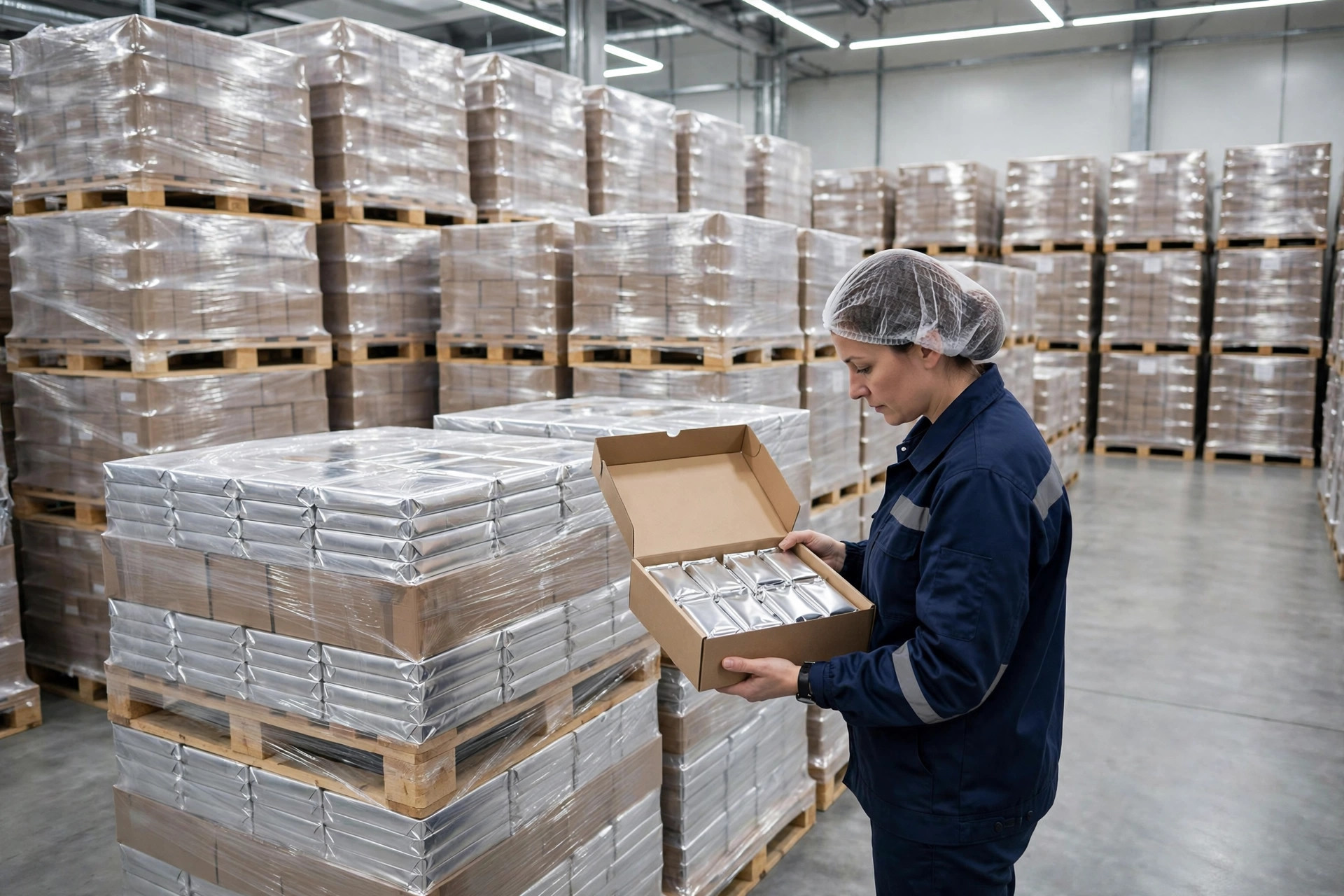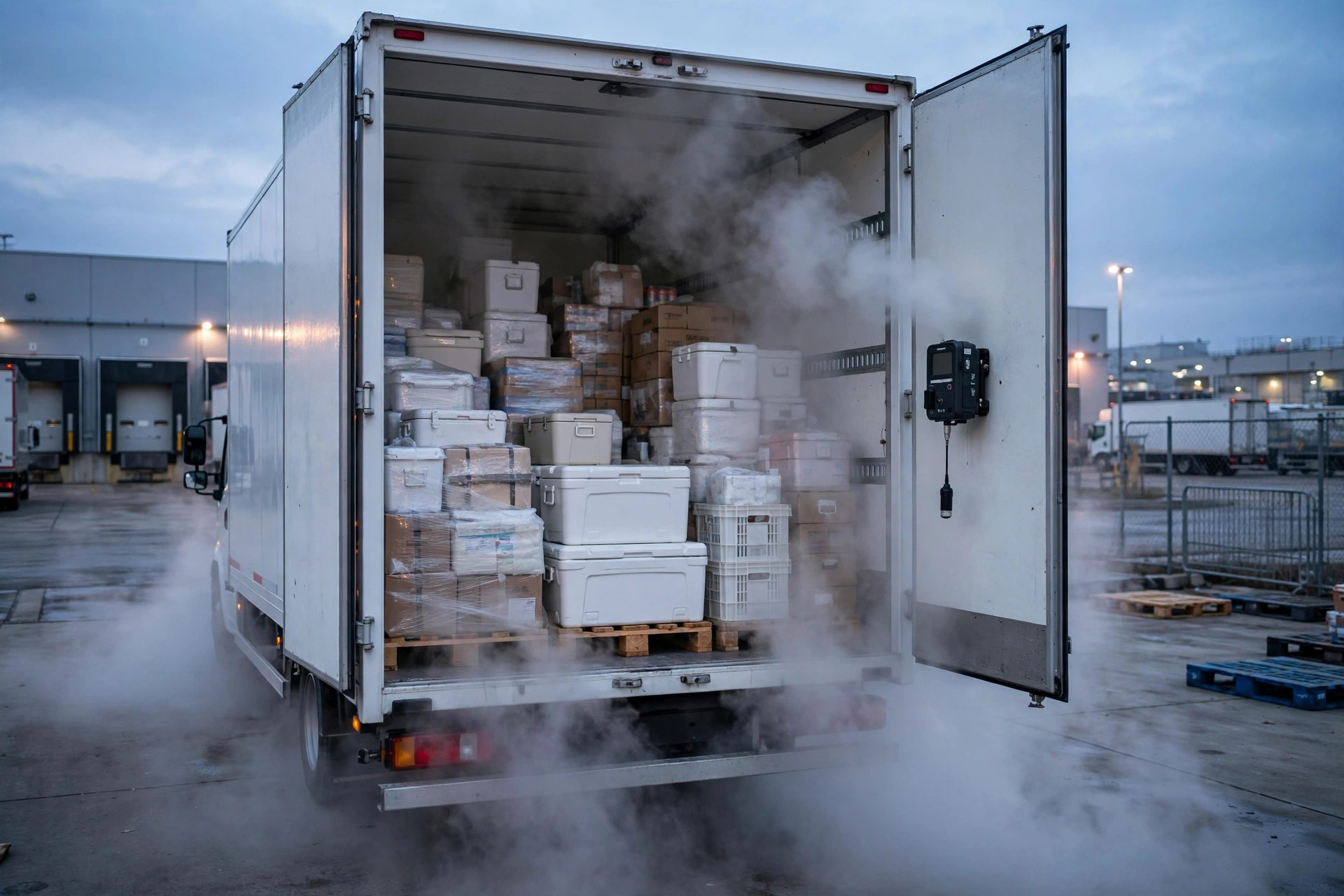
Bottom line up front: in mean kinetic temperature pharmaceutical cold chain work, MKT is the second ruler for excursion decisions. After a temperature excursion, the arithmetic average doesn't decide release or reject; MKT is the meaningful reference. But MKT doesn't get the final word either. QA does. The warehouse's job is exactly four things: quarantine immediately, produce complete and trustworthy temperature data, calculate MKT correctly, and document everything, so QA has a basis to decide.
What MKT actually governs
MKT is not an average temperature. It is the "equivalent constant temperature" weighted by chemical degradation kinetics (the Arrhenius equation): the degradation a drug product suffers under fluctuating temperatures equals what it would suffer stored at MKT for the same time. The basis is USP <1079.2>, with activation energy Ea = 83.144 kJ/mol. For controlled room temperature (CRT) products: storage at 20–25°C, MKT not exceeding 25°C, and permitted excursions between 15–30°C. Any MKT argument outside this framework is hand-waving.
Why the average lies and MKT doesn't
Chemical degradation is exponential, not linear. Three hours at 30°C does damage that three days at 15°C cannot "average out." The arithmetic mean dilutes the harm of high temperatures and gives you a false sense of "overall fine." MKT weights high temperatures exponentially. A few hot hours can eat the entire day's worth of averaged safety. Here's the counterintuitive part: the average can be within spec while the MKT is already out of spec.
The six warehouse steps after an excursion
Step 1: Quarantine. Don't wait. The moment an excursion is found, put the affected lots on hold/quarantine in the WMS and move them physically to the quarantine area. If you wait for QA's call before finding the goods, they may already have shipped. I've seen this fail three times.
Step 2: Pull the data. Three things must be in place. First, probe placement: product temperature next to the pallet positions, not air temperature at the cold-room door. The two can differ by several degrees. Second, continuity: no gaps during the excursion window. A gap is a gap; never bridge it with a straight line. Third, the probe calibration certificate must be current. If the data isn't trustworthy, everything after it is theater.
Step 3: Calculate MKT. The standard formula (USP <1079.2>):
MKT = (Ea/R) / ln( Σe^(−Ea/RTi) / n )
Temperatures Ti must be in Kelvin. Ea = 83.144 kJ/mol, R = 8.314 J/(mol·K), so Ea/R ≈ 10,000 K. n is the number of readings. The formula above is the mathematical core of mean kinetic temperature pharmaceutical cold chain disposition. Note: Kelvin! Plugging in Celsius gives garbage. I've seen that rookie mistake more than once.
Step 4: Work the example (illustrative data, shown only to demonstrate the math). A CRT product, 24 hours of readings: 12 hours at 15°C alternating with 12 hours at 30°C. The arithmetic mean is 22.5°C. Looks safe. But the formula gives MKT = 25.2°C, above the 25°C limit. Conclusion: this lot cannot be released on "the average was fine." It goes through the nonconformance process. The average is a trap in temperature disposition.
Step 5: The disposition framework. Once MKT is calculated:
- MKT ≤ 25°C, and the peak temperature and duration are within the product's stability data coverage → compile everything (temperature profile, MKT worksheet, probe calibration certs) and submit to QA for a release-or-reject decision;
- MKT > 25°C → quarantine as nonconforming; QA decides reject or destroy. The warehouse does not release on its own authority;
- Document everything in the WMS: the excursion event, the hold reason code, attachments, and QA's disposition written back. All of it.
Step 6: The WMS landing checklist. Go-live-night mindset: is the excursion event type configured? Is there a hold reason code? Can the temperature profile and MKT worksheet attach to the lot? Has the auto-release logic after QA disposition been tested? If any of these four is missing, the process exists only on paper.
Common misuses: I've seen this fail three times
Misuse 1: Calculating MKT from air temperature as if it were product temperature. A probe hung at the cold-room door reads several degrees higher than the pallet positions every time the door cycles. MKT comes out inflated, and good product gets quarantined on false evidence. On one of my projects, good lots sat in quarantine for two weeks until we moved the probe next to the product and recalculated. MKT came back into range. Wrong probe placement means the more precise your math, the more precisely wrong you are.
Misuse 2: Bridging data gaps with straight lines. When temperatures swing, an interpolated curve is fiction, and the MKT built on it is fiction too. Own the gap. Run it through the deviation process as missing data. Don't fabricate a curve.
Misuse 3: Treating MKT ≤ 25 as automatic release. MKT is one input. Peak temperature, duration, and the product's stability data all matter. MKT is a necessary condition, not a sufficient one.
Misuse 4: Applying the CRT formula to 2–8°C refrigerated products. The USP <1079.2> MKT framework is written for controlled room temperature products. Excursion decisions for refrigerated and frozen products follow the manufacturer's stability data and the PDA TR 64 approach. Don't force-fit.
Misuse 5: Uncalibrated probes. Precise math on garbage data is still garbage. A calibration certificate expired by one day gives QA every right to reject all of your data.
One last thing for warehouse folks: a 30-minute checklist for the moment an excursion hits. ① Hold in the WMS plus physical quarantine. ② Export the complete temperature data for the excursion window. ③ Verify probe placement and calibration validity. ④ Calculate MKT per USP <1079.2> (Kelvin!). ⑤ MKT ≤ 25°C with peaks inside stability coverage → package the records and hand to QA; otherwise quarantine as nonconforming. Get the warehouse part right — calculate correctly, document completely — and leave the verdict to QA. That's what professional looks like on the warehouse side of mean kinetic temperature pharmaceutical cold chain practice.
By Lin Xiao, WMS Implementation Consultant