We had a client who bought a season of table grapes out of Ica last year, and the shipment arrived on the US East Coast with the buyer docking the price. The reason was one line on the inspection report: excessive berry drop — a classic Peru table grape export cold chain failure. The fruit was not rotten. The bunches had simply come apart, and a loose bunch sells a grade lower. The client called me and asked, "Susan, the cold chain ran at zero degrees the whole way. How can this happen?" I asked for the temperature log. The reefer setpoint was indeed zero. The pulp temperature at loading was eight degrees. The container spent two weeks at sea slowly cooling the fruit down, and for those two weeks the grapes were heating themselves and dropping berries.
That is the first thing to understand about the Peru table grape export cold chain: it is decided in the packhouse, not on the ocean. The scale makes the stakes obvious. USDA data puts Peru's 2024/25 table grape exports at 692,000 metric tons, up 30 percent on the year before, worth 2.05 billion dollars, with the United States taking 52 percent. The 2025/26 season is forecast to reach 770,000 tons. At that volume, the competition is no longer about who can grow the fruit. It is about whose fruit still arrives as a whole bunch.
Berry drop starts in the first hour after harvest
Berry drop is a stem problem. When the rachis loses water it turns brittle, and the slightest knock shakes berries loose. If pre-cooling is incomplete, the stem dries first. If humidity inside the carton is not managed, the stem still dries. If the sulfur dioxide pad is placed wrong, botrytis starts at the stem end and the berries drop anyway. All three failures happen in post-harvest handling. None of them is the shipping line's fault.
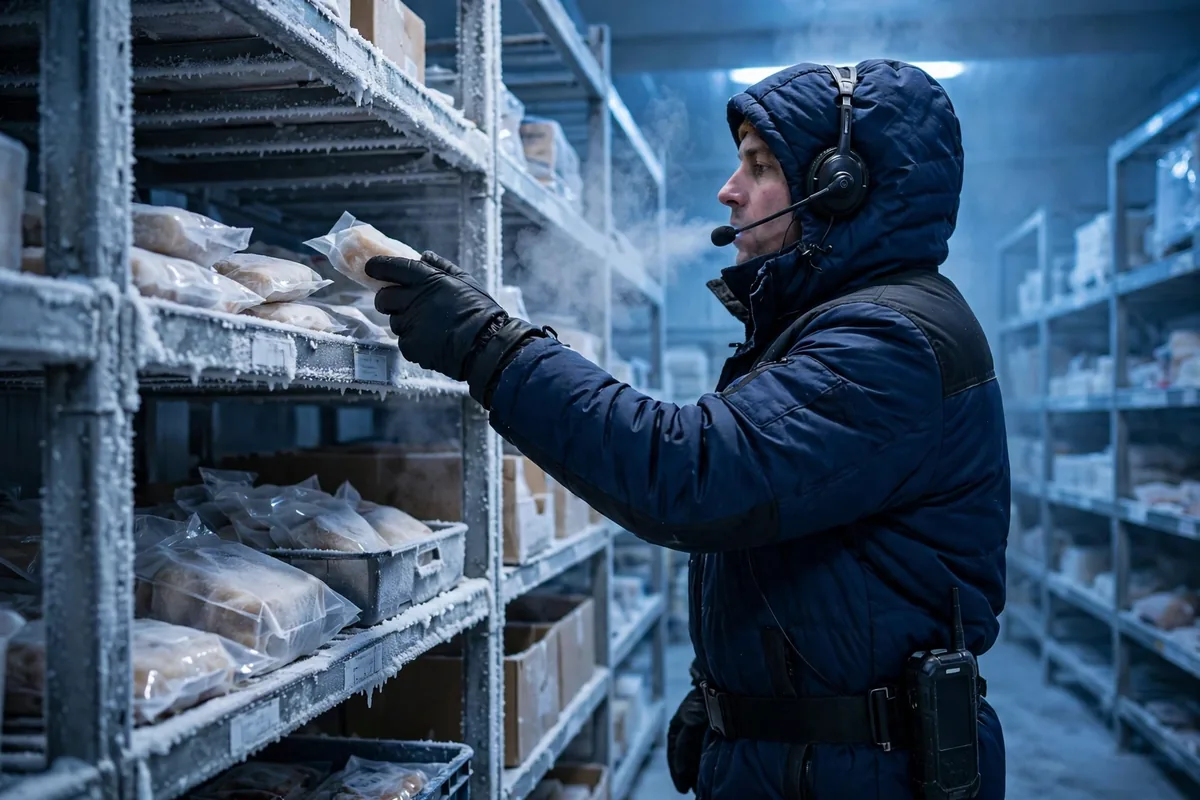
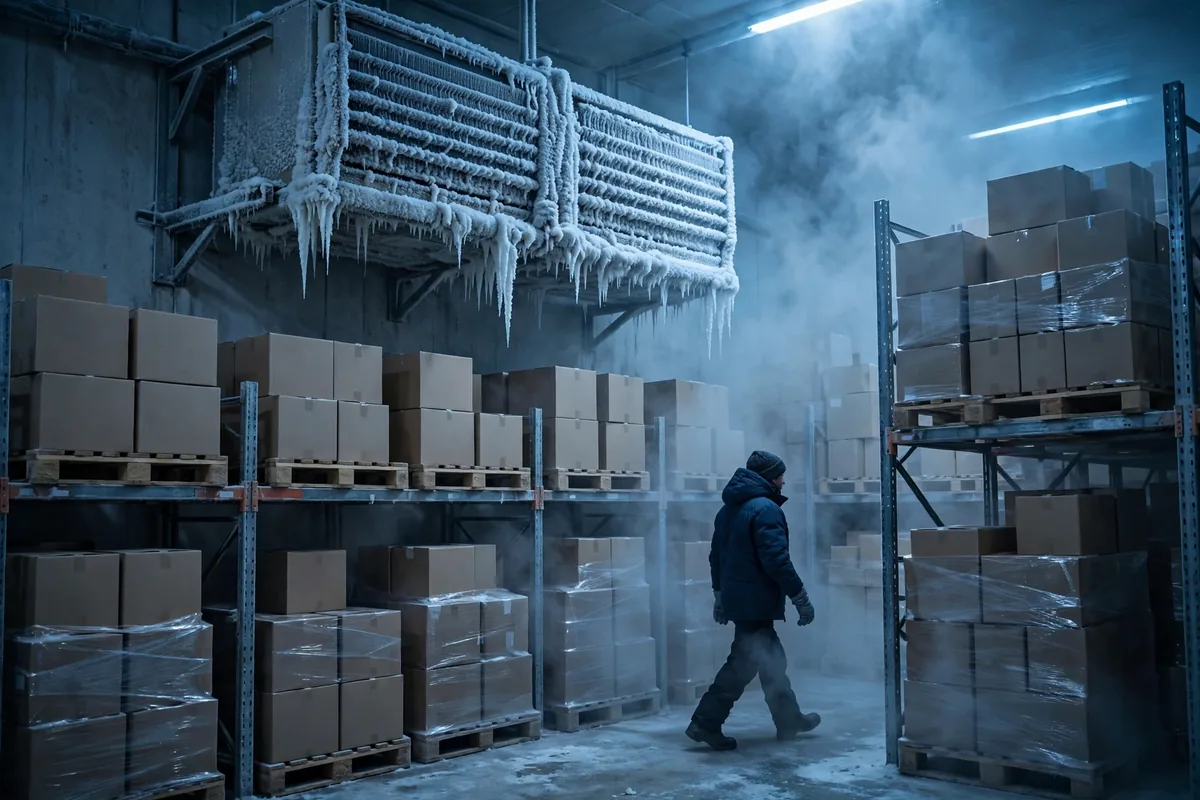
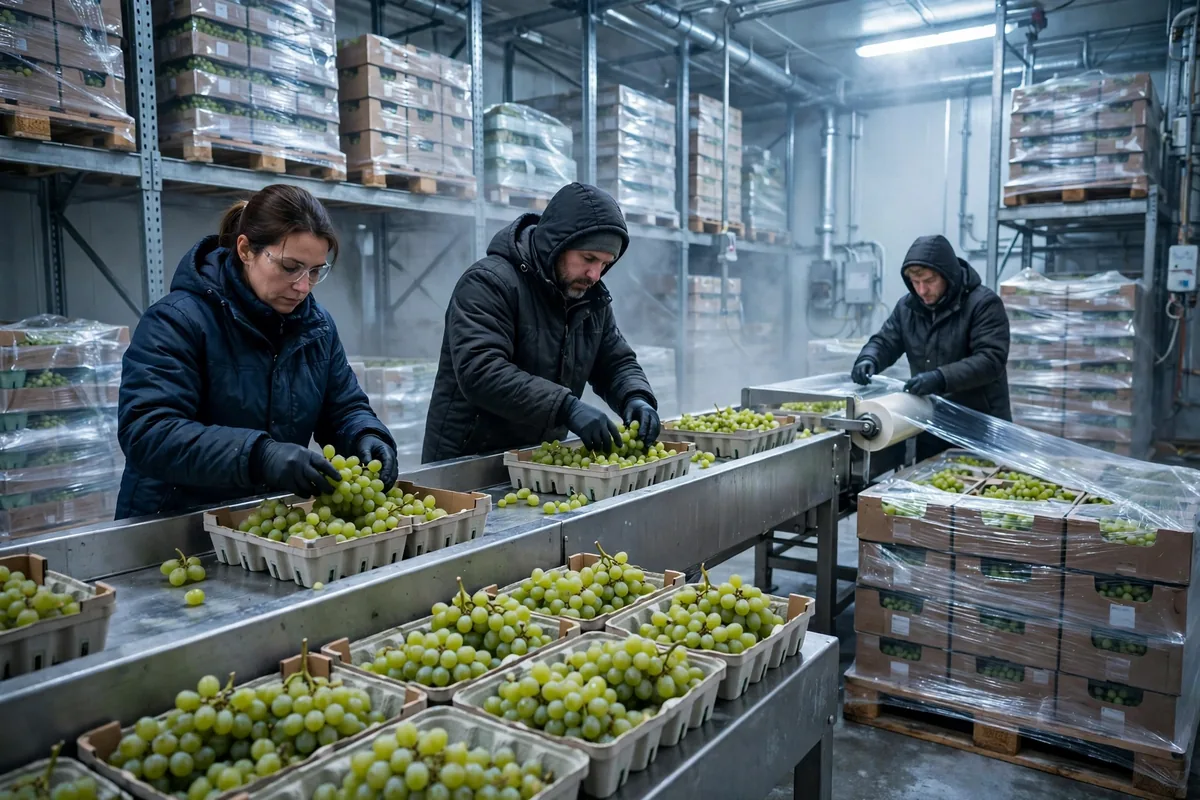
I watched a packhouse in Ica run this well, and the routine is worth copying. Grapes come in from the afternoon harvest and go through grading. The good bunches go straight into a forced-air cooling room, with the target of pulling pulp temperature down to around zero within a few hours, before packing. The cold room holds humidity at 90 to 95 percent, the range the industry generally uses for table grapes. Sulfur dioxide pads go in according to the carton specification, and pallets are stacked with air channels left open. Cramming in two extra cartons and blocking the airflow is a false economy. Once the pallet is wrapped, a temperature logger goes on, and the data travels with the cargo.
There is a detail in a real bill of lading that shows how serious operators treat this. In December 2023, a grower in Ica shipped a container of fresh grapes out of Callao to North America. The bill of lading records a 40-foot high-cube reefer, 2,300 cartons on 20 pallets, a setpoint of minus 1 degree Celsius, with thermographs fitted, under cold treatment. When the temperature and the loggers are written into the bill of lading, you have evidence. Now ask yourself the reverse: if your cargo gets docked on arrival, do you hold a record that starts with pulp temperature? If not, you are already losing the claims negotiation before it starts.
The road from Ica to Callao: time costs more than money in the Peru table grape export cold chain
The land leg from Ica to Callao is not long, but it is where the chain most often breaks. Fruit leaves the packhouse cold store on a refrigerated truck, then queues at the port, waits for a container, and gets loaded onto the vessel. Any gap in cooling along that chain wastes all the pre-cooling work. Central and southern fruit generally moves through Callao, northern fruit through Paita, and some Ica cargo through Pisco. Which port you use depends on the sailing schedule and the buyer, but the logic is the same everywhere: keep the time on land short and the temperature steady.
The sea leg has to be priced into the contract before the fruit leaves. Callao to Rotterdam and northern Europe runs about 20 to 25 days, and Callao to the US East Coast about two weeks. That means your grapes sit at around zero degrees and 90 to 95 percent humidity for two to three weeks. US-bound loads also carry cold treatment requirements, and the temperature curve has to comply all the way through or the cargo does not clear. That duration settles one argument: fruit loaded warm cannot be rescued at sea. A reefer container maintains temperature. It does not pull eight-degree pulp down to zero.
The table below is a hypothetical example. The figures are built around a typical container size to show the arithmetic. They are not any client's real quotation.
| Item | Hypothetical example |
|---|---|
| Load per container | About 2,200 cartons at 8.2 kg each |
| Share downgraded on arrival | Assumed 15 percent, from first to second grade |
| Price cut per kilo | Assumed 0.80 dollars |
| Direct loss per container | About 2,200 x 8.2 x 15% x 0.80, about 2,165 dollars |
| Buyer deductions and re-inspection | Assumed a further 800 to 1,200 dollars |
| Total loss per container | Around 3,000 dollars |
Three thousand dollars on one container looks small. Run 50 containers in a season and it is 150,000 dollars. The invisible cost is worse: the buyer switches supplier next season, and you do not even get to quote. So when you negotiate, do not only haggle over saving 100 dollars on freight per container. Ask whether pulp temperature at loading is written into the contract, who holds the temperature data, and how arrival downgrades are shared.
The counterintuitive part of the Peru table grape export cold chain: colder can kill grapes faster
Plenty of people assume a cold chain means the colder the better. Grapes at zero degrees, so why not minus two for safety? That is wrong. Grape flesh is sugary and freezes below water's freezing point, but the stem holds less sugar and can freeze at around minus two degrees. A frozen stem turns brittle like a dead twig, and by discharge the berries fall off worse than a warm load. The industry norm for table grapes is around zero, and bills of lading commonly show setpoints between minus one and zero. That band is not a guess. It is the narrow gap between the freezing points of flesh and stem.
One more point exporters overlook: Callao is not the only option. The Chancay port opened in 2024, giving Ica cargo another outlet when sailings out of Callao are tight, but a new port means checking reefer plug availability, yard routines, and trucking connections in advance, not discovering a plug shortage in peak season. Pisco is closer to Ica and suits tight sailings, but it offers fewer services, so bookings have to go in earlier. My routine is to compare all three ports on sailings, plugs, and trucking rates before each season and write the plan down, so a last-minute port switch is a decision, not a scramble. The Peru table grape export cold chain is won on that kind of lead time as much as on temperature.
So here is my verdict: the Peru table grape export cold chain is not a contest of refrigeration power. It is a contest of temperature precision. Pre-cool the pulp through, check pulp temperature at loading, leave air channels in the pallet, hold humidity at 90 to 95 percent, and keep the temperature log with the cargo. Miss any one of those five, and the berry-drop bill will eventually land on your desk.
Next time you negotiate a contract, ask these three questions: first, what pulp temperature is required before loading, and is it in the contract? Second, who holds the logger data, and who produces it first when something goes wrong? Third, what is the deduction rate for arrival downgrades, and is there a cap? Ask those three and the other side will know this is not your first grape season.
By Susan, 3PL Sales Director