Here is the verdict up front: in the Peru mango export business, whether the fruit arrives in the United States or Europe in sellable condition is decided about 70% before the ship ever leaves port. The two weeks at sea just magnify whatever mistakes were already made on land. Cold chain is a race against time, and in this trade the clock runs faster than most people admit.
The 2024/25 season shipped 286,311 tons of fresh mangoes, a record, up about 258% from the roughly 80,000 tons of the weather-hit 2023/24 season, according to APEM, the Peruvian mango producers and exporters association. Kent alone accounted for about 98% of exports, and Piura for about 70% of volume. The season runs November to April, with the peak in the first week of January. The numbers look great on paper. But I have seen too many people watch the volume and the price and forget to watch the cold chain. The fruit leaves looking fine, the container opens in Rotterdam, and the flesh is brown, the skin is blotched, and a whole container gets downgraded. Months of work, gone.
There are two sides to this. The good side: the chain itself is simple. Orchard, packhouse, pre-cooling, grading and packing, hot water treatment, reefer stuffing, Paita or Callao, then the US East Coast or Rotterdam. The bad side: there are only five or six links in that chain, and each one loses money in a different way. And the most expensive link is the one people pay the least attention to.
Where the Peru Mango Export Cold Chain Actually Breaks
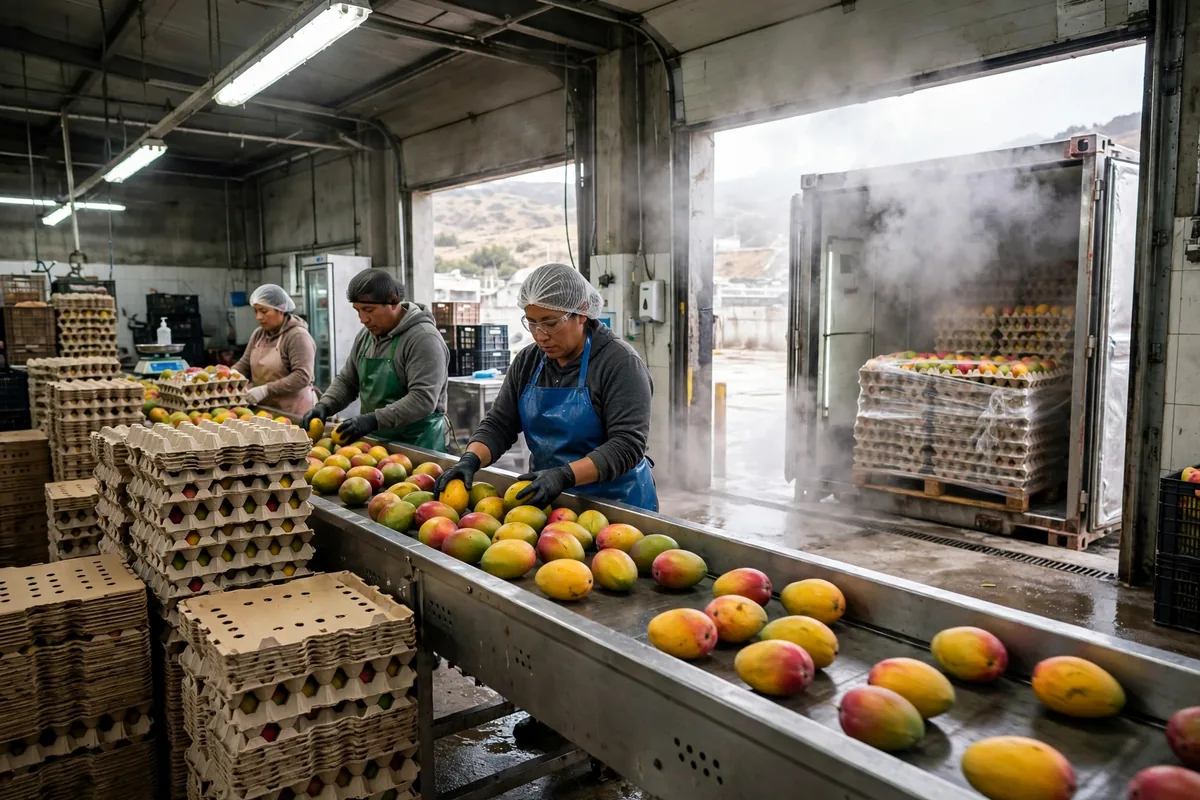
I have seen too many packhouses put their energy in the wrong place. Peak week in January, a packhouse in Piura running through the night, trucks lined up at the gate, fruit that sat in the field sun all day coming in load after load. The grading line runs its usual course: unload, sort, weigh, pack. By the time the fruit reaches the pre-cooling room, half a day has passed since harvest.
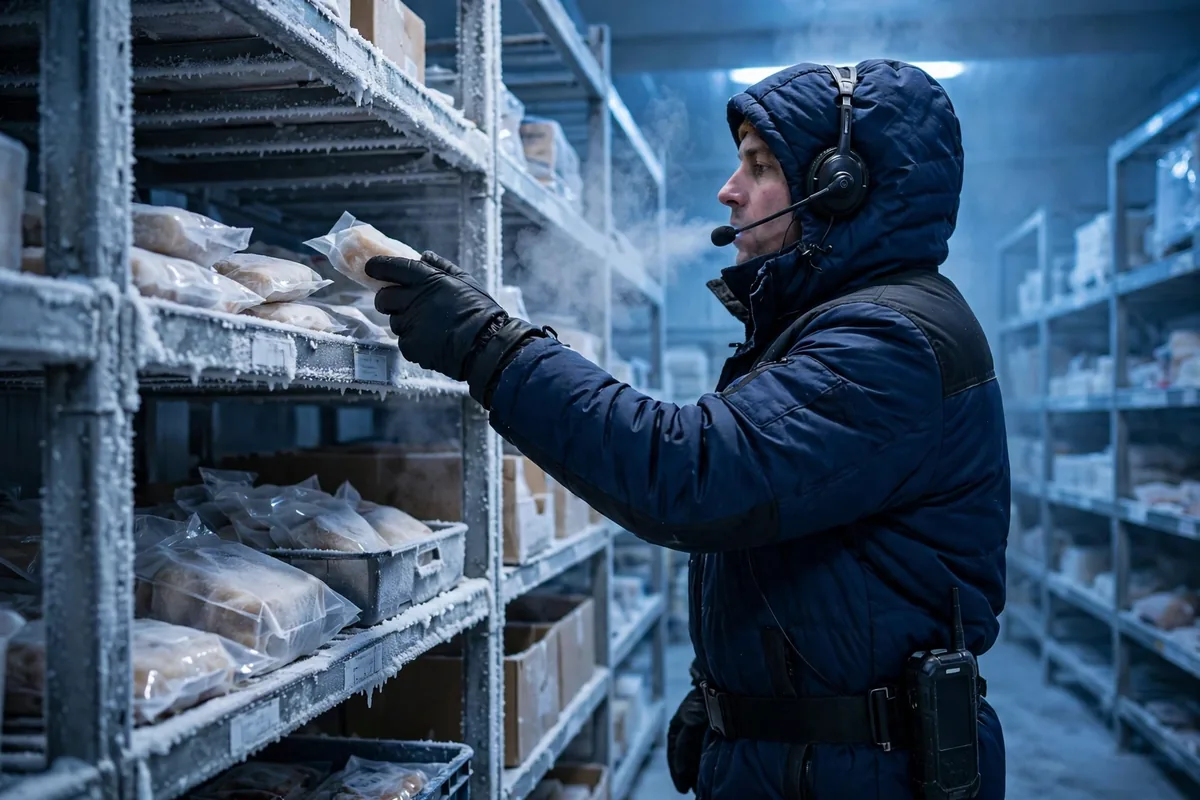
That is the first trap. A mango keeps breathing after it is picked. If the pulp temperature does not come down, ripening runs ahead on its own schedule. Pre-cooling is not an optional step; it is where the whole cold chain starts. Standard practice is to pull field heat out until the fruit is close to carrying temperature before stuffing: 10 to 13 degrees Celsius, relative humidity 85 to 90%, and below 10 degrees you start risking chilling injury. A reefer holds temperature. It does not create it. Counting on a reefer to pull down a container of warm fruit is gambling the cargo on the ship's refrigeration capacity, and that is a bet you will eventually lose.
Here is the counterintuitive part: the most dangerous link in the cold chain is not the ocean leg. It is the first six hours after harvest. No temperature curve at sea, however pretty, can save a mango whose pulp already started ripening while it sat outside the packhouse. Most arrival-quality disputes trace back to those hours on land. The ocean leg just takes the blame.
My approach is unglamorous and it works: lock harvest times to avoid the midday heat, send every truck through pre-cooling before it touches the grading line, and spot-check pulp temperature on every lot, with the readings written down. Every hour you save in pre-cooling is time no later step can buy back.
Hot Water Treatment: Protection or Damage
Mangoes bound for the United States cannot skip hot water treatment. It is the USDA APHIS quarantine requirement against fruit flies. The standard is immersion in 46.1-degree water, with the time set by fruit weight and shape. Kent is a round variety: 75 minutes for fruit up to 500 grams, 90 minutes for 501 to 700 grams, 110 minutes for 701 to 900 grams. After treatment, the fruit must wait 30 minutes before cold storage or hydrocooling, unless 10 minutes is added to the treatment time.
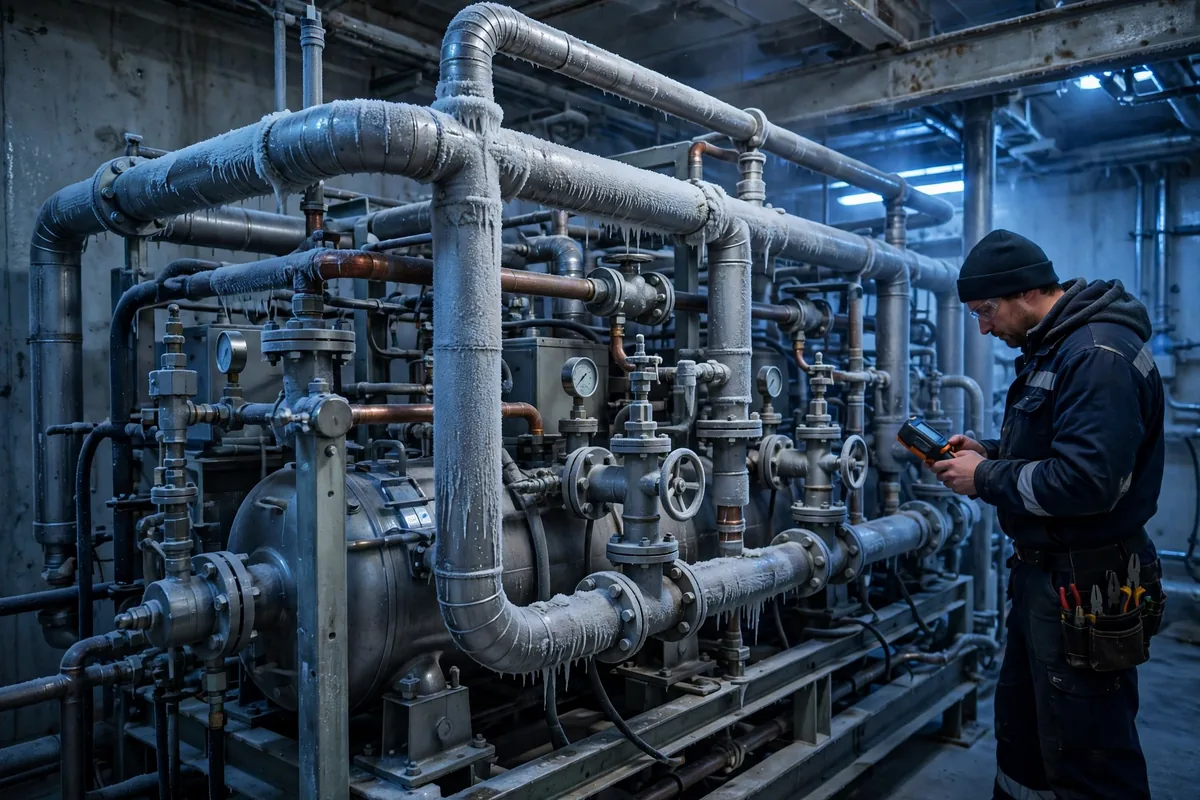
This cuts two ways. Done right, the treatment clears quarantine and the fruit gets into the US market. Done wrong, the fruit is damaged from the inside out. It looks fine on the surface, and then the buyer cuts it open at destination and finds brown flesh. I have seen a plant rush a sailing and run mixed weights through the same hot water bath: the light fruit overcooked, the heavy fruit undertreated, one container, both problems. Grading is not cosmetic. It exists so the hot water time matches the fruit weight. Whatever the grading line skips, the hot water tank collects.
The sequence matters too. Grade and group by weight first, then treat, then cool, then cold store. Get the order wrong and the whole temperature curve falls apart. There is no shortcut here. No matter how tight the sailing schedule is, you do not borrow time from quarantine treatment. If US inspectors catch it, the whole container gets held.
The Math on One Mango Export Container
Before the numbers, a word on where they come from: the table below is an illustrative scenario I built around one standard container load. It shows where the losses concentrate, not any real exporter's actual costs.
A standard 40-foot reefer commonly loads 5,544 cartons of 4 kilos, about 22 tons of fruit. From Paita there is a seasonal direct service to Philadelphia with about 11 days in transit; Rotterdam takes longer. The 2024/25 season shipped more than 71 million 4-kilo boxes. At that scale, any queue anywhere in the chain passes straight down the line.
| Broken link | Typical consequence | Illustrative share of loss |
|---|---|---|
| Pre-cooling skipped or late | Pulp stays warm, whole container ripens fast | About 40% |
| Hot water treatment error | Brown flesh, quarantine risk | About 25% |
| Stuffing fruit warmer than set point | Reefer cannot pull it down, hot spots in the load | About 20% |
| Waiting at port, power interrupted | Temperature swings, damage near the doors | About 10% |
| Slow handover at destination | Fruit waits, trucks wait, last mile of cold chain breaks | About 5% |
Read it plainly: pre-cooling and hot water treatment together account for about two-thirds of the loss, and both sit on land, in the exporter's own hands. The ocean leg is the most controllable part of the trip. The reefer set point, ventilation, and humidity are all written down. Real bills of lading commonly show a set point of 9 degrees Celsius, 85% humidity, and ventilation of 30 cubic meters per hour. Follow that and the odds of trouble at sea are low.
So where should the money go? My ranking: pre-cooling capacity first, temperature control and grading accuracy in the hot water line second, reefer plugs and stuffing coordination at the port third. The container itself comes last. You rent the box. The first three are your own assets.
January Peak: Rhythm Beats Volume
One more scene. Peak week in January, fruit from Piura, Lambayeque, and Ancash all moving at once, packhouses at full capacity, reefer plugs at Paita hard to get, one sailing a week. Miss a sailing and you wait seven more days. That is the reality of a season that ships over 71 million boxes in a few months.
At that point the contest is not who has the most fruit. It is who holds the steadiest rhythm. Three pieces of advice. First, lock peak-week sailings two weeks out; do not wait until the fruit is packed to go book space. Second, schedule the packhouse at 80% of peak daily capacity, not 100%, so pre-cooling and hot water treatment have slack built in. Running at full capacity is writing a break into the plan. Third, line up the destination handover before the ship docks: cold store, trucks, and paperwork all ready. Every extra day the fruit waits at port takes value straight off it.
Put plainly, the Peru mango export cold chain comes down to one thing: it is not about who owns the most expensive equipment. It is about who gets the temperature down first and whose chain never breaks. Every extra hour of pre-cooling in Piura is life added to the mango at destination. Whether the record 286,311 tons of 2024/25 holds up in the seasons ahead does not depend on how much fruit the weather gives. It depends on how many people are willing to do careful work in the places nobody sees.
So let me ask you: what is the pulp temperature of your container right now?
By Lao Mi, Supply Chain Veteran (20 yrs)