Here's my verdict up front: in the Peru grape export cold chain, the warehouse decides the season, not the ocean. Peru shipped 562,093 tons of table grapes in the 2024/25 campaign, the world's leading exporter for the second year running, and the 2025 forecast points to roughly 760,000 tons worth more than $1.9 billion. But that number one spot rests on one thing: the cold chain holding. Grapes don't ripen after picking. Lose temperature control and the value falls off a cliff.
I've seen too many people treat cold chain as buying reefer containers and setting a temperature. It isn't. In January 2025, in the middle of the season, a packing house in Ica had a lot of Sweet Globe picked at midday that sat in the field for half a day before it reached the pre-cooling tunnel. The pulp temperature was still high when the packing house, chasing a vessel cut-off, loaded it anyway. The reefer held -0.5°C all the way across, and it didn't matter. A reefer maintains temperature; it cannot cool warm fruit. At the US East Coast the inspection found berry drop and dry stems, and the buyer docked the payment. One container, about 20 tons, worth roughly $65,000 at the $3.27-per-kilo average — two months of claims, split between the packing house and the forwarder. Two sides to this story: the vessel schedule matters, but pulp temperature at loading matters more. The second one is the one that decides who pays.
Where the Peru Grape Export Cold Chain Actually Breaks
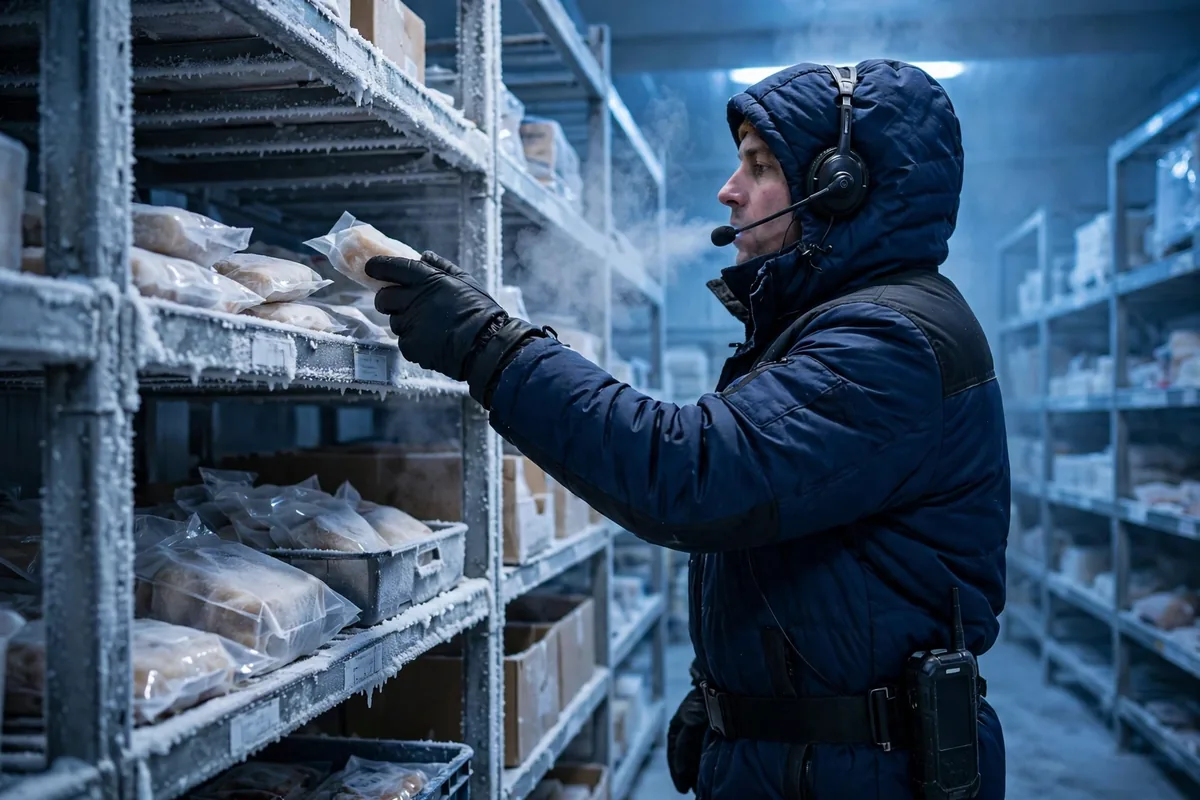
The Peru grape export cold chain is a short chain: field harvest, pre-cooling, packhouse cold store, reefer stuffing, port, ocean, arrival inspection. Production sits in Ica and Piura, with 47% and 36% of certified planted area respectively. The season runs October to April, and 137 packing houses run at once. In peak weeks, containers leave every day.
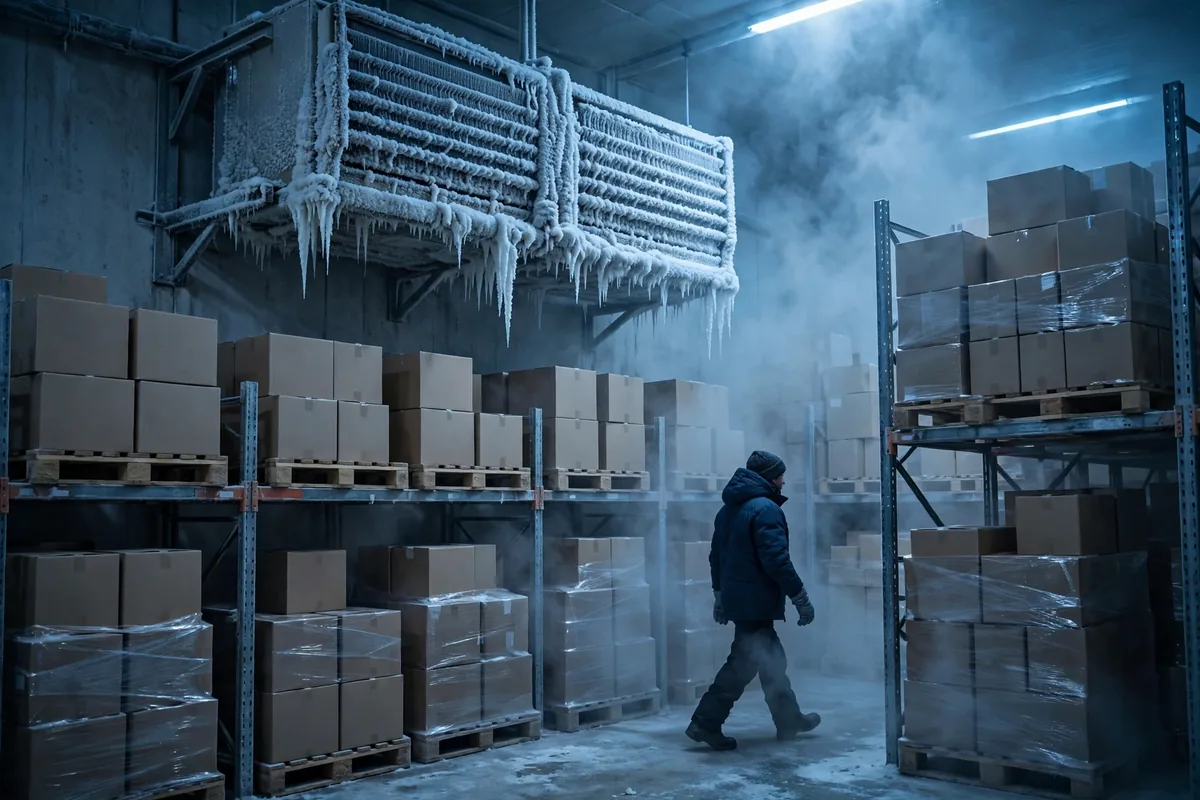
There are three break points. The first sits between the field and the pre-cooling tunnel. Grapes are non-climacteric — they never ripen after harvest — so forced-air cooling has to start as soon as possible after picking, driving pulp temperature down to around -0.5°C at 90% to 95% relative humidity. The longer the delay, the more condensation, shatter, soft berries, moisture loss and decay show up. The rule of thumb in the trade: shelf life drops about 40% at 4°C and about 70% at 8°C, compared with 0°C. That isn't a scare line. That's cargo loss, measured.
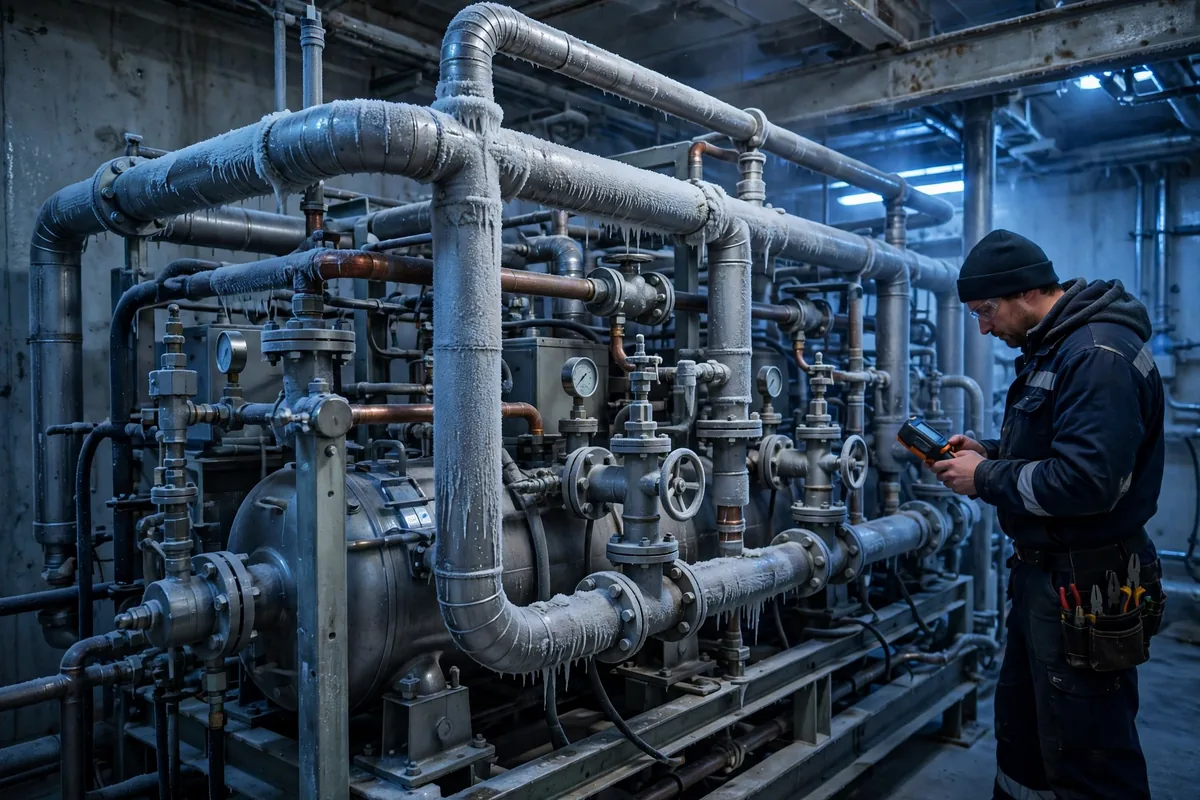
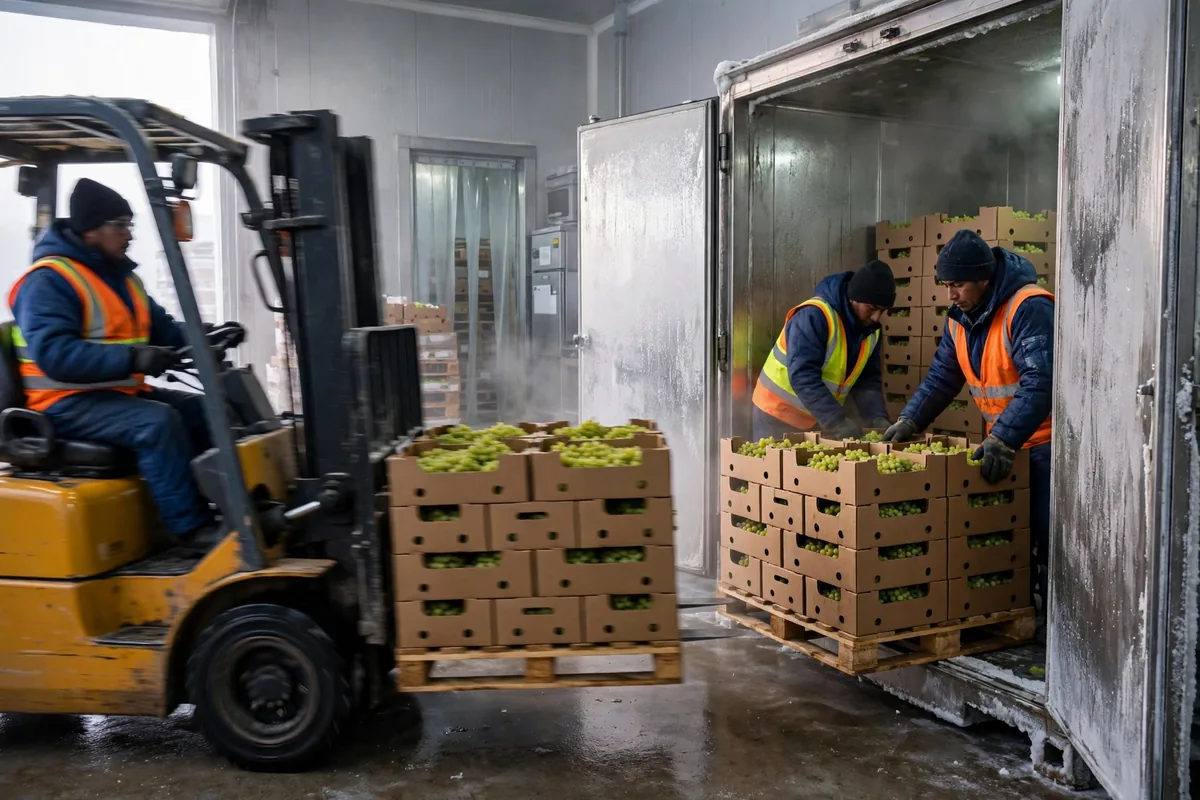
The second break point is the moment of stuffing. Here's the counterintuitive truth about reefers: a reefer is an insulated box, not a mobile cold store. If the pulp isn't cold when it goes in, no setpoint on earth will pull it down — the unit is built to hold temperature, not to chill warm cargo. Grape handling protocols say pulp temperature at loading should sit no more than 2°C above the carrying temperature. In peak season, chasing a cut-off, that line gets "flexed" all the time. The bill for it arrives at destination.
The third break point is arrival inspection. In December 2024, Peru ran its first phytosanitary certification for fresh fruit in refrigerated vessel holds at the port of Paracas — the first in South America — and inspection keeps getting tighter. Inspection means opening the box, and the moment the doors open, the cold air is gone. Who re-cools after inspection, and to what temperature before resealing — if the contract doesn't say, the cargo owner ends up arguing about it.
The opening of the port of Chancay added a new variable: direct sailings to China, cutting transit time and cost against transshipment. The more spread out the markets, the longer the chain: the US takes 35%, the Netherlands 15%, Mexico 10%, China 8%, across 44 markets sharing 562,000 tons. More markets, more break points, more need for someone watching temperature end to end.
What One Reefer of Grapes Really Costs
Let's be clear about the table below: it's an illustrative scenario, built on one 40-foot reefer of about 20 tons at the $3.27-per-kilo average price, so roughly $65,000 of cargo value. Real costs depend on the carrier's latest quote.
| Link | Cost (USD per reefer) | Note | | Pre-cooling + packhouse cold store | 800–1,200 | Pulp down to -0.5°C, packing included | | Reefer ocean freight (Callao–US East Coast) | 3,500–5,000 | Peak season floats with vessel space | | Port plug-in storage + inspection support | 400–700 | Box-opening inspection billed separately | | Destination reefer trucking + inspection | 600–1,000 | Cheapest when picked up within 24 hours | | Temperature logger + cargo insurance | 200–400 | The logger curve is the only claims evidence | | Total | 5,500–8,300 | Roughly 8%–13% of cargo value |
Here's the trade-off: a few hundred dollars more on pre-cooling and cold storage buys the safety of a $65,000 container. Skip it, and you're betting the arrival inspection goes your way. In 2024/25, Peru's table grape export value passed $2 billion for the first time. The bigger the plate, the bigger the absolute loss from one broken chain, and the less room there is to gamble. Cold chain money gets spent up front or paid out the back. There is no third way to spend it.
One more number worth keeping: Peruvian grape output has grown 82.5% over the last decade, with more than 56 varieties moving in a single season — Sweet Globe, Red Globe and Allison leading. More varieties means harder-to-unify temperature requirements, and a packhouse pre-cooling schedule that cannot afford to slip. When the schedule slips, trucks queue at the cold store door, and pulp temperature never comes down.
When the Chain Breaks, Who Pays?
When it breaks, don't argue first — pull the temperature logger curve. A complete curve with pulp temperature in spec at loading is what the carrier and the insurer recognize. A gap in the curve, or a loading temperature out of spec, and the claim usually dies at step one. That's the lesson after watching too many of these disputes: evidence isn't something you go looking for after the damage. It's something you secure before stuffing.
Three lines in the contract are worth more than anything else. First, the pulp temperature acceptance standard and the probe points, written dead: -0.5°C means -0.5°C, not "around 0°C." Second, who owns the logger data and the deadline for reading it. Third, who re-cools after inspection opens the box, and to what temperature before resealing. In export cold chain, those three lines matter more than $200 negotiated off the freight.
And one more counterintuitive point: colder does not mean safer. Stems freeze at -2°C; berries don't freeze until -3°C. Set the temperature too low and the stems freeze first, berries drop, and the cargo is a loss anyway. Minus 0.5°C is a sweet spot worked out over decades, not a number someone guessed.
One last uncomfortable truth: being the world's top exporter in 2024/25 is not the same as being it forever. China's export volumes are catching up, and US Department of Agriculture projections say China could overtake Peru in the coming years. Whether the top spot holds depends on more than how many grapes get planted. It depends on whether the cold chain holds. The market rewards the people who never break it and punishes the people who do. It's always been fair that way.
Next time someone tells you cold chain is just buying a few reefers, ask them one question: six hours after picking, where are your grapes? If they can't answer, don't take the booking.
By Lao Mi, Supply Chain Veteran (20 yrs)