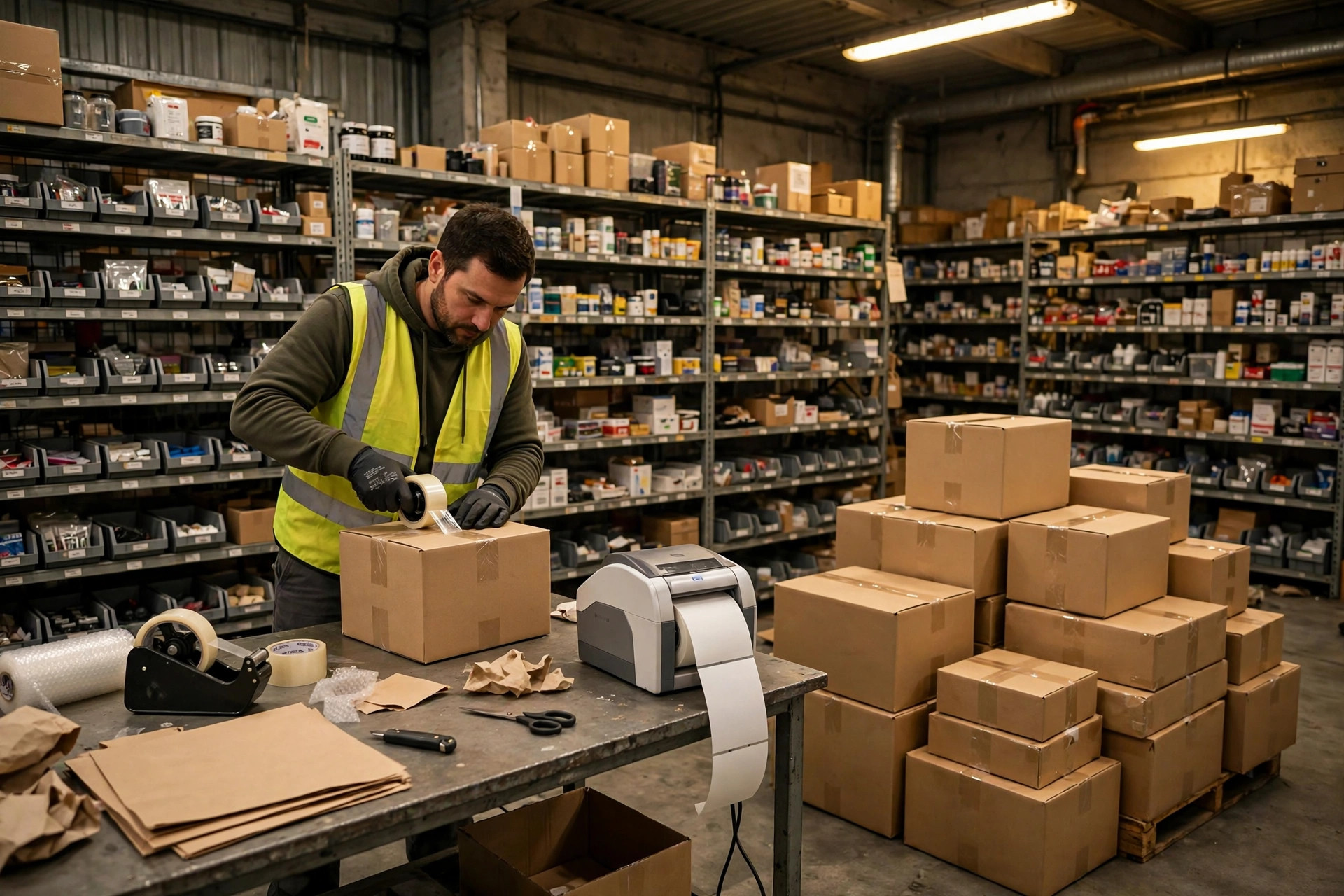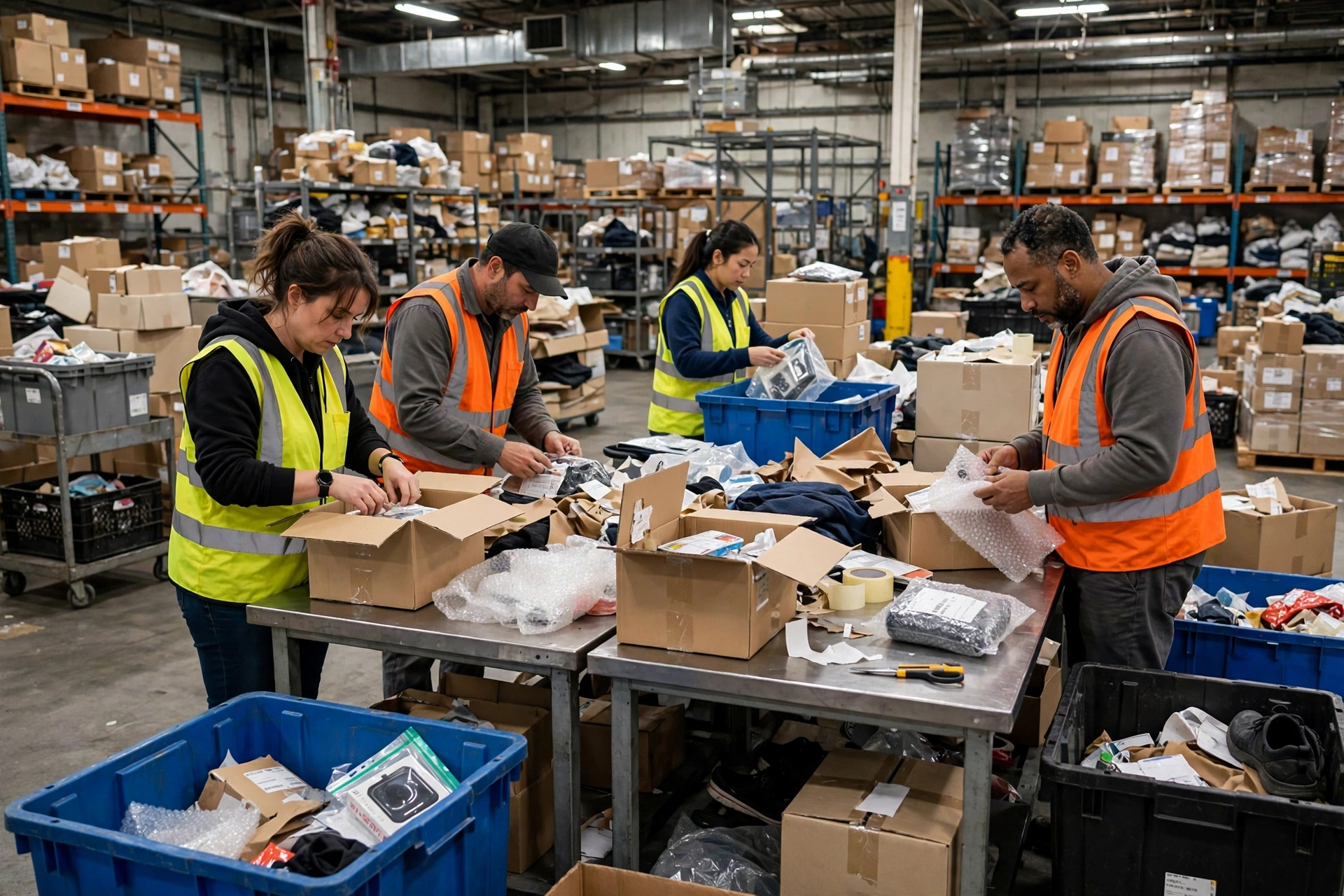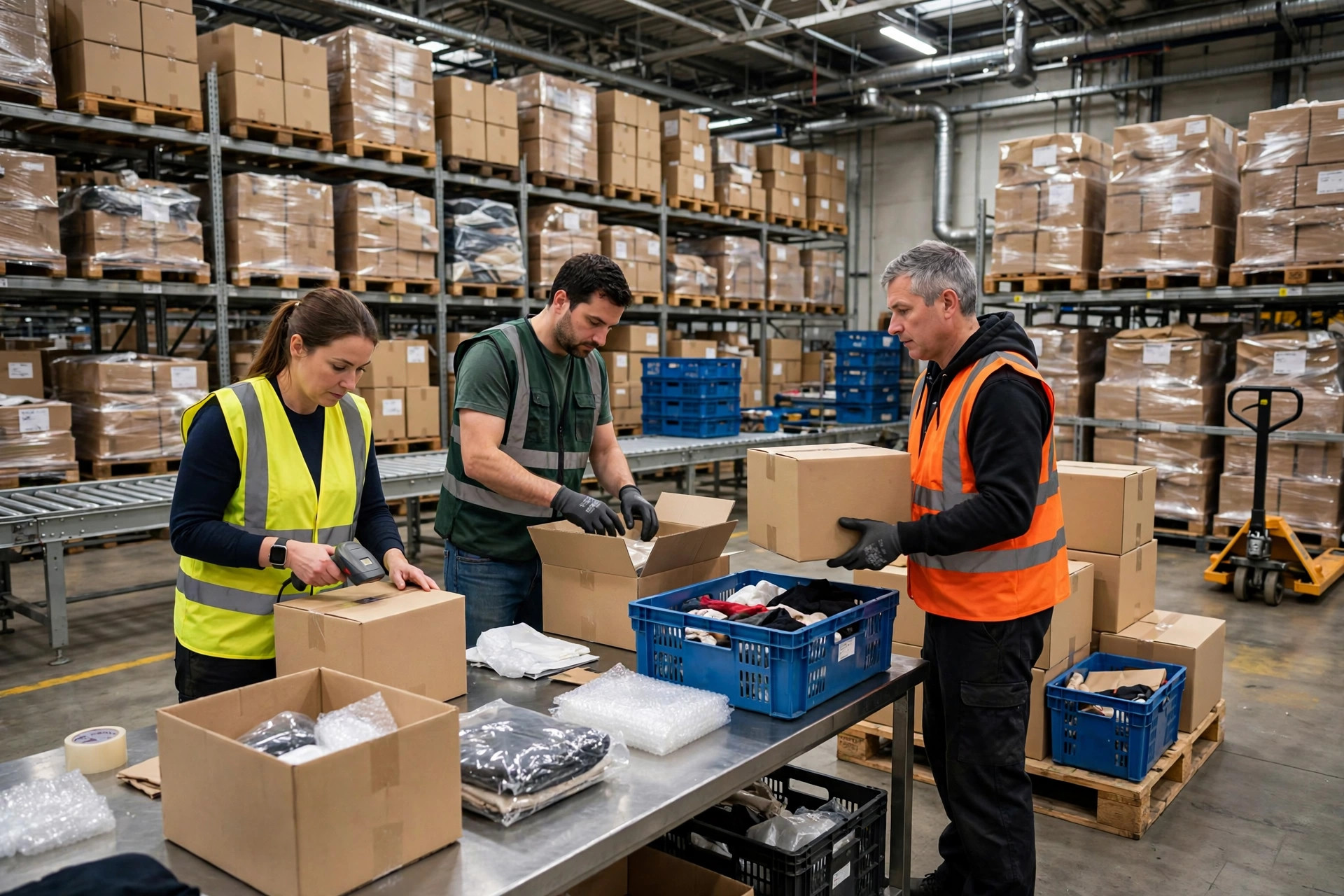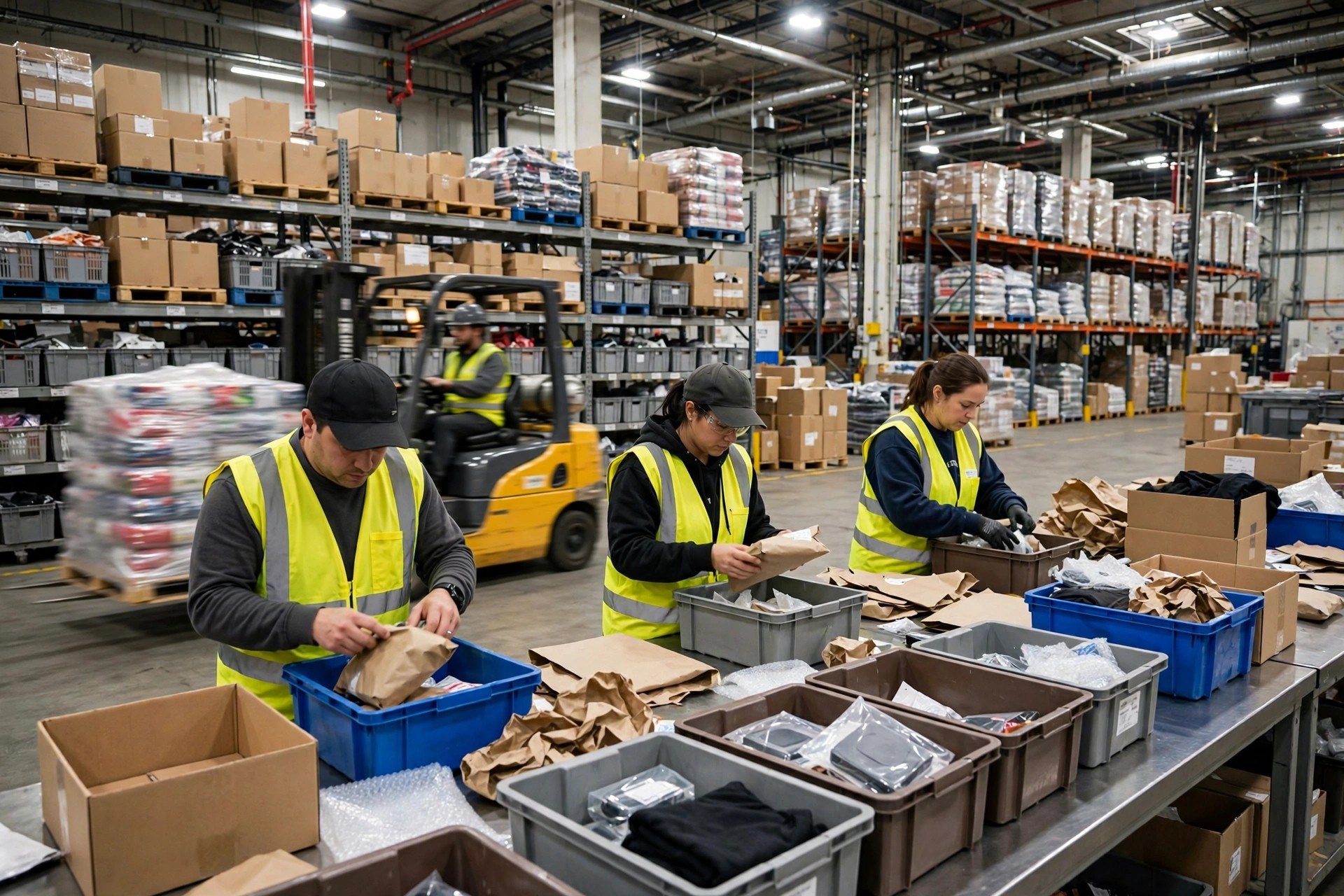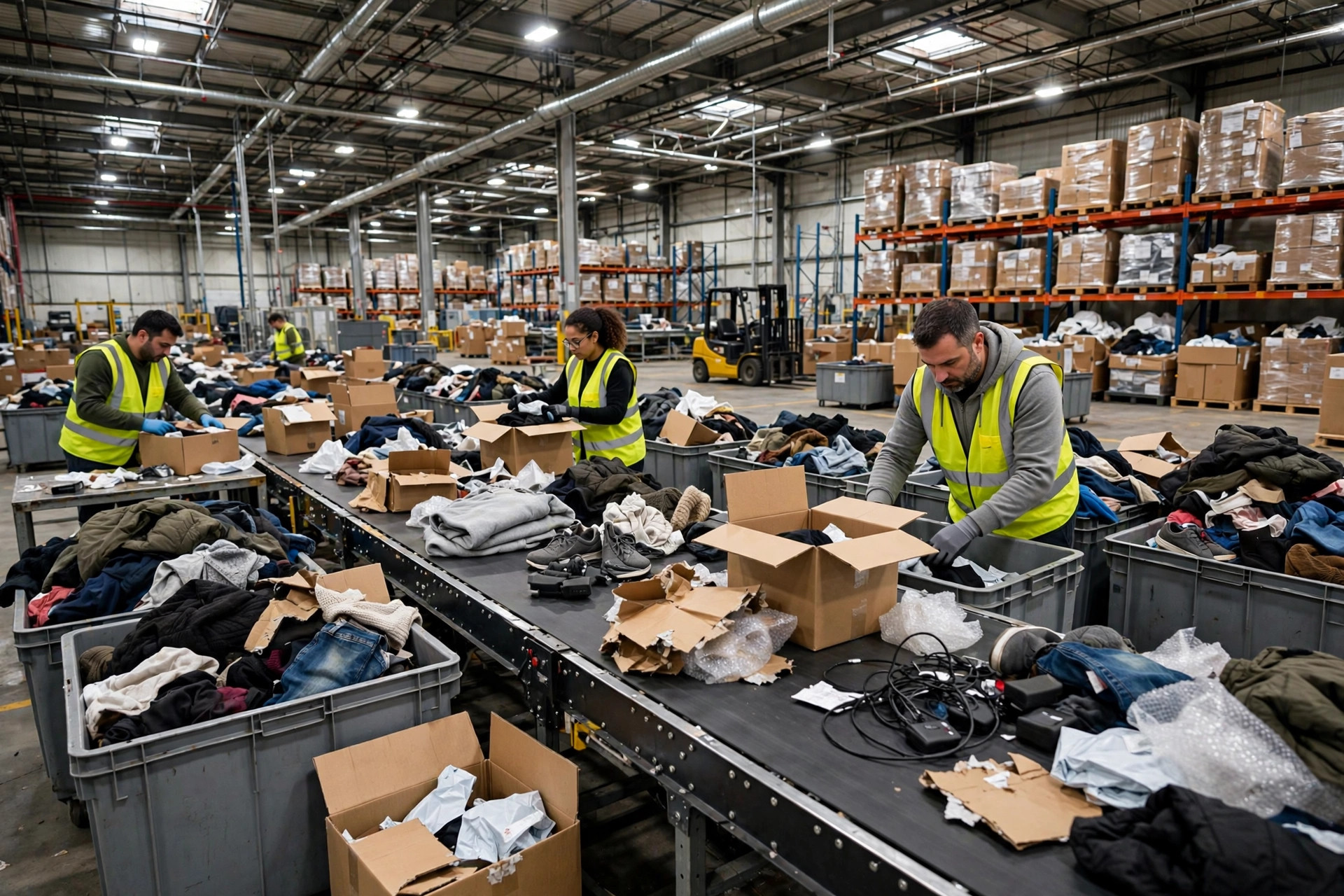
On the morning of January 2nd this year, I walked into a warehouse in California's Inland Empire. Four parcel-carrier trailers were already queued at the dock doors, and the receiving area was so stacked with return cartons that the fire lane was nearly blocked. The warehouse manager just laughed the tired laugh of someone who knows the deal: shipping hard through the holidays feels great, and then the returns come home. The post-peak returns flood is never a question of if. It is a question of when and how many. Here is the 30-day playbook I have used with warehouses and sellers to survive it.
Days 1–3: triage first, unbox later
The most common mistake in week one is opening every return as it arrives. Don't. When returns first land, you have no idea what's inside each box, and unboxing one by one turns your receiving area into a landfill.
The right move is triage before processing. My setup: three staging lanes in receiving. First, small-parcel carrier returns — UPS, FedEx, USPS loose pieces — sorted by seller or store. Second, full-truckload or palletized returns, which go straight to a returns staging area and never touch the inbound dock. Third, a separate quarantine zone for electronics — returns with batteries are hazmat-adjacent and must never mix with general returns. That one is non-negotiable.
And one hard rule: returns without an appointment get processed last. Before peak season, agree with every seller and 3PL client that returns require an advance RMA list or an appointment. Returns with no paperwork force your team to guess everything by unboxing, and they process about three times slower. Get the rule into the SOP and the contract before the flood, so you have something to point at when someone asks you to "just take it for now."
The inspection bench: grade ruthlessly, keep the standard brutally simple
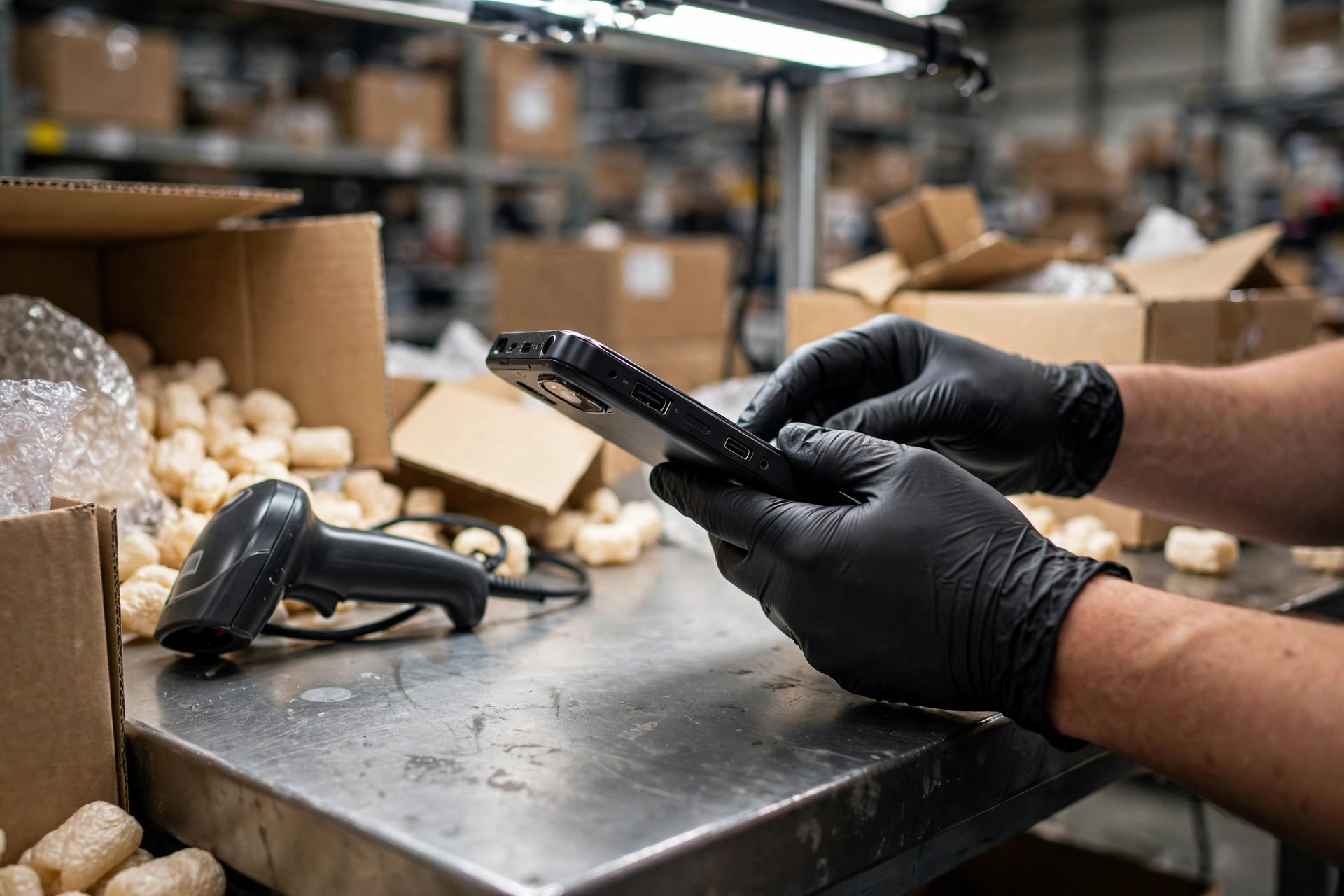
After triage, the real bottleneck is the inspection bench. An inspector gets about 30 seconds per return to decide: can this still be sold, and through which channel? So the grading standard has to be dead simple. I use four grades:
Grade A, like-new and resalable: tags and packaging intact, straight back to the pick location. Grade B, damaged packaging but the product is fine: repackage, then mark down or move to the clearance area. Grade C, needs repair, cleaning, or refurbishment: hold in a pending area until there's a big enough batch to process together. Grade D, dead: photograph it, then destroy or donate per the seller's instructions.
The simpler the standard, the faster the inspectors — and the fewer arguments with sellers. Never build a seven-grade system. Inspectors can't remember it, and sellers can't read it.
Photographs are your lifeline when reconciling with sellers. Every Grade C and Grade D item gets a photo of the product together with its return-reason tag, and the photo ID is tied to the return order number in the system. I have watched too many 3PLs and sellers blow up at month-end reconciliation, and the root cause is always the same: nobody can prove whose fault the damage was. With photos, that fight never starts.
Week two onward: restock fast, settle the money early
Grade A returns should be back in sellable inventory within 48 hours. The logic is simple: after Q4 comes Valentine's Day and spring launches, and every day a like-new return sits in the returns area is a day it isn't earning. My setup puts a "fast restock lane" right next to the inspection bench — Grade A items skip staging entirely, go from inspection to the shelf, and the system books the return receipt and the putaway in one move.
Grades B and C run on a separate track. B goes to clearance or gets packed back to the seller per their instructions; C accumulates for batch rework — repair, refurbish, relabel. The key here is agreeing on a "silence rule" with the seller in advance: for example, if Grade C items get no disposition instructions within 15 days, the warehouse automatically marks them down or disposes of them per the agreed policy. Without that rule, your returns area becomes the seller's free long-term storage, and it only grows.
On money: negotiate returns processing fees before the flood. 3PLs typically charge per unit or per labor hour for returns, and when volume runs three to five times normal, you want tiered pricing locked in ahead of time. The worst situation I've seen: no returns pricing agreed in advance, the January invoice lands, the seller sees returns processing cost more than storage, and the relationship explodes. Negotiate early, put it in the rate card, and everyone sleeps better.
A note for sellers: the returns flood is prepared three months ahead
Finally, for the sellers reading this. Every October, send your warehouse a returns forecast: expected volume, main categories, whether you need extended processing time. Platforms usually stretch the return window into late January, and returns arrive in three waves: impulse-buy returns in the first week after Christmas, "didn't fit" returns in mid-January, and "used it and returned it" at the end of the month. Share that rhythm with your warehouse and they can actually staff for it.
And make your customer service team fill in return reason codes properly. "Defective" and "ordered wrong item" go down completely different tracks: the first may land in Grade C or even trigger a supplier claim, the second is usually Grade A straight back to the shelf. Garbage reason codes mean garbage grading, and your resale data downstream is garbage too.
Returns processing is never about one heroic day. It is about not dropping the ball on any of the thirty days. Triage, inspect, restock, reconcile — if any link clogs, the returns spend the new year in your warehouse. Agree on the rules in advance, then run the script when the flood comes. Simple to say. Fewer people actually do it than you'd think.