Let me tell you something. Fifteen years behind the wheel, and the sharpest tool I own is my eyes. What I'm sharing today is the parcel account split playbook I picked up from all those years on the road: I can look at freight sitting on a dock and tell you whether that shipment is making money or losing it.
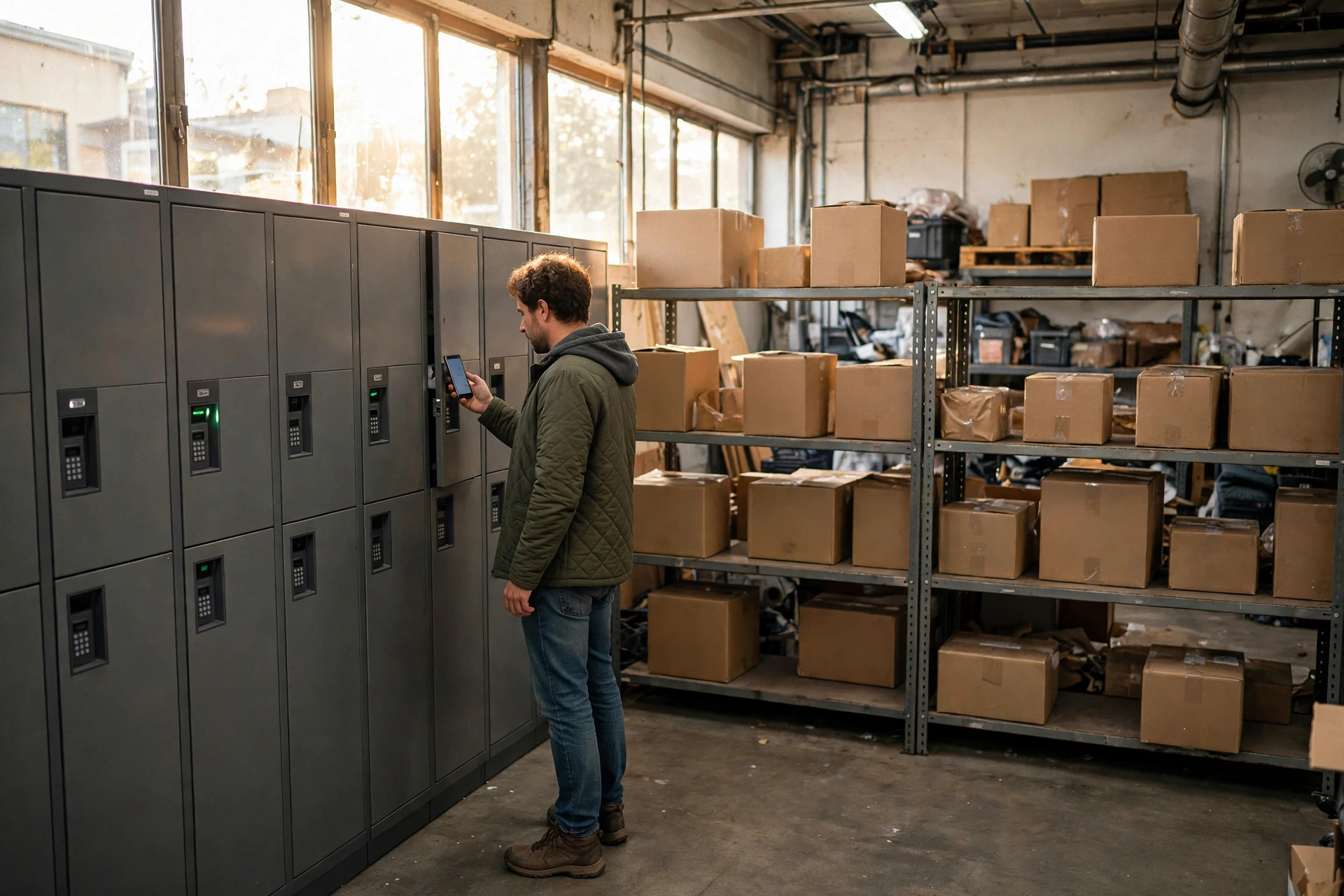
Last fall I was waiting to get loaded outside a fitness equipment warehouse in Rancho Cucamonga. Next to me, a young guy was slapping UPS Ground labels on a pallet of goods — 70-plus-pound weight plates, one plate per box, one label per box. I stood there watching, and honestly, it hurt. That wasn't shipping. That was donating money to the carrier.
Then in November, a customer in Ontario who sells solid wood furniture — every nightstand 60 to 80 pounds, all going out Ground. Peak season hit, surcharge stacked on surcharge, and by month-end he told me, "Shifu, I'm not selling furniture. I'm working for UPS."
One Account for Everything Is Where the Money Dies
Both sellers bled from the same wound: one account, one lane, light freight and heavy freight squeezed through the same pipe. The whole idea of a parcel account split is one sentence — stop making light boxes and heavy boxes share the same road.
Ground parcel service prices by the piece. The heavier the piece, the uglier the price, and past a certain weight the curve bends straight up. LTL, on the other hand, prices by the pallet — stack as much as you can on one pallet and the per-unit cost drops. Two different businesses, two different pricing logics. Force heavy freight through the small-parcel logic and of course it costs a fortune.
Drawing the Line: Weight, Size, and Speed
After all these years on the road, I've learned the split comes down to three measurements:
Weight first. Seventy pounds is the line in the sand. UPS Ground officially goes up to 150 pounds per piece — that's the published rule. But my experience says once you're past 70, small-parcel pricing climbs faster than LTL. Under 70 pounds, Ground is home. Over 70, get an LTL quote before you do anything else.
Size second. Some freight isn't heavy but it's big — dimensional weight does the damage. Nightstands, flat-pack furniture, gym equipment: light on the scale, scary on the tape measure. Palletize that stuff and send it LTL instead of cramming it into a parcel lane.
Speed third. This is the one people forget. LTL runs a day or two slower than Ground. If you promised next-day delivery, keep that order on express parcel. A parcel account split is not a meat cleaver — it's a sorting knife. The unhurried heavy stuff goes LTL; the urgent and the light stay parcel.
Run every shipment past those three checks and the right lane picks itself.
Splitting Parcel Accounts: Four Accounts, Four Jobs
More accounts isn't automatically better. What matters is that each account has one job. Here's the setup I walk sellers through:
Account one: your own UPS or FedEx account. Daily light parcels go here. Billing terms, monthly invoicing, the routine stuff — this is your foundation.
Account two: an aggregator platform. Pirate Ship, Shippo, that crowd. Small sellers can't negotiate discounts on their own volume, so you borrow the platform's volume and print at their discounted rates. Light parcels often come out cheaper here than on your own account. Check each platform's official site for current pricing — don't trust anyone's old screenshots.
Account three: an LTL carrier account. Estes, Old Dominion, Saia — open a direct account with one of the big less-than-truckload carriers. Heavy and palletized freight goes here. First-timers are always scared of LTL: scheduling pickups, building pallets, filling out a BOL. But I'll tell you, once it clicks you'll wonder why you waited — and here's the bonus nobody mentions: freight on a pallet takes less beating than single boxes tumbling down a conveyor. Damage claims drop.
Account four: a regional carrier. Find a regional parcel carrier strong in the zone where most of your orders land. West Coast orders on a West Coast regional — faster and cheaper. This one's the cherry on top; add it once volume justifies it.
Four accounts, four lanes. Orders come in, get sorted by the three checks, labels print from the matching account. That's the complete parcel account split playbook.
Parcel Account Split: The Math on 100 Shipments
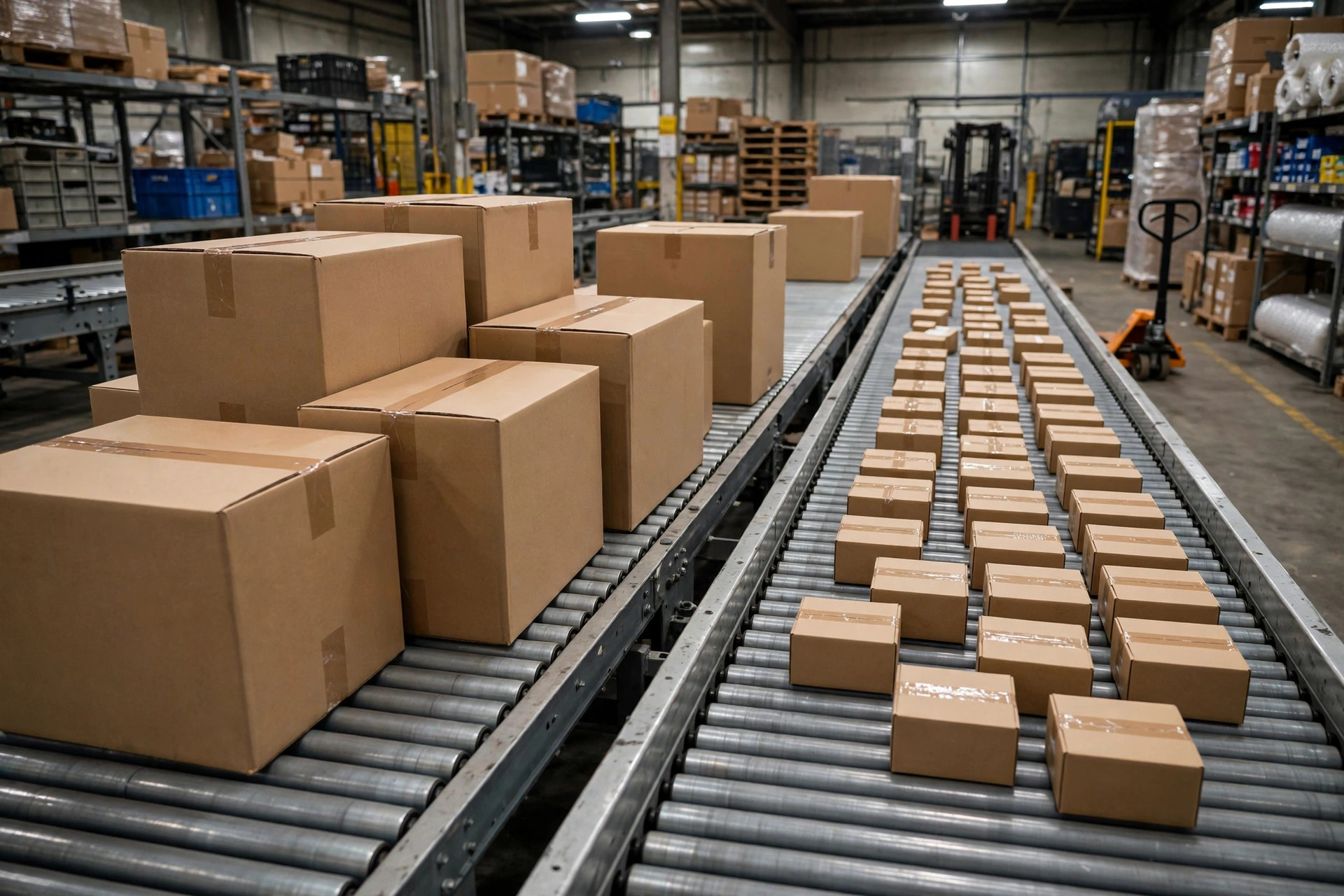
Talk is cheap, so let's run the numbers. Say a seller ships 100 orders a month: 70 light parcels under 10 pounds, 30 heavy ones between 70 and 100 pounds.
Before the split: all 100 go Ground on the seller's own UPS account. The 70 light ones price out fine. But those 30 heavy parcels cost several times more apiece — together they routinely eat more than half the total freight bill. Heavy freight burns the money; light freight just watches.
After the split: the 70 light parcels move partly onto the aggregator account at discounted rates; the 30 heavy ones get stacked onto a few pallets and roll LTL. One pallet's LTL price, spread across every heavy piece on it, lands far below per-piece Ground. Month after month, the savings are on the order of half a headcount — money that goes straight back into margin.
How much exactly? Rates change every year, so check the carriers' official published pricing — I'm not going to invent numbers for you. But the logic is fixed: parcel charges by the piece and punishes weight; LTL charges by the pallet and rewards it. If a steady chunk of your freight is heavy, the split always pays.
Now the counterintuitive part: most sellers think LTL is a big-seller game. It's the opposite. Small sellers ship fewer orders, so heavy freight takes a bigger bite of their cost structure — every dollar the split saves drops straight to profit. Big sellers have negotiating leverage. Small sellers don't, so they need structural moves like this instead of discounts.
And the honest trade-off: LTL saves money but costs you hassle. Building pallets, booking pickups, waiting on the truck — more work than slapping a label on a box. If you've only got two or three heavy shipments a month, opening an LTL account and learning to palletize may not be worth it. My rule of thumb: ten or more heavy shipments a month, do the split. Under ten, piggyback on your 3PL's LTL account first and see how it feels.
Three Pieces of Straight Talk for Sellers
First: sort your shipments by weight and count how many are over 70 pounds. If you don't know your own heavy-freight count, you're not ready to talk about splitting. Pull the data — the answer will speak for itself.
Second: don't worship one account, and don't hoard accounts either. Four is the ceiling, not the starting line. Add the aggregator first and eat the light-parcel discount; open LTL once the heavy volume is steady. One step at a time.
Third: rates can be negotiated, but a split can't be negotiated away from you. Discounts change every year, policies change every year — but "heavy goes LTL, light goes Ground" is a skill that lives in your operation, and nobody can take it from you.
There's an old saying where I come from: someone will always take a risky deal, but nobody runs a business to lose money. Every dollar freight eats is a dollar you could have kept. Split early, save early.
By Shifu Zhao, Trucking Veteran (15 yrs)