Do you run every single order through the same shipping account? Then you're probably paying a laziness tax. Heavy freight and small parcels were never meant to travel the same way, and forcing them through one channel means you overpay on both ends.
Back in 2019, I ran a 30,000-square-foot warehouse in Chino, California, and one invoice finally pushed me over the edge: a 180-pound fitness equipment part shipped Ground to Texas cost nearly $200. The same shipment on an LTL carrier came in under $120. Meanwhile a 3-pound accessory cost more on LTL's minimum charge than three Ground shipments combined. One account, one process, losses on both sides. Splitting shipments across channels isn't advanced logistics. It's just common sense with a spreadsheet.
Where to Draw the Line
The industry's rule of thumb is 150 pounds. That number isn't magic — it's convention. LTL carriers generally start accepting freight above 150 pounds, and parcel Ground services top out at 150. But here's what took me a few expensive years to learn: drawing the line on weight alone will burn you.
What actually drives cost is density, not weight. A 100-pound box of foam packaging is enormous; Ground bills it on dimensional weight, which can exceed the actual-weight price. A 120-pound steel plate is compact and ships Ground cheaply. The rule I run in my warehouses looks at three lines at once: anything over 150 pounds goes LTL automatically; anything between 70 and 150 pounds with one side over 48 inches gets quoted both ways before deciding; and low-density freight under 6 pounds per cubic foot goes into the LTL comparison pool even below 100 pounds. The 70-pound and 6-pounds-per-cubic-foot figures came out of my own shipping data — your product mix will give you different numbers. Run a month of actual invoices and let the bills draw the line for you.
And one hard verdict: if your warehouse ships fewer than 3,000 orders a month, don't bother building an LTL split operation. LTL means scheduling pickups, preparing bills of lading, and coordinating driver time windows. Below that volume, the management overhead eats whatever you save on freight. Three thousand is an experience-based threshold, not a law — the heavier your average shipment, the lower your break-even point.
Setting Up Your Accounts
Splitting only works if you have more than one channel in hand. The four platforms warehouse operators use most — Pirate Ship, Shippo, ShipStation, and Easyship — are all easy to open, but each has its own personality.
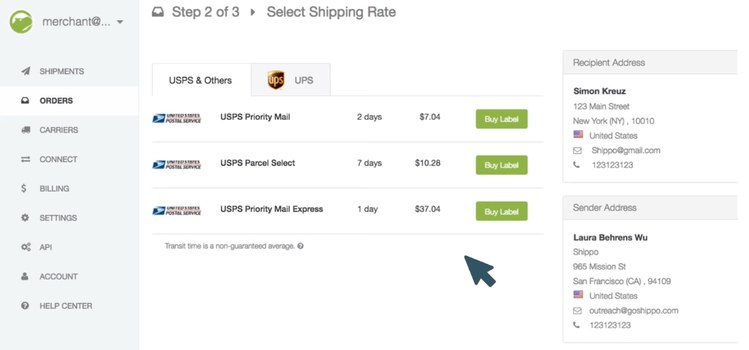
Pirate Ship charges no monthly fee and passes discounted UPS and USPS rates straight to small shippers. For a warehouse just getting started, it's the friendliest way to move Ground parcels. Shippo also works on a pay-per-label model with a clean API, which suits operations that already run a WMS and want label printing embedded in their own workflow. ShipStation is subscription-based with the deepest feature set — multi-store, multi-warehouse, multi-carrier management in one place — but the monthly fee has to be amortized against real volume, so do that math first. Easyship shines on cross-border: international parcel and DDP quotes are comparatively transparent, though it offers less advantage for purely domestic US shipping.
Three practical notes on onboarding. First, open the free tier or trial on every platform you're considering, run quotes for your five most common shipment profiles across three destination zip zones, and only then pick your primary. Never decide on a sales rep's promises. Second, don't try to negotiate LTL inside these parcel platforms — LTL needs its own carrier or forwarder contract with negotiated rates. Pirate Ship and its peers solve the small-parcel side. Third, treat every published rate and discount as provisional: check each platform's latest published rates on its own website before signing anything, because programs change and verbal discount claims are worth nothing.
How to Price the Same Shipment Twice
Theory is cheap. Here's the five-minute comparison routine my warehouses actually use.
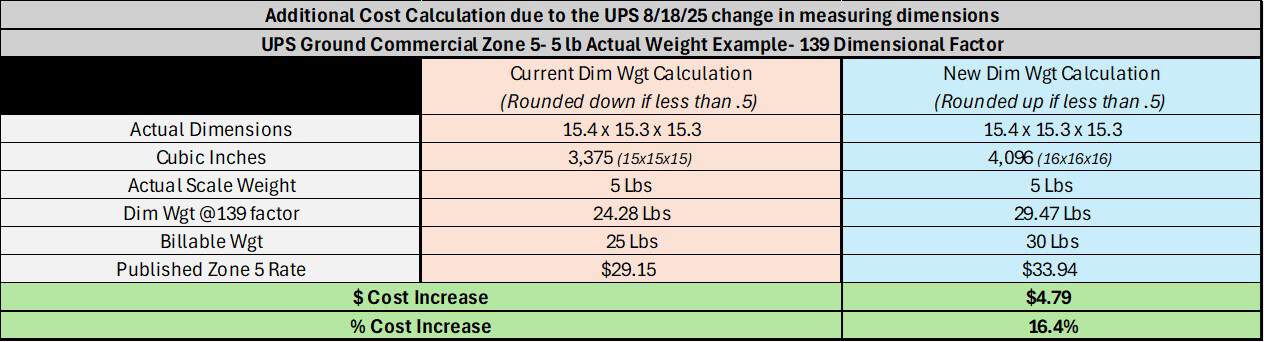
Take a real shipment: 220 pounds on a 48×40×36-inch pallet, Los Angeles to Chicago. Step one, get a quote from an LTL carrier and a Ground quote for the identical weight, dimensions, and zip codes. Step two, ask whether the LTL quote is truly all-in — liftgate service, residential delivery, and inside delivery are excluded by default, and every fee you forget to ask about shows up on the invoice later. Step three, recheck the Ground quote against dimensional versus actual weight, whichever is greater. Beginners quote on actual weight and discover dimensional pricing at checkout.
The numbers below are illustrative only — I made them up to demonstrate the method, not to represent real rates. Always check each platform's latest published rates. Say LTL comes back all-in at $260 and Ground on dimensional weight at $340: ship LTL, obviously. But drop that shipment to 90 pounds at the same dimensions, and LTL's minimum charge might be $180 against Ground's $150 dimensional quote — the answer flips. The dividing line isn't a number you decree; it's a number that emerges from quoting every shipment both ways for two weeks. After that, you'll know your own flip point by heart.

The LTL Traps That Ambush First-Timers
LTL is cheaper on paper, and the traps are priced accordingly. The first is reclassification. LTL pricing depends on the freight class (NMFC code) you declare; if the carrier's inspection disagrees with your classification, they reclassify and bill the difference plus a fee. The worst case I ever saw: a shipment declared as "plastic accessories" got reclassified as "machinery," and the surcharge exceeded the original freight bill. My rule since then: every LTL shipment's commodity description must match the logic of its purchasing HS code. No vague words, ever.
The second trap is reweigh. The carrier's floor scale says your freight weighs more than you declared, and you pay the difference at the higher rate plus a reweigh fee. The fix is unglamorous but effective: keep a floor scale in the warehouse, weigh every LTL shipment yourself before it leaves, and photograph the scale. When there's a dispute, the photo is your evidence.
The third is the residential surcharge. LTL quotes assume commercial delivery addresses. Deliver to a residential address and the surcharge typically starts in the triple digits — check the carrier's tariff for the exact figure. Warehouses shipping to end consumers walk into this one constantly. Verify the address type before you book, not after the invoice arrives.
The last trap is the deadliest: getting your accounts banned. Some warehouses open multiple accounts under different company names to stack new-customer discounts, or spin up a fresh account after one gets suspended. Platform risk systems are sharper than you think — addresses, tax IDs, IP addresses, and labeling patterns all feed the profile. Once accounts get linked, they get shut down together, and freight already in transit can get held. You can negotiate discounts. Don't play games with accounts — one ban costs ten times whatever discount you were chasing.
As for what to do tomorrow morning: don't try to build the perfect system in one go. Do three things tomorrow: pull last month's orders over 70 pounds and count how many should have gone LTL; open free accounts on Pirate Ship and Shippo and quote your five heaviest shipments on both; and if the warehouse has no floor scale, order one. Run the data for two weeks and your dividing line will draw itself. Freight savings are never negotiated at the table — they're calculated one invoice at a time.