Let me open with the numbers.
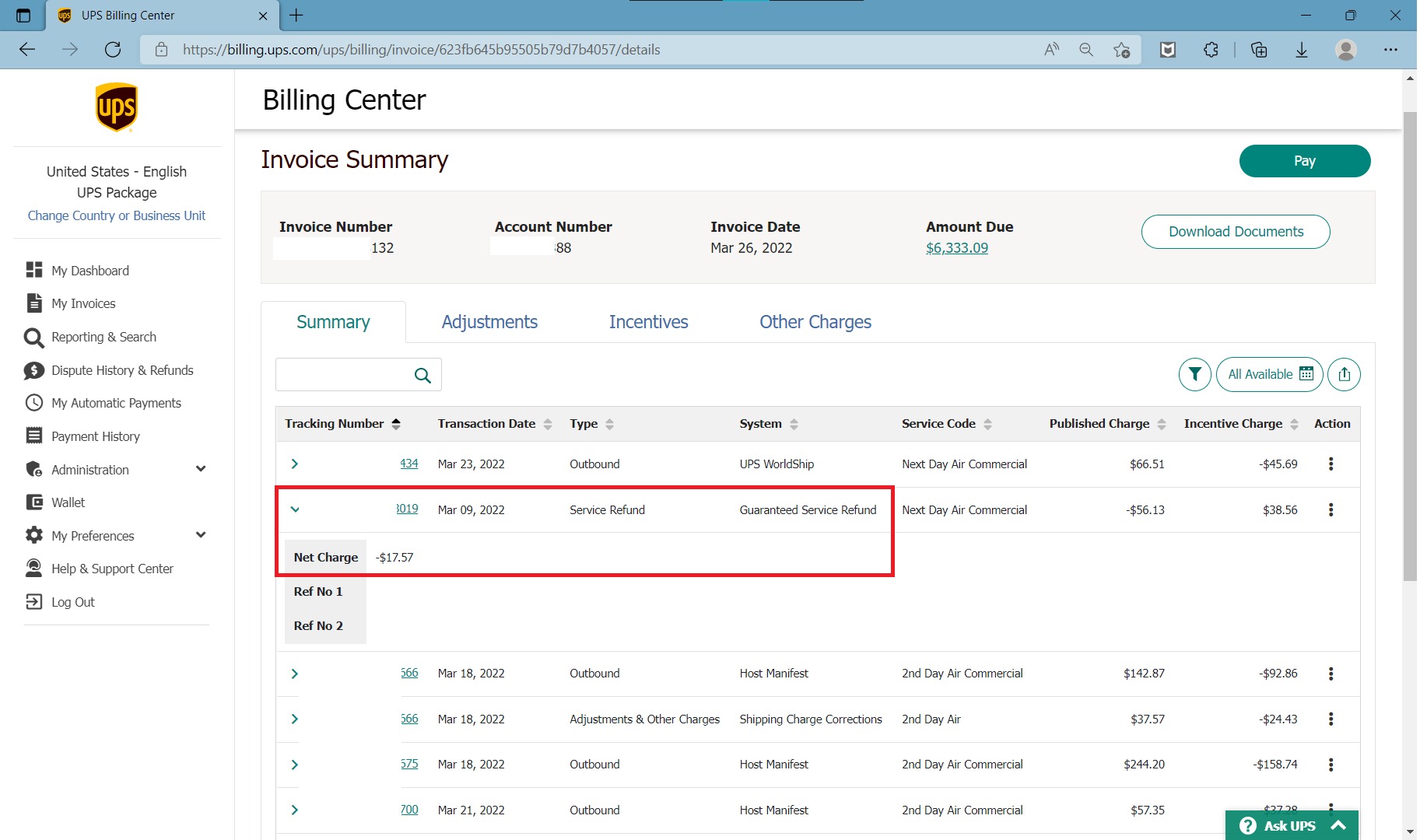
In March 2026, a home-goods e-commerce seller in California shipping roughly 4,000 parcels a month caught something odd during reconciliation: one FedEx shipment showed $30.60 on the shipping label but $51.40 on the monthly invoice. Same tracking number. A $20.80 gap.
The cause? The package actually weighed 20 lbs. FedEx billed it at 51 lbs, citing a dimensional weight recalculation. The customer re-measured the box and ran the official DIM formula — the real dimensional weight was 26 lbs. That 51 lbs was simply the carrier's measuring equipment having a bad day.
They filed a claim. The $20.80 came back.
Then they did something smarter: they audited the full prior three months of invoices. Total recovered: $11,700. They had not audited a single invoice in the two years before that.
That is the entire logic of a parcel invoice audit: if you don't check, the money evaporates quietly; if you do, a meaningful slice of it comes back. Industry research commonly puts the recoverable error range at 3–7% of parcel spend (an industry research range, not a guarantee — your actual recovery depends on how rigorously you audit). Run that range against a company spending $100,000 a month on parcel: $36,000 to $84,000 a year sitting on the table.
Where the Money Leaks: The Usual Overcharge Suspects
The first step of any parcel invoice audit is knowing where overcharges concentrate. UPS and FedEx invoices run hundreds of lines, but the errors cluster tightly:
| Overcharge type | Typical trigger | Per-shipment magnitude | Recoverable? |
|---|---|---|---|
| DIM (dimensional weight) billing errors | Scanner misreads, crushed boxes measured at larger dimensions | $5–25 per shipment | Yes — re-measured dimensions are your evidence |
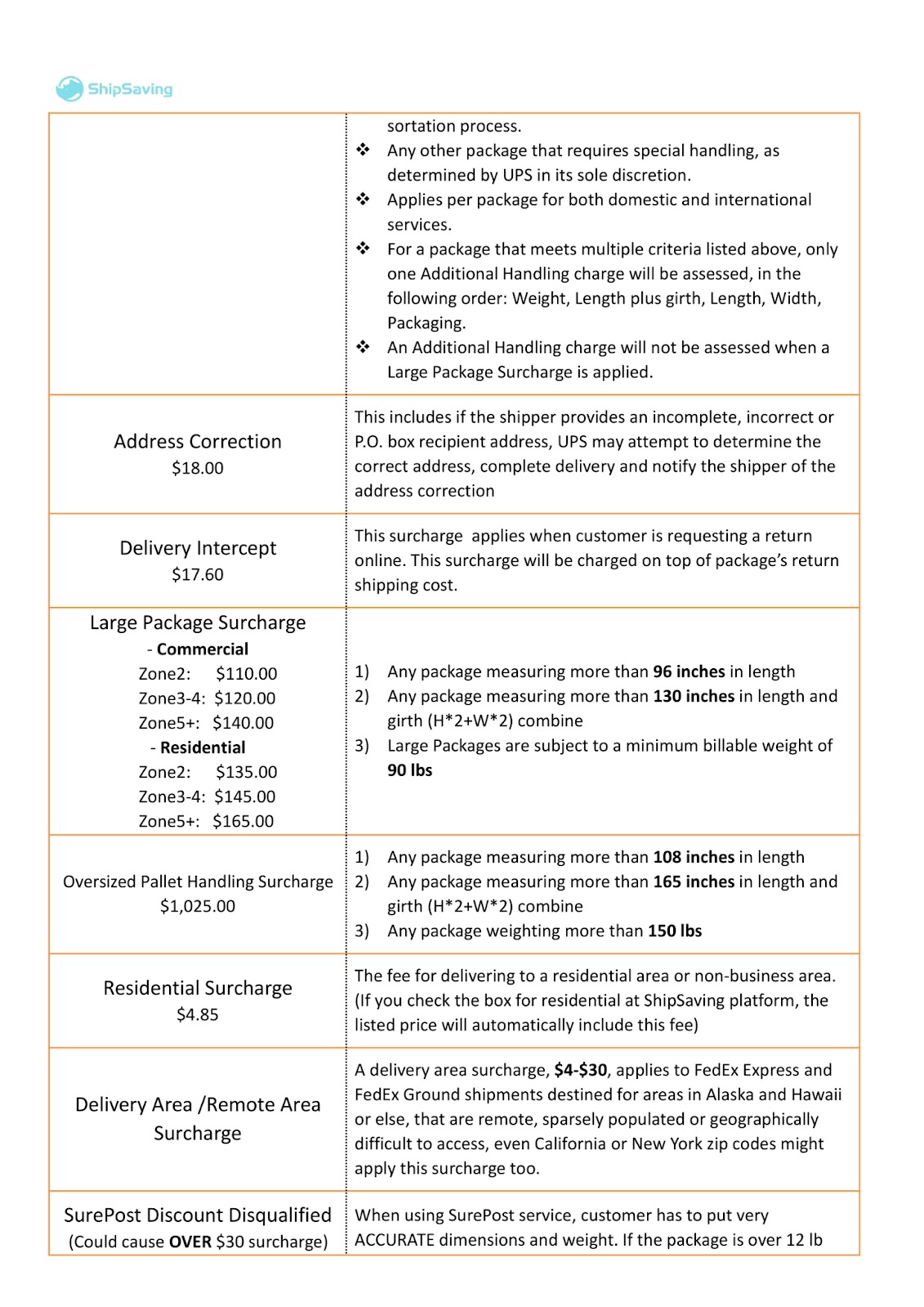
| Address correction fees | Missing suite number, system "corrects" and charges | about $18–20 per shipment | Partially — prove the address was correct |
| Residential surcharges | Commercial address misclassified as residential | about $4–5 per shipment | Yes — provide proof of address type |
| Manual processing / late tender fees | No electronic manifest, data entered after the fact | about $5 per shipment | Hard — this is a process problem, prevent it instead |
| Duplicate surcharges | Same fuel or remote-area surcharge billed twice | A few to about $15 | Yes — line-item comparison catches these |
| Weight-tier jumps | A 19.9 lb package billed at the 20 lb tier | The tier rate difference | Yes — demand re-rating at actual weight |
Notice the pattern: overcharges are almost always wrong billing inputs, not wrong rates. Your negotiated rates are contractual and rarely move. But weight, dimensions, and address classification — the inputs that feed the rate engine — get corrupted constantly. So the audit has exactly one job: verify the inputs, not the rates.
Second case. In November 2025, an auto-parts distributor in Illinois shipping about 2,500 parcels a month found a systemic error during an audit: 300+ shipments to the same industrial park had all been hit with residential surcharges. UPS's address database had tagged one building in the park as mixed-use. One bulk claim, plus a whitelist request for the address, recovered $1,460 — and saved $400–500 every month after. That is the compounding effect of an audit: a one-time correction plus a permanent rule fix.
How to Run Your Own Parcel Invoice Audit in Four Steps
No consultants needed. Here is the process:
Step 1: Export invoice detail and build a reconciliation sheet. Pull the last three months of detail from UPS Billing Center or FedEx Billing Online as CSV. Key columns: tracking number, billed weight, billed dimensions, service type, base charge, each surcharge, total. Add a column for your own label cost per tracking number, sort by the variance — start with the biggest gaps.
Step 2: Re-measure and attack DIM errors. This is the highest-ROI step. Pull a random sample of 50 larger shipments, re-measure length × width × height, and compute dimensional weight with the official divisor (139 for inches and pounds). Flag anything off by more than 2 lbs. In the cases I have worked, DIM errors account for over 40% of recovered dollars. Document your evidence: photograph the re-measured box with the scale reading in frame.
Step 3: Sweep surcharges for "shouldn't be there" and "billed twice." Pivot by surcharge type. Focus on three buckets: address corrections (were those addresses actually wrong?), residential surcharges (check the address classification), and any surcharge appearing twice on one shipment. File systemic issues as bulk claims — far more efficient.
Step 4: File claims and follow through to credit. Both carriers have online claim portals. File per tracking number or in bulk, attach your evidence (re-measurement photos, address proof). Claims have filing deadlines — check the carriers' official sites for the current policy, because the windows change and old blog posts lie. The disciplined move: pick one day each month to audit the prior month's invoices. Stay permanently inside the window.
The Counterintuitive Part: Small Shippers Need This More
Most people assume invoice auditing is a big-shipper game. Small shippers, few parcels — not worth the trouble.
The math says the opposite. Large shippers have dedicated logistics teams and negotiated discounts; their base rates are lower, so the error share shrinks. Small shippers pay higher base rates and nobody reconciles anything — the errors sit in the ledger at full value. And with low volume, the audit is cheap: 500 shipments a month takes one afternoon to review. Audit ROI is inversely proportional to company size. The smaller you are, the more it pays.
One more trade-off people get wrong: should you hire a third-party audit service? They typically take 30–50% of recovered amounts as contingency. My rule is simple: under $50,000 a month in parcel spend, do it yourself — the contingency isn't worth it. Above $50,000 with five-figure monthly shipment counts, outsourcing can make sense, but the contract must be contingency-only with zero fixed fees. Otherwise you are just creating a new line item of wasted money.
The Closing Calculation: What You Can Recover This Year
The formula is simple:
Annual recovery ≈ monthly parcel spend × 12 × error rate × recovery success rate
- Monthly spend: you know this from your invoices
- Error rate: use the industry research range of 3–7%; be conservative at 3%
- Recovery success rate: with a serious DIY audit, estimate 60–80%
Example: a company spending $80,000 a month on parcel:
| Error rate assumption | Annual spend base | Error amount | 70% recovery rate | Expected recovery |
|---|---|---|---|---|
| 3% (conservative) | $960,000 | $28,800 | 70% | $20,160 |
| 5% (neutral) | $960,000 | $48,000 | 70% | $33,600 |
| 7% (optimistic) | $960,000 | $67,200 | 70% | $47,040 |
This money requires no extra shipments, no rate negotiation, no carrier switch. It is your own money, sitting in someone else's ledger. The only cost is one afternoon of auditing.
Whether that money was wasted is your call. But the math is done.
By Lao Zhou, Logistics Cost Analyst