A warehouse owner doing 3,000 orders a month asked me if he should go RF. My answer: not yet.
I've given that answer more than once. RF is good gear — but good gear has a minimum order volume to make sense. At three or four thousand orders a month, paper pick lists plus a barcode scanner deliver accuracy and throughput that are more than good enough. Pocket the money you'd spend on RF terminals and put it into cleaning up your slotting instead. The payback is bigger.
Early in 2025 I visited a 20,000-square-foot 3PL warehouse in California's Inland Empire. The owner had just bought a fleet of RF terminals, determined to modernize in one jump. Come peak season, the pickers were back on paper. The RF task queue couldn't keep up with the walking routes they knew by heart, and the terminals ended up locked in a drawer. That warehouse never had an equipment problem. It had a process problem.
Paper-plus-scan sounds old-fashioned, but the logic is sound: the paper tells you where to go, the scan confirms you grabbed the right thing.
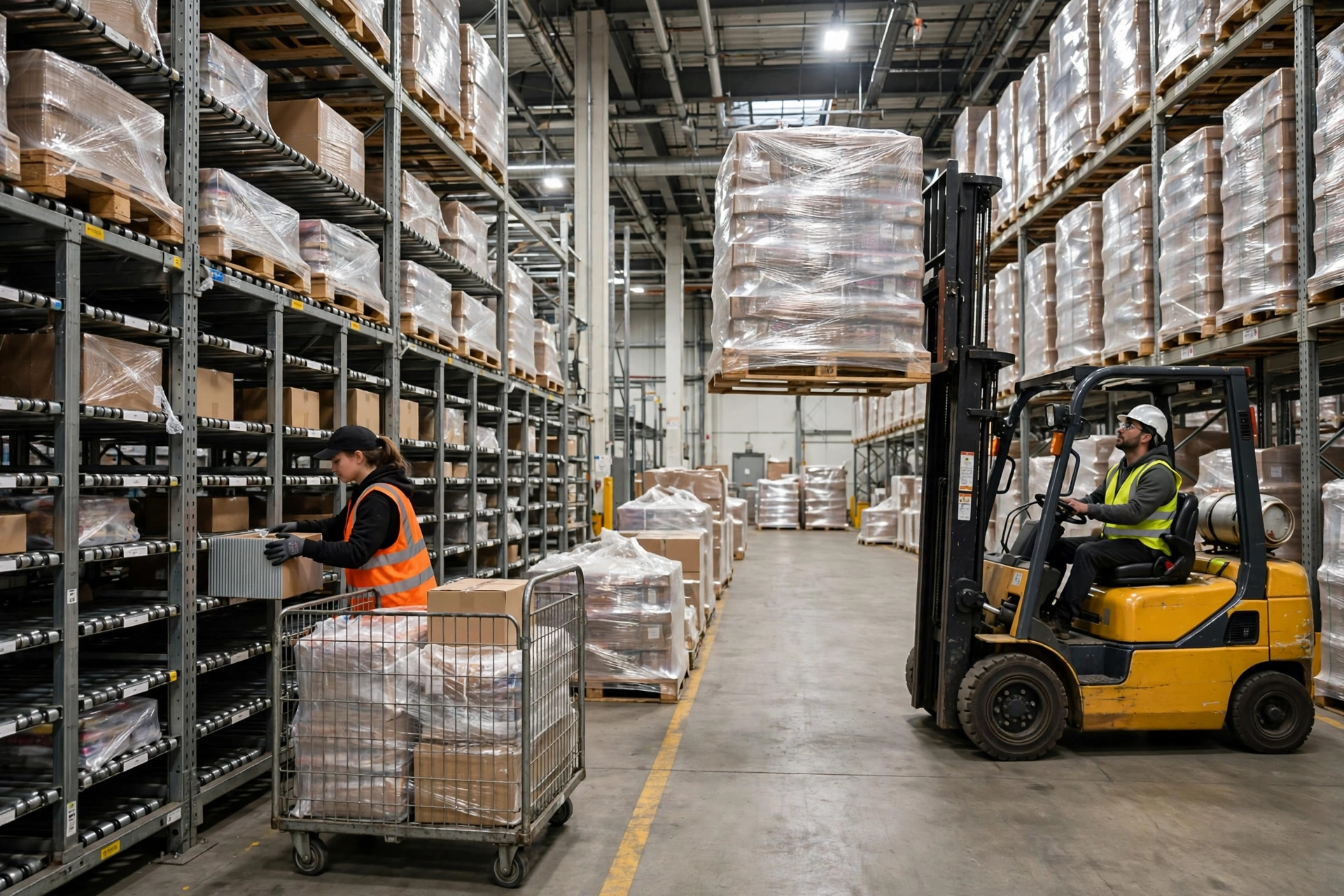
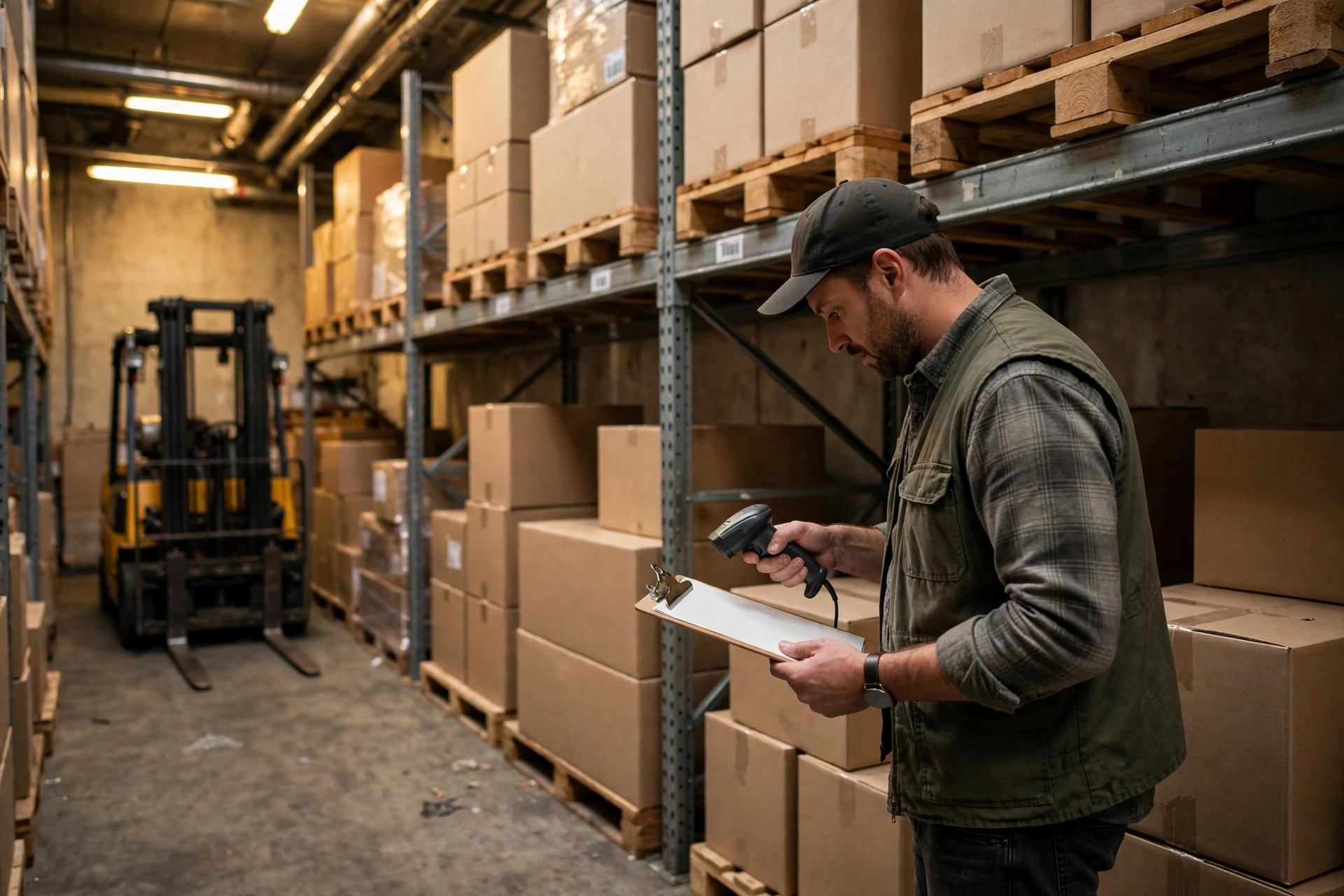
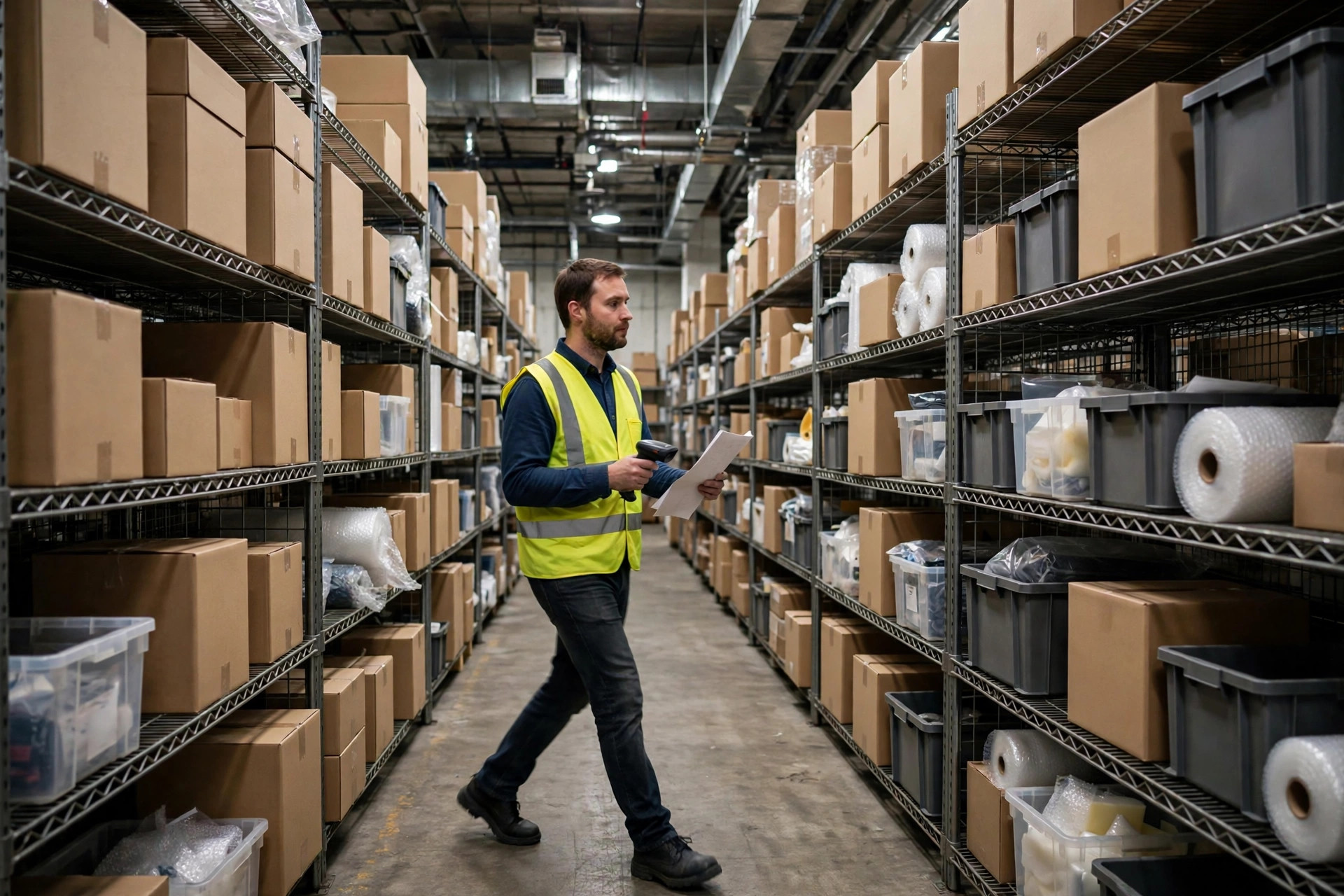
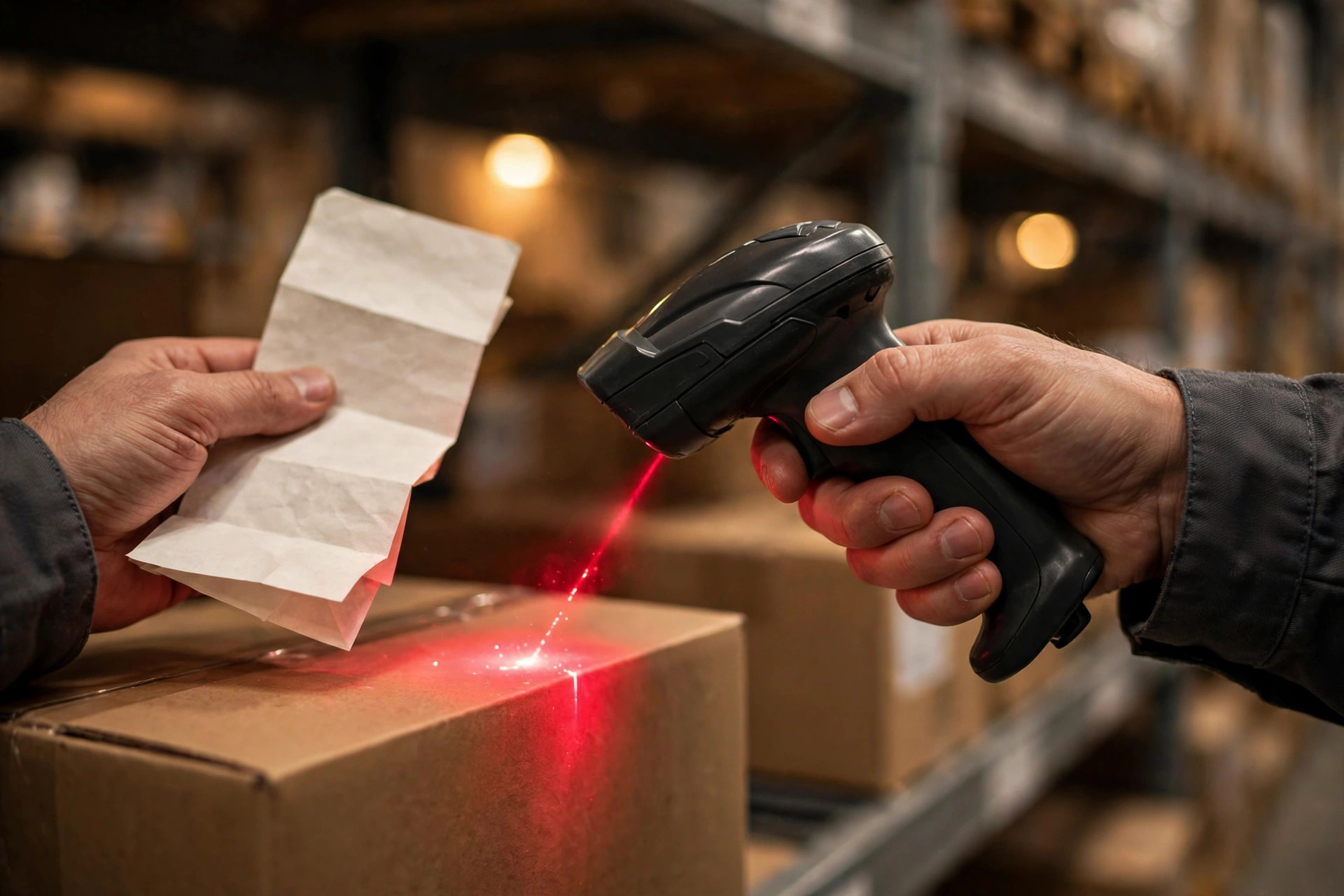
Here's the standard flow. Orders print in waves from the WMS, and the lines on each pick list are sorted by bin location — not by order line. A lot of people miss this detail, and it's what keeps pickers from doubling back across the aisle. The picker walks the aisle with the list on a cart, scans the bin barcode when they arrive, then scans the product barcode when they grab the item. The scanner feeds a validation screen on a nearby computer or inside the WMS. Wrong scan, and you get that long angry beep — the pick can't proceed until the scan matches the list. Those two scans catch two different errors: scanning the bin catches "wrong location," scanning the product catches "wrong item."
After twenty years in this business, I've read a lot of small warehouses' error ledgers. The expensive part of picking errors is never the extra walking. It's shipping A when the customer ordered B. In a paper-and-eyeball warehouse, wrong picks depend entirely on human attention, and attention collapses under pressure. In a paper-and-scan warehouse, the "wrong item" error gets stopped by the machine, and accuracy lands at a level any small operation can live with. The extra value RF brings at this volume — real-time task interleaving, dynamic replenishment direction — is wasted on three or four thousand orders a month. Your pick area is only so big; your pickers know where everything is with their eyes closed.
Why the Low-Tech Approach Holds Up
Here's a counterintuitive take: for a small warehouse, the real bottleneck in picking isn't speed. It's accuracy, and time spent hunting for product.
Time spent hunting depends on how clean your slotting is, not on whether you use paper or RF. A warehouse with a messy bin system will hunt for product all day on RF too — the terminal just delivers the wrong location information faster. And accuracy is already handled by the scanner. An entry-level scanner like Zebra's DS2208 costs a fraction of one RF terminal, and if someone drops it off a ladder, a replacement ships the same day. Corded scanners beat Bluetooth for small warehouses, by the way: no charging, no dropped connections, just buy a cable long enough to reach the top shelf.
Paper has a few stubborn advantages RF can't touch. Exception handling is visible: out of stock, the picker circles it on the list and writes "short 2," and the office sees it at a glance. On RF, exceptions go into a system workflow, and a small warehouse doesn't have the staff to chase that down. Training is fast — a new hire shadows a veteran for two rounds and they're productive, which matters when you're staffing up with temps for peak. And the most practical one: when the network goes down or the system is being upgraded, paper keeps picking. An RF terminal without connectivity is a brick. I've watched more than one small warehouse ship its whole day on paper while IT upgraded the WMS.
That said, I don't recommend paper with eyeball verification alone — that's the other extreme. Without the scan step, a pick list is just paper, and accuracy depends on character. And barcode labels need maintenance: bin labels scraped half off by a forklift, product barcodes printed blurry — the best scanner in the world can't read those. Walk the bins once a month and reprint damaged labels on the spot. That habit is worth more than any hardware purchase.
One more thing people underestimate: the scanner is also your data collection point. Every scan logs who picked what and when. When a customer claims a short shipment, you can pull the scan history instead of arguing from memory. Small warehouses skip this and then pay for it in chargebacks they can't dispute.
The Three Lines That Say It's Time to Upgrade
This is the question every owner asks. I use three trigger lines from experience — hit any one of them and it's time to talk RF.
First: monthly order volume consistently above 10,000 orders, for several months running. One peak month doesn't count. At that scale, printing, distributing, and collecting paper lists becomes a full-time job of its own, and RF's real-time task flow starts to pay for itself.
Second: error rate above 1% for two months in a row. One bad month might be a new hire or a peak-season crunch — that doesn't count. If errors stay high month after month, the problem isn't execution anymore; the process itself needs machine enforcement.
Third: the business got more complex. You're managing lot and expiry dates now, or your SKU count just doubled, and there's more verification data than fits on a printed list. That's when the forced validation on an RF screen earns its keep.
Upgrade in steps — don't jump. Step one isn't buying RF terminals. Step one is getting scan validation solid: a scanner, a validation screen, bin barcodes on every location. That's the best money you'll spend in this whole journey. Step two is RF, and be clear about what you're buying: real-time data and task direction, not faster picking. Owners who expect RF to double their pick rate end up disappointed. Voice picking and pick-to-light are another tier entirely — don't even look at them until you're pushing twenty or thirty thousand orders a month, or you'll just torture yourself.
One more honest word: most small warehouses that fail with RF don't fail because the equipment is bad. They fail because the integrator configured big-warehouse workflows. In a small warehouse, one picker does three people's jobs, and a standard RF task flow ties their hands. If you go RF, find an implementer who has actually done small-warehouse projects. That one choice avoids half the pain.
Something you can do tomorrow morning: have the office change the pick list print template to sort by bin location. Most WMS platforms default to order-line sequence, and pickers zigzag across the building because of it. Sorting by location is one setting, zero cost, and it pays off the same day. Paper pick lists aren't dead. What's dead is using them without thinking.