Let me start with a complaint: if you export fruit from Peru, the scariest part of the year is not finding orders. It is vessel schedules and reefer boxes. When blueberry season hits, every farm in northern Peru is fighting for the same reefer containers and the same sailings. You are half a day late, your cargo sits in the warehouse an extra week — and blueberries do not wait. Paita port warehouse logistics is a race against the clock, and I have run it for five seasons now.
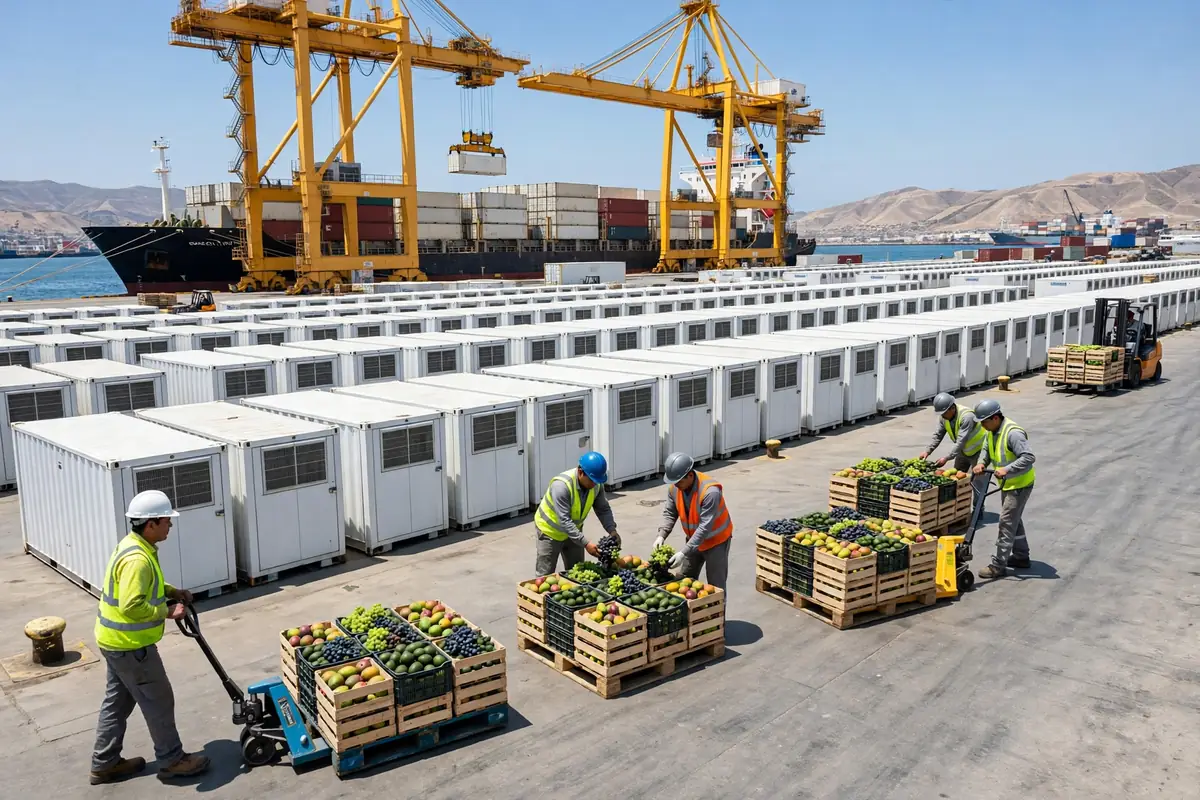
Paita sits in northern Peru. It is the country's second-largest container port. In 2024 it handled about 310,000 TEU, and by December 31, 2025 it was already at about 414,600 TEU, against an annual capacity of roughly 650,000 TEU. The port is small: 2 container berths, 360 meters of quay, around 500 vessel calls a year. The operator is TPE — Yilport and DP World, 50% each — which took a 30-year concession in 2009. Before the concession, the port saw about 300 vessel calls a year. And here is the number that defines the place: about 80% of export cargo moves in reefer containers — grapes, blueberries, avocados, mangoes, seafood. All of it hates heat.
Paita Port: A Small Port With a Big Cold-Chain Business
The first reaction most people have to Paita is: a port that small, what can it do? That is exactly the counterintuitive part. Paita is small, and that is why it wins. Peru's northern blueberries, grapes and mangoes grow around Piura, close to Paita and far from Callao down by Lima. Fruit comes off the tree and needs to get into a cold room, into a reefer, onto a ship — fast. Every extra few hundred kilometers on a truck is extra spoilage and extra risk. For fruit export, being close to the farm matters more than being a big port.
I know a blueberry grower in Piura who did the math before the 2024 season. Via Callao, the truck leg added a full day, the reefer burned an extra day of power on the road, and the loss rate crept up — and by the time the fruit arrived, it had dropped a grade and the price with it. Via Paita, the fruit is picked in the morning, in the cold room by midday, boxed in the evening, on the ship the next day. He shipped everything through Paita that year. Losses fell. Customer complaints fell. His line to me was: port rankings are for other people to look at. My blueberries only care about the shortest road from the farm.
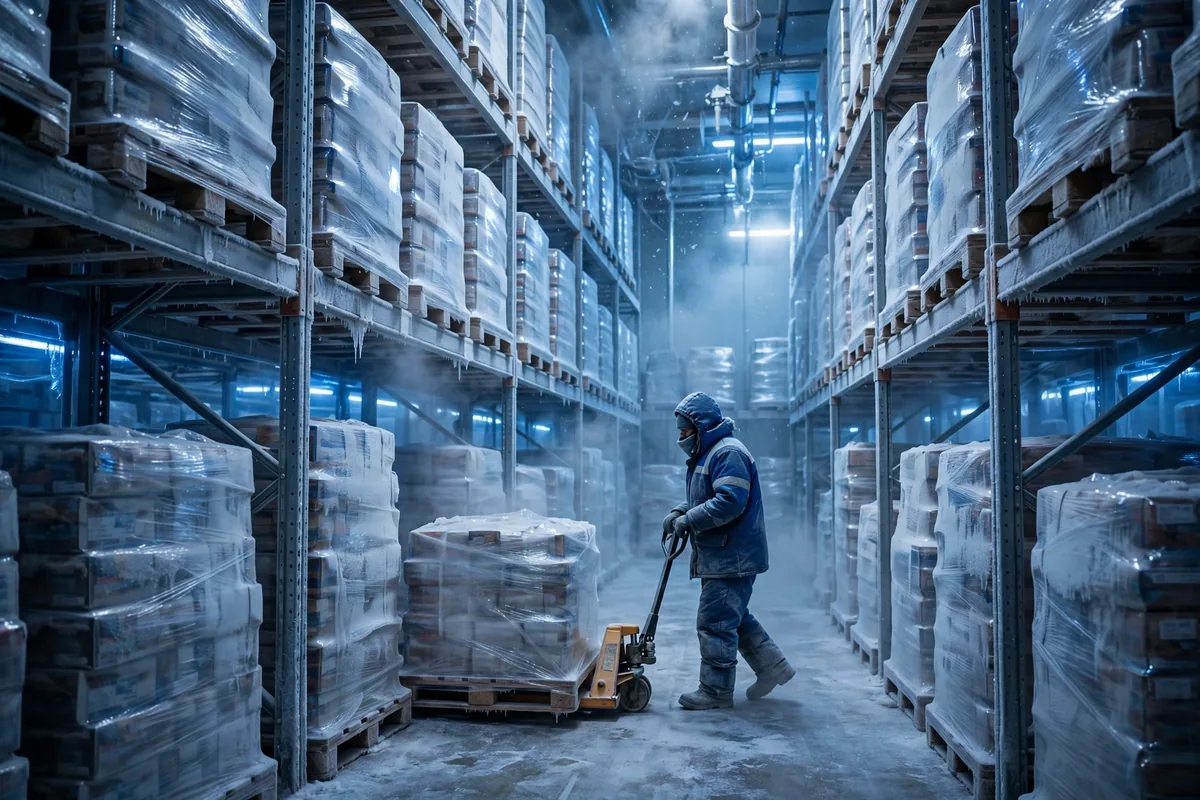
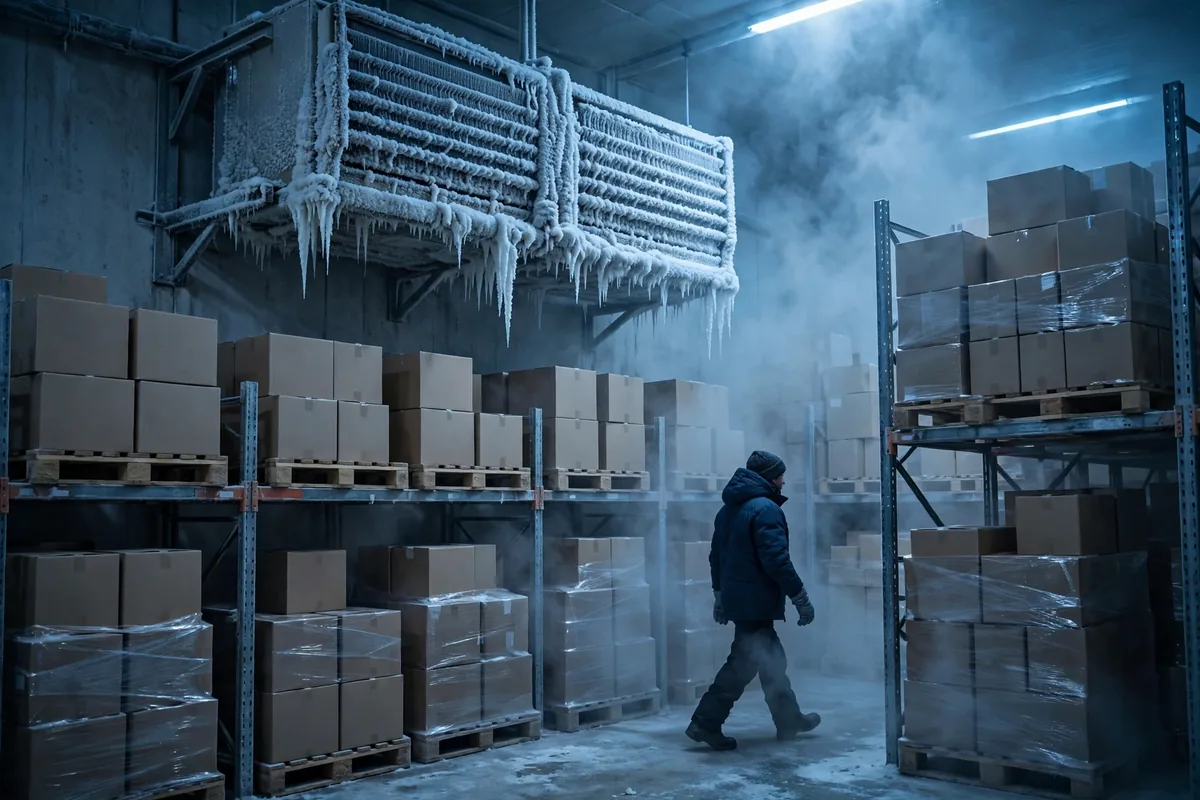
That 80% reefer share is all details, all the way down. A reefer that lands needs a plug, and plugs run out. Before loading, the box has to be pre-cooled to the set temperature — load warm fruit into a warm box and you are killing it slowly. Paita's cold-chain setup grew up around that 80%: cold rooms, pre-cooling areas, plug points, all built for fruit season. Quiet in the off-season. Fully booked the moment the season starts.
How I Schedule Blueberry Season at Paita Port
Here is how I actually do it. One month before blueberry season, I start watching three things: reefer bookings, cold-room space, and truck availability. Whichever one of those breaks, the cargo stops there.
First, book early. Peak-season reefer slots are not there when you want them — the lines give them to big customers and long-term contracts first, and spot shippers wait at the back. My approach is to give the forwarder a rough container count before the season, even if the number gets adjusted later. Get in the queue first. If you wait until the fruit is ripe to book, it is already too late.
Second, keep slack in the cold room. Harvest volume depends on the weather. Sunny weeks pick heavy, rainy weeks pick light, and the plan never survives contact with the weather. Book the cold room too tight and there is nowhere to put a big week. Book too much and you pay for empty space in the off-season. My rough rule is to book about 70% of the biggest week in recent history, and cover the rest with spot space. It costs more, but nothing gets stranded.
Third, the rhythm of trucks into the port. Paita has 2 container berths and 360 meters of quay. In peak season the trucks pile up at the gate. My fleet now runs split shifts — early morning and late morning — dodging the worst of the midday queue. The drivers complained at first about the early starts. Then they did the math: two fewer hours in the queue means one more run a day, and suddenly the early starts looked fine.
What Missing One Sailing Actually Costs
Time for the money part. This is my own arithmetic on my own cargo. All figures below are a scenario illustration / hypothetical example — do not apply them directly to your shipments:
| Item | Made the sailing | Missed one sailing |
|---|---|---|
| Extra cold storage | 0 days | 5–7 extra days, power and storage fees climbing |
| Fruit condition | Arrives as planned | A week older, likely down a price grade |
| Next sailing | — | Wait for the next one, and the buyer may source elsewhere |
| Cash flow | Paid on schedule | Payment pushed a week, and peak-season cash pressure doubles |
See the pattern? Missing a sailing does not cost you freight. It costs you the whole chain: condition, customer, cash flow, one link after another. Some people say a small port with few sailings is a weakness. I see it the other way: few sailings means fixed sailings. You know which day of the week the ship leaves, so you can schedule harvest and packing to the day. A big port has more ships, but your box is one of thousands in the queue, and you never really know when it sails.
One warning before I finish: the TPE concession runs to around 2039, the port has been adding capacity and equipment, and 2025 volume already hit about 414,600 TEU against roughly 650,000 TEU of annual capacity. As capacity fills up, peak-season congestion only gets worse. My bet for the next two or three years is that the fight in Paita port warehouse logistics will not be over freight rates. It will be over cold-room space and reefer plugs — whoever locks those in early is the one who actually ships.
This one I have tested myself, and it works: one month before the season, lock in the three things — bookings, cold-room space, trucks — write them on a sheet of paper and stick it on the wall. However busy blueberry season gets, follow the paper, not your gut. Paita is not a big port, but if your rhythm is right, it is the smoothest road out for fruit from northern Peru.
By Ah K, E-commerce Seller (5 yrs)