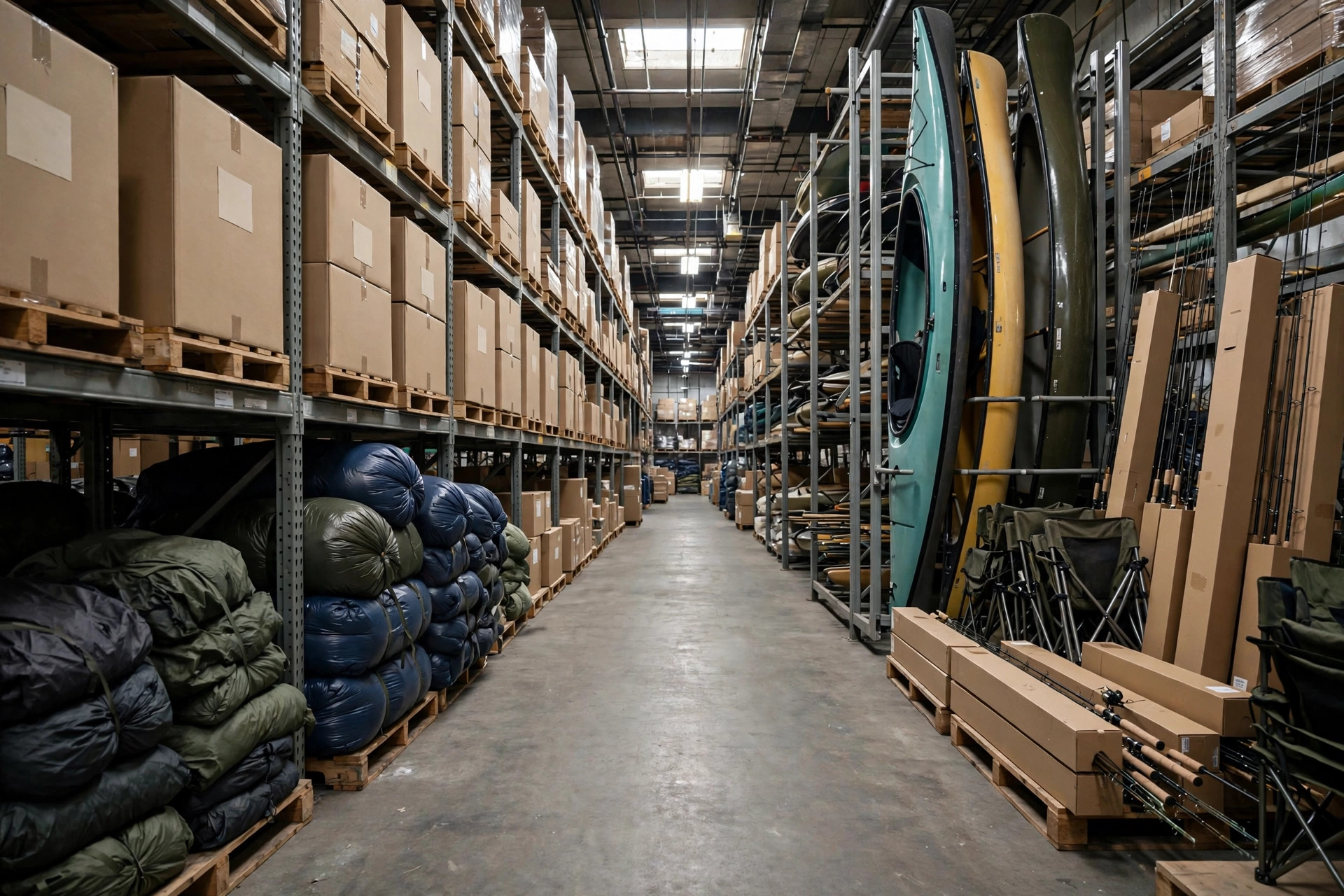
Let me get this off my chest first: I can live with Amazon changing the rules every year. What I can't live with is seasonality — it shows zero mercy.
Standard-product sellers get steady sales twelve months a year. Us outdoor folks? We make our entire year in two or three months. Ski gear runs November through February, camping and hiking April through September, and in between, the store basically hibernates. Stock up too early and your cash is locked up; stock up too late and you watch competitors sell out while your listing sits at zero. If you've never sold seasonal products, you have no idea how this feels.
Winter 2023: How I Turned a Container of Snowboard Bags into Dead Stock
September 2023. Search volume for snowboard bags started climbing, so I rushed an order for 4,000 units. The factory quoted 45 days, ocean freight 35 days — I did the math and figured a mid-November arrival, right in time for Thanksgiving. Perfect plan.
Reality check: the factory slipped by 12 days, the shipment hit year-end port congestion and arrived in early December, then customs clearance plus drayage ate another week. By the time the goods could actually enter FBA, it was mid-December. Worse, FBA inbound appointments during peak season had a two-week backlog — my shipment didn't go live until the end of December.
You can guess the rest: the day after Christmas, search volume for snow gear fell off a cliff. Of those 4,000 bags, I sold barely 900 during the season. The remaining 3,000 sat in the warehouse until the following year. After long-term storage fees and a 70%-off clearance the next year, that single order cost me close to $20,000.
One bloody lesson: for seasonal products, arriving 30 days late is barely different from not stocking at all.
Camping Season 2025: Stocking 60 Days Early Changed Everything
Once burned, twice smart. For the 2025 camping season, I shifted the entire timeline 60 days earlier.
My hero product, a 2-person tent: production ordered in December 2024, ocean freight arrived at the end of February, and both FBA and my 3PL had stock by mid-March. When the weather warmed up in April and search volume took off, my listing was already sitting there with 200+ reviews — accumulated during the off-season with small test batches.
The numbers: from April through June, that tent converted at 14.6% against a category average of roughly 9%. Out-of-stock days for the whole peak season: 3, versus 21 in the same period of 2024 — when stockouts directly cost me nearly $10,000 in lost sales. The extra two months of capital tied up in early inventory? Pocket change compared to the additional profit.
Doing the Math: Is Early Stocking Really That Expensive?
A lot of sellers are afraid to stock early because they fear tying up cash. Let me run the numbers:
| Option A: stock 90 days early | Option B: stock 30 days before peak | |
|---|---|---|
| Shipment value | $80,000 | $80,000 |
| Extra capital tied up | 60 days, interest cost about $800 | $0 |
| Freight cost | Off-season rates, saves about $1,500 | Peak-season surcharges |
| Factory cooperation | Open schedule, low defect rate | Rushed production, defect rate doubles |
| Stockout risk | Near zero | High (see my 2023 disaster above) |
| Cost of stockout | $0 | 20 days out of stock ≈ $20K–$30K in lost sales |
See it now? Early stocking costs you hundreds of dollars in capital; a stockout costs you tens of thousands. A fifth-grader can do this math, yet every year sellers still get wrecked by "let's wait and see."
Here's the counterintuitive part: the off-season isn't for clearing inventory — it's your cheapest buying window of the year. Factories have no orders, so your PO makes you royalty: pricing 5–8% better is on the table, you pick your production slot, and QC is more careful. Ocean freight has open capacity at the year's lowest rates. Come September, when everyone's fighting for factory slots and containers, you can't buy your way to the front of the line.
That said, hoarding blindly is stupid. My rule: only stock SKUs validated with small off-season test batches — 200 to 300 units per SKU during the testing phase. Unproven products get small, fast-replenishment orders only. Only proven winners deserve your capital.
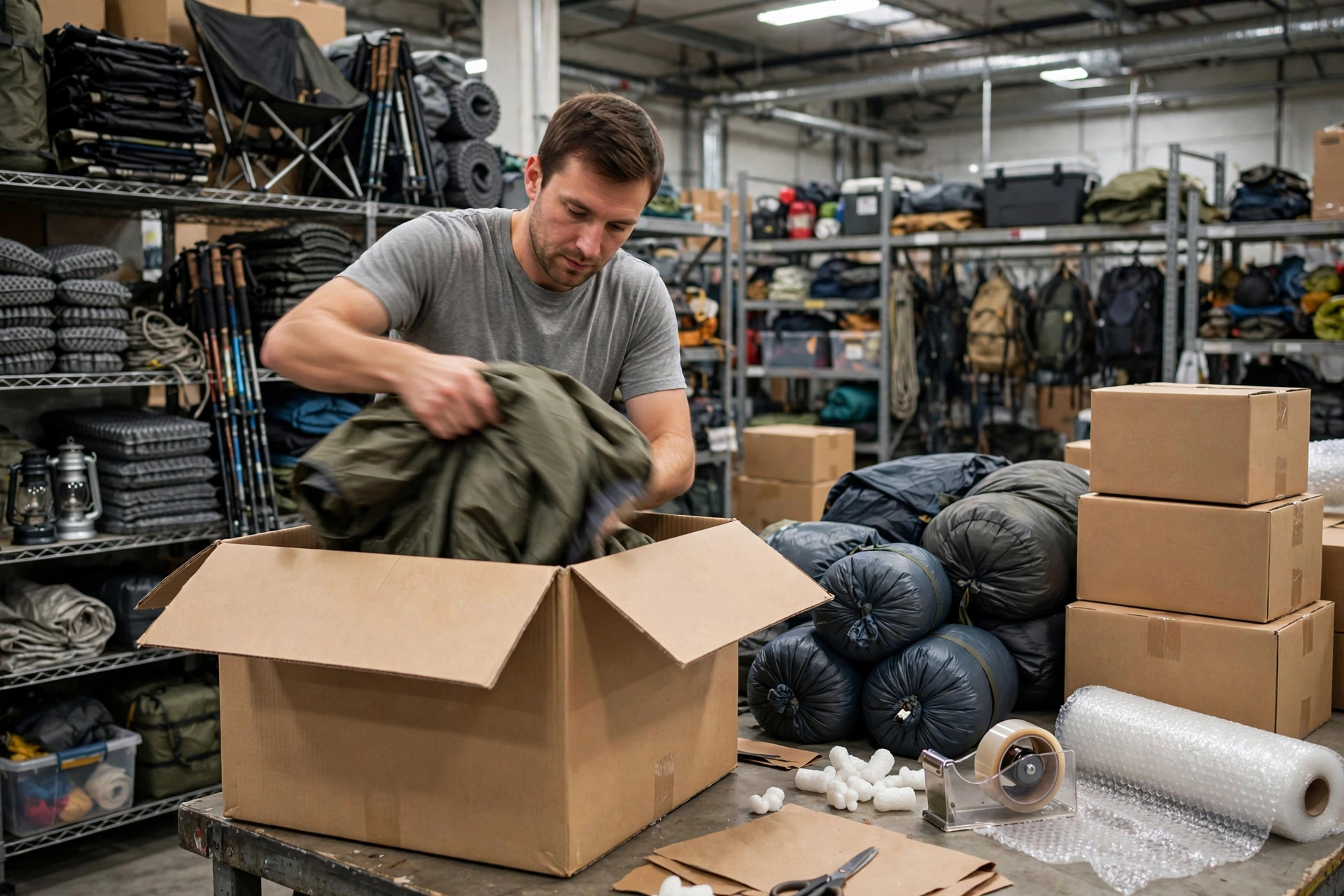
One more outdoor-specific trade-off: bulky, irregular SKUs. Kayaks, tents, folding tables — big volume, awkward shapes. FBA storage fees are brutal for this stuff (you know the drill — check Amazon's official site for current rates and do the math yourself, it hurts). So I run a two-warehouse system: FBA holds only 2–3 weeks of sales to keep the Prime badge and conversion rate; the bulk sits in 3PL warehouses, one on each coast, with weekly transfers into FBA based on sales velocity during peak season. The trade-off is an extra transfer step and its cost — but compared to FBA long-term storage fees, it's nothing.
Three Pitfalls That Get Sellers Every Year
First, book inbound appointments early. FBA inbound queues during peak season are the norm — lock in your October–November appointments back in September. Don't wait until the goods hit the port. That's exactly what killed me in 2023.
Second, re-measure oversized items yourself, three times. Amazon's measurements often differ from yours, and one size tier up means a jump in fees. Before shipping, pull 5 units per SKU, re-measure, photograph the dimensions, and keep records — dispute it if there's a discrepancy.
Third, the January returns wave. Outdoor gear already has high return rates, and post-Christmas returns can hit 15–20%. Design your packaging for resale from day one: resealable bags, no single-use destructive packaging. Every returned unit you can resell as new is money saved.
My stocking rhythm, steal it: ski season (Nov–Feb) — order production in July, ocean freight in September, inbound complete by mid-October. Camping season (Apr–Sep) — order production in December, ocean freight in February, inbound complete by mid-March. Iron rule: go-live date = 30 days before peak season starts, leaving room for review accumulation and ranking momentum.
I've run this rhythm for three years — from losing $20K in 2023 to zero major stockouts in the 2025 peak season. This one's battle-tested. Go use it.
By Ah K, E-commerce Seller (5 yrs)