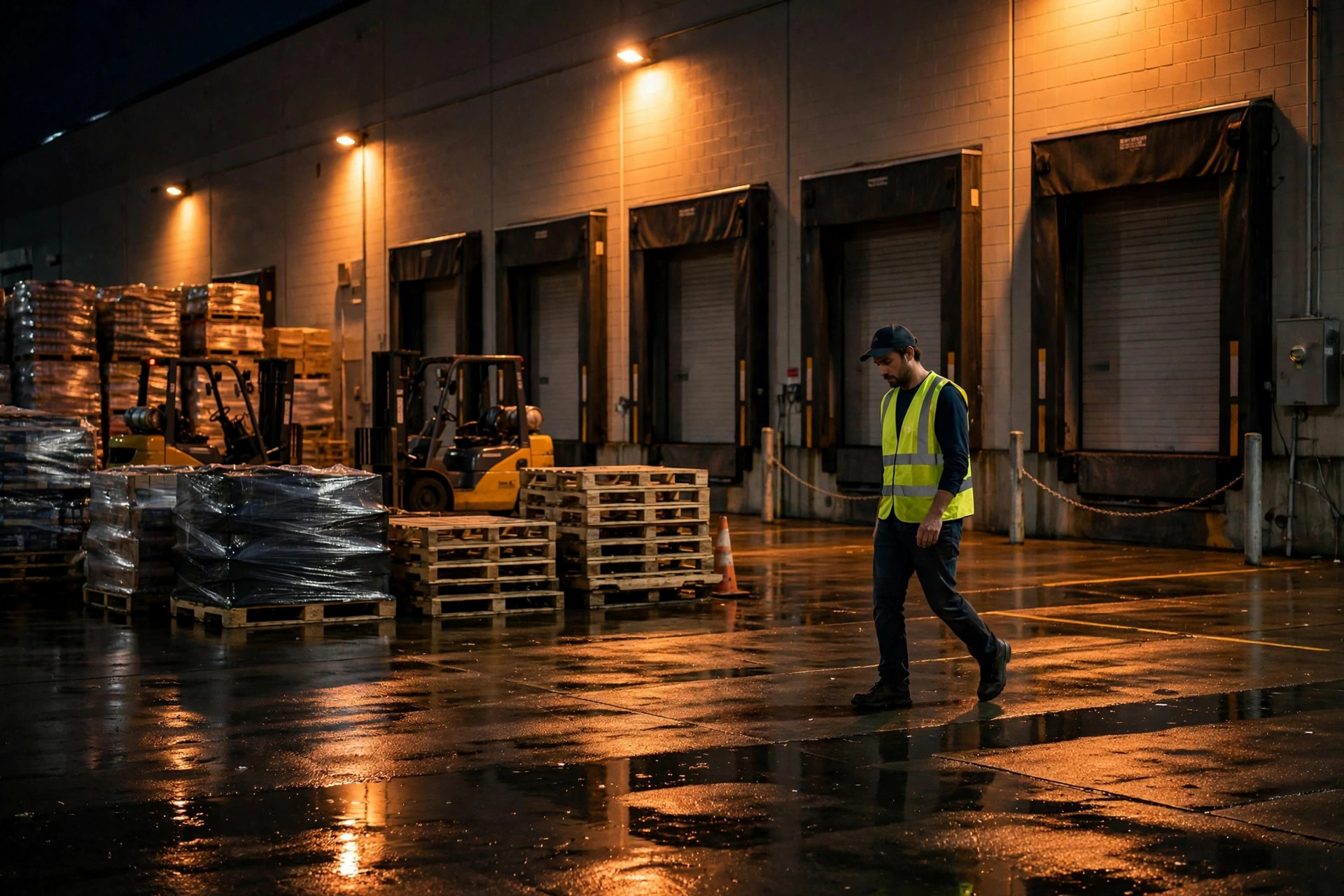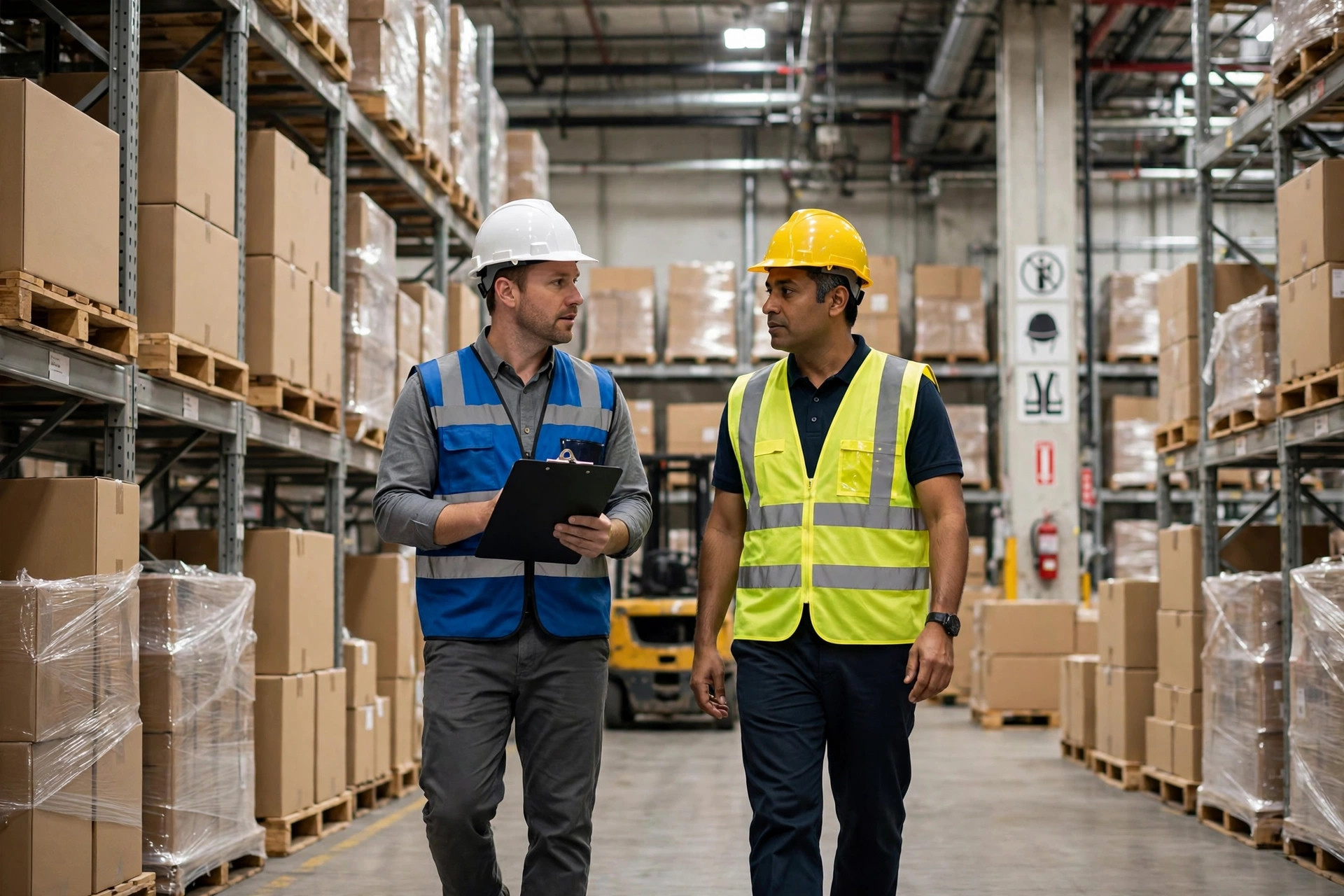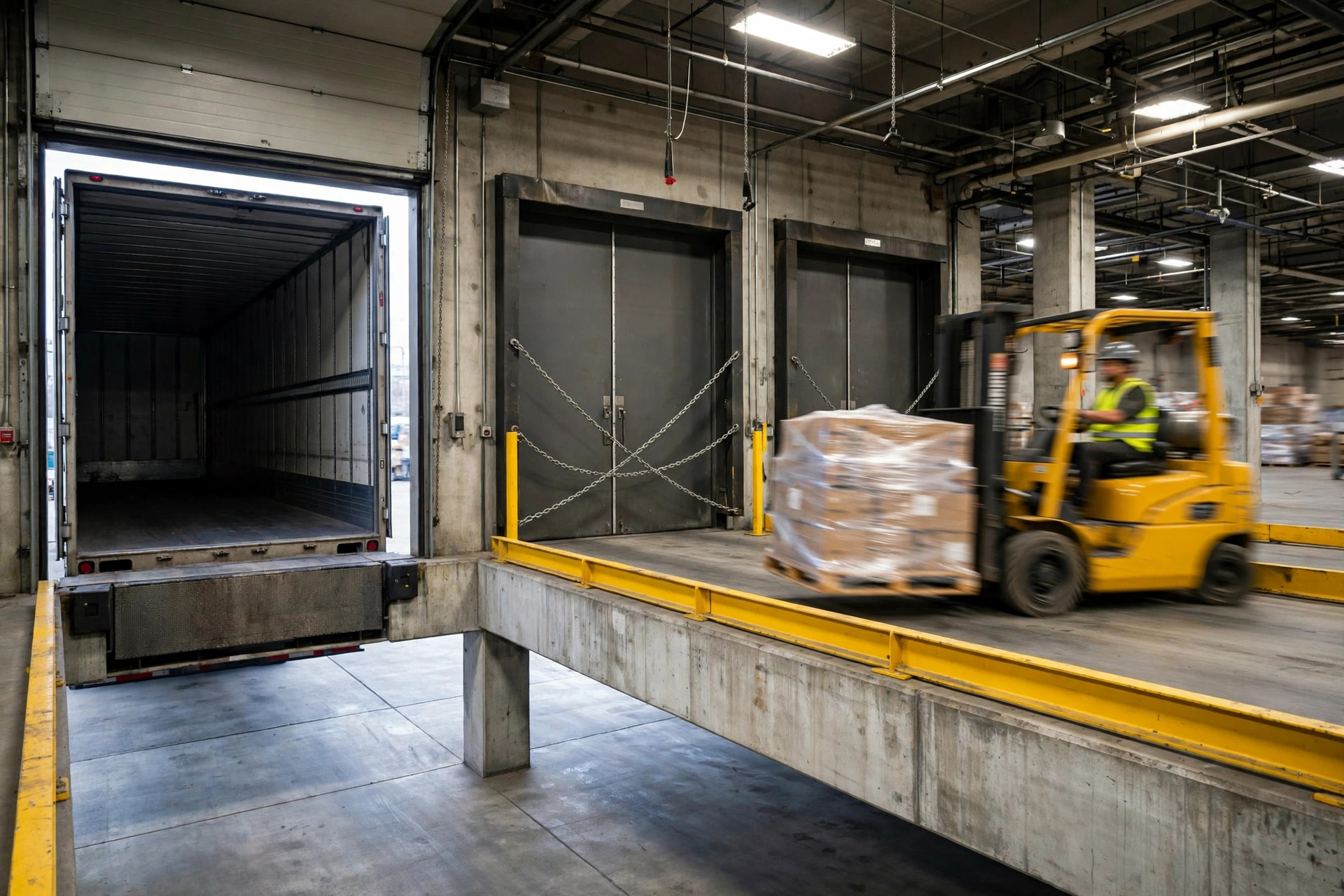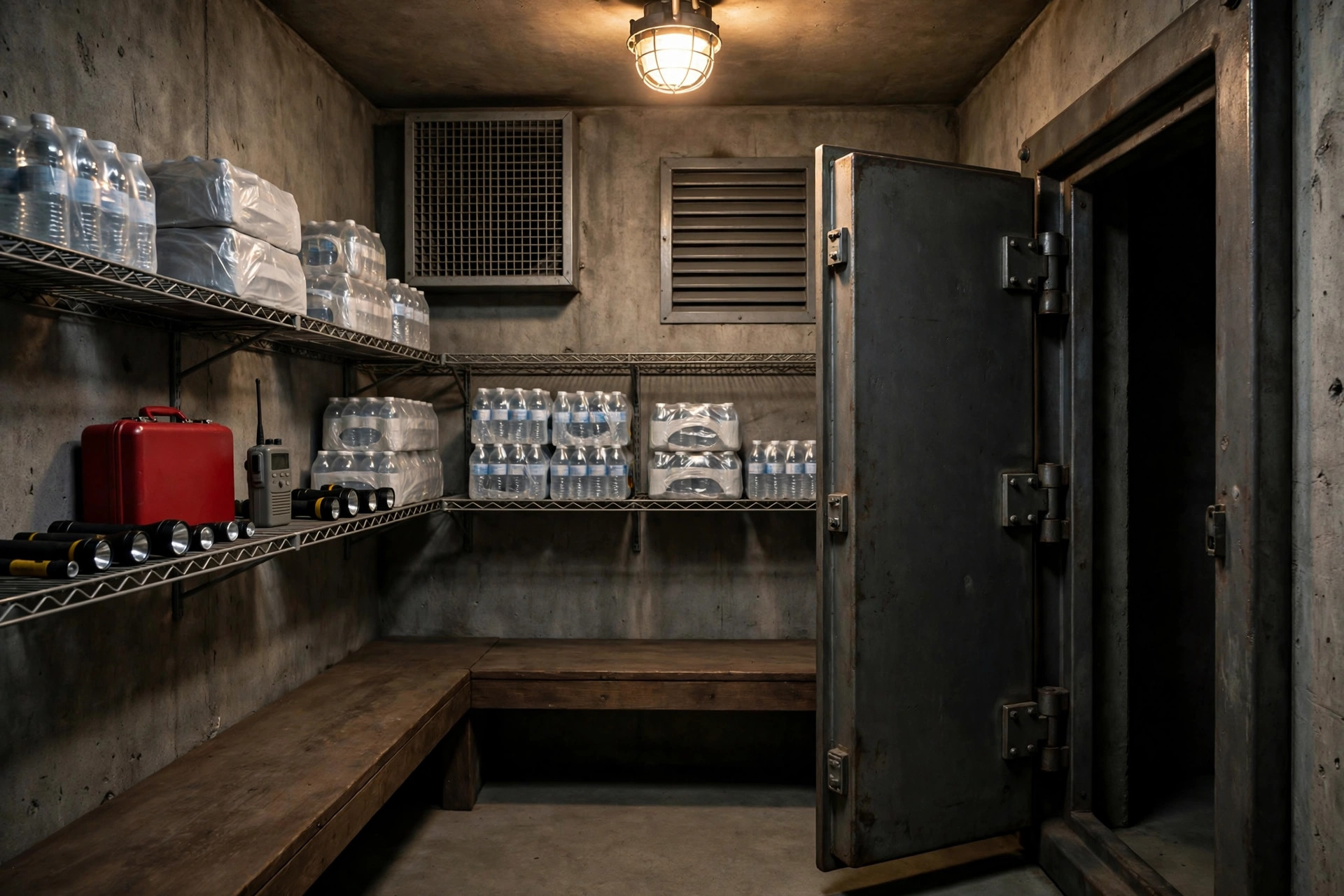
Fifteen years driving trucks, and let me tell you — I've seen many warehouses. Cold storage at 3 AM, giant e-commerce docks with a line of trailers waiting at midnight. You learn to read a warehouse the way you read the road: the clean, orderly ones and the chaotic ones. And here's what I've noticed — the chaotic ones almost always fail at the same thing: OSHA warehouse new hire safety training just never really happens.
Let me tell you two things I saw with my own eyes.
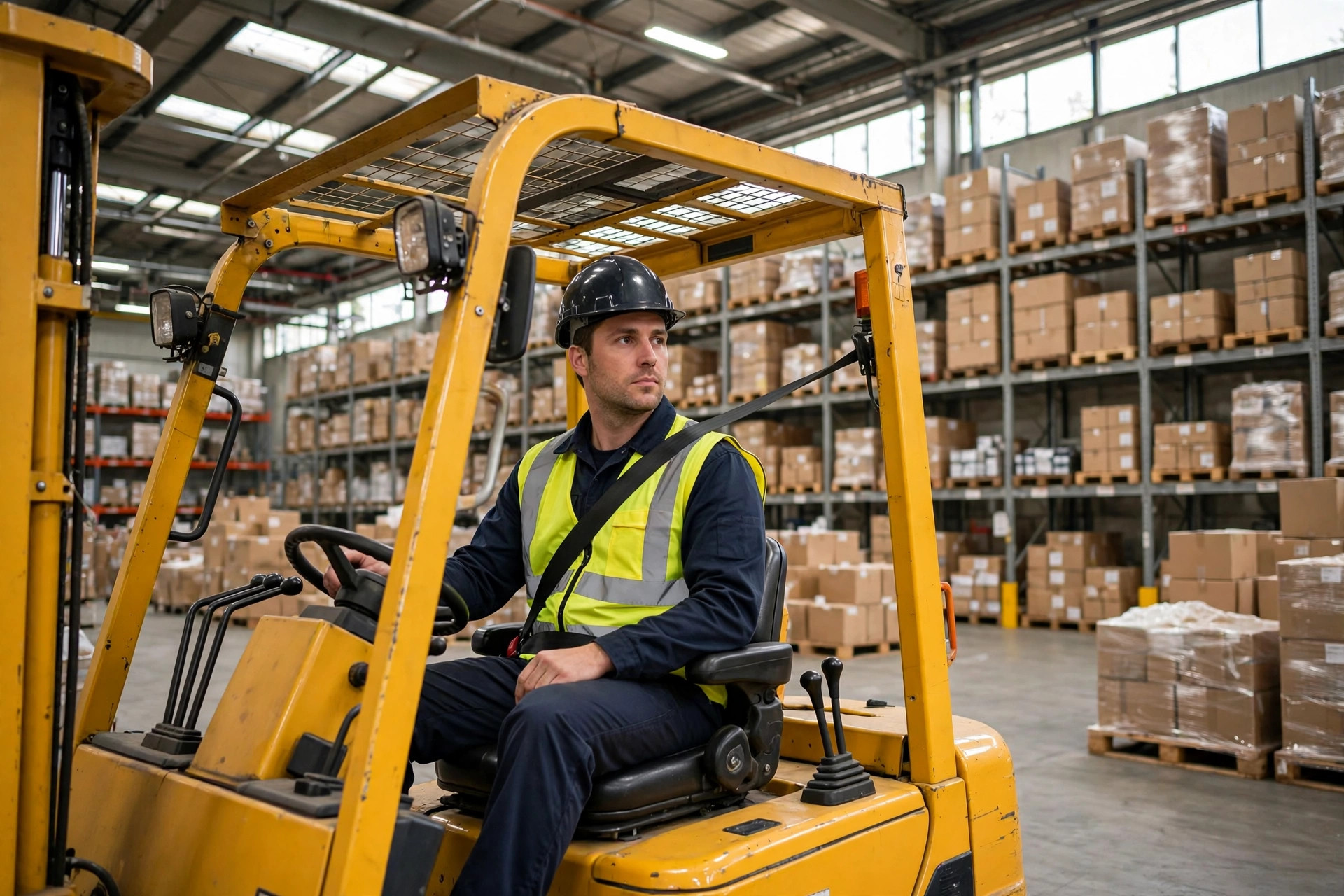
The first was summer 2021, at a food warehouse near Dallas, Texas. I was waiting to get loaded when a kid who was barely twenty came flying past my rig on a forklift, two pallets stacked high on the forks, wobbling the whole way. My stomach dropped. Sure enough, twenty minutes later came a crash you could hear across the yard. He'd taken a turn too fast, the load slid off, and forty cases hit the concrete while a rack upright bent sideways. Nobody got hurt. Later the supervisor told me the kid was on his third day, and his forklift training hadn't even been scheduled yet. An older hand was "showing him the ropes." The supervisor went pale telling me: "If OSHA walks in here, we can't explain a single bit of this."
The second was fall 2023, at an auto-parts e-commerce warehouse near Los Angeles. I was dropping a load and watched a new guy stacking return boxes in a fire lane — already waist-high. I asked him, "Hey brother, isn't this a fire lane? You're not supposed to block it, right?" He looked at me blankly: "Nobody told me." Turns out the place had never walked new hires through emergency procedures at all — where the extinguishers were, where to run when the alarm sounds, which door was the muster point. None of it. If a fire had broken out, that whole crew of new hires would've been standing around clueless.
Those two scenes taught me something: warehouses don't usually get hurt by bad equipment — they get hurt by people who were never properly told. And OSHA's requirements for new-hire training are more specific than a lot of warehouse owners think. So today, in plain language, here's what OSHA actually expects you to cover before a new hire starts real work.
New-Hire Safety Training Starts with Forklifts — OSHA's Favorite Thing to Check
First and most important: forklifts. OSHA's powered industrial truck standard (29 CFR 1910.178) is crystal clear — nobody touches a forklift without training and evaluation. And it's a three-part package, no shortcuts:
- Formal instruction: how the machine works, how to read a load chart, center of gravity and stability — taught systematically, not as hallway tips;
- Practical training: real seat time under supervision — turns, stacking, ramps;
- Evaluation: you pass the assessment or you don't drive. Period.
And it's not one-and-done. The standard requires refresher training and re-evaluation at least every three years — plus immediately if there's an incident, an observed unsafe operation, or a new truck type. What that Dallas warehouse did in 2021 — letting an uncertified kid drive first and "doing the paperwork later" — is exactly what OSHA calls permitting unqualified operation. It's a heavy penalty category. Fine amounts change year to year, so check OSHA's current published schedule — but trust me, the number will hurt a small or mid-size warehouse for months.
My advice to warehouse owners: until the forklift certification is in hand, the new hire doesn't even touch the keys. "Start working, we'll sort the cert later" is gambling with someone's life.
Emergency Plans: This Is the Stuff That Saves Lives, Not Paperwork
Second: the emergency action plan, covered by OSHA standard 1910.38. The requirements are refreshingly practical — four things every new hire must know before day one ends:
- Where to run when the alarm sounds — which exit, which route;
- Where to gather — the muster point;
- How to raise the alarm — fire number, pull stations, internal alert buttons;
- Where the extinguishers are and how to use them — and note that 1910.157 separately requires extinguisher-use training for employees wherever extinguishers are provided, reviewed annually.
I've seen too many warehouses treat the emergency plan as a poster on the wall — new hire glances at it, signs a form, done. That's theater. In a real fire, nobody reads the poster. It's all muscle memory. Walk the new person through it physically: from their workstation, alarm sounds, which hallway, which door, where do you stand outside. Ten minutes. It can save a life.
The New-Hire Training Checklist Every Warehouse Should Use
Here's a checklist I put together against the relevant OSHA standards — the backbone of any serious OSHA warehouse new hire safety training program. Print it, stick it at the front of every new hire's onboarding folder, and check off each item:
| # | Training Item | OSHA Reference | Key Requirement |
|---|---|---|---|
| 1 | Forklift / pallet jack qualification | 1910.178 | Formal instruction + practical + evaluation; refresher at least every 3 years |
| 2 | Material stacking & handling safety | 1910.176 | Stable stacks, aisles kept clear, unstable loads dealt with promptly |
| 3 | Emergency evacuation plan | 1910.38 | Routes, muster point, alarm method — walked through in person |
| 4 | Fire extinguisher locations & use | 1910.157 | Annual training; pointing at it doesn't count, they must know how to use it |
| 5 | Chemical hazard communication | 1910.1200 | How to read labels, where the Safety Data Sheets (SDS) live |
| 6 | Personal protective equipment (PPE) | 1910.132 | What to wear for which job, how to wear it, who to ask for replacements |
| 7 | Pedestrian & vehicle traffic flow | General duty clause | Separate forklift and foot traffic, check behind before reversing, slow down and honk at blind corners |
| 8 | Lockout/tagout basics | 1910.147 | Don't touch equipment you don't understand; don't touch equipment under maintenance |
Both the new hire and the supervisor sign each line. When OSHA inspects, the first thing they ask for is training records. Documented, tied to a name, tied to a date — that's training. "Oh, we told them" without a record doesn't count.
A Counterintuitive Take: Longer Training Isn't Better — Untested Training Is Nothing
Now for the part some warehouse managers won't like: new-hire safety training is not a case of "longer is better."
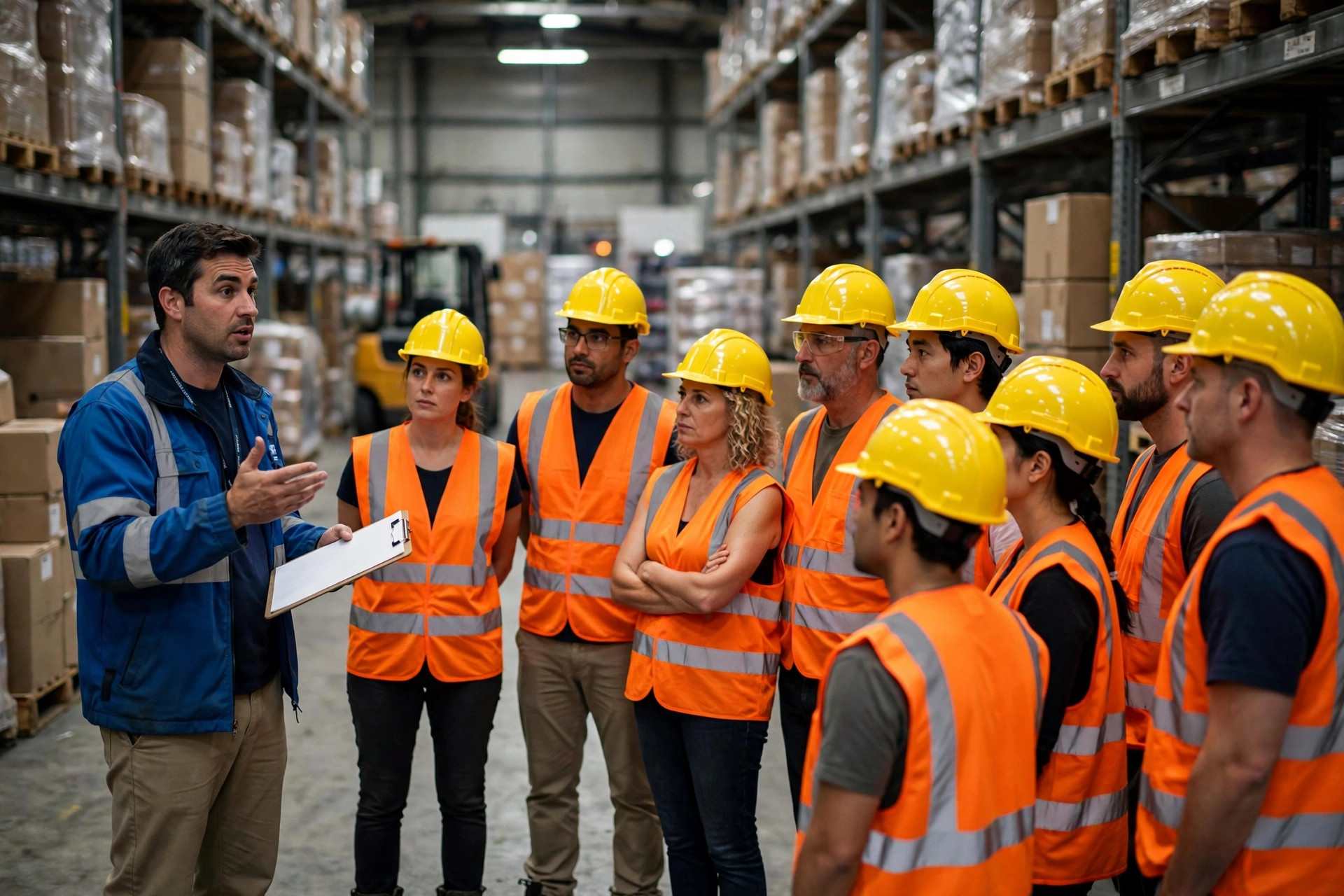
I've seen warehouses run a three-day onboarding safety course — new hires in a conference room watching slides for three days, half asleep by day two, remembering nothing. And I've seen a two-hour session followed by a hands-on test: point to the nearest extinguisher. Walk me to the muster point. Read this load chart. Fail the test, don't start work.
Guess which one OSHA respects? The second one. OSHA has never cared how many hours you trained — it cares whether the employee actually knows the stuff. Standard 1910.178 says "training and evaluation." Fail the evaluation and a hundred hours of training mean nothing. Flip it around: a logbook proudly showing "8 hours of training completed" while the employee can't point to an extinguisher — an inspector spots the theater in seconds, and the penalty lands harder.
So here's my honest take: make training shorter, make it real, and always test. Two hours of teaching plus one hour of testing beats three days of slide-induced napping. A new hire's attention is a limited resource — spend it where it counts.
And one more hard truth: don't let "the old hands will show the new kid" replace formal training. A veteran driver might be great on a forklift, but he can't explain a load chart, can't teach center-of-gravity physics, and has definitely never read the OSHA standard. Word-of-mouth knowledge degrades with every retelling. Formal training plus veteran mentoring — both legs, or you limp.
Straight Talk for Warehouse Owners and Shippers
After 15 years of dealing with warehouses, I've got one rule of thumb: how a warehouse trains its new hires tells you almost everything about whether that place will have a serious accident. The ones that train right — clean floors, clear aisles, forklifts driven steady. The ones that fake it — you feel it the moment you walk in: leaning stacks, blocked aisles, people and machines mixing. It's a matter of time.
So, five things:
- Safety first on day one, job skills second. The job can be learned slowly. You only get one life.
- Guard the forklift keys. One uncertified touch is one loaded gun.
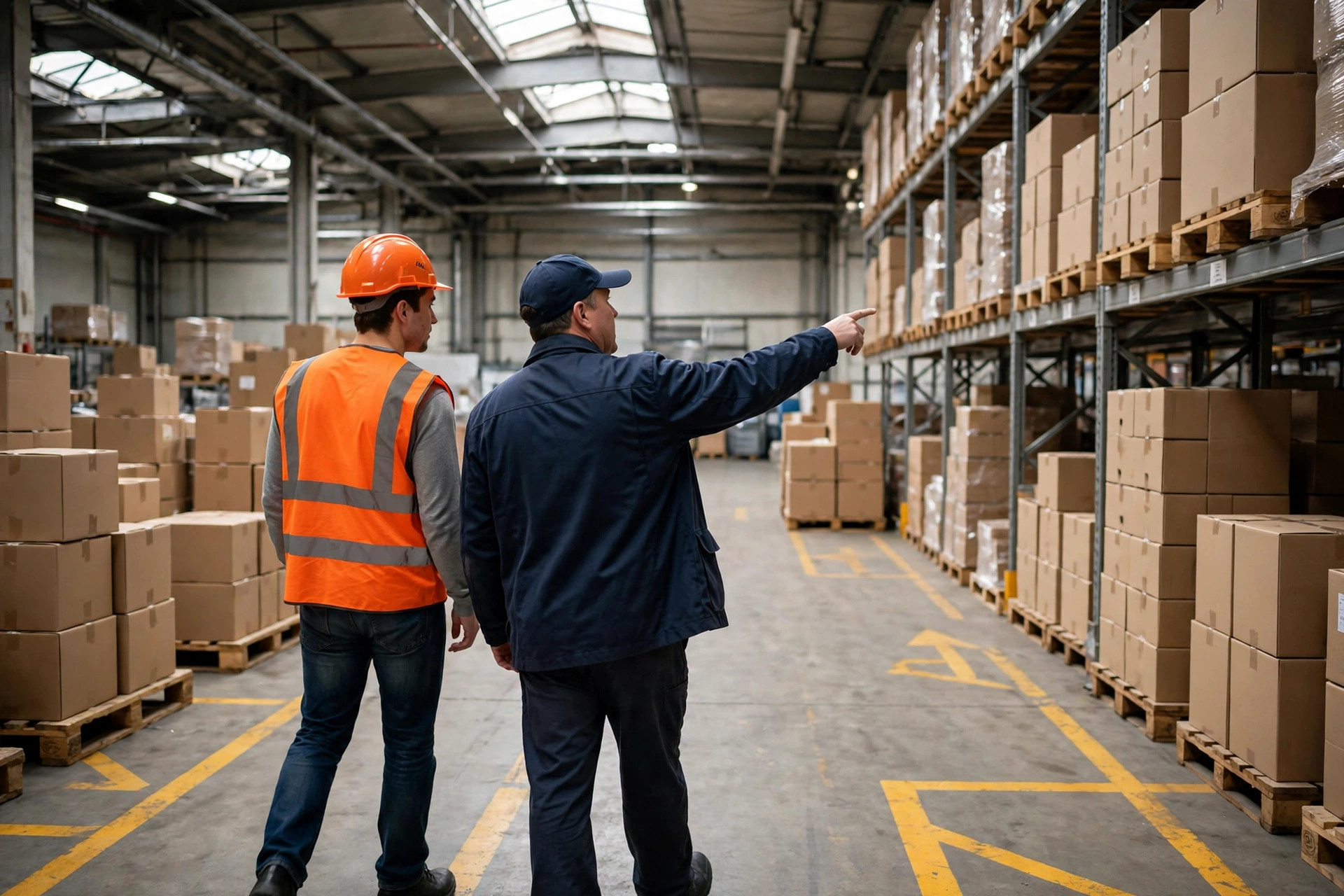
- Walk the emergency plan in person. Don't just collect signatures.
- Keep training records that tie to names — in whatever language your crew reads. OSHA asks for paper first.
- Don't skip refreshers. Three years comes fast for forklift re-certification; extinguisher use gets a yearly run-through.
There's an old saying where I come from: sharpening the axe doesn't delay the woodcutting. That half day of OSHA warehouse new hire safety training before a new hire starts will save you a fine that could run into serious money — and it might save somebody's kid. That math always works out.
By Shifu Zhao, Trucking Veteran (15 yrs)