
title: "Order Management System Cost for Small Business: The Order-Volume Line Where Excel Stops Working"
Every platform keeps shouting at you to grow, scale, hit the next bestseller badge. But when orders actually spike, the first thing that breaks is rarely your traffic. It's your spreadsheet.
I've sold home goods on Amazon and Shopify for five years, and I know this pain in my bones: orders go up, mis-ships and missed shipments go up with them, customer messages pile up faster than you can answer, and one-star reviews start chipping away at your listing. Sooner or later every small seller Googles "order management system cost small business" and wonders what a real system actually costs. Here's the thing most guides won't tell you: the subscription price is only half the bill. The other half is how much money you're already losing every month by not having one.
Let's do the math for real.
Order Management System Cost for Small Business: A Price Map by Order Volume
Conclusion first, process after. Based on buyer research, the order management system cost for a small business falls roughly into three tiers:
| Tier | Monthly range | Who it's for |
|---|---|---|
| Entry-level | Around $62/mo (Software Advice buyer survey) | Under 500 orders/mo |
| Mid-range | $99-$729/mo (published vendor tiers) | 2,000-10,000 orders/mo, growing sellers |
| Full-featured | $1,000-$5,000/mo (older Skubana-era survey data, magnitude reference only) | 10,000+ orders/mo, multi-warehouse, multi-channel |
Caveat: these are subscription fees, and vendor pricing changes every year — check each vendor's official site for the latest policy. Treat this as a map so you know roughly which square you're standing on.
Rant First: Excel Isn't Free. It's the Most Expensive Option.
Black Friday 2024. My little 2,000 sq ft warehouse in East Los Angeles, California. Daily orders jumped from the usual 30 to 200.
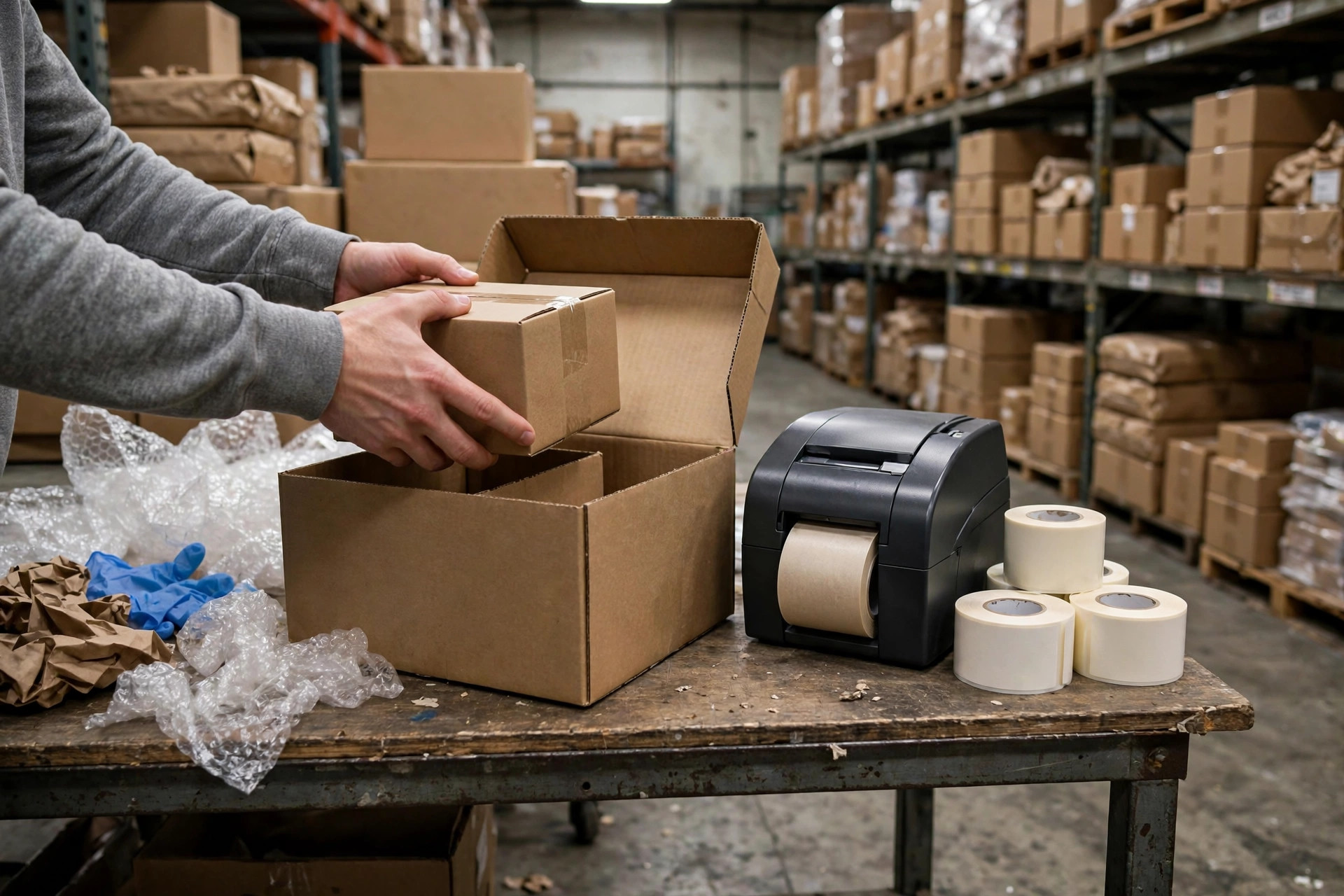
Our "system" was one Excel sheet shared by three people: me, my wife, and one part-time packer. We exported from the platform backend, deducted inventory by hand, and restocked FBA by gut feeling. That week we missed 7 shipments entirely and sent 3 to the wrong addresses. Two buyers left 1-star reviews, one listing lost its Best Seller badge, and conversion rate fell from 18% to 11%.
I added it up afterward: refunds, reships, and wasted ad spend cost me about $1,400 that week. An entry-level OMS would have been around $62 a month.
The "free" spreadsheet cost me more than twenty times that in a single week.
What I Actually Did: Three Order Volumes, Three Ways to Die
My buddy Chen sells pet supplies out of Houston. In March 2025, when his monthly volume hit 3,000, he bought me a beer and asked: "Am I too late to get a system?"
I drew him this table — my five-year summary of where the line actually sits:
| Monthly orders | Excel status | Hidden monthly cost | What to do |
|---|---|---|---|
| Under 500 | Still alive; one person plus a spreadsheet handles it | Mis-ships and misses: $100-$300/mo | Don't buy yet; fix your spreadsheet and process |
| 500-2,000 | Starting to crack; multiple people editing one sheet always ends in fights, inventory never reconciles | Mis-ships, support tickets, bad reviews: $500-$1,500/mo | Get entry-level OMS (the ~$62/mo tier) |
| 2,000-10,000 | Fully broken; FBA plus self-fulfilled plus multi-platform means reconciling three different realities | 1%-2% mis-ship rate: $1,500-$5,000/mo | Get mid-range OMS ($99-$729/mo tier) |
| 10,000+ | Running without a system is running naked | Labor plus errors burn a full employee's salary monthly | Full-featured OMS; time to talk implementation |
Chen was at 3,000 orders a month with roughly a 2% mis-ship rate — over $800 a month just in reships and corrections, customer service replying every other day, review ratings visibly sliding. He gritted his teeth and signed up for a $199/month OMS. Within the first month his mis-ship rate dropped below 0.3%.
The numbers: a $199 subscription bought back $600+ a month in error costs, plus the listing ratings he stopped bleeding. Even a fifth grader can do that math.
The Hidden Line Item in Order Management System Cost: Implementation
Here's the second trap most sellers walk into: they only look at the monthly fee.
The industry's open secret: implementation often costs more than the first year of software fees. Migrating historical orders, inventory, and customer data; EDI integrations with big channels and 3PL warehouses; staff training; reworking your processes — these get billed per project or per hour. The classic small-seller failure mode is "I can afford the monthly fee, but not the implementation."
Three hard-won warnings, all tested by me personally:
- Get a cap on implementation fees before you sign, in writing. Anyone who says "oh, onboarding is quick" — translate that as "expensive."
- Run real orders through the trial, not the demo. The demo environment is always sunshine; your actual orders are the lie detector.
- Price EDI and API integrations separately. Some vendors advertise a low monthly fee and then charge per channel connection. Three channels later, integrations cost more than the subscription.
One more note: pricing research on legacy full-featured systems like Skubana is getting old, and this market moves fast. Confirm current quotes on each vendor's official site — don't walk into a negotiation waving a three-year-old screenshot.
The Uncomfortable Truth: You Don't Switch When You're "Big Enough." You Switch When You Can't Afford Not To.
A lot of sellers treat switching to an OMS as a coming-of-age ceremony — "I'm only at 500 orders a month, Excel is fine for now, let's just get by." That logic is backwards.
The real dividing line isn't an order number. It's this equation: the money you lose each month without a system (mis-ships + misses + support labor + reviews dragging down conversion) exceeds the monthly subscription plus amortized implementation cost. That moment is your line.
In my experience, for most small sellers that line lands somewhere around 500-800 orders a month. Don't wait until 2,000 orders, when you're firefighting daily, to switch — by then you're migrating data while trying to ship, and every hour of the implementation consultant's time is burning your money.
Switching early has a hidden bonus: entry-level systems are cheap, your team is small, your process is simple, and migration costs the least it'll ever cost. Wait until you're at 10,000 orders with three warehouses and five channels, and the implementation quote will scare you.
So stop asking "how much does an OMS cost per month." Start asking: "how much did I lose this month because I don't have one?"
This one I've personally tested, and it works.
By Ah K, E-commerce Seller (5 yrs)