Let me tell you something. I have been on the road for many years, and I have rarely seen a city as gridlocked as Lagos. A couple of years ago, a friend selling phone accessories opened a small warehouse in Lagos. His stock came from the free zone near Lekki — half a city away on the map. The rider left at 7 a.m.; by noon the parcel still had not arrived. The customer called three times and finally cancelled. My friend complained to me: it was not a lazy rider. This city just does not play fair.
Doing last-mile delivery logistics in Lagos, Nigeria, means doing the math on congestion. Today I will break it down: how to run a motorcycle rider network, where to put your stock, how to promise delivery times, and how to get a signature in a city with no proper addresses.
The Dispatch Rider: The Only Cure for Gridlock — But Not a Miracle Worker
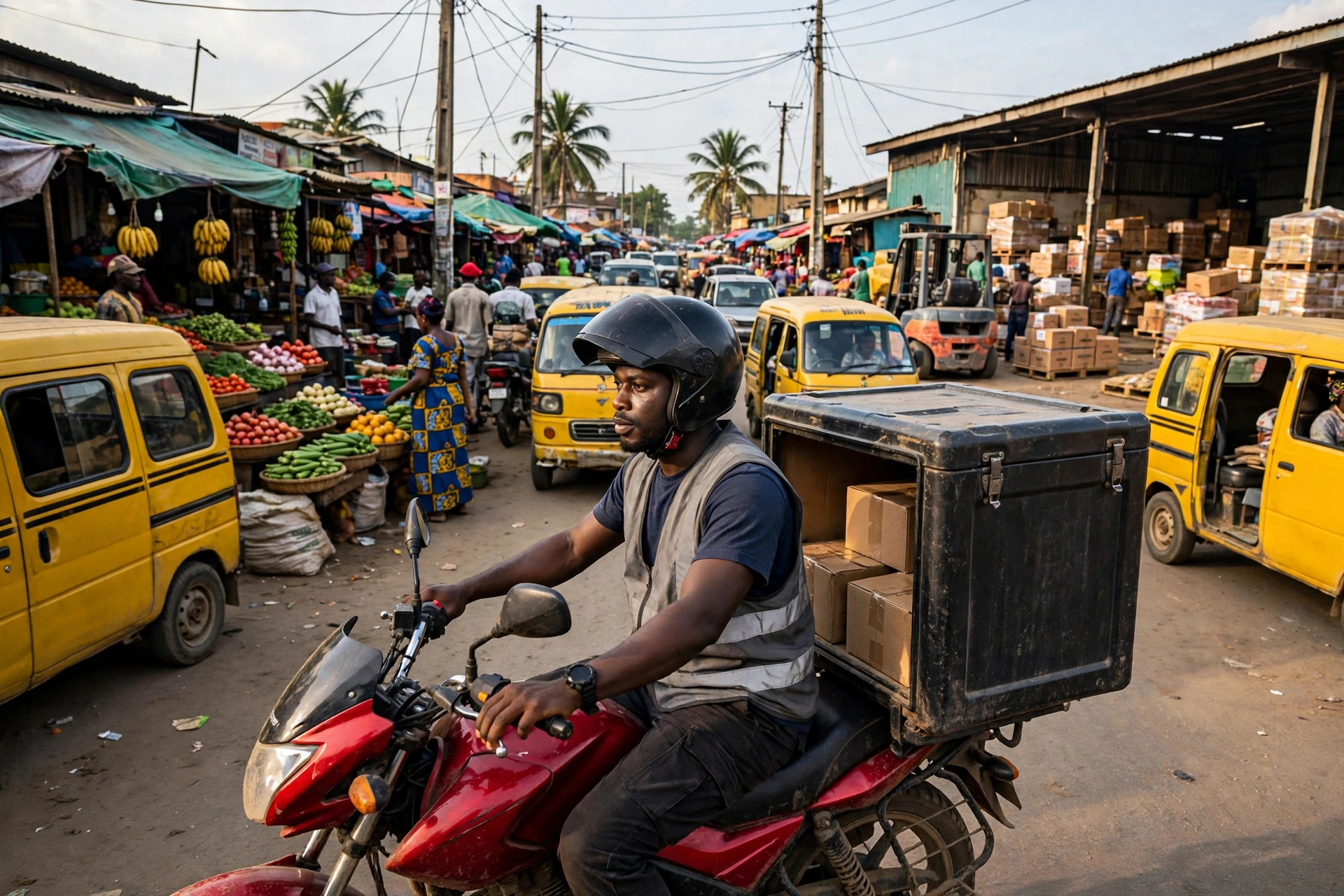
First, a confusion I see all the time. Since 2022, Lagos State has restricted passenger motorcycles (locally called okada) in several local government areas, and task forces still seize bikes on restricted routes. But cargo dispatch riders are a different category — licensed, no passengers, parcels only — and they keep running right through enforcement zones. So in Lagos, your last-mile fleet is basically motorcycle riders. Vans simply do not move at rush hour.
But riders are not miracle workers, and a badly managed rider network just burns money. I have watched too many bosses schedule riders at ten trips a day and then wonder why everything is late. Do the honest math: one in-city delivery — pickup, riding, finding the address, waiting for the customer — takes 1.5 to 2 hours, easy. A rider working 8 to 10 hours tops out at 4 to 5 trips, and rush hour shaves that down further. Three to four trips a day is the number you should plan around. A local field test in Lagos landed on the same figure: 8 to 10 trips planned, 4 actually delivered. Matches my math.
Three things leak money in rider operations. First, if riders are paid per trip, pickup slips and delivery slips must be reconciled — one or two skipped trips are invisible, but a month of them is a hole in your pocket. Second, cash-on-delivery money must be separated from the rider: a local logistics guide once noted that a rider earning a modest monthly salary can be carrying several times that in other people's cash every day. Push COD to bank transfer wherever possible. Third, track both bike and rider — GPS on the vehicle, a work log on the rider. When a parcel goes missing and everyone starts arguing, that is your only evidence.
Promising Delivery Times in Lagos: Calculate on Congestion, Not Distance
Lagos dispatch operators share a rule of thumb, and I have cross-checked it against several local courier writeups — it holds up. Within one corridor (say Yaba to Surulere), a trip takes 1 to 2 hours. Crossing the bridge between the Mainland and the Island at peak? Two to three hours is normal, with peak windows roughly 6:30–9:30 a.m. and 4:30–8 p.m. In other words, "2-hour delivery" promises only work in small local pockets in this city.
So tier your promises; do not overpromise. My advice: same-day delivery within one corridor, with an order cutoff around 2 p.m.; next-day for anything crossing the bridge — do not gamble. Orders taken during peak windows get an automatic buffer in the system. The refunds and lost customers from one late delivery cost more than hiring two extra riders. Do that math first.
Micro-Hubs in Lagos: Stock Near the Customer Beats Fast Vehicles
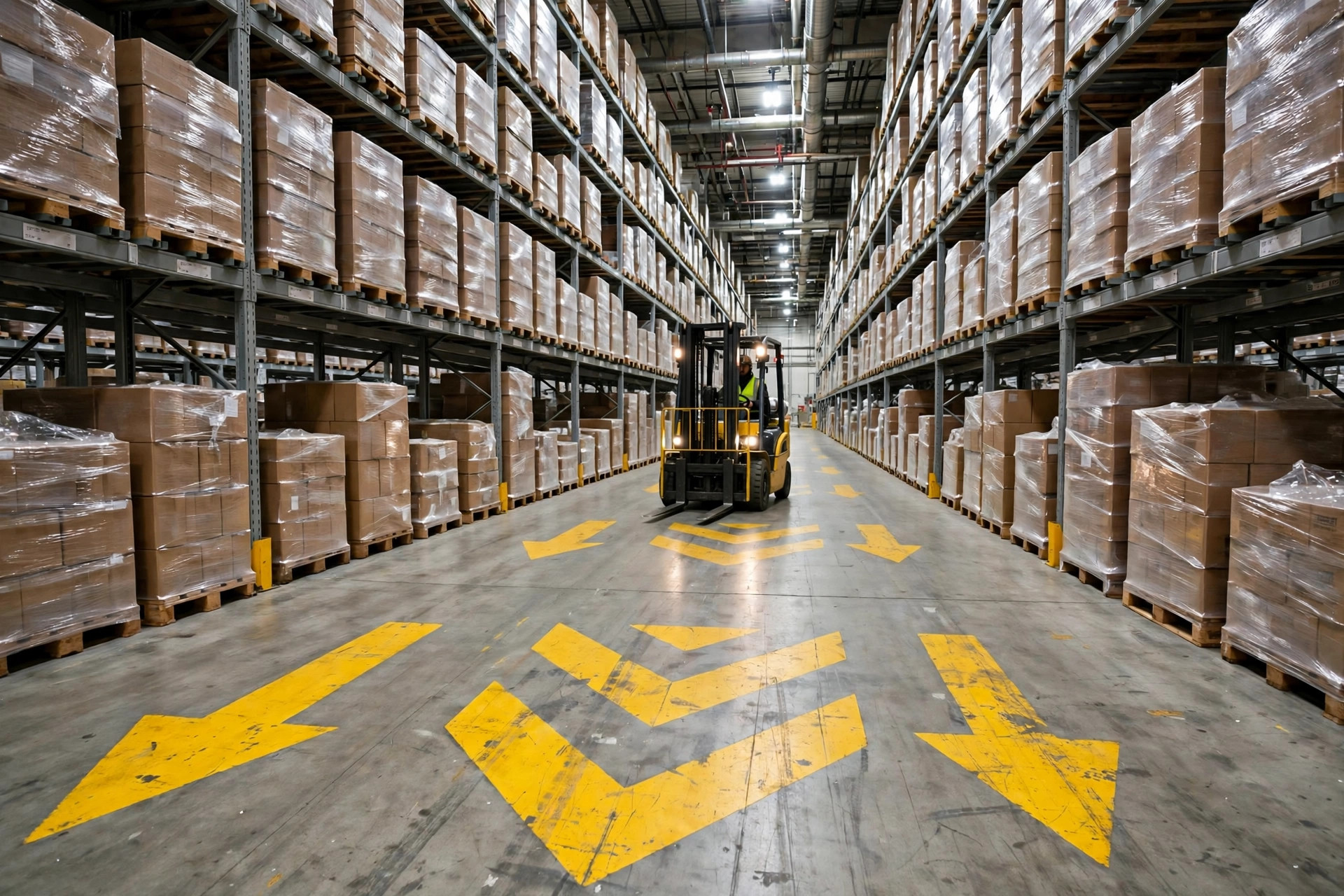
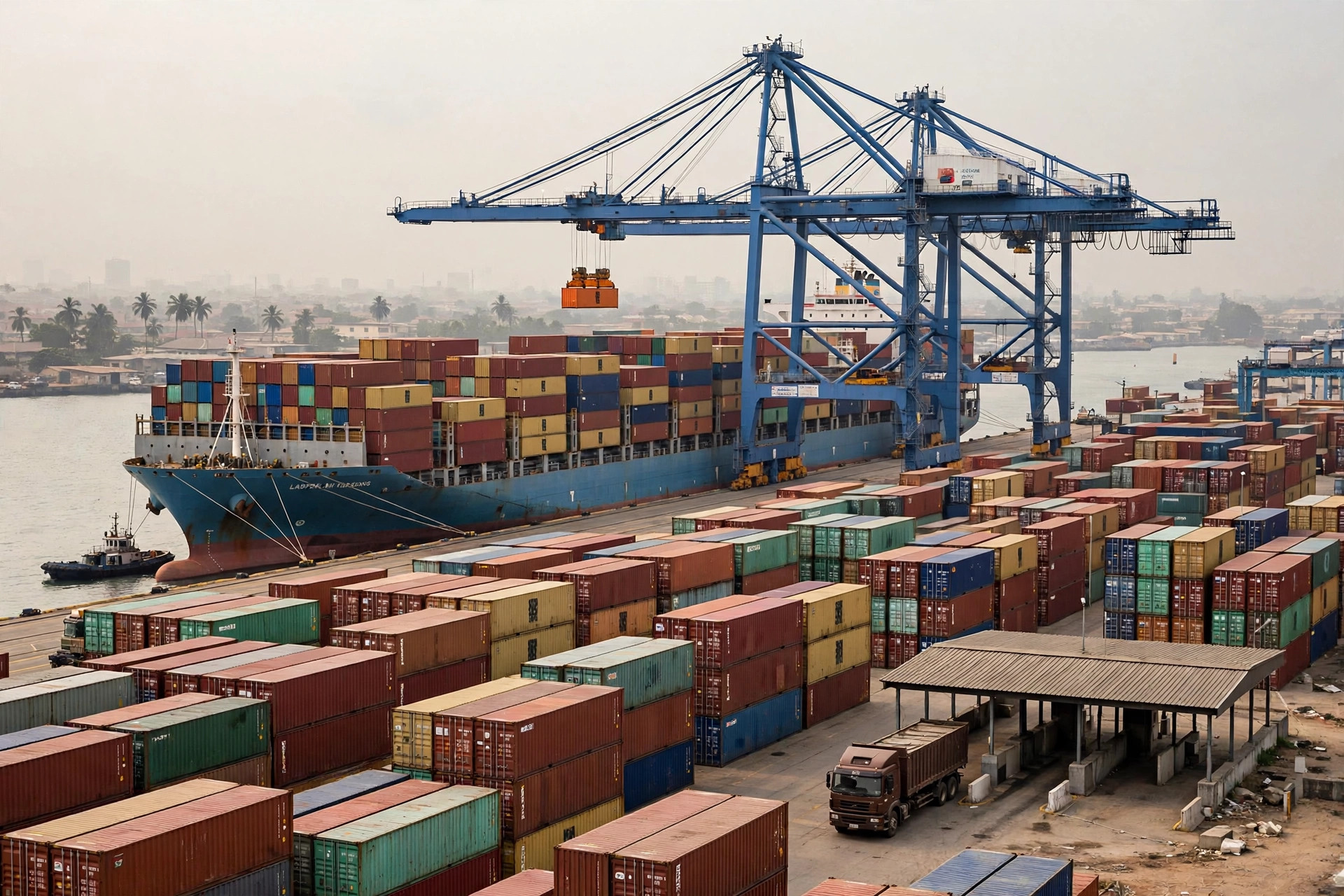
Now, where to put your warehouse. Lekki Deep Sea Port only started full commercial operations in April 2023, yet the Nigerian Ports Authority's 2025 operational report shows it already handles 40.6% of the country's cargo throughput — the number one port in Nigeria. Goods flow in from the east, but customers are spread across the whole city. Put your one big warehouse in Lekki, and orders on the eastern side are smooth, but every Mainland order has to cross the bridge. That is gambling, every single day.
Here is the counterintuitive call: in Lagos, renting one extra small warehouse costs less than what bridge-crossing delays will cost you. The play is a main warehouse in Lekki plus a small forward stocking hub of a few hundred square meters in Ikeja or Surulere, with your best sellers pre-positioned there so Mainland orders ship locally. Local e-commerce platforms like Jumia run on the same logic in Lagos: stock near the customer beats a fast vehicle. A forward hub is not a cost — it is insurance. What you save is not freight; it is late-delivery refunds and customers who never come back.
No Street Addresses: Delivery Runs on Human Navigation
Many Lagos neighborhoods have no formal street numbering; navigation apps get you to the general area and give up. Years ago, the motorcycle delivery startup MAX had a rough but effective method: the first time a rider delivered somewhere new, they pinned the location into their own mapping system, and the second trip was easy. That thinking still works today.
Three field-tested moves you can use tomorrow. First, ask for two extra things before dispatch: the recipient's live location pin and one landmark in plain words ("the red gate next to the big church" beats a street address). Second, have the rider call only within about 500 meters of arrival — calling earlier is useless; the customer comes downstairs and waits, which feels worse. Third, set up pickup points: partner with corner shops or pharmacies, let recipients collect on their way home from work, and settle COD right there at the counter. One setup, everybody saves a trip. And for your warehouse system: do not leave the address field as "street" alone. Add "landmark + phone + pickup point" as three mandatory fields and collect them at order entry.
Doing delivery in Lagos, remember this: the roads are jammed, but the math is flexible. Keep your riders managed, your stock close, and your promises padded — do all three and even a gridlocked city delivers on time. Skip them, and every order is a gamble against this city. And in all my years on the road, I have never seen a business win by gambling.
By Shifu Zhao, Trucking Veteran (15 yrs)