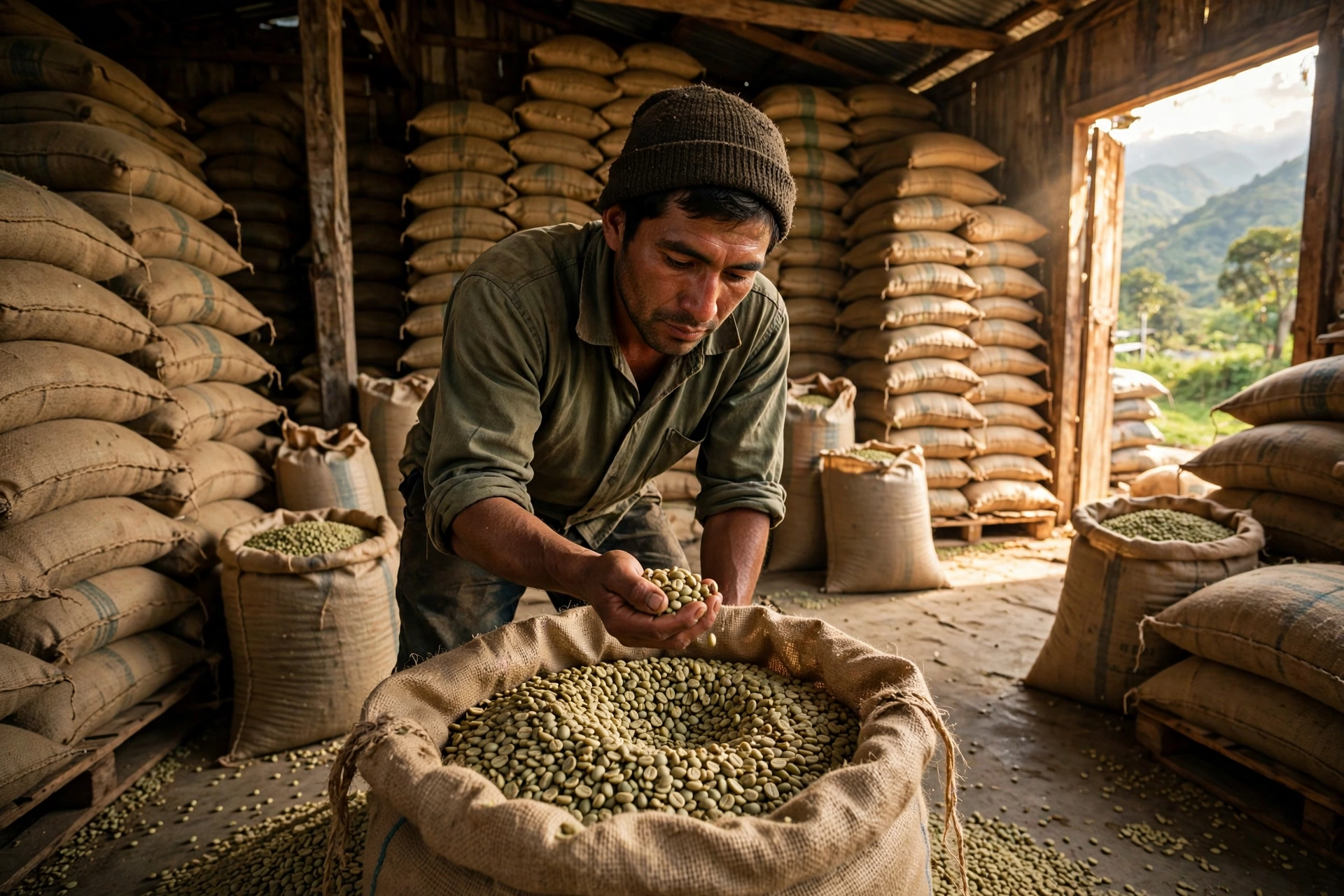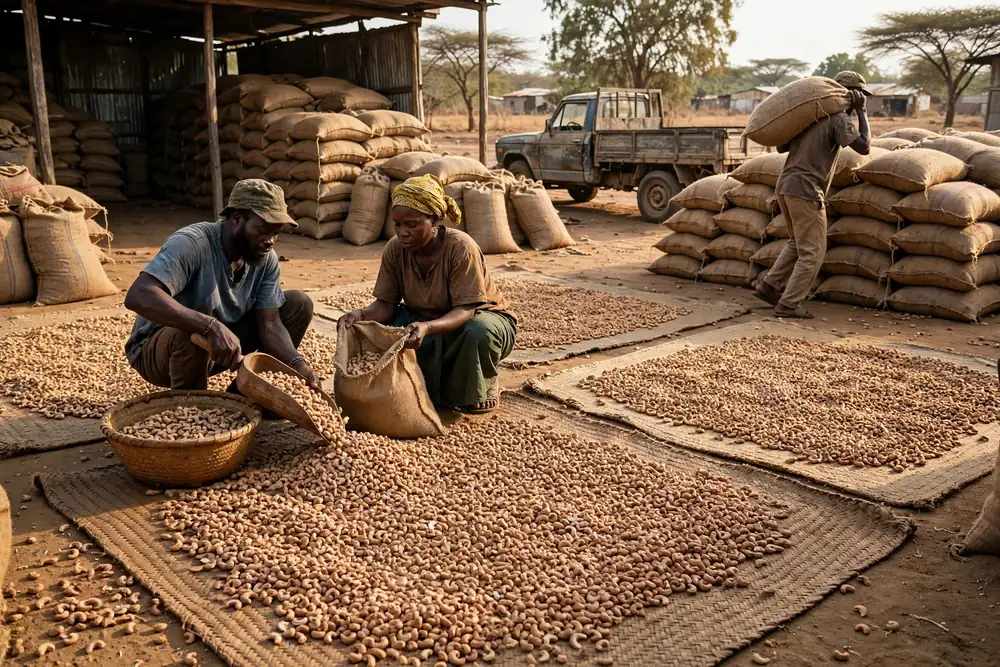
Let me tell you about a morning in March 2026 — a morning that shows you how Nigeria cashew export warehouse logistics really works. Six o'clock, still dark, and I was loading cashew nuts at a warehouse in Ogbomosho, in Oyo State. Trucks were already lined up at the gate, all headed for Lagos. The exporter, an old hand from Ibadan, stood by the weighbridge watching every 80-kilo jute bag go over the scale. The harvest had just opened in February, and the nuts still carried the damp of the fields. He told me the moisture was hovering right around the 8.5% line, the line that decides whether a shipment keeps its price or gets cut.
Fifteen years on the road, and cashew is one of the fussiest cargoes I know. It is not afraid of bumps. It is afraid of being smothered. A jute bag looks breathable, but stack those bags high and the ones in the middle get no air at all. The iron roof bakes by day, cools by night, and condensation forms right inside the bags. The exporter that morning was smiling at how full and heavy his bags felt. I said nothing. All I could think was: how much of that weight is water?
The real battle is not on the road — the truck from Ogbomosho to Lagos takes a day or so, bumps and all. But the nuts sit in a warehouse for days, sometimes weeks, and how that warehouse is run decides whether the shipment still hits a kernel outturn of 48 to 52 pounds at the processors in Vietnam or India. Let the moisture creep past 8.5%, and the buyer will dock your price without a second thought.
In Nigeria Cashew Export, the Enemy Is Stale Air, Not Distance
Most people think cashew storage is simple: find a big shed, stack the bags, keep the rain off. I am telling you, that idea has cost people real money. Rain is not what ruins cashew. Piling the bags too tight and sealing them in is what ruins it.
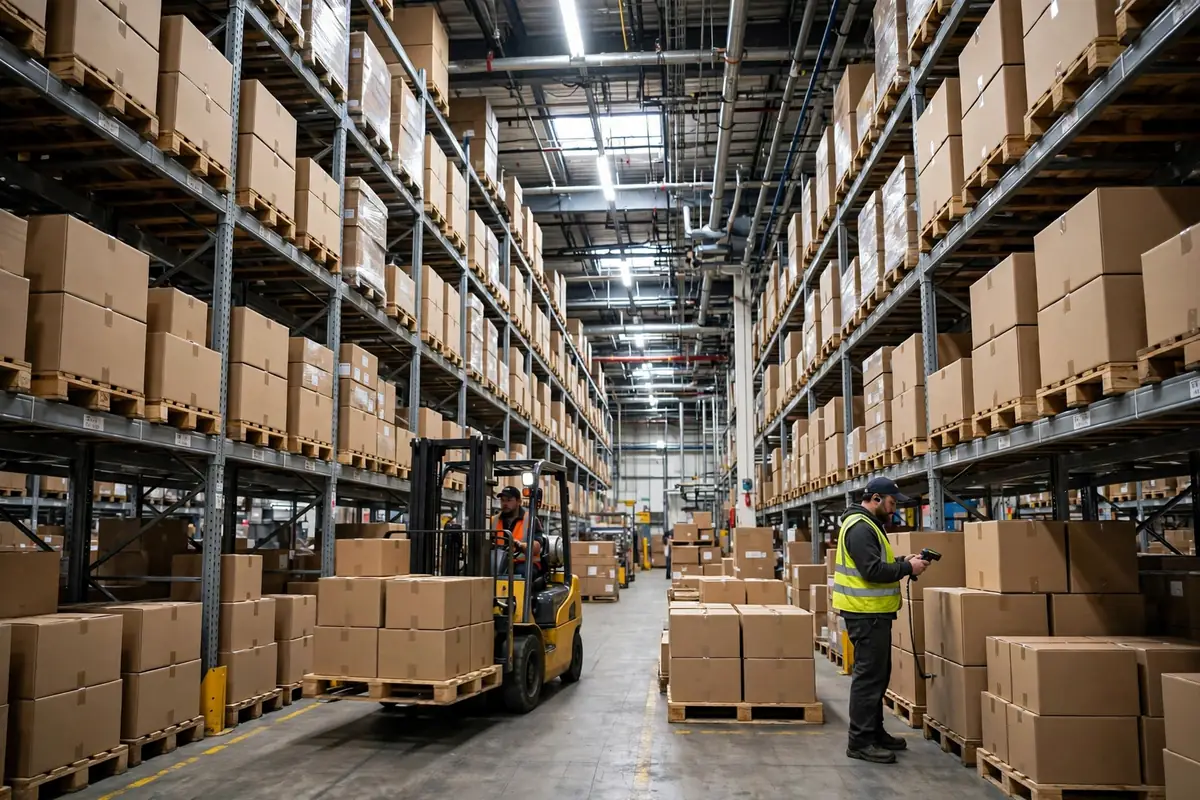
I once saw a collection warehouse in Oyo State that looked decent enough — concrete floor, iron roof, a small weighbridge at the gate. But the owner wanted to squeeze in every last bag, so he stacked them hard against the walls with no aisle in between. By late March the stacks against the wall went first: the bottoms were damp, a few nuts already showed mould, and that lot had to be picked out and sold separately at a much lower price. The owner told me later the spoiled bags alone would have paid several months of warehouse rent.
Here is the counterintuitive part: for cashew, ventilation matters more than cooling. Plenty of people rush to buy fans or air conditioning. I have seen the opposite — a well-ventilated simple shed keeps nuts in better shape than a stuffy big iron-roofed store. Cashew suffers when the temperature inside the bag drifts away from the temperature outside, and that gap is what makes condensation. Keep the air moving and the gap never builds up. Leave ventilation aisles, leave gaps between stacks, never stack hard against the wall. Those three moves cost nothing and beat any machine you can buy.
Then there is the moisture test, and it needs doing twice. Test when the nuts come in — during the February to June harvest the fresh crop runs wet, and that first test tells the exporter what he is actually holding. Then test again before stuffing the container. That second test is the one the buyer cares about: it decides whether the shipment ships at contract price. Test only once and you are reading half the ledger.
Nigeria Cashew Export Warehousing: Two Warehouses, Two Different Bills
Every exporter in Nigeria cashew export warehouse logistics has to answer one question: should the nuts sit up-country or near the Port of Lagos? My advice is: do not look at the rent alone. Look at the whole bill. Here is the comparison I use. I am not putting money figures in it — rent, trucking, and handling rates change all the time, so check the latest local rates.
| What to compare | Up-country warehouse (Ogbomosho area) | Port-side warehouse (Apapa / Tin Can area) |
|---|---|---|
| Rent | Usually lower, plenty of space | Usually higher, land is dear |
| Collecting the crop | Farmers deliver close by, fast intake | Nuts must first travel in from up-country |
| Ventilation | Mostly simple sheds, managed by hand | Mixed — only the pricey ones ventilate well |
| Moisture testing and sorting out mould | Labour is cheap, sorting is thorough | Labour costs more, sorting costs more |
| Stuffing the container | Empty containers must be sent up from Lagos | Containers are right at the port, load anytime |
| Sailing-date risk | The nuts still have a road journey ahead | Close to the ship, easy to catch the sailing |
Work it out for one 20-foot container: at 18 to 19 tonnes a box, with 80-kilo bags, you are looking at roughly 225 to 238 bags. Up-country, gathering a full container takes time, and how long depends on the season and the buying pace. At the port you do not wait for a full load — but every extra day the nuts sit there, the rent keeps burning. My rule is simple: keep the nuts up-country while you are still buying, then once the lot is complete and tested, move it to Lagos in one push and stuff the container. You get the best of both ends.
That March 2026 load was run exactly this way. The exporter spent weeks collecting at his Ogbomosho warehouse until he had two container loads, tested the moisture, picked out the mouldy nuts, and only then called the trucks. We left at six in the morning and were in Lagos before dark, stuffing the next morning. Both containers held their kernel outturn and nobody docked him a thing. His words stuck with me: "Let the nuts sit up-country as long as they like, as long as the shed breathes. Once they reach the port, do not let them sit — every day there burns money."
Before the Container Doors Close, Do the Checks Nobody Wants to Do
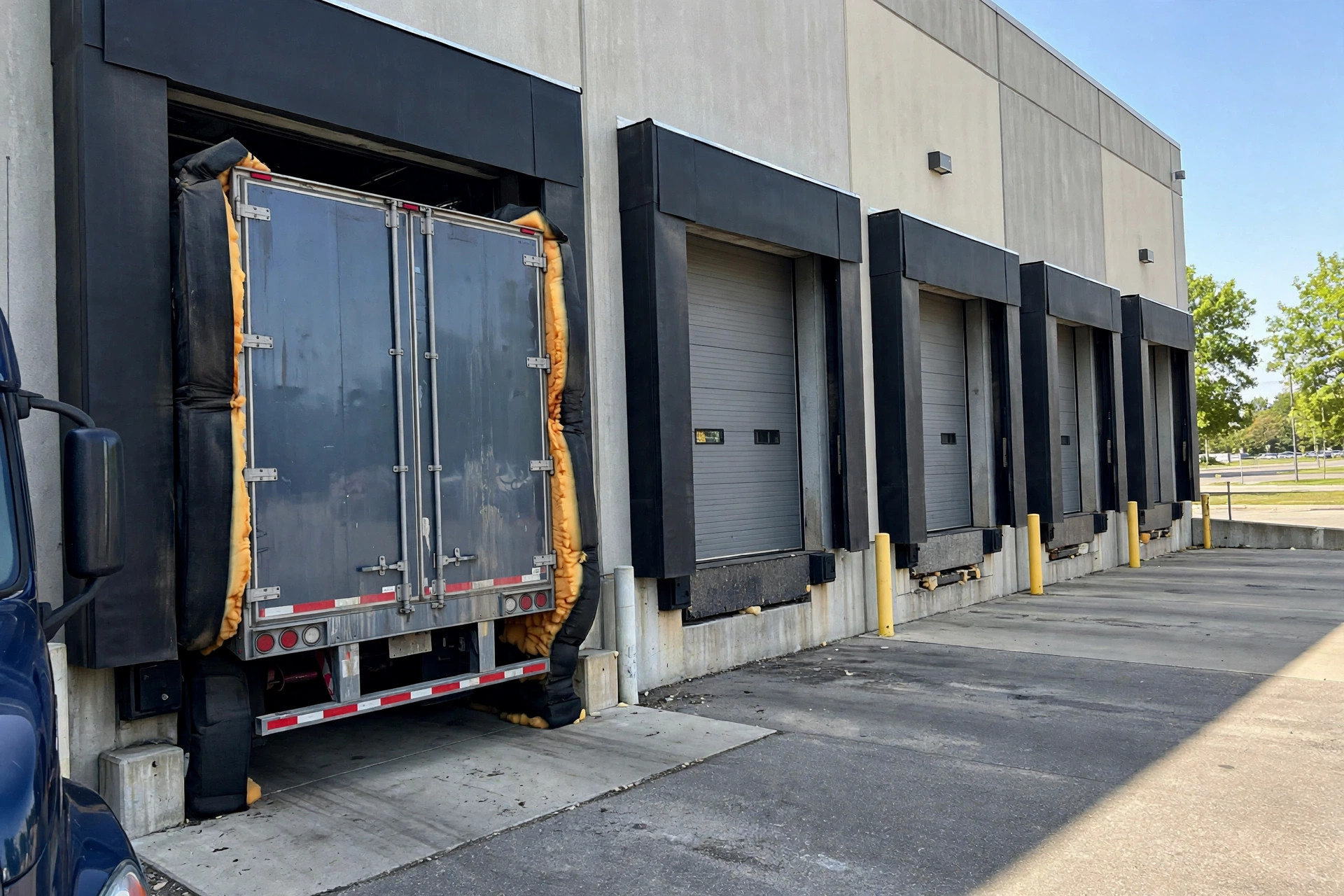
Apapa and Tin Can are where the last gate stands, and it is not at the quay — it is at the warehouse door. I have watched too many people lose money right there: the nuts were fine up-country, then at stuffing time the moisture test comes back over the line, or a few mouldy bags turn up mixed in, and the whole container gets priced down. Nobody treated the pre-stuffing check as a real job.
Three pieces of advice, all paid for by other people's mistakes:
First, sample bag by bag before stuffing — do not pull three or five bags and call it done. A container holds more than two hundred bags, and a tiny sample is no sample at all. Sample at random, not just the top layer — the middle and the bottom of the stack are where trouble hides.
Second, inspect the container before it enters the warehouse. Does the roof leak? Do the doors seal? Is there damp or a strange smell left over from the last cargo? I once saw a container whose previous load had been wet cargo — the floor was still damp, and three days after stuffing, the bottom bags were already stained. One lesson like that lasts a career.
Third, keep the paper: the intake moisture record, the count of mouldy bags picked out, the stuffing inspection sheet. When the buyer in Vietnam or India tests the cargo and wants to cut the price, records are what you argue with. Without them, whatever number the buyer names is the number you get. Paper costs nothing. At the right moment, it is worth money.
In Nigeria cashew export warehouse logistics, the winner is not the one with the fastest truck. It is the one whose warehouse is run with the most care. Ogbomosho to Lagos is not a long road, but the nuts spend far more time in a warehouse than on a truck. Run the warehouse right — 18 to 19 tonnes in a container, FOB Lagos, clean and dry — and the shipment goes out steady. Run it sloppily, and no fast driving will save you.
An old saying fits here: the cargo waits for the man. The harvest runs February to June, and the faster the buying, the steadier the warehouse side has to be. Keep the air moving, test the moisture twice, and check everything before the container doors close. Get those three things right, and the ledger pretty much balances itself.
By Shifu Zhao, Trucking Veteran (15 yrs)