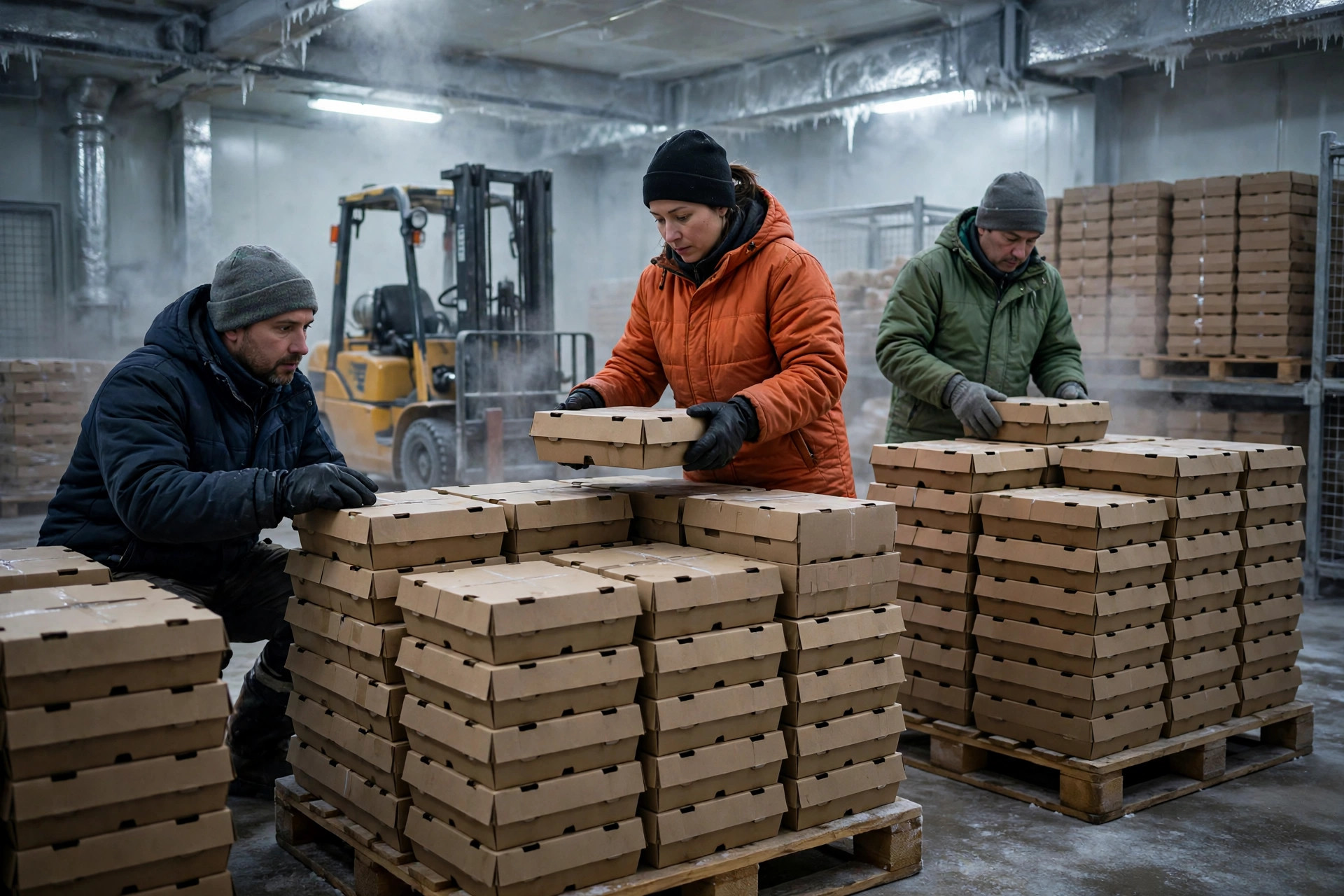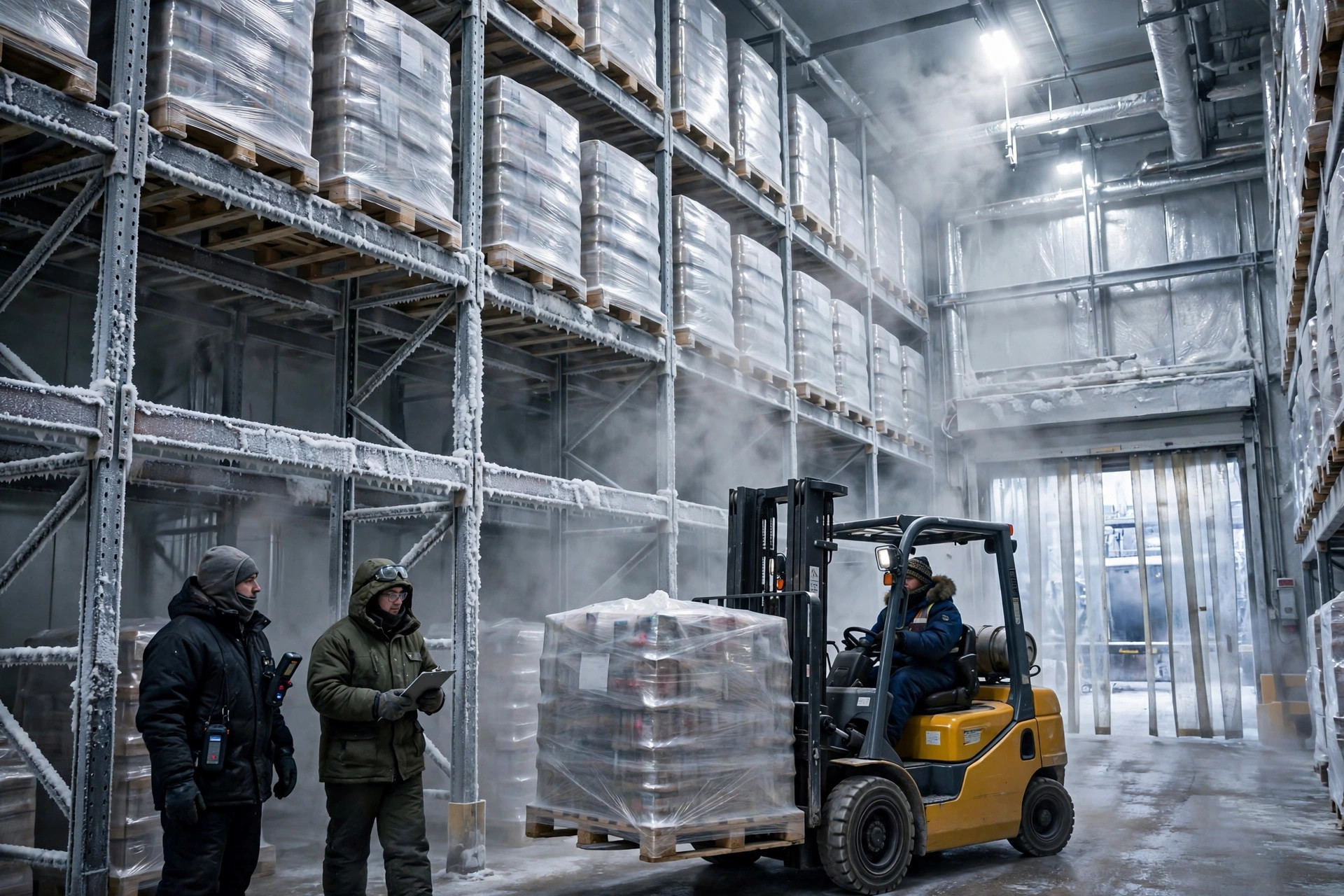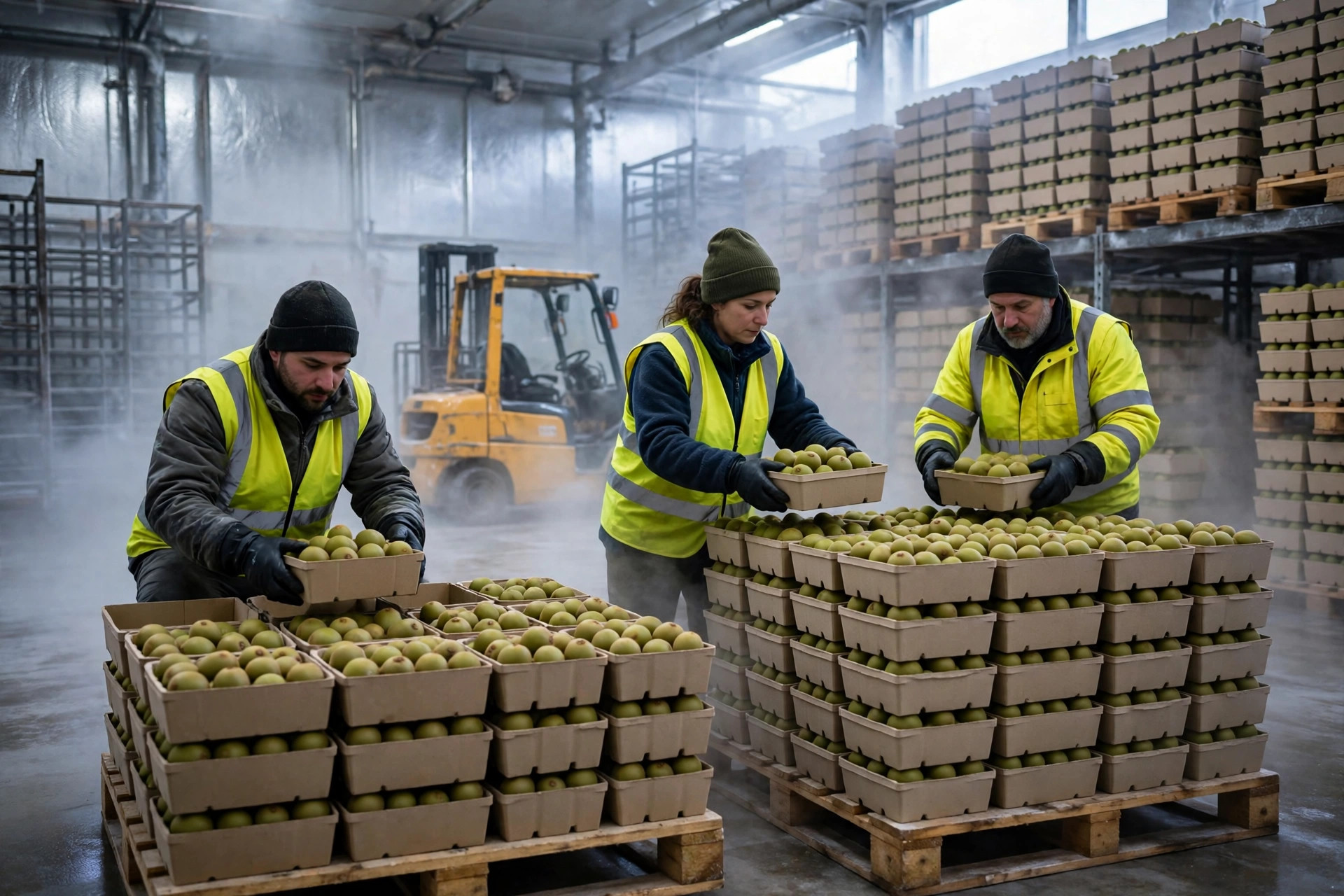
It was half past four in the morning, and the lights over the coolstore dock were still on. The forklifts were already warming up. The crew came in wearing heavy jackets, breath fogging in the cold air. The first trucks from the Bay of Plenty orchards were already on the road. During harvest season, from February through June, that is how every day starts. Whoever gets in first gets the pre-cooling slots. A load that arrives half a day late is a different load, even if the boxes look the same.
Let me be straight with you. Most people get the math of this business backwards. They worry about the sea voyage: how long the ship takes, whether the container holds steady. The voyage matters, of course. But what usually decides whether fruit arrives firm or soft is the first few hours after picking. Fruit comes off the vine still carrying field heat. It is still breathing. Softening has already started. If you do not pull the temperature down fast, the best ship in the world is just preserving fruit that is already on its way down. Cold storage preserves condition. It does not turn back time.
I made that mistake myself when I first took over this operation. Early one harvest season, trucks were stacking up at the coolstore gate. One load had been picked late and held up on the road, so it did not reach us until the afternoon. We were short-handed, and pre-cooling slipped to the night shift. The boxes looked fine, were loaded, and sent on to Tauranga Port the next day. When the load was opened at the other end, more fruit was soft than anyone had expected. Nobody argued about it. We all knew where the time had gone. After that, we made a hard rule: when a load arrives, the first question is when it arrived.
Pre-Cooling Is Where the Cold Chain Gets Lost
Pre-cooling is not just pushing pallets into a cold room and calling it done. Push them in and leave them, and the boxes in the middle stay warm while the outside cools. Our method is plain, but it works. Loads get split on arrival: early, good-shape fruit goes into pre-cooling first, while late or road-delayed loads go to a separate area ahead of the main queue. Mixed together, a few late pallets can drag down a whole container's result.
Grading happens in the same pass. Workers handle every carton, pulling out soft, bruised, or pressure-marked fruit before it goes onto an export pallet. Some people complain that this slows us down when harvest labor is tight. I tell them the same thing every season: slow in the coolstore beats soft at the port. A rejected carton costs one carton. A soft load costs your reputation with that buyer.
One detail trips up newcomers more than any other: how the pallet is stacked. Pack cartons too tight and cold air cannot get through, so the middle becomes a warm pocket. Pack them too loose and the load shifts on the road. Our fixed pattern leaves air channels, keeps labels facing out, and leaves one carton per pallet that can be pulled for a spot check without breaking the pallet down.
Ripening Cannot Be Rushed, and It Cannot Drift
Kiwifruit is not like other fruit when it comes to ripening. Push it too fast and it goes soft before the buyer has finished selling through it. Hold it back too long and it arrives hard, and the buyer complains that customers are waiting. We have tried both extremes, and both cost us. What we do now is work backwards from the sailing date. Once the vessel and container are fixed, we count back and set the ripening pace from there. A tight sailing means ripening starts later. A comfortable sailing leaves room to move.
Here is the counterintuitive part. When ripening is going well, the coolstore looks quiet. That does not mean there is nothing to do. It means the work was scheduled ahead of time: picking, pre-cooling, grading, ripening, each step landing when it should. A coolstore that is busy all day, every day, usually has a scheduling problem up front. Constant firefighting is often just yesterday's delay asking to be paid today.
Staffing is part of the same calculation. Harvest season runs February through June, and people get tired. We do not run everyone flat out. Two shifts, with clear jobs: night shift handles pre-cooling and grading only, day shift handles palletizing and loading. Night shift has the hardest hours, so it gets the simplest tasks. The simpler the job, the fewer the mistakes. Manage a warehouse long enough and you learn you are managing people's condition as much as fruit. Tired hands drop boxes.
Reefer Containers and Reefer Ships Play Different Roles
Out of Tauranga Port, we ship two ways: refrigerated containers and refrigerated ships. Running both is not about looking flexible. The two routes behave differently, and that is the point. A reefer container is flexible, one box at a time, with plenty of sailings, which suits staggered shipments. A reefer ship takes volume in one go, which suits peak harvest. Choosing by looking at one container alone is the wrong way to choose. You have to look at the whole season's rhythm. In peak weeks, betting everything on one route means one disrupted sailing backs up the entire coolstore.
When we cost it out, we do not cost a single container. We cost the season's turnaround. Containers turn fast, but every container means another round of checks at the dock. Ships take volume in one move and cut down on handoffs, but the loading window is unforgiving. Miss it and nobody can say when the next one comes. This is the decision frame we actually use on the floor:
| Option | When it fits | What to watch |
|---|---|---|
| Reefer container | Staggered shipments, frequent sailings | Temperature records and loading time for each container |
| Reefer ship | Peak-season volume in one move | The loading window and consistency across the whole batch |
| Both routes mixed | Peak weeks with unstable sailings | Do not split one batch so far apart that traceability gets messy |
That mixed approach is what a New Zealand kiwifruit export cold chain warehouse has to get right in a busy season: enough flexibility to keep moving when a sailing slips, without scattering one batch so far that nobody can trace it.
Records are the other lesson I will not forget. We used to think that once fruit left the dock, the paperwork was done. Then a buyer asked for the pre-cooling time on one batch, and it took half a day to dig out. Since then, every pallet carries its sheet: arrival time, pre-cooling time, ripening pace, loading time.
At Tauranga Port, the Handover Is Not a Formality
One night shift stays with me. A few containers reached the Tauranga Port coolstore while the port crew was changing shifts. The person on handover glanced at our driver's sheet, signed it, and moved on. No spot check, no question about the temperature record. I stayed until they did the checks properly. That handover is the easiest step to treat as a formality, and the easiest one to regret.
This is where a New Zealand kiwifruit export cold chain warehouse earns its keep or loses it: the handover has to be as disciplined as the pre-cooling. Temperature records must match the sheet. Pallet counts must match container numbers. Seals get confirmed face to face. Anything that does not match gets raised on the spot, not after the ship sails. Our routine now is simple: every handover gets a spot check, every spot check gets a signature, and the person who signs is responsible.
That night also taught me something broader. A cold chain is one line running from orchard to port, and any loose handover slackens the whole line. Orchard, coolstore, and port crews may never meet, but the sheet connects them. When times, temperatures, and counts line up, the line holds. In the busiest weeks, sheets are most likely to get vague, which is exactly when they need to be clearest.
So here is my word to anyone running a similar operation. Start the cold chain math at the orchard, not at the port. Arrival time, pre-cooling speed, and ripening pace decide the voyage before it begins. In peak season, ask arrival time first, split late loads for pre-cooling, and set ripening by counting back from the sailing. Those habits are posted by our coolstore door. They keep the next shift from fighting the last shift's fires. And that is what a New Zealand kiwifruit export cold chain warehouse is really selling: not cold air, but a season that holds together from the first morning truck to the last sailing out of Tauranga.
By Chen Feng, Warehouse Operations Manager