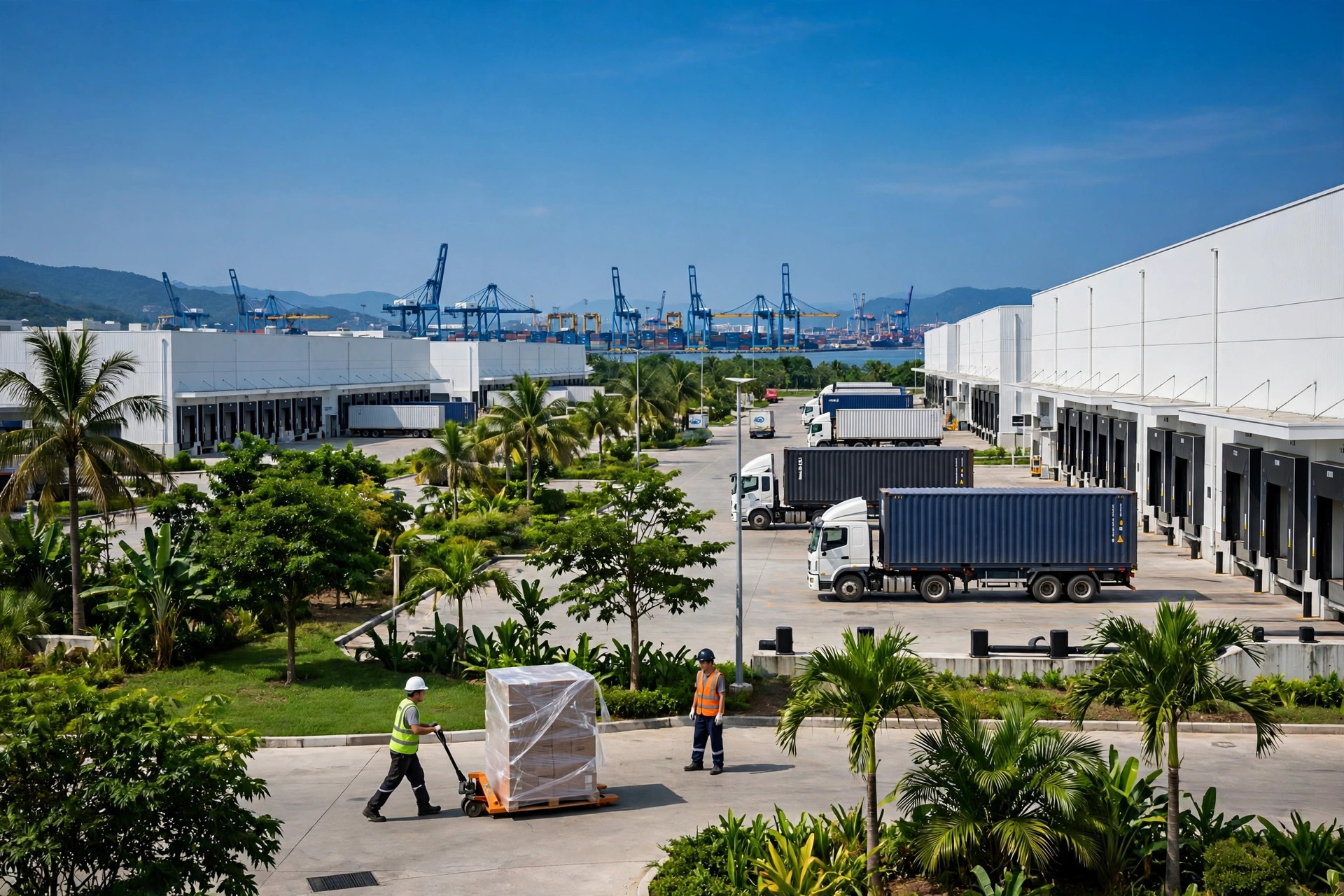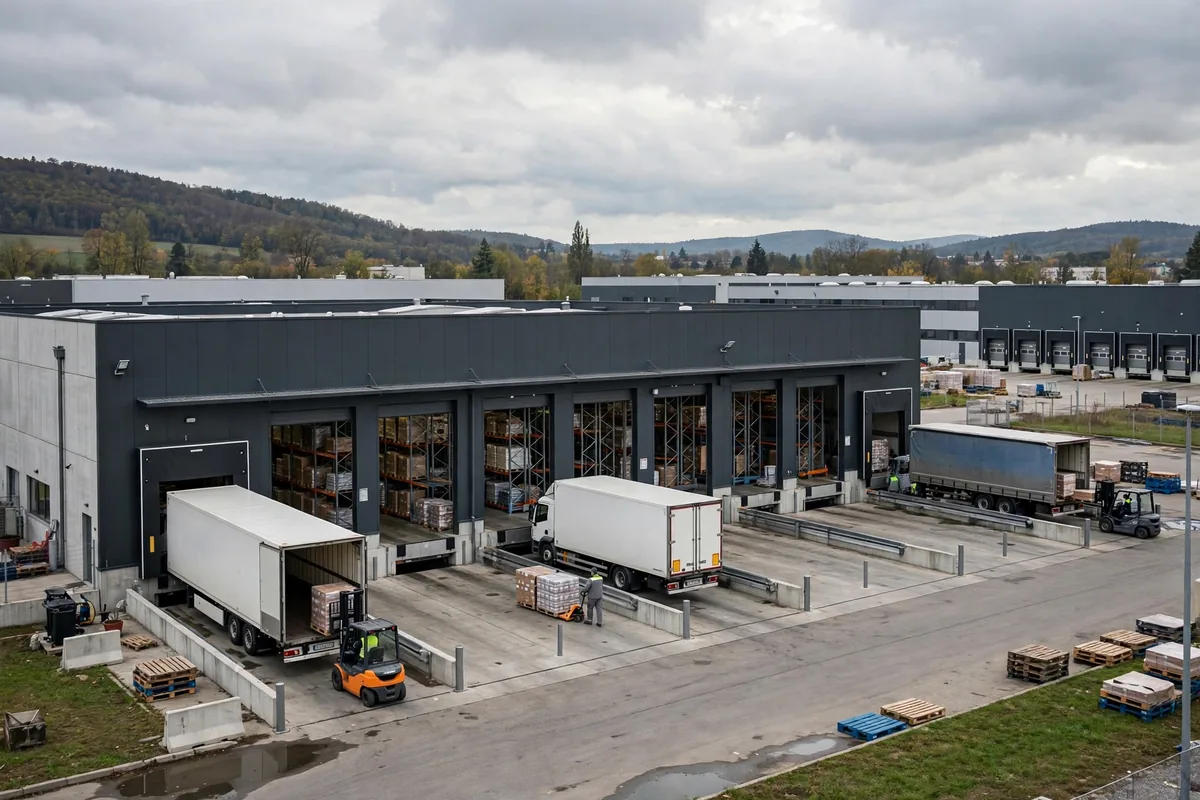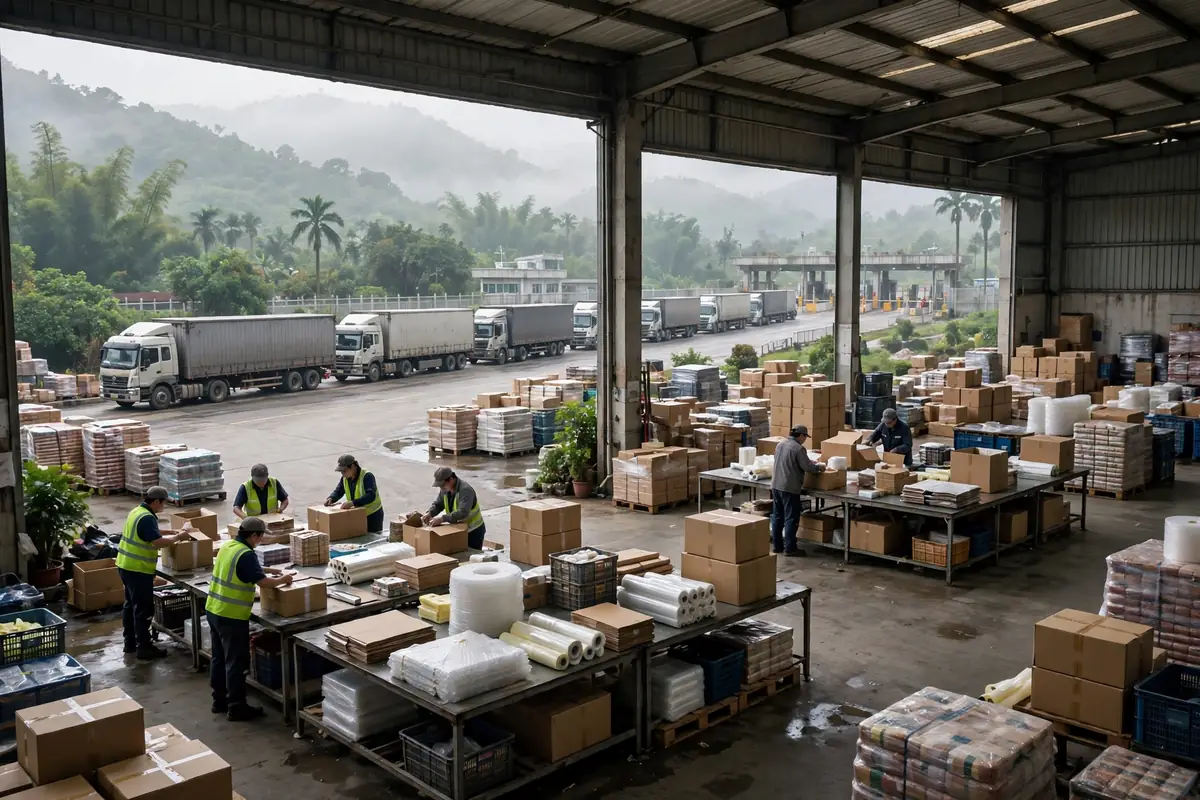
At 5:40 in the morning, the roller door at our Nanning warehouse was only half up, and three box trucks were lined up in the yard waiting to load. The drivers were squatting on the steps eating rice noodles, asking each other whether clearance at the Friendship Pass would move fast that day. Honestly, running nanning asean cross border warehouse logistics starts with the border clock, not with software or a rate sheet. It does not matter when the warehouse opens. What matters is whether a truck reaching Pingxiang and the pass can catch that day's inspection and transloading wave. Miss it, and the freight sleeps on the truck for another night, the customer chases us ten more times in the group chat, and the night crew stays up again.
I am a domestic warehouse man by trade — shifts, crews, floor discipline. This lane I look at as an outsider who moved in. From a distance, cross-border work looks like moving goods from A to B. Stand on the floor and you see what sits in between: two sets of trucks, two sets of drivers, two sets of paperwork habits, and a gate that opens and closes on its own schedule. Freight in Nanning is inventory. Freight on the road is a race.
nanning warehouse split: cross border freight cannot sit in one place
We run two stages now. The Nanning warehouse is the consolidation and processing site. The small forward warehouse near the border does transit and rescue work only, never long-term storage. Plenty of people ask why freight bound for Pingxiang is not simply parked next to the gate, close and reassuring. I thought that too, until it cost us.
Nanning does three jobs. First, receiving and inspection: goods arriving from factories in Guangdong and Guangxi are counted here, checked for crushed cartons and wrong labels, and fixed here. Second, consolidation and repacking: e-commerce freight from several sellers has to be split by destination and channel, weighed, and relabeled in Nanning, because nobody can sort it out at the gate. Third, building full truckloads, because a half-empty truck on this lane burns money. The forward warehouse does two jobs only: short holding while trucks are swapped, and quick fixes such as relabeling or document corrections close to the border. Its space is small and priced by location. Using it as cheap storage is paying premium rent to hold ordinary freight.
One Monday morning in November, during peak season, seven supplier trucks arrived at Nanning at roughly the same time. Three carried e-commerce goods bound for Vietnam, two carried manufacturing components, and two arrived with paperwork still incomplete. The packing benches jammed, temporary workers stacked component pallets next to e-commerce pallets, and a forklift driver nearly pulled the wrong pallet for outbound. We stopped for ten minutes and rezoned the floor: three lanes on the left for e-commerce only, two on the right for components, and a yellow zone for freight whose documents were not ready — received, but never staged for dispatch. That yellow zone is still there today. The crew's rule is simple: freight without wings does not get to queue for the flight.
What belongs in Nanning consolidation? E-commerce parcels, because they come from scattered origins, swing wildly in volume, and need combining, weighing, and labeling before they move. Manufacturing components, because they ship against production schedules in batches, and one missing carton holds the whole batch — completeness has to be policed where the workbenches are. And goods needing light processing, such as repacking, inserts, or bundle assembly, which the forward warehouse has neither the staff nor the benches to do. Freight that is highly perishable or on a brutally tight clock should not linger in Nanning at all; every extra handling is extra risk.
asean logistics rhythm: cross border shifts follow the gate, not the warehouse
Domestic warehouses schedule shifts around order volume. On this lane we schedule around the border first: when the gate opens and closes, when inspections peak, and when trucks on the Vietnamese side can actually arrive. In plain terms, nanning asean cross border warehouse logistics runs backwards. We fix the hour a truck must reach the border, work back to the loading hour, then back to picking and packing start times.
We tried the old three-shift domestic pattern. Trucks finished loading in the afternoon, arrived at the gate in the longest queue of the day, and drivers burned half a day waiting, which wrecked the return trip as well. Now the main Nanning shift is built around departure times, with picking starting before dawn in peak season. At the forward warehouse we keep a small crew whose only job is transloading and paperwork, including someone who can talk directly with drivers and brokers on the spot. The night shift is not about headcount. It is about coverage: while a truck is on the road or freight is at the gate, somebody in the warehouse must be able to answer the phone and pull up that pallet's photos and packing list.
The second scene happened during a truck swap at night. A Chinese truck arrived, inspection finished, but the receiving vehicle on the other side came late and the driver handover had never been properly confirmed. The freight waited in the supervised area for most of the night while our two-person forward crew took turns staying with it, rechecking every pallet count so the morning swap would go cleanly. After that night we set a hard rule: no truck departs until the receiving vehicle and driver details have been confirmed back to us. Late departure is a cost. Freight stranded at the gate with nobody receiving it is a risk. Those are not the same thing.
On clearance itself, I only talk about what the floor controls. Documents are checked in Nanning the day before dispatch, and any mismatch between paperwork and goods — names, counts, weights — stops the shipment at our door. Specific declaration requirements and charges follow the latest border policy; we never guess them from habit. Every error caught inside saves a round trip of fuel, labor, and a customer's delivery date.
Here is a hypothetical example, clearly an assumption and not a real quotation. Suppose e-commerce freight from three suppliers travels separately to the border: three loose trips plus repeated sorting at the gate. Consolidated through Nanning, it becomes three short inbound trips and one full outbound truck, with one extra handling in between. On freight cost alone, direct shipping looks cheaper. Add gate waiting, sorting labor, and the cost of one rejected load coming back, and consolidation is the steadier choice.
| Factor | Consolidate in Nanning | Ship direct to the border |
|---|---|---|
| Transport | Full loads, better truck use | Loose loads, poor truck use |
| Inspection and labeling | Full benches, rework possible | Basic fixes only |
| Document errors | Caught before departure | Found at the gate, costly returns |
| Gate waiting | One coordinated arrival | Several shipments queueing |
| Best for | Parcels, components, processing | Complete, urgent full batches |
Here is the counterintuitive part: a forward warehouse closer to the gate does not make the lane faster. Speed comes from paperwork being right and the receiving truck being there, not from where freight slept the night before. Moving unready freight a hundred-plus kilometres closer to the gate just relocates the problem onto the most expensive ground available. We would rather spend half a day in Nanning getting freight right than gamble at the border. That is the real difference in nanning asean cross border warehouse logistics: distance creates no speed; the handover does.
Our dispatch decision is three questions on the whiteboard at the outbound door. Is the batch complete? Do the documents match the goods? Are the receiving vehicle and timing confirmed? Three yeses, the truck rolls. One no, the problem gets fixed in Nanning and the freight does not travel sick. New hires learn those three questions before they learn the system screens.
A closing word to fellow warehouse people. Do not treat the Nanning warehouse as a cheap big shed. Treat it as the metronome of this lane: receiving, inspection, consolidation, and truck building, each beat matched to gate hours and truck swaps on the other side. Schedule the border first and the shifts second. Judge freight by completeness and paperwork before freight cost. Let the forward warehouse rescue, never store. Fix those three habits, and even in peak season the floor stays calm. That is simply how we run it now — not the cleverest method in the world, but the trucks leave on time, and my crews work fewer all-nighters than they used to.
By Chen Feng, Warehouse Operations Manager