Here's a number to start with: on a warehouse insured for $10 million, a 3% named storm deductible means you pay the first $300,000 out of pocket before the insurer pays a dime.
Not $30,000. $300,000. Most warehouse operators I meet have never done this math until I put it in front of them — and the look on their faces tells me everything about how insurance gets bought in this industry: premium first, fine print never.
It's not a flat fee — it's a percentage of your insured value
A named storm deductible is a special provision in commercial property policies across hurricane country, and it works nothing like a standard deductible. Your regular deductible might be a flat $25,000. The named storm version is calculated as a percentage of the insured value — typically 2% to 5%, per the policy terms.
The math is simple and brutal: $10 million of coverage at 3% is $300,000 retained. $5 million at 5% is $250,000. The bigger the building, the uglier the number. In Florida, Texas, and Louisiana, this clause sits in practically every warehouse policy — not because the insurer dislikes you, but because that's how regional risk gets priced.
Two traps people miss. First, it triggers per named storm, not once per year. In 2020, Louisiana took two hurricanes — Laura and Delta — in a single season, and the deductibles stacked. I know an operator who learned that the expensive way. When you buy the policy, ask your broker exactly how the trigger is worded and write it down. Second, storm-surge flooding usually isn't covered under the wind provisions at all — that takes separate flood insurance. Every hurricane season, somebody discovers that most of their "wind damage" was actually water, and finds out at claim time. Too late. Third, "named" is literal: only storms officially named by the National Hurricane Center trigger the clause. Most claim disputes live in the gray areas — wind speed thresholds, the exact naming timestamp — and the policy defines all of it. Read those definitions before the storm, not after.
One more wording trap: some older policies say "hurricane deductible" instead of "named storm deductible." A hurricane deductible is typically tied to hurricane-force winds at your location; a named storm deductible triggers as soon as the National Hurricane Center names the system — which can include tropical storms that never reach hurricane strength. The named-storm wording is broader, which means it can apply more often. Know which version your policy uses.
Since Hurricane Ian in 2022, Florida's commercial property market has hardened noticeably: higher premiums across the board, and some carriers walking away from coastal business entirely. My take: that's exactly when you don't gamble on being underinsured. Rising premiums and high deductibles are the market telling you the risk is real. When the market hardens, read the terms more carefully instead of lowering your coverage.
Money spent on mitigation buys you leverage at renewal
You can't dodge the deductible, but you can negotiate premium and terms — and your leverage is documented mitigation work.
Underwriters price risk, not intentions. Roof hardening (upgraded roof-to-wall connections, a full roof system inspection), flood barriers and a sandbag plan, a backup generator, a written emergency plan with drill records — these are things you can put on the table. My rule: don't start assembling this a month before renewal. Keep photos, invoices, and third-party inspection reports as you go. A stack of evidence beats "we take safety seriously" every time.
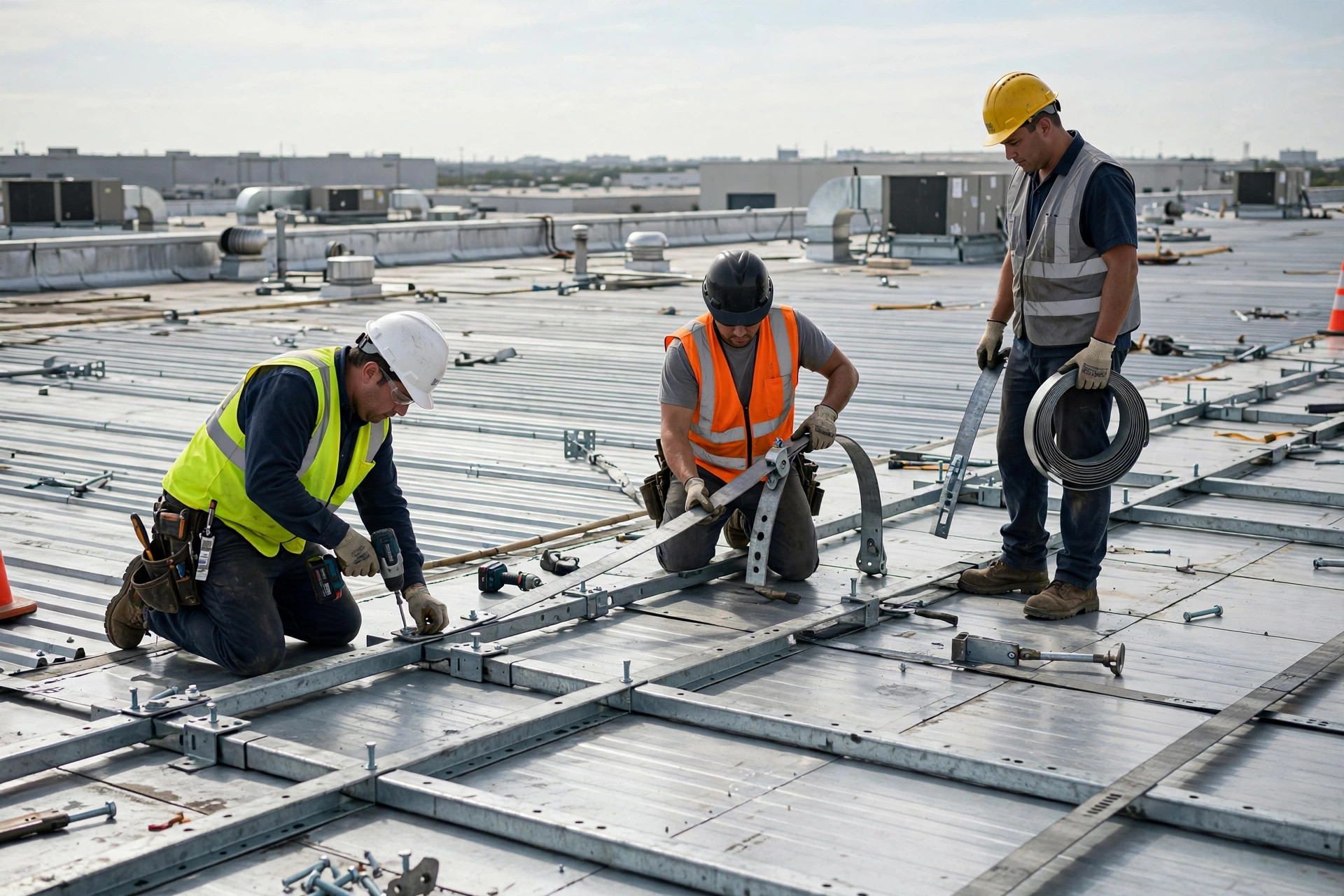
But keep expectations honest: spending $100,000 on hardening won't cut your premium by $100,000. The real return is quieter — less damage when it hits, shorter downtime, and maybe you never touch that $300,000 retention at all. When Hurricane Ian came ashore in southwest Florida in 2022, one operator I know lost part of a roof but was shipping again in 4 days because the hardening held and the generator carried them through. The warehouse next door, no hardening, took three months to repair. No policy reimburses three months of lost orders.
And know what a real claim timeline looks like, because nobody walks you through it in advance. The storm passes, and your first job is documentation — photos and video of every damaged area before cleanup begins, because the adjuster will arrive weeks later and memory won't count. Notify your broker and carrier within days; policies have prompt-notice requirements, and late notice gives them leverage. Then wait: the adjuster inspects, the carrier separates wind damage from water damage (expect an argument here), and settlement talks drag on for months. The operators who get paid fastest are the ones with the thickest documentation file. Start it the day after the storm, not the day the adjuster calls.
This math belongs next to another option: voluntarily raising your deductible to lower the premium. Going from 3% to 5% usually buys a meaningful premium cut — but ask yourself one question first: if a storm hits, can your cash flow survive writing a $500,000 check? If not, don't chase the cheaper premium. Insurance is for sleeping at night, not for saving money.
There's one more angle worth raising with your broker: business interruption coverage and how it interacts with the deductible. Some operators discover after the fact that their downtime coverage has its own waiting period on top of the property deductible. Ask before the storm, not after.
Before you call your broker, get these four things ready
Start 60 to 90 days before renewal — not two weeks before expiration. And walk in with four things.
First, your loss and claims history. Clean is best; that's your bargaining power. If you've had claims, attach what you fixed afterward — don't make the underwriter guess.
Second, your mitigation file: photos, invoices, inspection reports. All of it, organized.
Third, the building's basics: year built, last roof replacement or major repair, fire suppression and drainage condition. This is what underwriting actually looks at, and an aging roof is the number-one reason for a hike. If the roof hasn't been touched in 15 years, deal with that before you negotiate anything — otherwise you're arguing uphill.
Fourth, get competing quotes. Don't marry one broker. The market moves every year, and comparison shopping works here too.
And while you're talking to the broker, ask three questions: what's the carrier's financial rating and claims reputation — a cheap policy from a carrier that drags its feet on claims is no policy at all; are there exclusions I haven't noticed, especially around water damage and mold; and if I switch carriers this year, how do we bridge the transition so there's no gap in coverage. Ask those three and the broker will know you're not a novice — and the quotes tend to get sharper.
Some lines that work in the room: "What mitigation credits are available for the roof work we completed two years ago — show me the line item." "If two named storms hit in one season, is there a per-occurrence cap or an annual aggregate on the deductible?" "Walk me through the wind versus all-other-perils breakdown — where exactly am I overpaying?" Brokers negotiate these terms every day; most warehouse operators never ask. The ones who ask get the better wording.
Here's the honest bottom line: insurance is a backstop, not a plan. No deductible math, however clever, beats a building the storm can't hurt.
So here's something you can do tomorrow: pull your warehouse policy, find the named storm deductible clause, and run your own number with the formula above. Once you see it, you'll know exactly what to negotiate at renewal.