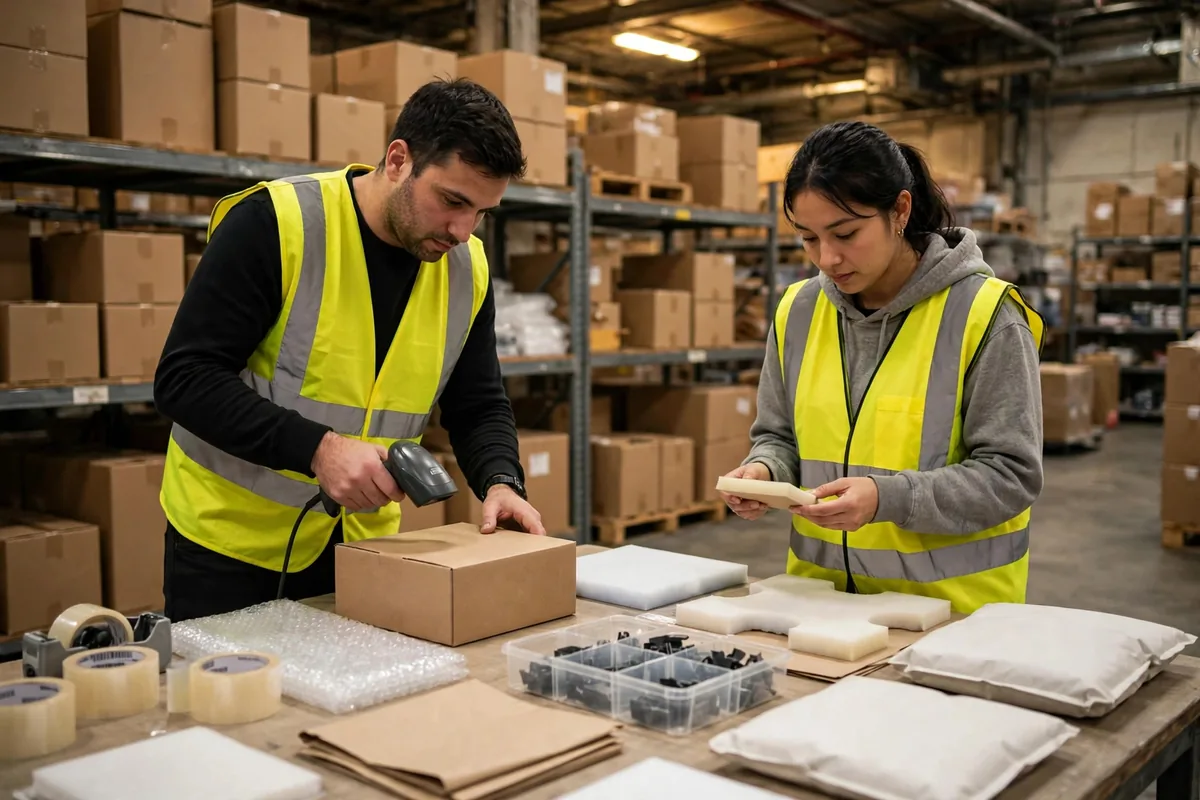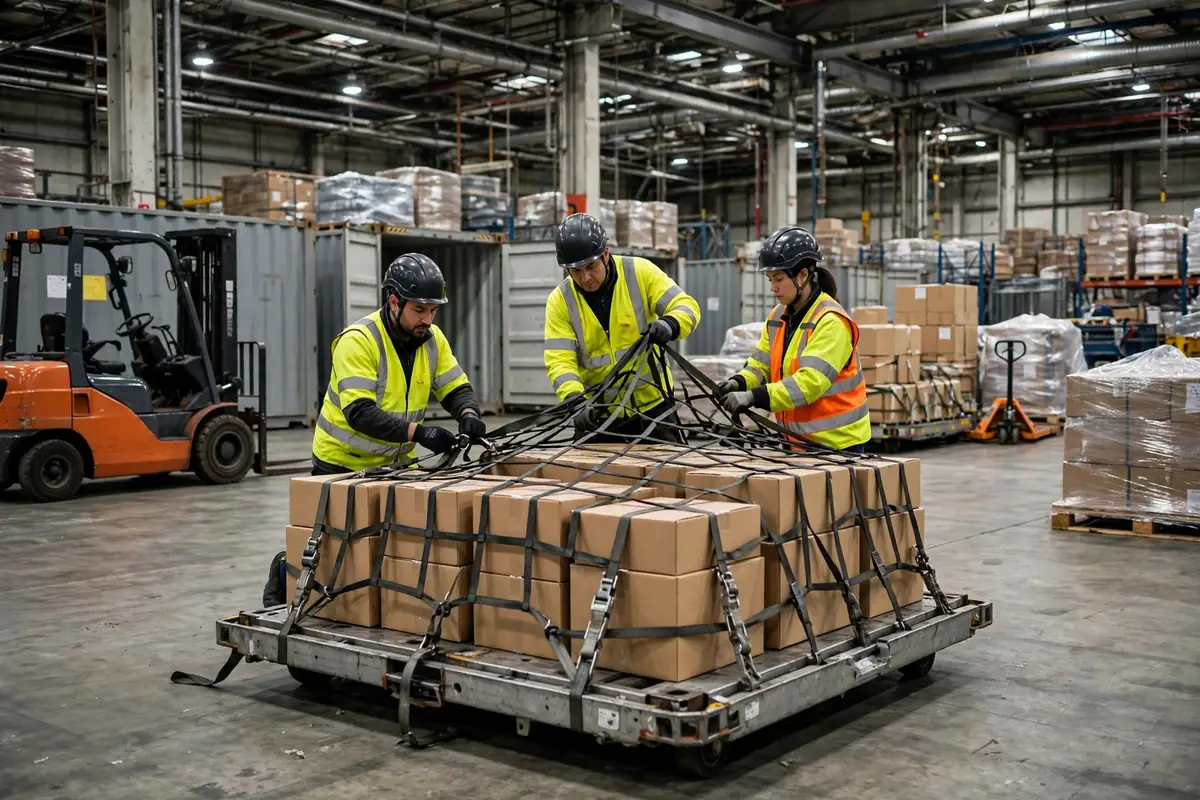
Amazon changed the rules again. MCF fees went up in January 2026, and my fulfillment cost per order jumped overnight. That part is old news — the platform moves the goalposts every year. The real headache was multichannel fulfillment order batching: the same SKU selling on Amazon, my own Shopify store, and Walmart at the same time, with my little self-run warehouse handling two kinds of orders — the ones I push to MCF, and the ones we pick and ship ourselves. During last November's big sale week, I threw both kinds into the same picking wave. Picking pace fell apart.
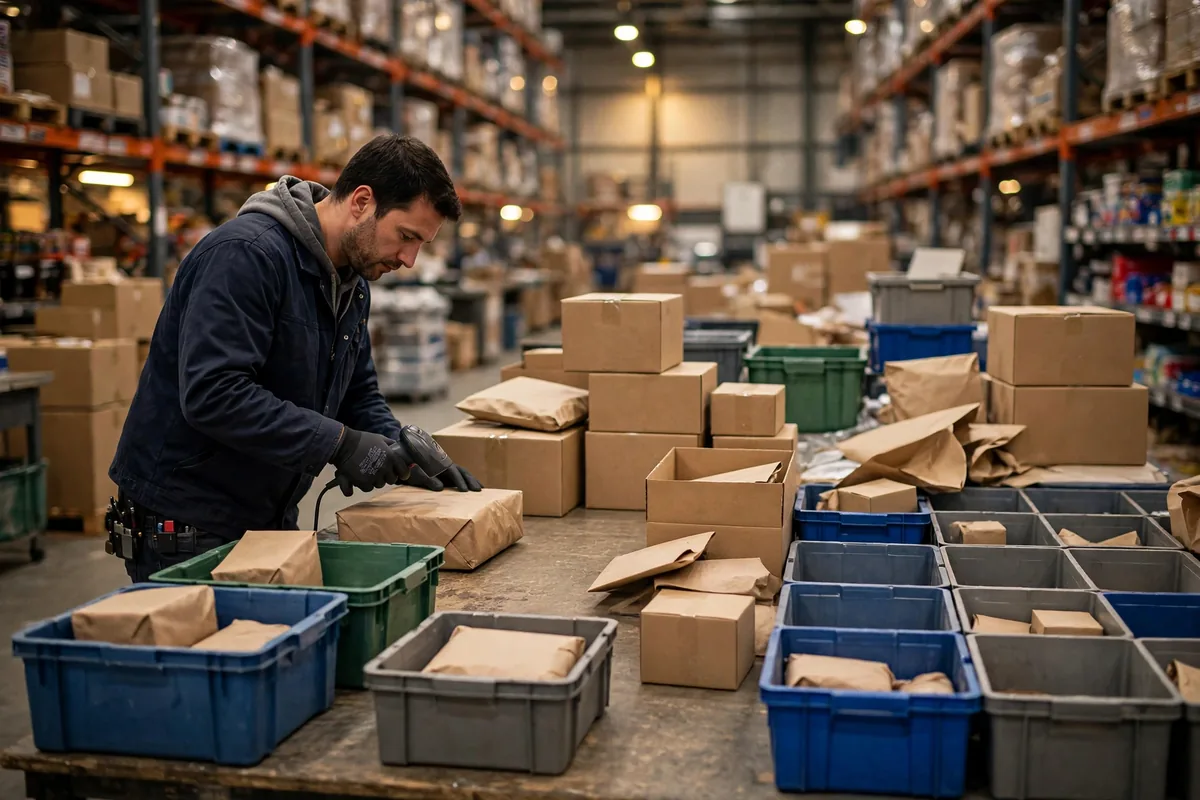
I still remember the numbers from that day. 330 orders in one day: 180 from Amazon, 90 from my own site, 60 from Walmart. Three pickers in the warehouse. By noon we had shipped 140 orders. Normally we'd be past 200 by then. The problem wasn't headcount. It was the 60-plus MCF orders sitting inside the wave. Those orders never needed our pickers at all — the stock sits in an FBA warehouse and Amazon ships it. But there they were, clogging up the wave. At every bin, a picker had to stop and check: is this one ours to pick, or is it an MCF order? Every stop cost minutes. Four waves a day, and we lost over an hour to nothing.
That week taught me the first rule of multichannel fulfillment order batching: draw the line before you batch anything.
Multichannel Fulfillment Order Batching Starts With a Hard Line
MCF orders do not go into your warehouse's waves. Sounds obvious. Plenty of sellers get this wrong anyway.
Here's how MCF actually works: it draws on the same inventory you already have sitting in FBA, and Amazon picks, packs, and ships orders that came from other channels. Packaging is unbranded by default. Standard delivery is 3 business days, expedited is 2. The moment an MCF order is placed, it stops being your warehouse's problem. Your warehouse handles exactly one kind of order: self-fulfilled ones.
So every morning I run a triage, three questions, no exceptions. One, which channel did the order come from, and what delivery promise did we make? Two, which inventory pool actually has the stock, the FBA pool or my own warehouse? Three, does this channel have special packaging requirements? Answer those three and the order sorts itself: MCF orders go straight to Amazon and never touch the wave plan. Only self-fulfilled orders get batched.
If you want the full picture of how Amazon MCF itself works, there's a solid walkthrough in this Amazon MCF multichannel fulfillment guide — setup, fee structure, the lot. I won't repeat it here. This piece is only about what happens after the split: how to run waves for the orders that stay in your building.
Triage also stops the two pools from fighting each other. MCF and Amazon orders share one FBA inventory pool. Push too many MCF orders and your Amazon listings can stock out. I learned that one in August last year: a product blew up on my own site, I pushed everything to MCF, and the next day the same SKU showed 3 units left on Amazon. The listing lost rank for two days. My rule now: if FBA stock drops below 7 days of sales, MCF gets switched off for that SKU. Better to ship slow from my own warehouse than to starve the Amazon listing.
Multichannel Fulfillment Order Batching by Cutoff Time, Not by Channel
Once the split is done, how do you run the waves? By cutoff time, not by channel.
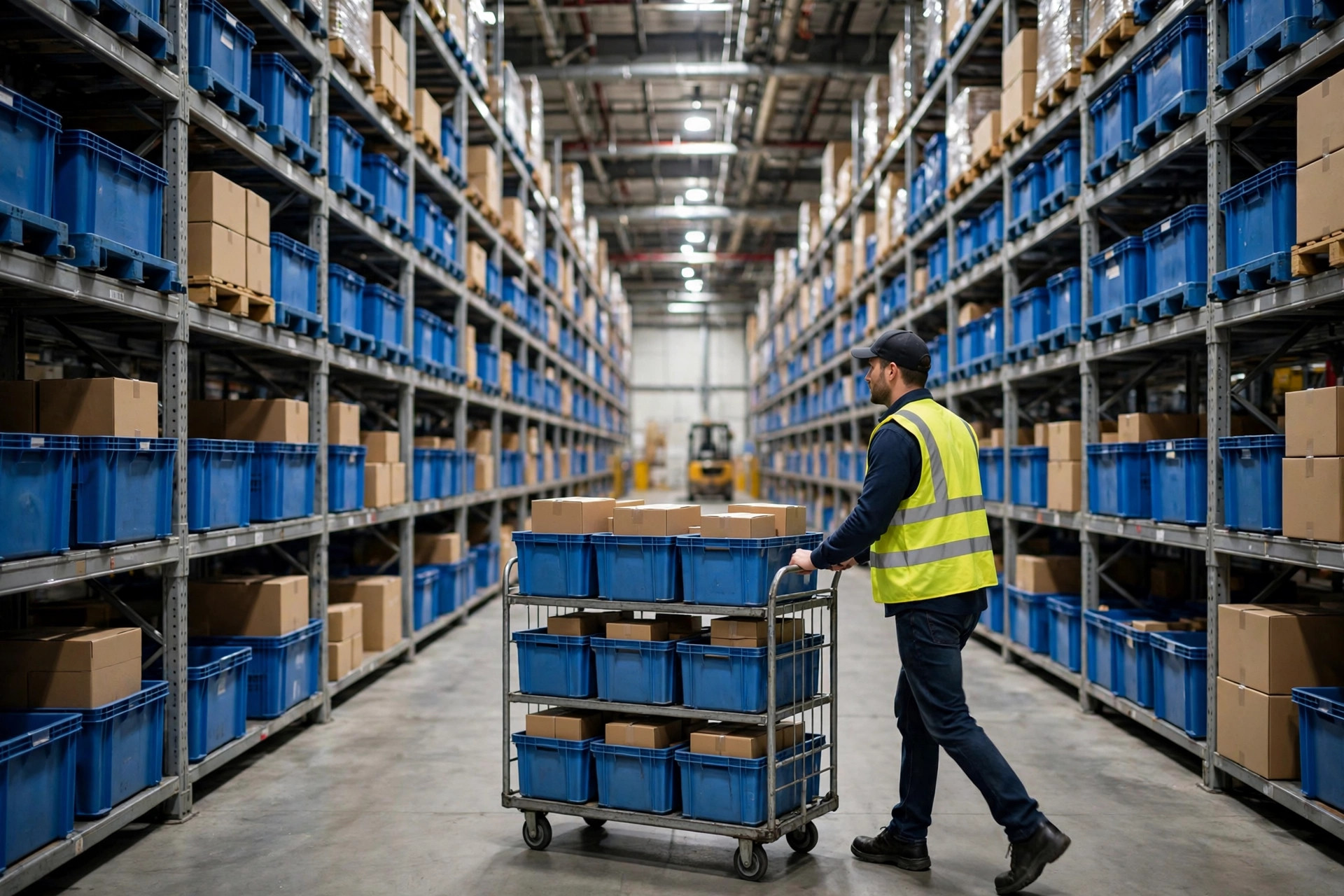
A lot of sellers batch by channel: one wave for Amazon, one for the store, one for Walmart. Looks tidy. Wastes the most walking. The same SKU sells on all three channels, so batching by channel sends a picker to the same bin three times. I cut waves by cutoff instead: one wave at 11 a.m., one at 3 p.m., one at 7 p.m. Inside a wave, it doesn't matter which channel an order came from — if the bins are on the same route, the orders get picked together.
The trick is grading by delivery promise. My own site promises dispatch within 2 days; Walmart's orders have an earlier cutoff because the platform is stricter. So Walmart orders go into the morning wave, and my own site's orders can wait for a later one. The wave sheet lists exactly two things: the cutoff time, and the time everything must be out the door. The channel name is just a note, not a grouping rule.
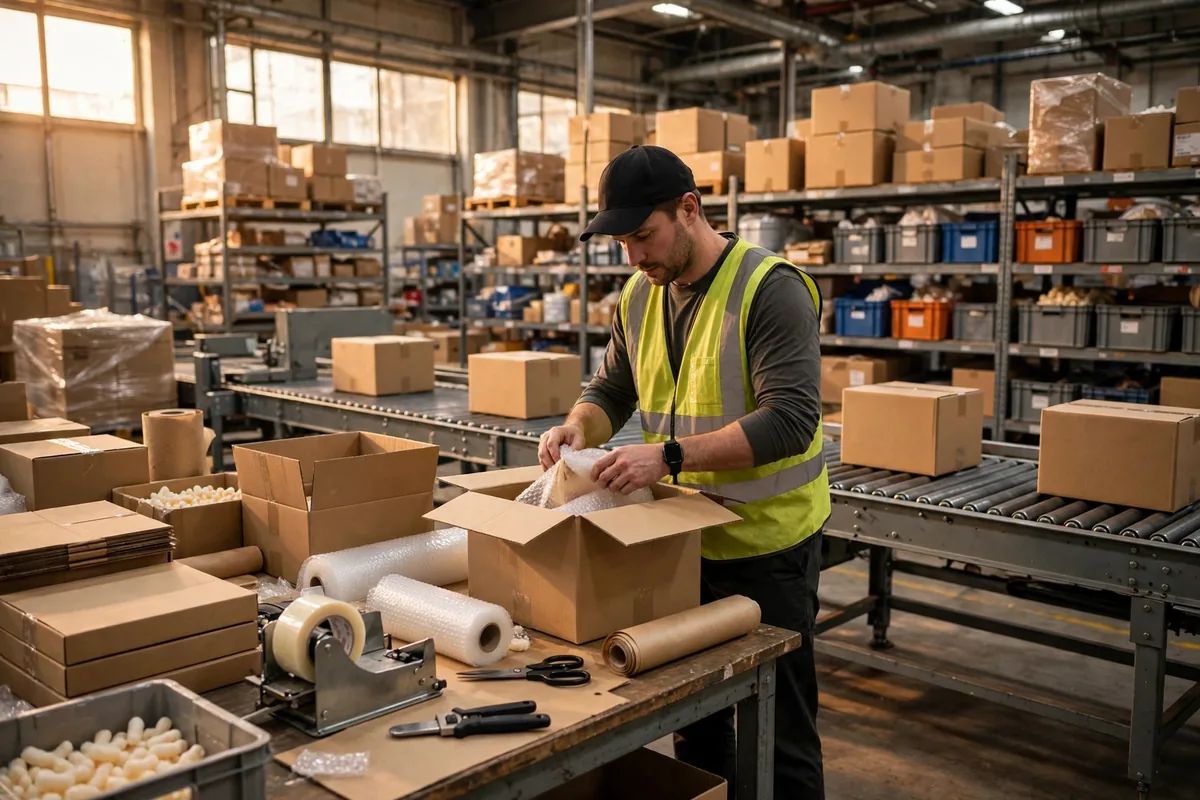
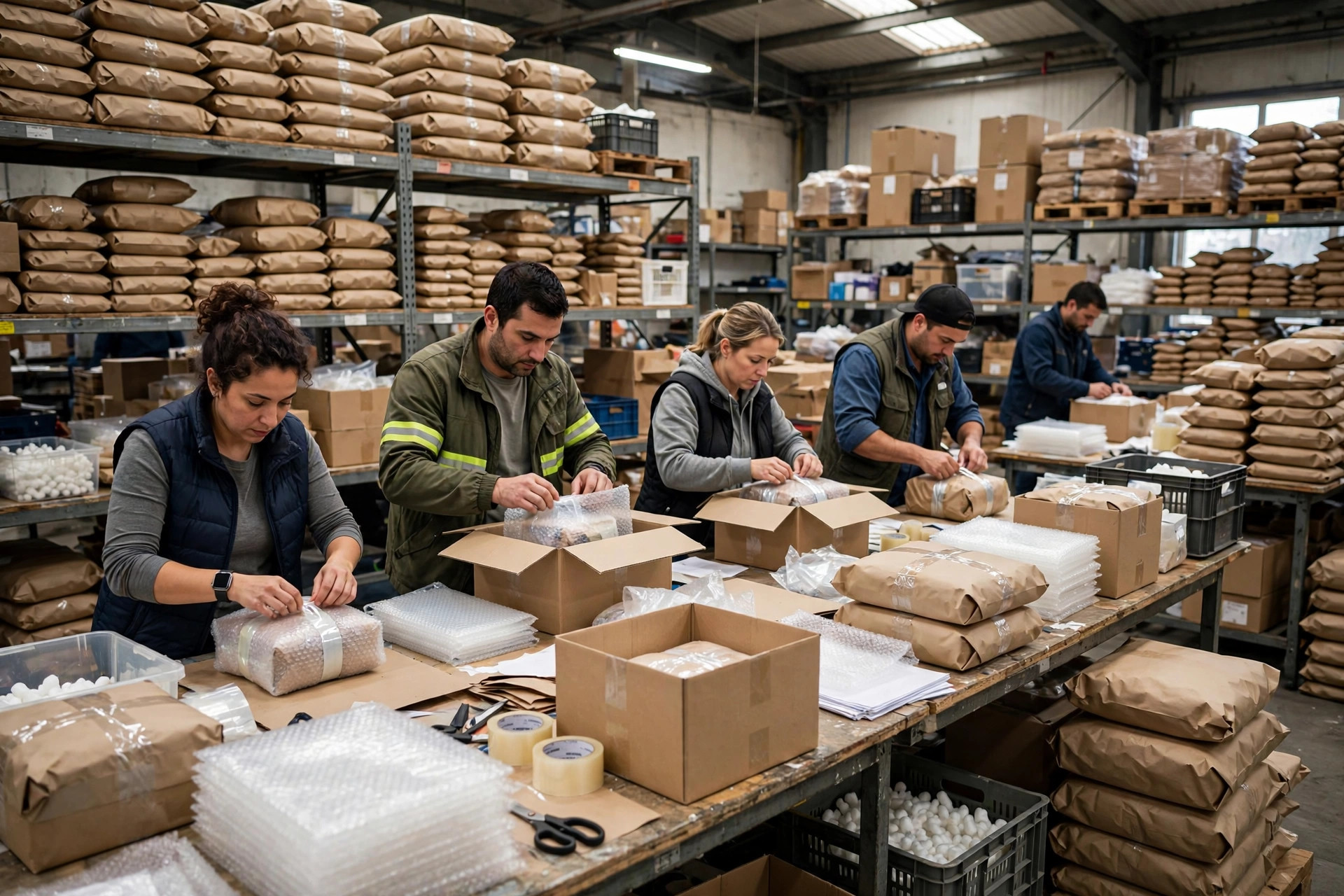
Batching itself has three hard rules, and I won't batch orders that fail any of them. Same bin zone: force orders from different zones into one batch and the picker walks more than the batching saves. Same packaging: standard boxes in one batch, orders needing bubble wrap or gift boxes in another. Same urgency: mix expedited orders with standard ones and the expedited ones get dragged down while the standard ones get knocked off rhythm.
The Math: What Mixing MCF Into Waves Actually Costs
Here is a worked example, using assumed figures. Say my warehouse handles 200 self-fulfilled orders a day, picking pace is 50 orders an hour, so the day's picking takes 4 hours. Pickers earn 20 dollars an hour, so picking labor runs 240 dollars a day.
Now stuff 60 MCF orders into those waves. Each wave picks up about 20 minutes of checking and waiting. Four waves a day means 80 minutes lost. At 50 orders an hour, 80 minutes is about 66 orders not picked. Those 66 either get done in overtime or slip to tomorrow. Overtime for 80 minutes across 3 people is 4 extra labor hours, 80 dollars gone. Worse is the slip: my own site promises dispatch in 2 days, and a one-day slip can mean a bad review. One bad review costs a lot more than 80 dollars.
Here's the counterintuitive part: smaller waves run steadier. Everyone assumes bigger batches are better, that a 200-order wave is the dream. I tried it. In a giant wave, pickers zigzag between bins and spend more time hunting than picking. My wave cap is now 60 orders — anything bigger gets split. Splitting feels like extra work, but daily output actually rose about 15% over two weeks of comparing. That's my own warehouse's number, measured, not guessed.
One more trap: returns. MCF doesn't handle returns for non-Amazon orders. Returned goods come back to you. I had a batch of Walmart returns shipped straight to my warehouse, nobody recognized the orders, and the boxes sat in a corner for two weeks before anyone noticed. Now the triage sheet has an extra line: where does each channel's return go? It's printed and taped to the packing bench.
No wave plan lasts forever. Channel rules shift every quarter, fees move, order mix changes. I review the wave sheet every two weeks: whichever channel's volume went up, its cutoff moves earlier. The method stays the same, though. That's multichannel fulfillment order batching in one line: draw the line, batch by cutoff time, and only batch what shares a bin zone, a packaging type, and a deadline.
This one I tested myself. Last month's sale: 410 orders in a day, 3 people, everything out the door by 8 p.m., no overtime. Same volume last year, we were still packing at 11 p.m.
By Ah K, E-commerce Seller (5 yrs)