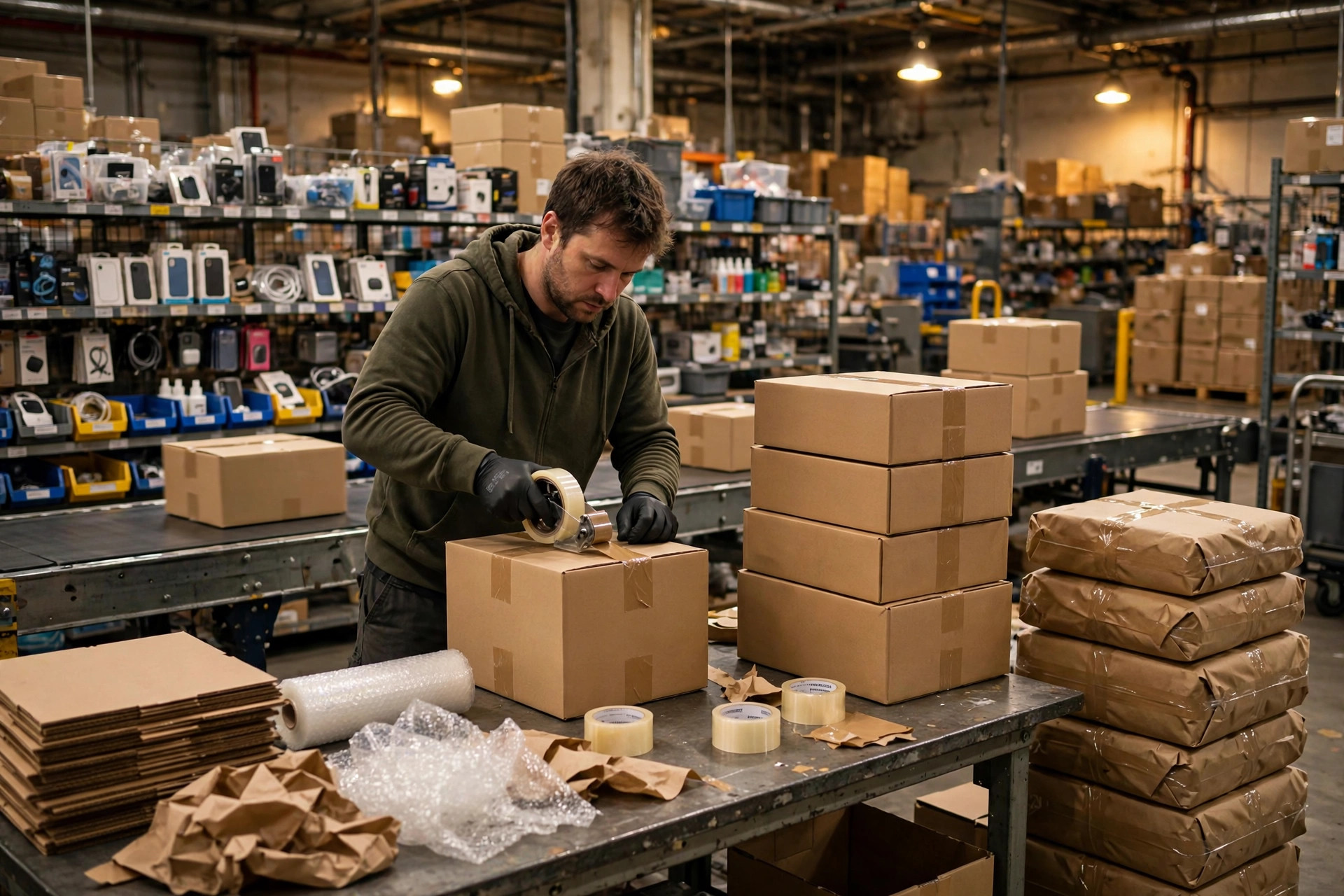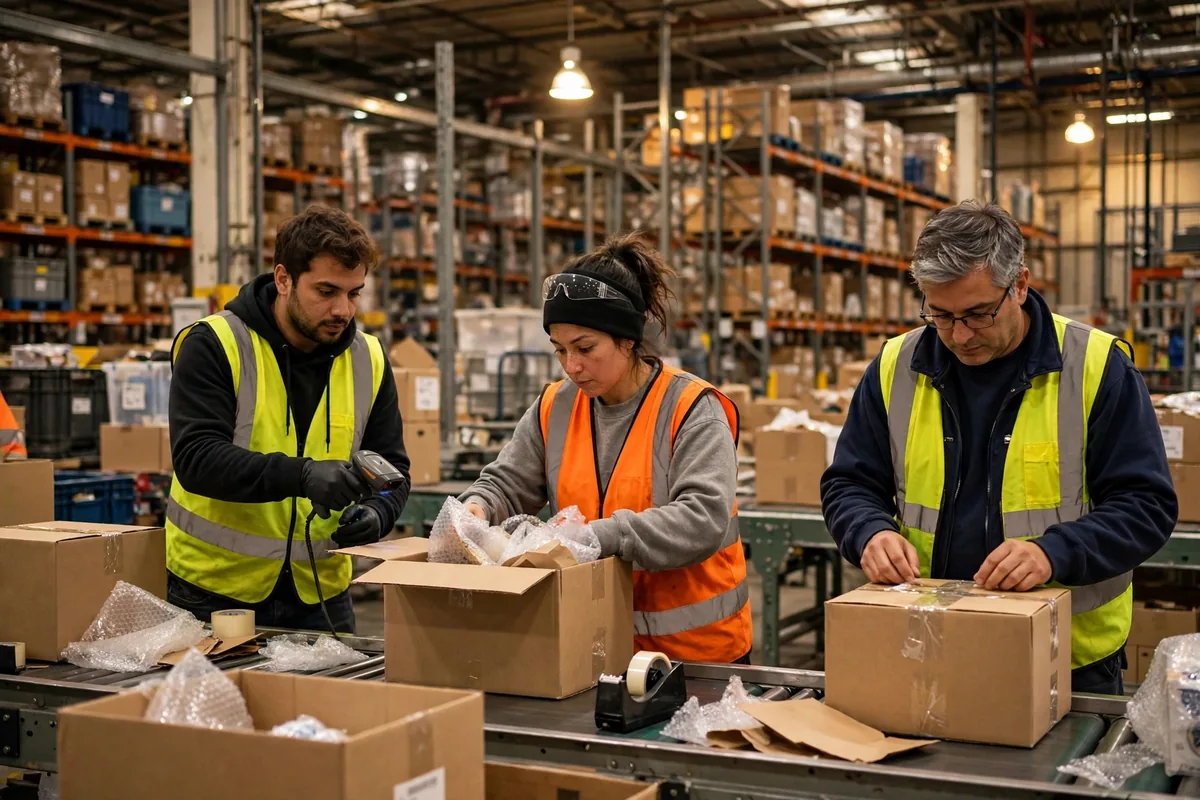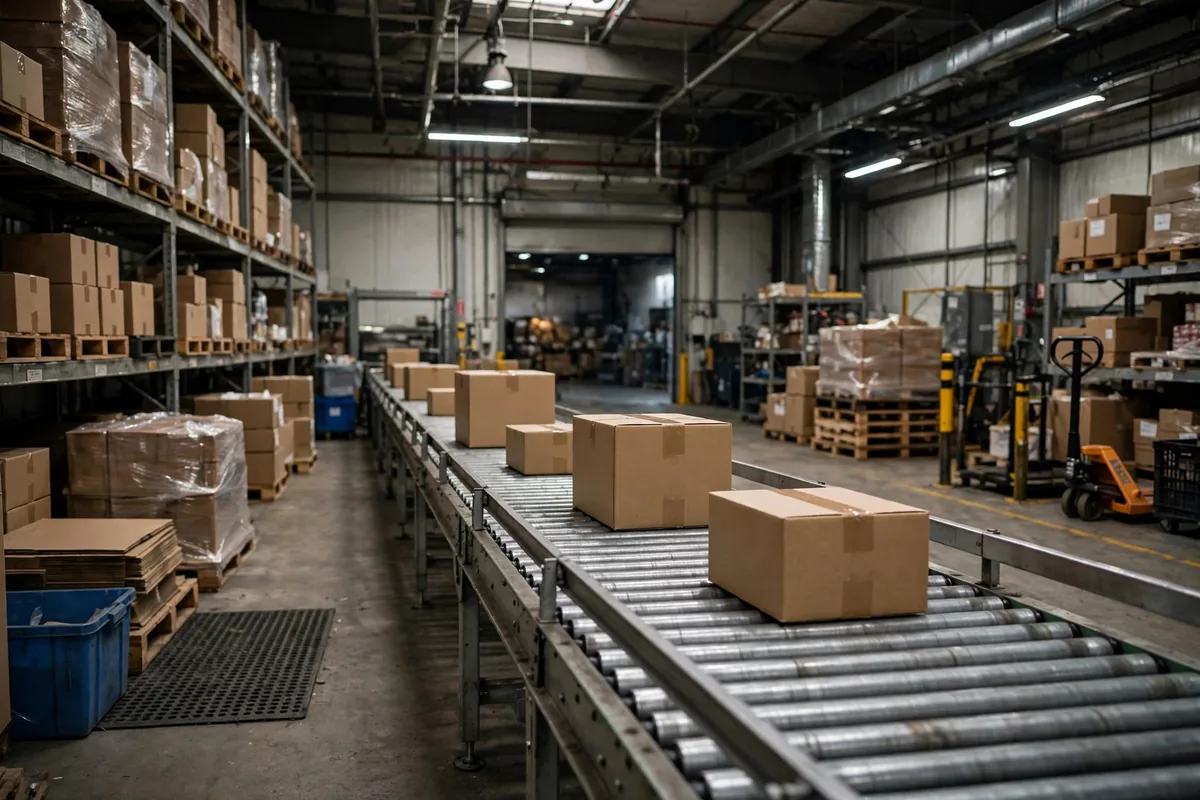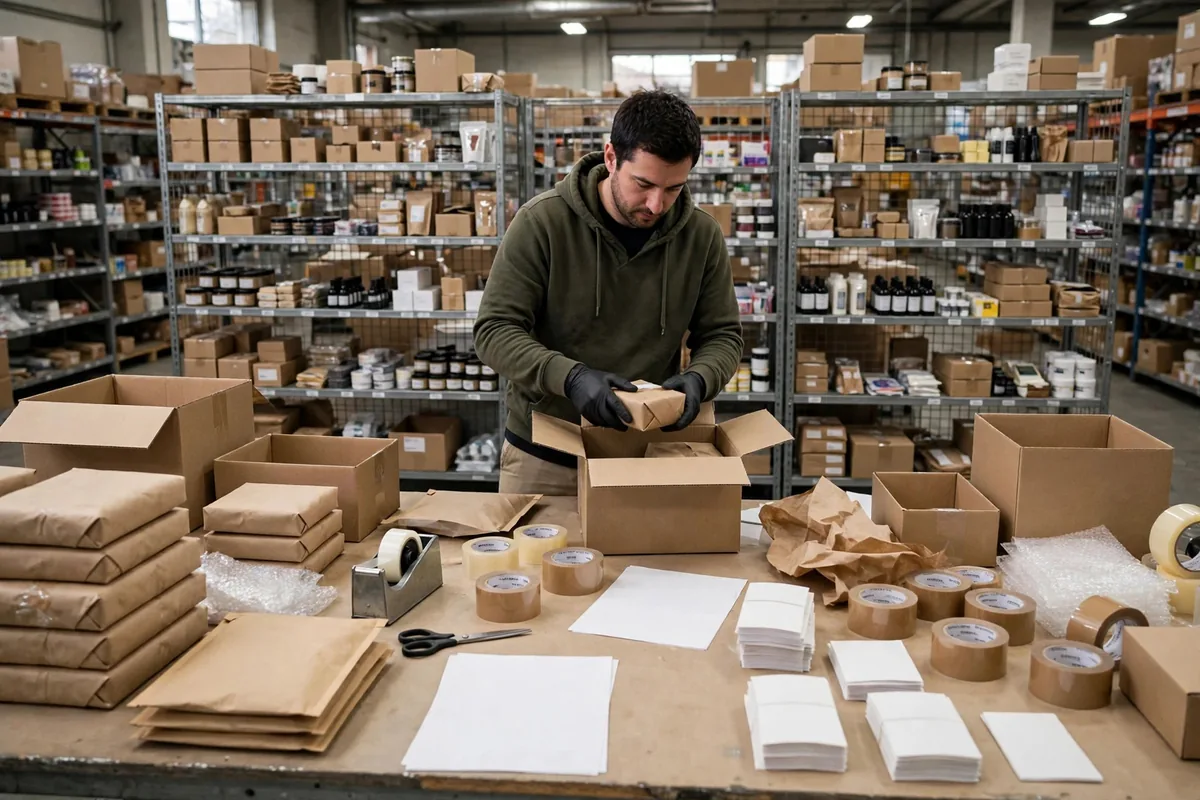
Let me start with our situation, so nobody thinks I am showing off: our warehouse is 3,000 square meters, the team including me is seven people, and in peak season we serve three platforms plus two wholesale regulars. Last year, before peak even started, I had one feeling — the goods had not sold yet, but the warehouse was already chaos. One product blew up on Platform A, Platform B ran out of stock, and Platform C's returns piled into the aisles until the forklift could not turn around.
Here is the thing: we cannot afford to burn money like the big warehouses do. They rent temporary space, hire temp crews, and buy systems that split inventory automatically. We cannot. So over the past two years we worked out a scrappy method. It is not fancy, but it kept us alive. This year I ran the same 90-day rhythm before peak, and I am sharing it with other small-warehouse folks.
Where small warehouses actually die in peak season
The first killer is "stocking by gut feeling." Two years ago we looked at last year's best sellers and simply doubled the order. One of them had changed packaging specs, and the old packaging sat on half a storage location until after New Year before we cleared it. Lesson: never plan stock from last year's sales alone. If anything changed — specs, price, platform rules — you have to redo the math.
The second killer is "one warehouse serving every platform." Three platforms have completely different outbound rhythms: Platform A wants full cases fast, Platform B is all small scattered orders, Platform C has a high return rate. Mix them together and pickers switch between three workflows all day. Mis-shipments shoot up. And in peak season, one mis-shipment's customer service, return, and reshipment cost can eat the entire profit on that order.
The third killer is "hiring only when peak arrives." Temps who show up two weeks before peak get three days of training and then go live. Peak season is when your error tolerance is lowest all year, and that is exactly when your floor is full of beginners. That is digging your own hole.
The scrappy method: 90 days in three phases
We cut the 90 days into three phases, each with exactly one job — simple enough to stick on the wall.
Days 90–60: Do the math, set the plan. These 30 days are for counting, not buying. Pull each platform's sales data for the past year and sort SKUs into three tiers: Tier A, core products that sell on all three platforms; Tier B, platform-specific hits that blow up on one platform only; Tier C, slow movers you cannot afford to drop entirely. Stock Tier A deep, stock Tier B separately per platform, and keep only safety stock for Tier C. We do this in one shared spreadsheet — honestly, at our size, a spreadsheet is enough, and a full system would be a burden, not a help.
This phase also means doing one uncomfortable calculation: cost of stockout versus cost of overstock. A stockout costs sales and platform ranking; overstock costs cash flow and floor space. For a small warehouse, cash flow is more deadly than ranking, so our rule is: Tier A, stock 10% extra if in doubt; Tier C, stock light and replenish if it runs out. There is no universal answer to this trade-off, but you have to decide in advance what you fear more.
Days 60–30: Split the warehouse by platform. Physically divide the floor into three zones — Platform A, Platform B, Platform C — plus a shared zone for Tier A core products. It sounds like wasted space, but it actually saves pickers' brains: walk into a zone, follow that platform's process, no switching. The shared zone's core products serve all three platforms, but every morning we pre-split them into piles based on the previous day's sales ratio, so pickers never have to think during the shift.
Here is another low-tech trick: color stickers for each platform. Yellow for A, blue for B, green for C — on cartons, location cards, and pick lists alike. New hires do not need to learn the process first; they learn the colors, and mis-shipments drop immediately. Do not laugh — this single trick did more to cut our peak-season mis-shipment rate than anything else we tried.
Days 30–0: Train early and keep two escape routes. Bring temp workers in a full month early so they practice on normal orders and arrive at peak already experienced. And line up two backup plans that cost nothing: an agreement with a neighboring small warehouse to lend each other space and hands during surges, and an emergency replenishment channel with your main supplier for a small rush batch within 48 hours. Both cost a few meals and phone calls. When peak actually hits and you use them, they pay for themselves many times over.
Two more peak-season traps deserve their own mention, because neither shows up on a stocking spreadsheet.
The first is returns. Platform C has a high return rate, and return volume can multiply several times over in peak season. Returned goods cannot just be tossed back on a shelf — they need inspection, sorting into "resellable" versus "write-off," and resellable items need relabeling and restocking. Our first year, returns had nowhere to go and piled into the aisles, forcing pickers to walk around them all day. The second year we carved out a dedicated returns corner — just two rows of racking, nothing grand — but with one firm rule: one fixed hour every afternoon for returns processing, and nothing sits overnight. "Returns never stay overnight" sounds trivial, but it effectively puts peak-season chaos inside a cage.
The second is sudden platform rule changes. Last year, one month before peak, a platform tightened its shipping window from 48 hours to 24. We nearly missed it — our zone staffing was built around the old window, and Platform B's zone could not finish the day's orders. The next year we kept a separate "rule-change emergency sheet" next to the stocking plan, listing only three things per change: which platform, what changed, and which part of our process has to move with it. When a rule changes, we follow the sheet instead of calling a meeting. On an ordinary day it looks like scrap paper; on the day a rule changes, it is a lifesaver.
And here is a counterintuitive point: more stock is not always safer in peak season. Overstock fills locations, lengthens pick paths, and makes beginners more likely to grab the wrong item — pushing mis-shipments up, not down. Last year we overstocked one Tier A core product so heavily that it spilled next to a pick aisle, and pickers grabbed the wrong variant without noticing. So the ceiling on stock is not "how much can we sell" but "how much can the warehouse hold and pick cleanly." For a big warehouse, more stock is muscle. For a small one, it can be a burden.
What it delivered, and advice for warehouses like ours
Last year, running this playbook, our peak-season mis-shipment rate dropped sharply compared to the year before, stockout days fell, and most importantly — I did not have a repeat of "the goods had not sold out, but the team had burned out." Seven people handled three platforms' peak season, and nobody quit. In this business, that counts as a win.
Three pieces of advice for small warehouses like ours: first, do not copy the big warehouses' playbook — their solution is buying certainty with money, ours is earning certainty with care. Second, the earlier you split zones and layouts, the better; rearranging the floor right before peak is self-inflicted chaos. Third, the unglamorous tricks — the stocking spreadsheet, the color stickers, the mutual-aid agreement — share one virtue: they are cheap, usable immediately, and fixable immediately when they break.
Small warehouses have their own way of surviving. Peak season is not won by whoever has the biggest warehouse. It is won by whoever keeps the steadiest rhythm.
By Xiao Ma, Small Warehouse Owner