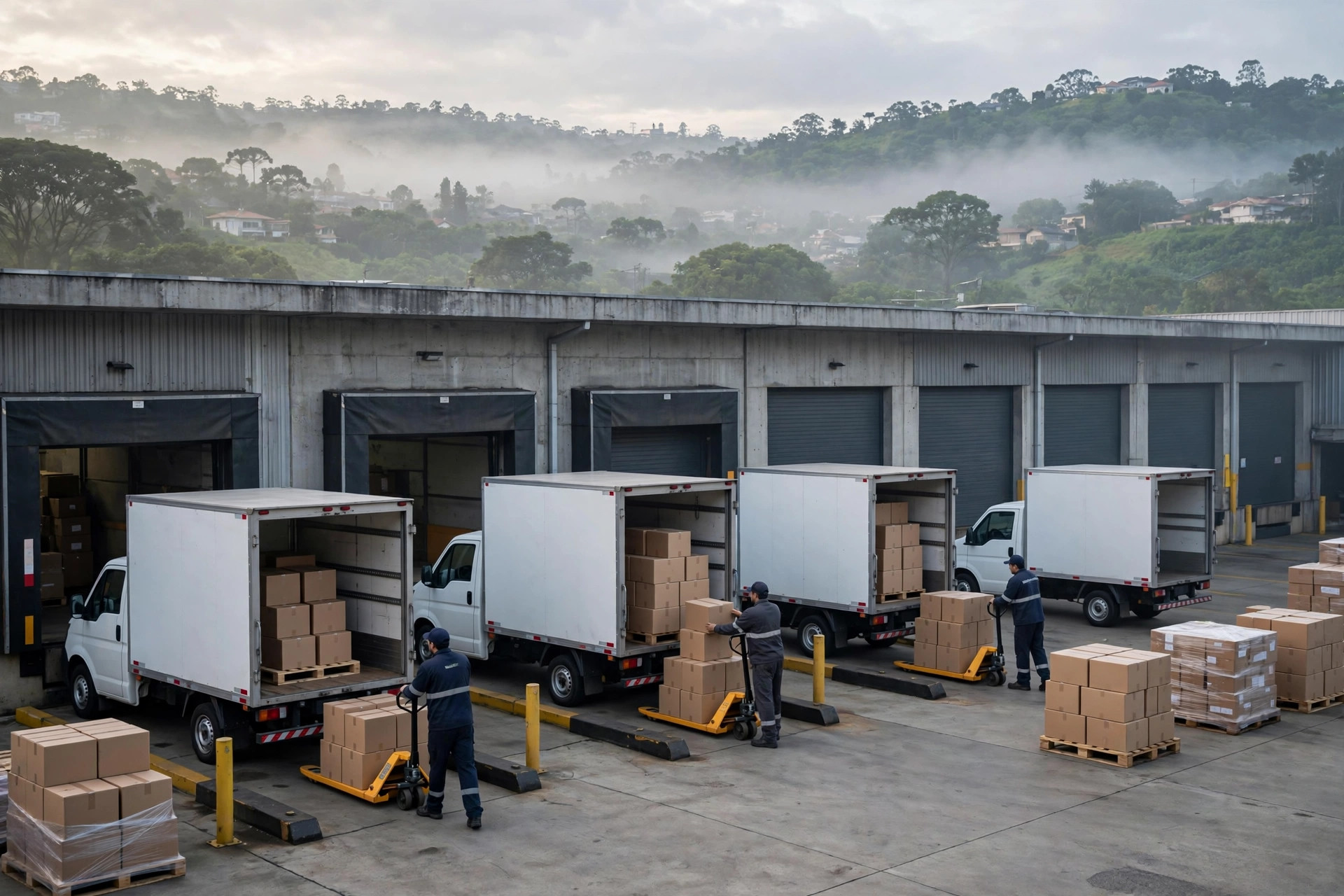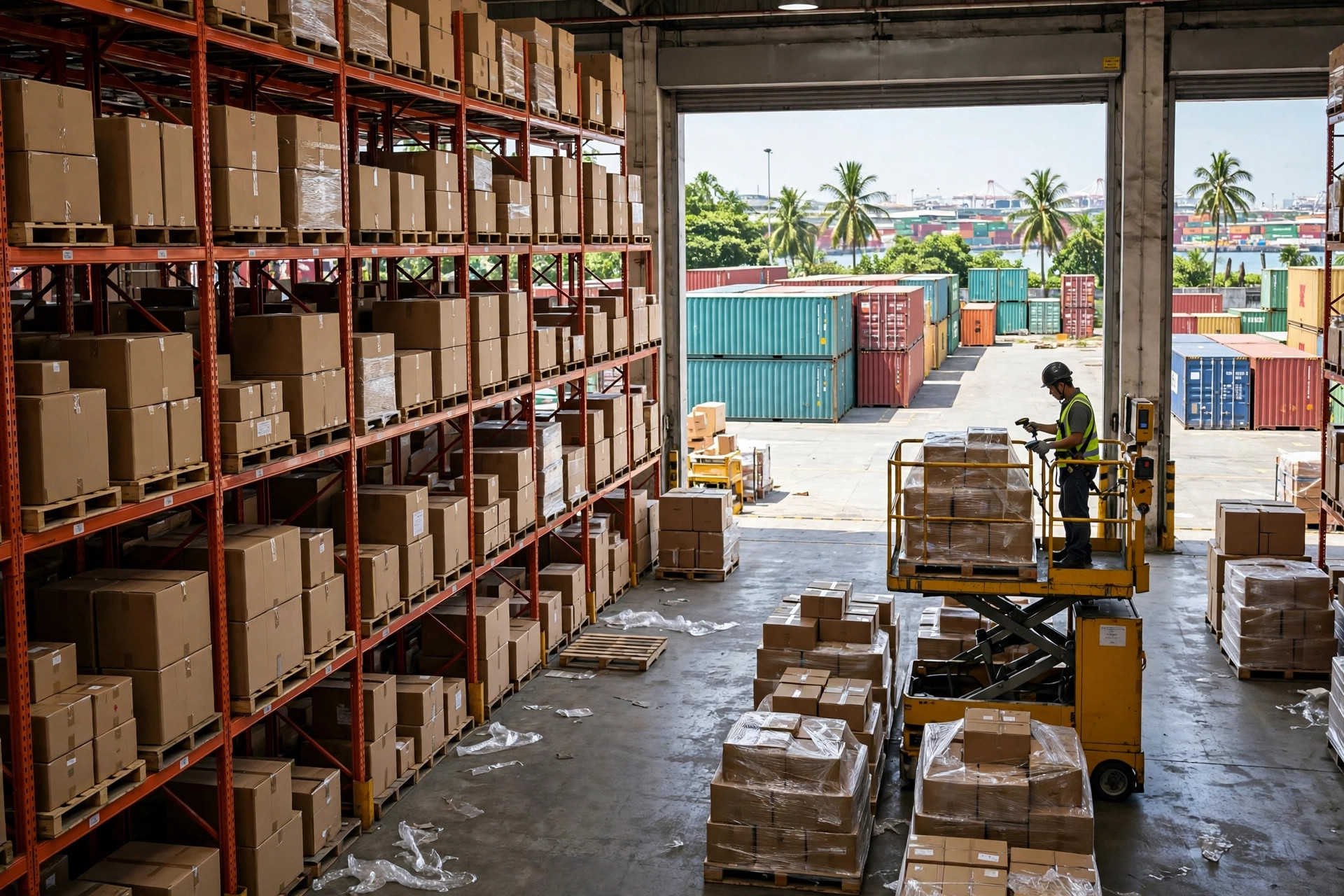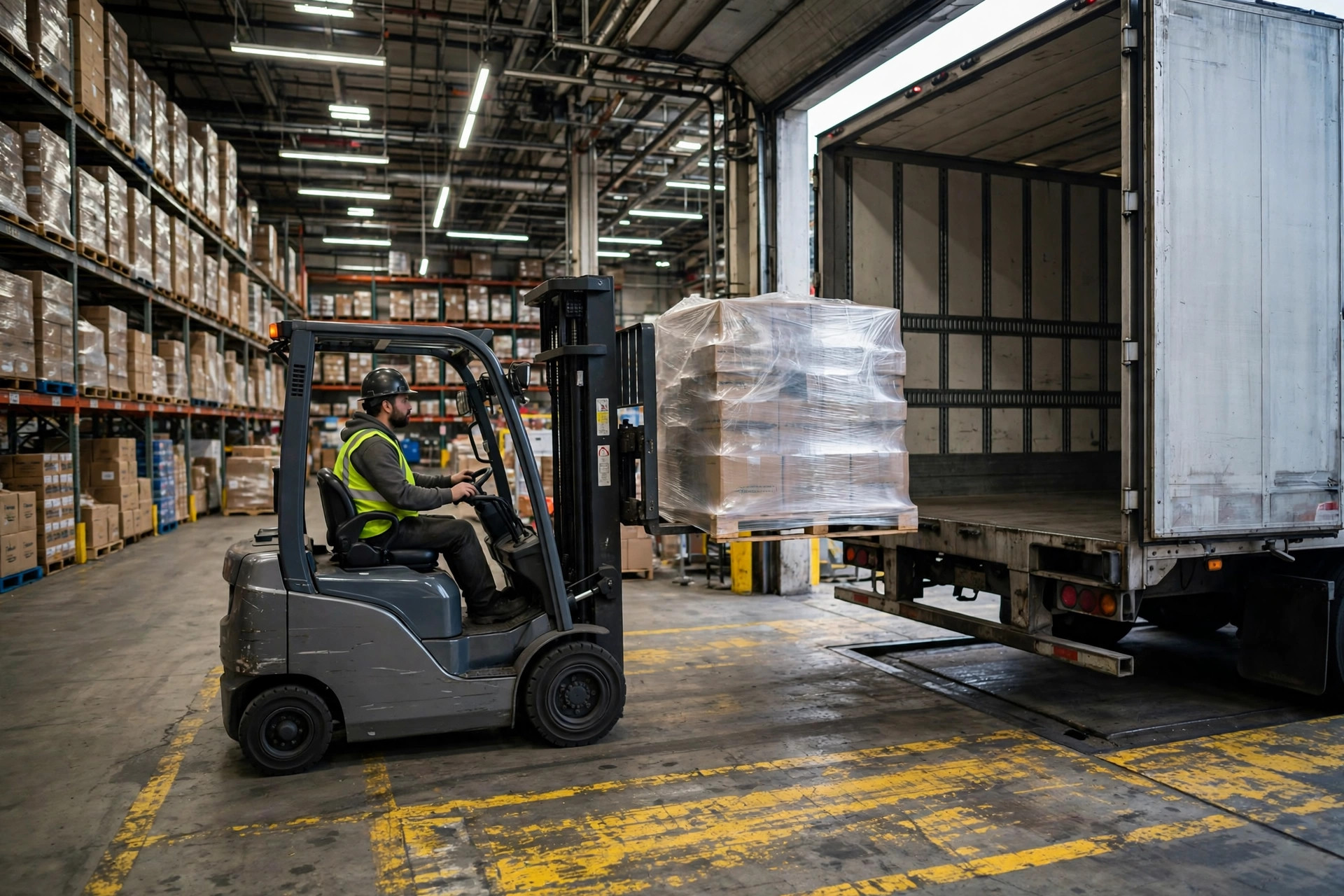
Last October, at ten at night, the warehouse manager at our Edison, New Jersey facility sent me seventeen photos in a row: pallets stacked three high on the receiving dock, aisles narrowed to exactly one forklift width, slotting utilization at 97 percent. At that same moment, our Chino, California warehouse was sitting on more than 400 empty slots, shipping less than a third of Edison's daily volume. The next morning's meeting had exactly one agenda item: move the freight from Edison to Chino, or accept it and let the inventory bleed out slowly in Edison?
My answer: move it. But not on gut feel. A badly planned inter-warehouse transfer burns freight money and double-handling labor, and it leaves both warehouses' books in chaos. Everything below is what I learned the hard way running East Coast/West Coast multi-warehouse networks.
Three tripwires. Hit one, then talk transfers.
The most expensive part of a transfer is not the freight. It is deciding too slowly. My rule for the team: if any one of these triggers, a transfer plan is due within 24 hours.
Slotting utilization above 92% for five straight days. Do not wait for 97. Past 92, pick efficiency starts to decay — forklifts reroute, pallets get shuffled to make room, and the extra labor costs more than the transfer freight. At the Edison blowout, we ran the math: three days of overtime and inefficiency burned the cost of an entire full truckload transfer.
One warehouse is stocked out while another holds 30+ days of cover. Note: stocked out, not "running low." The same SKU dead at zero in one building and sitting on a month of stock in another is a structural mismatch. Not moving it is throwing money away.
Regional orders and inventory are inverted. Forty percent of your orders ship to the West Coast, but eighty percent of the inventory sits in New Jersey. Ground parcels from Edison to California take two or three extra days, every single time. That is not a choice to make. That is homework you should have done already.
None of the three apply? Then do not transfer. Sell through slowly, or run a promotion. Moving freight for the sake of moving freight is how you lose money twice.
How much to move: one formula, no vibes
Transfer quantity = (destination daily sales) × (transit days + safety days) − (destination available inventory)
Then back-check one thing: after the transfer, the origin warehouse's remaining days of cover for that SKU must stay above (transit days + safety days). Only lock the number when both sides clear.
Example (illustrative numbers — plug in your own): a SKU sells 120 units a day in Chino. Edison to Chino by full truckload takes 7 days in transit. You hold 10 safety days. Chino has 600 units available. Transfer quantity = 120 × (7 + 10) − 600 = 1,440 units. Edison still holds 9,000 units of that SKU and sells 200 a day, so after the move it keeps 38 days of cover — far above the 17-day red line. Move with confidence.
How to set safety days? Look at the SKU's sales volatility. Stable sellers: 7 to 10 days is enough. Hot items and seasonal SKUs: give it 15 to 20. Better to move one pallet too many than to stock out two weeks after the transfer — the second transfer's freight is charged per trip.
Picking the mode: full truckload, LTL, or parcel
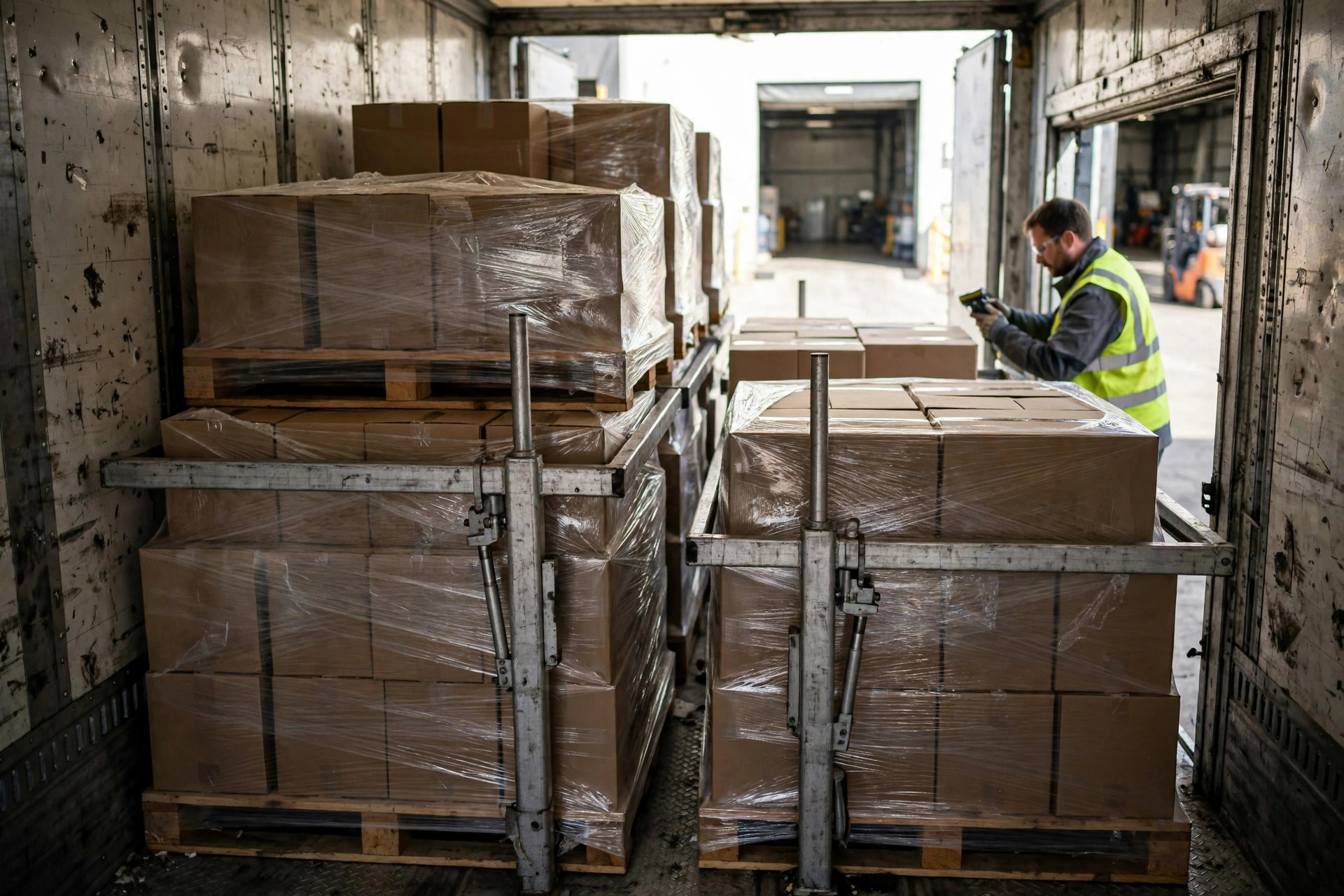
If you can fill half a trailer (12+ pallets), go full truckload. An East-to-West dry van runs 5 to 7 days, the per-pallet cost is the lowest of the three options, and with no hub transfers, damage rates stay low. During peak season, truck capacity gets tight — book 3 to 5 days ahead, not when freight is already piled at the door.
Six to twelve pallets: LTL. Billed per pallet or by weight, 8 to 12 days in transit, cheaper but slower. Two things to watch: get the accessorials (liftgate, overlength) quoted in writing before you compare rates, and during peak season LTL hubs back up — do not take the transit promise at face value; plan on the worst case.
Under six pallets, or high-margin SKUs that cannot stock out: parcel. Expensive, but 3 to 5 days. This is a "keep the lights on" play: a SKU with 3 days of cover left in Chino, truckload and LTL both too slow — send 200 units by parcel first, then follow with the LTL bulk. Emergency parcel and bulk transfer can run in parallel.
One line to remember: volume picks the mode, the clock picks the floor. Do not let a bestseller stock out for a week to save a few hundred dollars on freight.
The paperwork: a transfer order equals the shipping confirmation
This is where warehouses make the biggest mess. The standard flow has four steps:
- The origin warehouse creates a transfer order in the WMS. Status: pending shipment. Neither side's inventory moves.
- The origin loads the trailer, the driver signs, the truck leaves, and the WMS confirms shipment. At this step, inventory is deducted from the origin and enters an independent "in-transit" status. In-transit inventory must never count as available inventory at the destination. That is the iron rule.
- The freight arrives, gets received, put away, and reconciled. The transfer order flips to complete, and in-transit converts to available inventory at the destination.
- Finance and customer service see one document flowing through its lifecycle — not two disconnected inbound/outbound records.
The messiest warehouse I ever saw: transfer orders created, freight never shipped, 2,000 units hanging in "in-transit" in the system, customer service taking orders against system inventory that did not physically exist at the destination. The root cause in one sentence — a transfer order takes effect at shipping confirmation, not at creation. Put that in the SOP and tape it to the office wall.
Three traps, each more expensive than the last
Trap one: the in-transit ledger does not reconcile. The fix is the document timing above, plus a weekly in-transit aging review. Any order still in transit after 15 days gets chased one by one: either the freight is lost, or the destination received it and never confirmed.
Trap two: it sells in Jersey and dies in California. You looked at the origin's velocity data, but the destination's customer mix may be completely different. A hero SKU in Edison is not automatically a hero in Chino. Before transferring, check the destination region's historical order share and category velocity. For SKUs with no regional history, ship only the safety-days minimum on the first transfer and send a second truck once it proves itself.
Trap three: the last-mile account does not match the region. The freight lands in Chino, and only then you discover the parcel discount account was negotiated on the Edison address — UPS and FedEx zone pricing changes entirely, and the warehousing savings get handed straight back to last-mile costs. I stepped on this one hard in 2023: moved 40 pallets west, per-package last-mile cost rose $1.80, and we bled nearly $20,000 extra in a single month. The person who owns last-mile must be in the transfer decision meeting, and account zones must be confirmed two weeks ahead.
Pre-transfer checklist (print it, check every box)
- Trigger confirmed: at least one of the three tripwires, with data screenshots
- Transfer quantity calculated by the formula; origin remaining-days back-check passed
- Destination regional velocity verified: the SKU or category has sales history in that region
- Mode selected: pallet count, transit time, and freight cost compared
- Last-mile account confirmed: destination-address discount account is live
- Destination slots reserved before receiving — no freight arriving with nowhere to go
- Transfer order created; the team agrees it takes effect at shipping confirmation
- In-transit owner assigned; weekly reconciliation on the calendar
Inter-warehouse transfers were never a logistics problem. They are an inventory courage problem: when the data is there, move decisively; when it is not, have the discipline to sit still. The freight is never the most expensive part. The most expensive part is the week your warehouse blew up and you did nothing.