
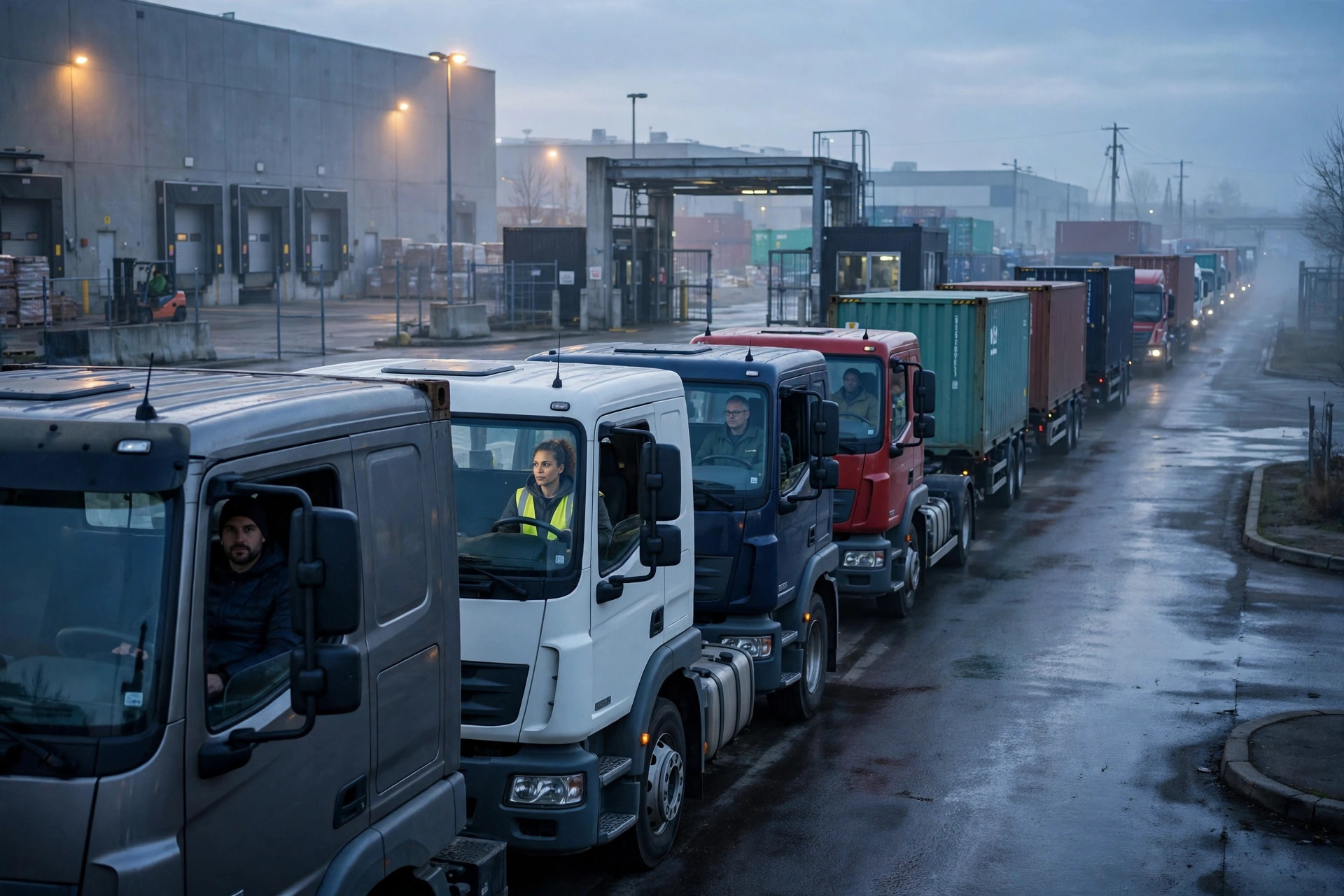
Let me tell you something. After fifteen years behind the wheel, the thing I fear most out on the road isn't highway traffic. It's the line of trucks at the warehouse gate — and nine times out of ten, that line starts with an inbound appointment gone wrong.
Late last October, right as peak season was kicking in, I hauled a full trailer down to an overseas warehouse over in Carson, California. The appointment confirmation was crystal clear: 10 AM, door number so-and-so. I rolled in at 9:30, thinking I'd be smart and get there early. You know what I found? More than twenty trucks already lined up outside the gate, brake lights stretching as far as I could see. I took my place at the back, killed the engine, and waited. Ten o'clock came and went. Eleven o'clock came and went. I ate a sandwich in the cab at noon. It wasn't until past three in the afternoon that I finally got backed into a dock door. By the time I pulled out, the sky was going dark.
And that wasn't the worst of it. The guard at the gate told me the next two days were fully booked, and a few of the trucks in line had failed to get in the day before and come back to try their luck. My backhaul, scheduled for the next morning, had to be pushed a full day. The shipper kept calling, and all I could say was: buddy, it's not that I won't run — I just can't get through the gate.
What that line at the gate is really telling you
It took me a while to figure this out. When people hear "warehouse is full," they picture a building stuffed to the ceiling with boxes. That's not quite it. Drivers can't see inside the building. What we can see is the line at the gate.
A long line at the gate means three things happened at once. One, too much freight showed up at the same time — everybody pushes inventory in for peak season. Two, the warehouse is short-handed and can't unload fast enough. Three — and this is the real killer — the number of inbound appointments they handed out doesn't match what they can actually unload.
Think about it. If a warehouse can comfortably unload forty trucks a day but hands out sixty appointment slots, where do those extra twenty trucks go? They sit at the gate. Any driver can do that math from the cab.
These days I don't judge how slammed a warehouse is by its advertising. I judge it by how many trucks are lined up at seven in the morning. More than ten in line? That warehouse is buried for the whole week. On the flip side, a gate that's clean with trucks flowing in and out tells you the folks inside actually know how to run their appointment book.
The counterintuitive part: getting there early isn't always smart
A lot of newer drivers figure: appointment's at ten, I'll show up at eight and wait — can't go wrong, right? Let me tell you: wrong.
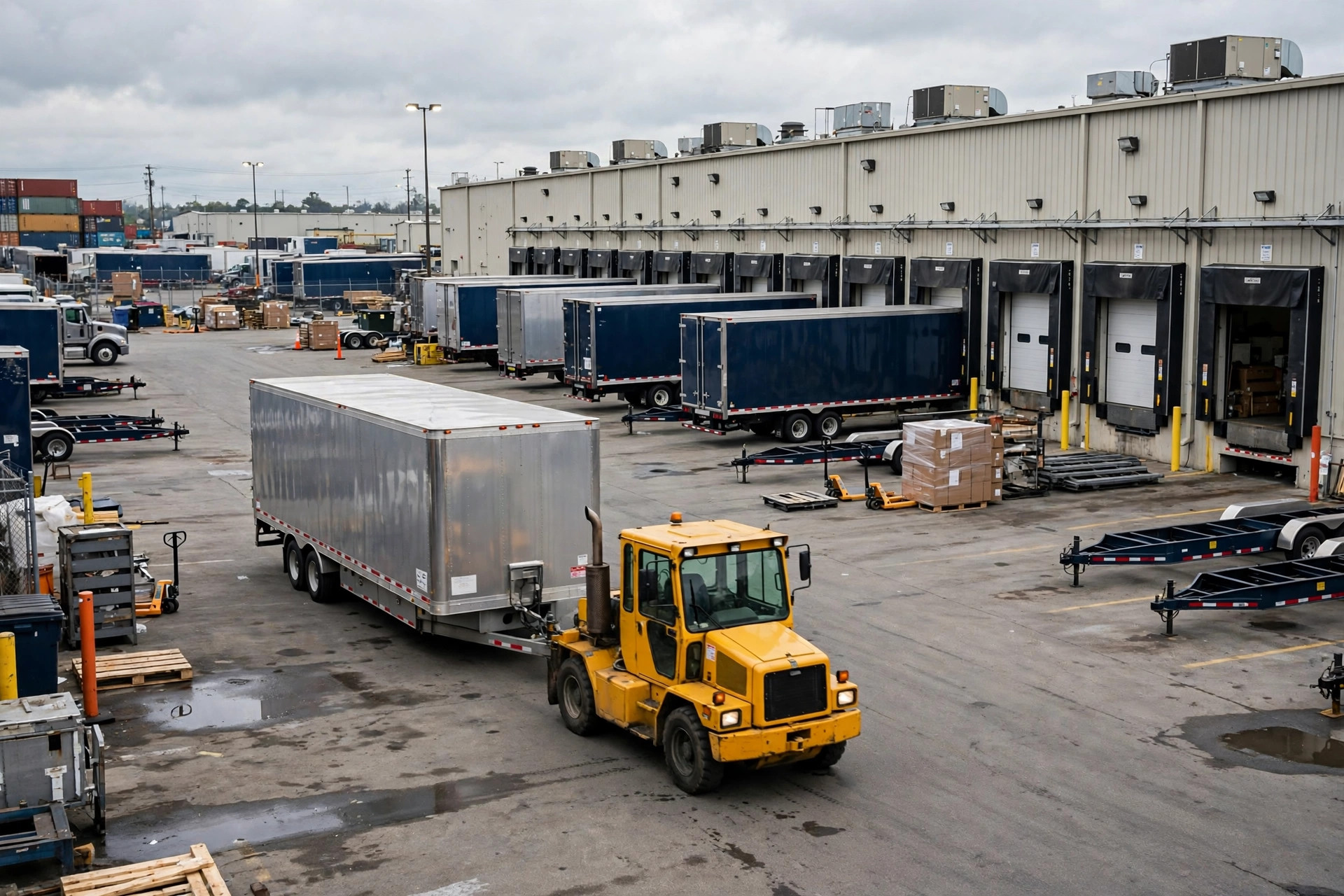
Inbound appointments run on time windows, not first-come-first-served. You show up at eight, the guard still makes you wait until your ten o'clock block. Why? Because the dock doors, the forklifts, the crew — everything is scheduled by time slot. Showing up early just means two extra hours parked at the gate. It buys you nothing.
And here's the part that really stings. Our hours behind the wheel are capped by federal law — eleven hours of driving inside a fourteen-hour work window, every trucker knows this by heart. Three hours idling at the gate comes straight out of the miles you can run that day. You're spending your earning hours paying for somebody else's scheduling mistake.
So here's what I do now. Ten o'clock appointment, I roll in at 9:40. Twenty minutes of buffer, that's plenty. If I'm running early, I park at a truck stop nearby and rest. I don't go join the line. The longer that line at the gate, the more it tells you this warehouse oversold its appointments — and joining it just makes you part of the denominator.
Three ways to play peak-season inbound
After all these years, I've boiled it down to three plays, each with its price:
| Play | How it works | Upside | Price you pay | Best for |
|---|---|---|---|---|
| Hit the window | Arrive right on your slot, not early, not late | No wasted drive hours | One hiccup at the warehouse and you're stuck waiting | Warehouses you know that run on time |
| Camp out early | Show up hours ahead and queue at the gate | Peace of mind; you might snag an early opening | Burns your legal drive hours for nothing | First-timers, warehouses you've never been to |
| Drop and go | Drop the trailer in their yard and leave, pick it up later | Saves the most time by far | Not every warehouse allows it | Dedicated lanes with long-term partners |
That third one is the sweetest deal, and the hardest to get. Yards that allow drop trailers give peak-season priority to their regulars. If you're new, don't even ask.
And here's a trade-off a lot of shippers never think through. They want freight in the warehouse as early as possible — get all the holiday inventory in by October. But the building is only so big. Freight that arrives early eats up storage space, racks up storage fees, and can scramble the outbound sequence later. Same deal for us drivers: when the shipper pushes hard, I end up running nights, and the safety risk lands on me. "Early" isn't the same as "good." On time beats early, every time.
Straight talk for shippers and warehouses
First, for the shippers. One: book peak-season inbound appointments two to three weeks out. Don't wait until the freight is almost there. Appointments in peak season are like holiday train tickets — wait too long and there are none left. Two: send the appointment number, the warehouse phone, and a contact name straight to the driver's phone — not just to dispatch. When something goes sideways on the road, the driver is the first to know, and he needs to reach the warehouse directly. Three: ask about the late policy up front. Half an hour late — do they still take you, or do you rebook? Every warehouse has different rules. Ask before you arrive; it's a lot cheaper than arguing at the gate.
Now for the warehouses. I know peak season is rough on your end too — can't hire enough people, freight pouring in. But two things. One: don't hand out appointment slots based on the perfect day. You calculated fifty unloads "if everything goes right" — but when does everything go right in peak season? Book at eighty percent. No line at the gate, no angry drivers, everybody's happier. Two: if you're short-handed, say so. Don't let a truck burn a whole trip to find out at the gate. Nothing burns me up like arriving and hearing "we can't unload you today." That trip's fuel and hours are gone.
And for my fellow drivers. Call the warehouse before you roll. Confirm the appointment is still good, confirm the door number hasn't changed. Sounds like common sense, but warehouses change plans like the weather in peak season. Five minutes on the phone can save you an afternoon. Keep snacks and a power bank in the cab — waiting in line is the norm in peak season, don't go hungry. And screenshot that appointment confirmation — the email, the text. When the guard at the gate won't take your word for it, that screenshot does the talking.
Here's what fifteen years taught me: the line of trucks at the warehouse gate is never just about trucks. It's the whole chain's planning breaking down, made visible. Shippers, warehouses, drivers — none of us gets to say it's somebody else's problem.
There's an old saying where I come from: sharpening the axe doesn't delay the woodcutting. In peak season, one phone call ahead and one appointment booked two weeks early — that's sharpening the axe. Don't skip it because it feels like a hassle. The people who skip the hassle are the ones sitting in that line at the gate.
By Shifu Zhao, Trucking Veteran (15 yrs)



