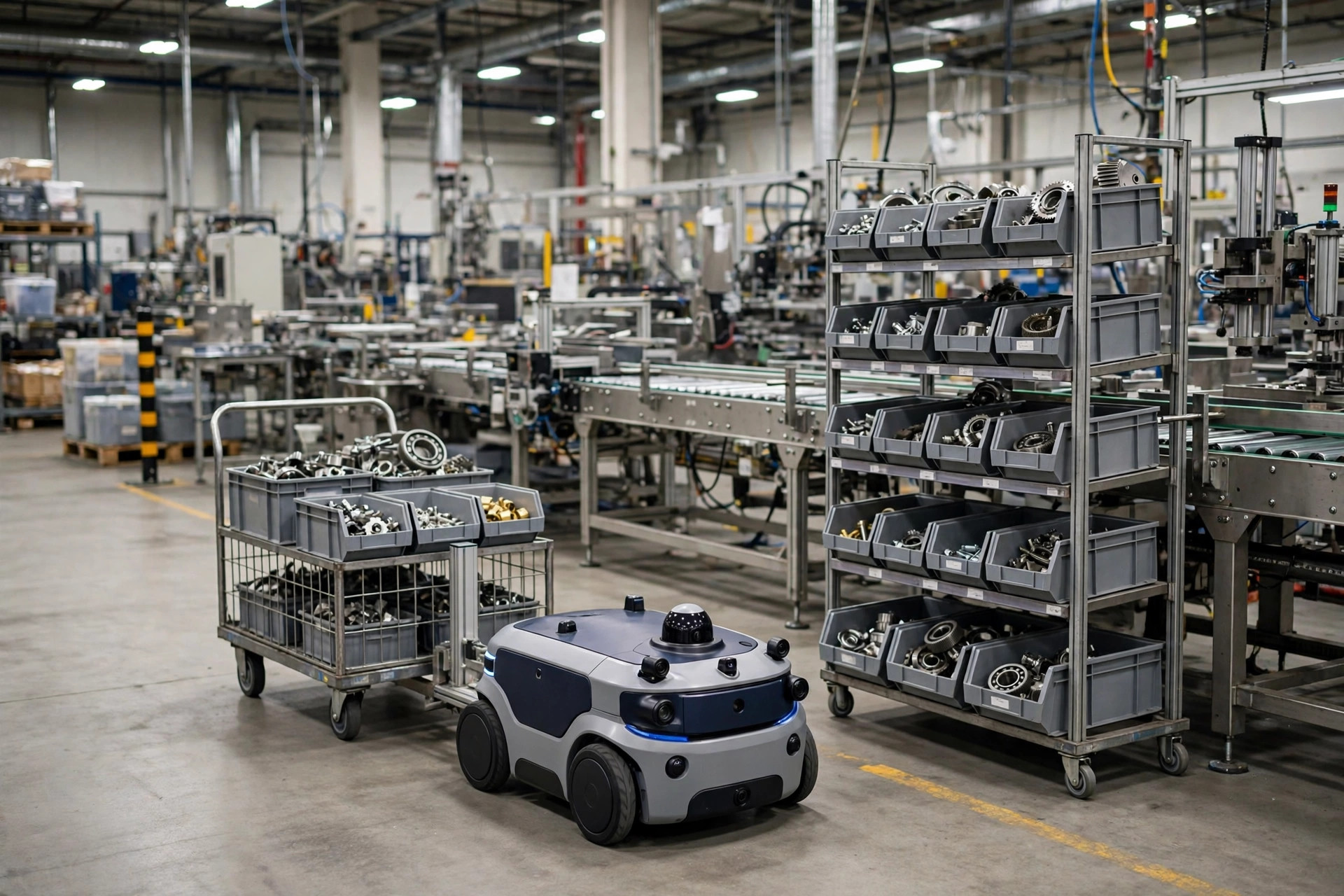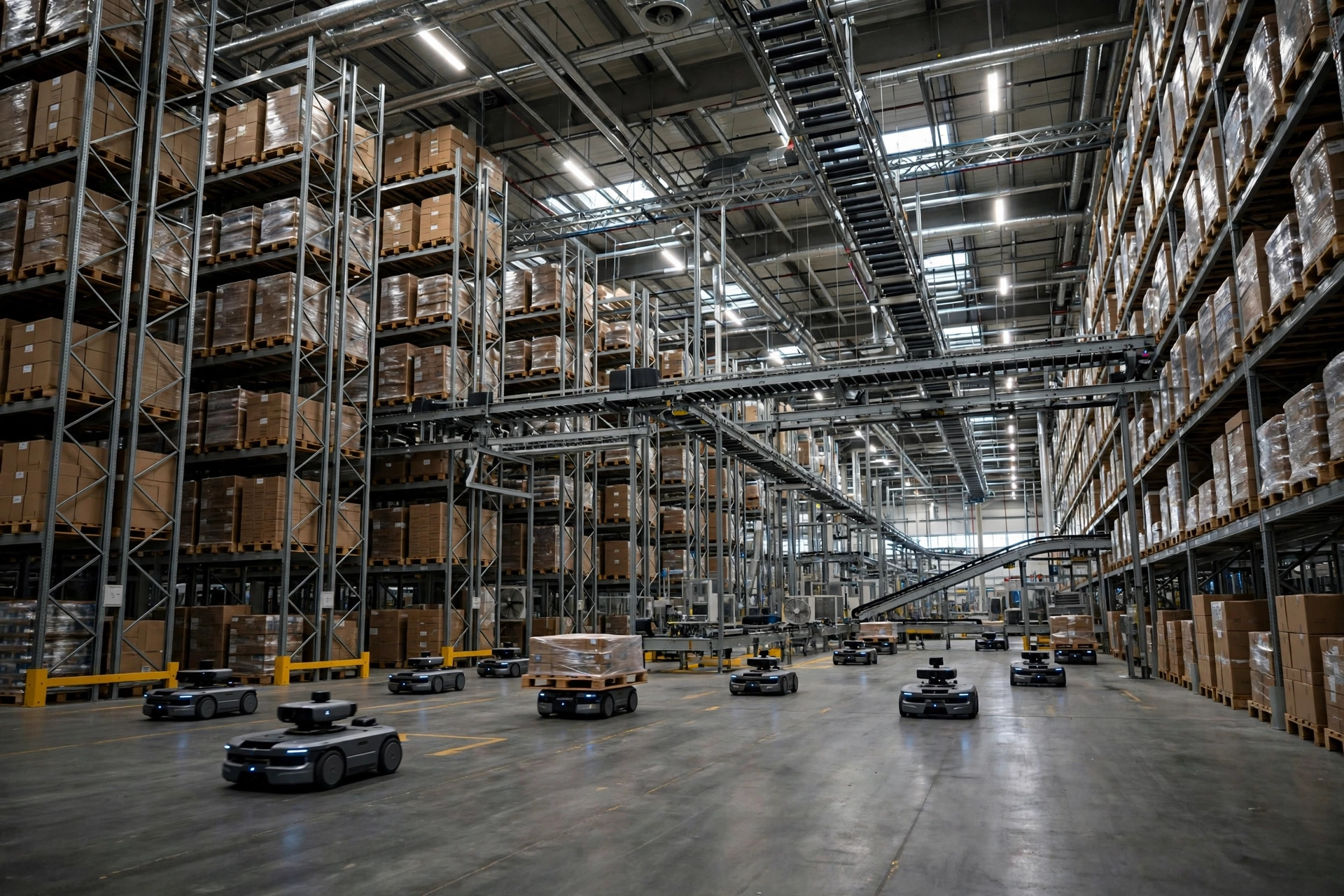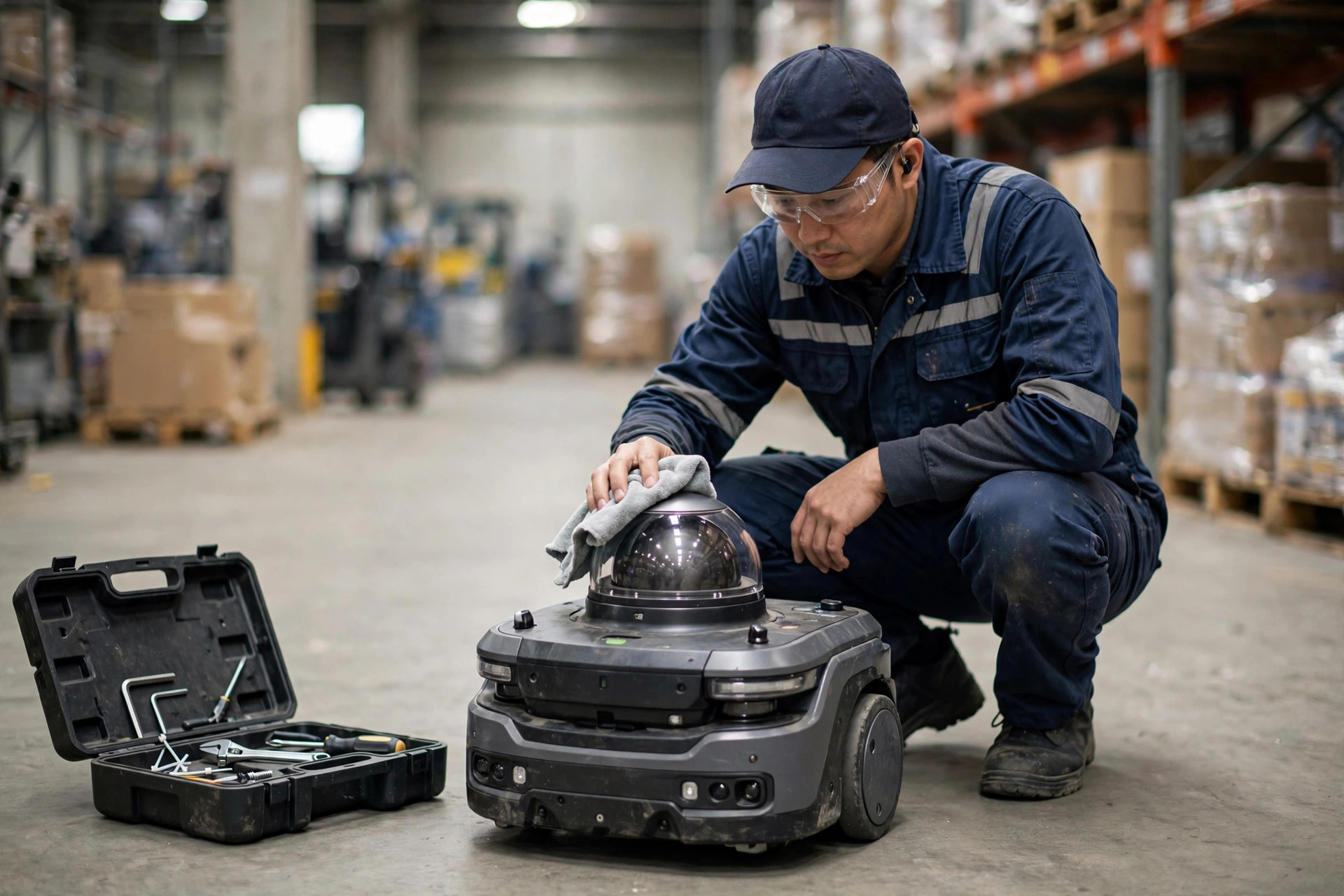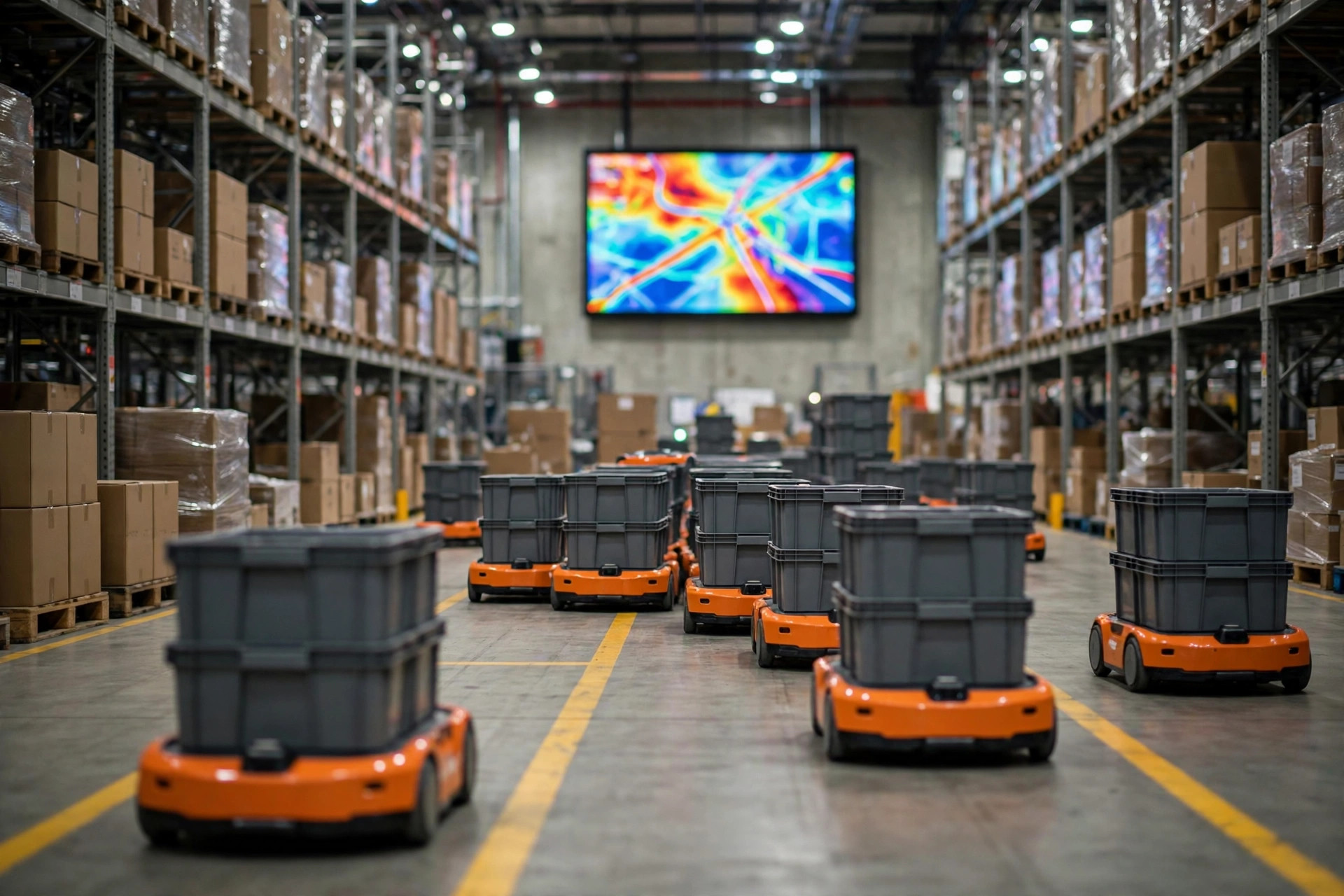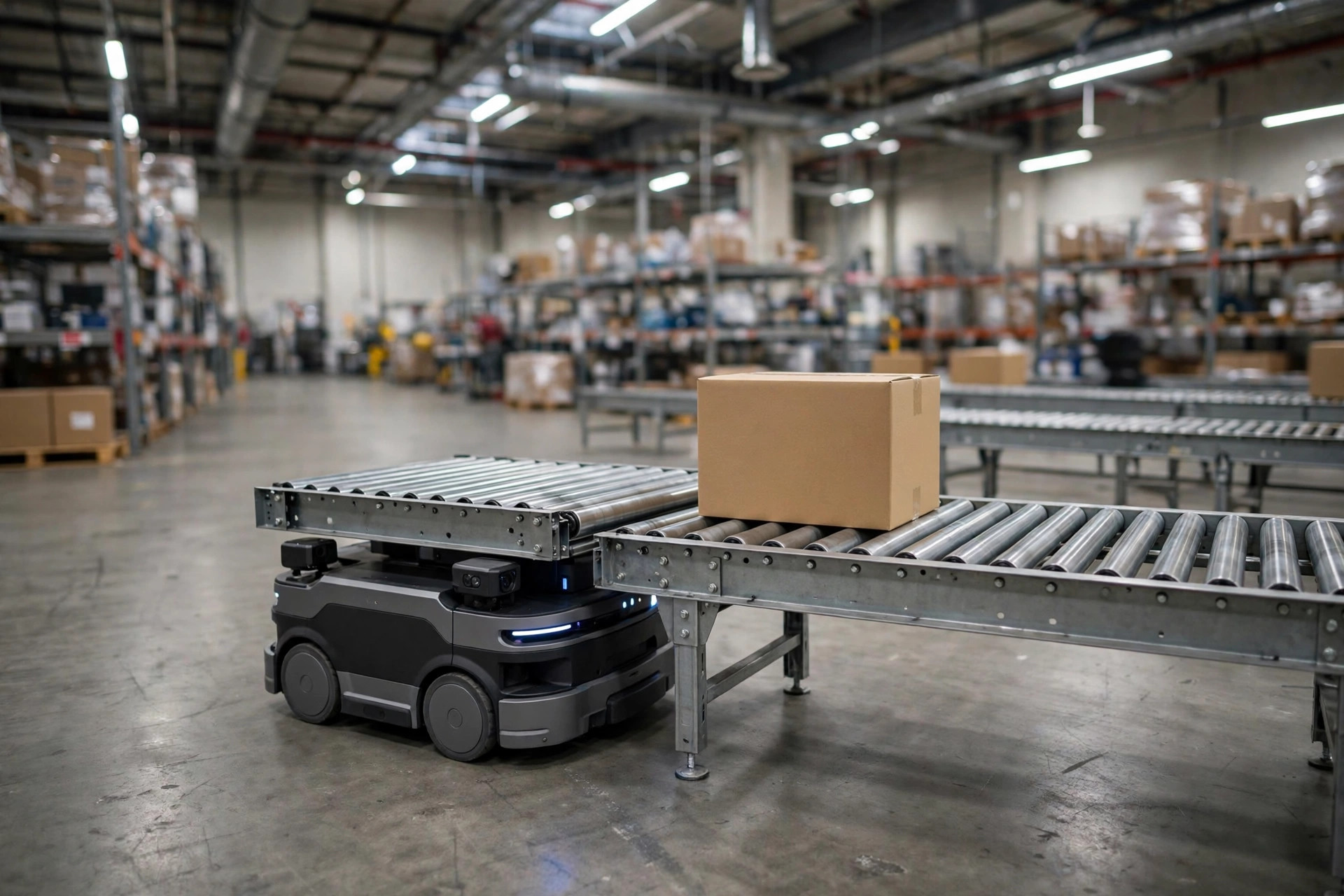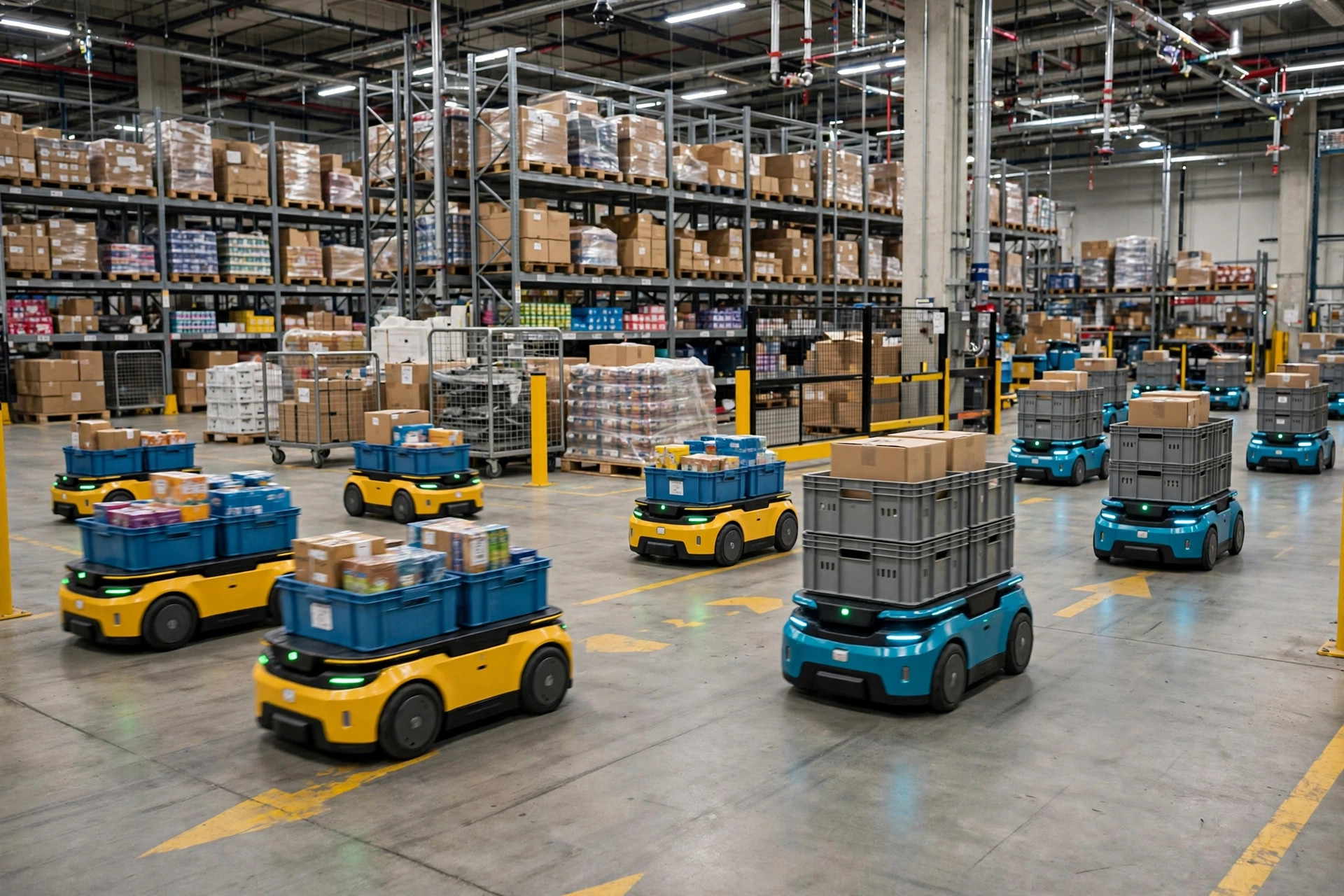
Walk into enough warehouses and you start noticing a pattern. Over the past two years I've seen it in at least five buildings: two, sometimes three brands of AMRs running under the same roof. The story is always the same — phased buying. Brand A won the pilot, performed well, and then brand B came in thirty or forty percent cheaper when it was time to expand. The CFO did the math, brand B's robots rolled in, and the IT manager started losing sleep. Separate fleets, separate maps, dispatch held together by radios and group chats.
Here's my judgment up front: mixed fleets aren't the problem. The lack of unified dispatch is. But RCS isn't a magic wand either — if you're running under twenty units and one brand dominates, you'll get more value from mastering the native fleet manager than from rushing into a third-party RCS.
First, get RCS's place in the stack right. The WMS owns orders and inventory. The WES/WCS breaks work into tasks and assigns them. RCS owns exactly one thing: keeping the robot fleet from crashing, stalling, or double-booking in the physical world. Path planning, traffic arbitration, charging schedules, exception handover — that's RCS. Business logic, like which wave picks first, is not its job. Think of RCS as the traffic cop of the robot world, not the business brain. Expect it to do the WES's job and you'll be disappointed.
The Maps Are All Built. So Why Won't the Robots Run?
This is the question every mixed-fleet warehouse asks. Every brand mapped the building. Every brand runs fine alone. Mix them and everything goes sideways.
The root cause is that maps and traffic rules don't interoperate. Each vendor's SLAM format, coordinate origin, and no-go-zone definitions are proprietary — a restricted zone on brand A's map means nothing to brand B. Worse, traffic rules differ: one-way aisles, intersection right-of-way, how to pass in a narrow lane — every vendor has its own logic. In 2024 I watched two brands deadlock at a main-aisle intersection a dozen times a day, nose to nose, neither yielding, until a human with a radio directed traffic by hand. Automation that creates a new job called "traffic director" is automation doing it wrong.
So the first lesson of mixed fleets: a built map is not a drivable road. Unified dispatch starts with unifying right-of-way, not map files. Who arbitrates intersections, who defines no-go zones, how temporary closures get synchronized — settle those three, or more robots just mean more chaos.
Whose Task Is It, and Who Owns the Charging?
Map problems are at least visible. Task and charging problems are quieter — and nastier when they blow up.
Task dispatch fights come first. Two dispatch systems both believe they should assign the work, so the same transport task gets issued twice and two robots from different brands deadhead across the building to grab the same pallet. The WES only sees "task complete" — not which robot, not which route — so root-causing an exception is pure guesswork. Over time the floor stops trusting the system entirely. People call each other instead of checking the screen, and the dispatch system becomes decoration.
Then charging. Every brand's charger protocol and low-battery return threshold is different. Brand A's robot is fine at thirty percent; brand B's is already stranded. Brand A's unit hogs the shared charging pad on a slow charge while brand B's dies in an aisle. Charging is a non-issue with one brand and a failure source with three. Add stale state on top: brand A reports "idle," brand B reports "executing," and the RCS is always half a step behind reality, making dispatch decisions on outdated data. The more it dispatches, the worse it gets.
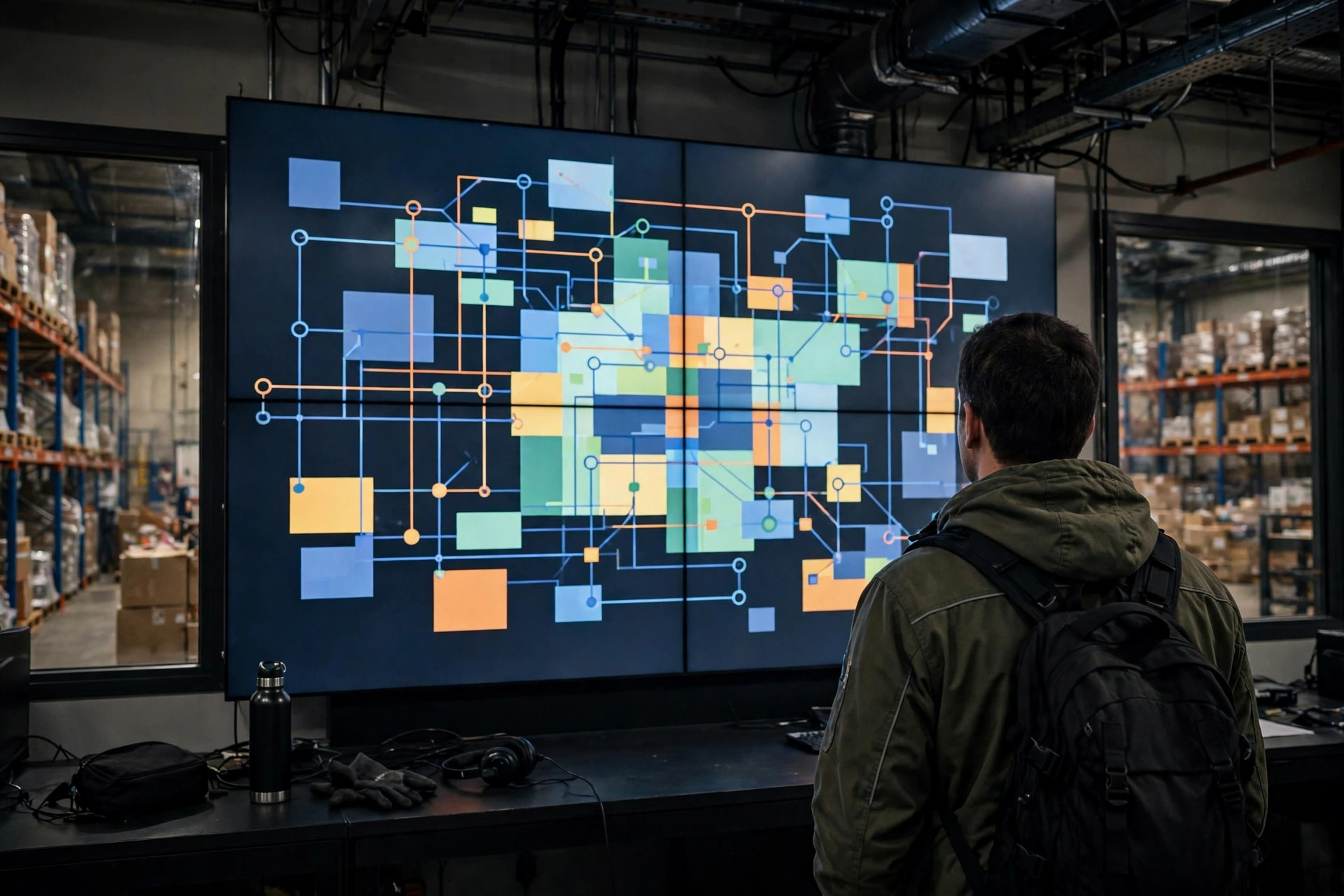
Three Roads to Unified Dispatch — Pick by What You Can Afford
There are three real approaches out there. No silver bullets. Pick the one your operation can actually carry.
Road one: open vendor APIs plus a neutral third-party RCS as the unified layer. Best for large sites with a messy brand mix. The upside is neutrality — nobody's home team wins. The price is a long integration slog, chewing through one API doc after another, and you'll need a project manager who can bang the table with three vendors at once.
Road two: the dominant brand's RCS as the core, with secondary brands bridged in through protocols. Best when one brand owns seventy percent or more of the fleet. Cheaper, faster to go live — but the secondary brands lose capability. Don't expect advanced dispatch features from them; if basic tasks run clean, that's a win. Choosing this road means admitting the dominant brand calls the shots, so write the secondary brands' integration depth into the contract.
Road three: the WES dispatches tasks directly, and RCS handles only traffic deconfliction. Best when task logic is complex and the robots are just executors. The WES becomes the brain, RCS degrades to pure traffic cop, and each vendor's fleet manager handles charging and maintenance. This road demands the most from your WES — don't touch it if your WES is weak.
Before you sign anything, run this checklist, and don't sign if any line is blank: does the vendor support VDA 5050 — the mobile-robot communication interface jointly published by Germany's VDA and VDMA, currently the most realistic common language for multi-brand fleets? A brand that doesn't support it starts a point down. Can maps be reconciled, and who owns no-go zones? Who arbitrates intersections? Can chargers be shared, and who sets the low-battery policy? Who takes over when the network or power drops? Getting these into the contract matters ten times more than haggling over unit price.
My verdict, with the line drawn clearly: three or more brands, or over thirty units in one building, or a firm plan to add brands within two years — that's when an independent RCS is worth discussing. Below that line, stick with the dominant brand's fleet manager plus WES task orchestration, and spend the money where it counts. RCS is a scale game, not a fashion game.
Before you buy that second brand, do two things: get the open API documentation from brand number one, and ask brand number two whether it supports VDA 5050. If you can't get those two documents, everything after is borrowed trouble.
So — how many fleet management systems are running in your building right now?