Here's my verdict up front: if you're shipping fewer than 5,000 orders a month, don't rush to sign a second 3PL. The freight you'll save probably won't cover the management overhead you'll add. This cuts both ways — diversification is right, but diversification has a cover charge. I've seen too many sellers turn "don't put all your eggs in one basket" into "hire two more landlords." More baskets, but no extra hands to watch them, and in the end neither basket gets watched well.
Why everyone wants a second 3PL
Three reasons, and they're all valid.
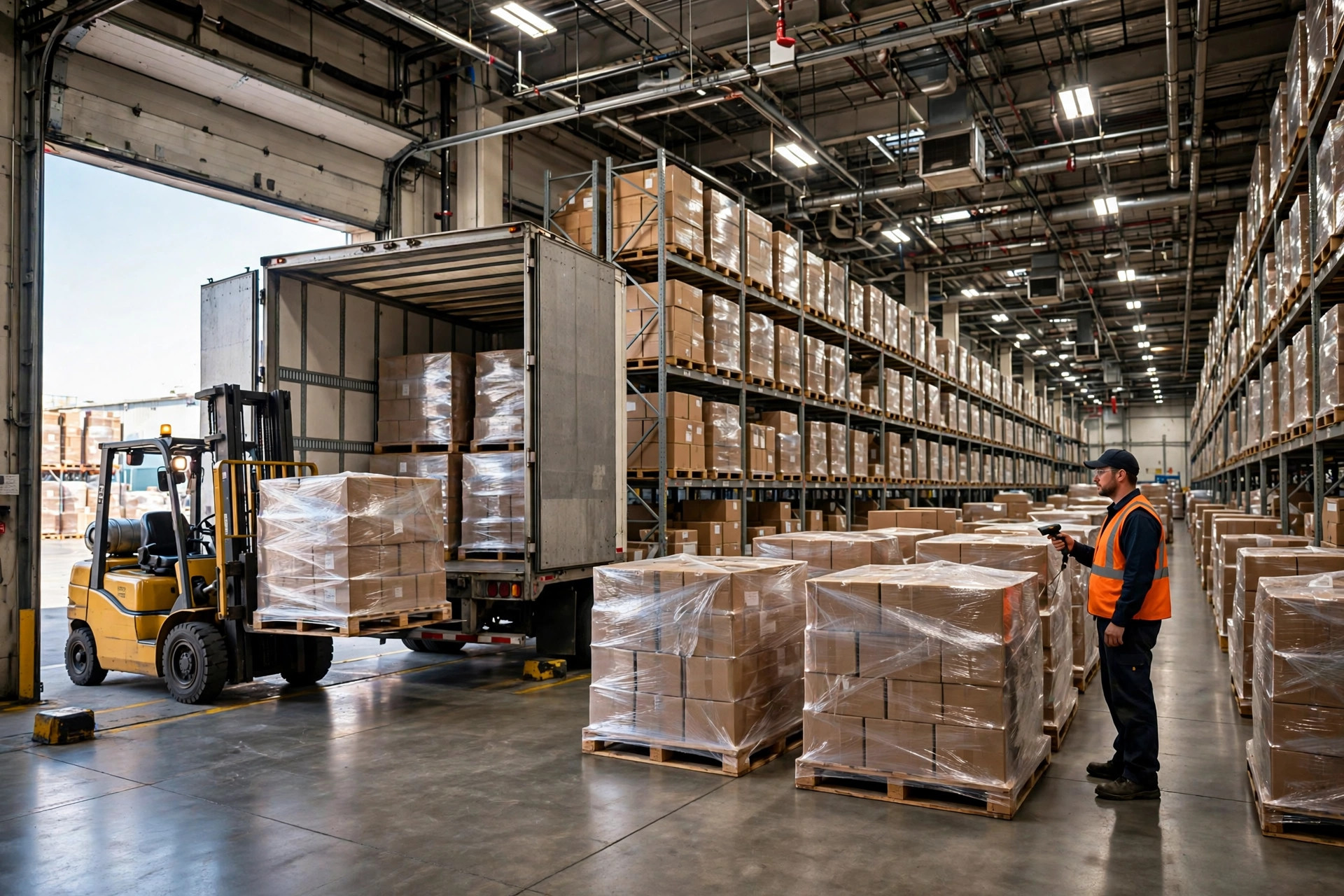
First, risk hedging. Anyone importing through Southern California remembers how bad the LA port congestion got in the second half of 2021. One of my clients, a patio furniture seller doing several million dollars a year, kept 100% of his inventory at a single 3PL in Ontario, California. In September 2022, with a rail strike looming and the ports jammed, his containers sat at the terminal for 11 days, and he couldn't replenish during the two most critical weeks before peak season. He did his own math afterward: those two weeks cost him several hundred thousand dollars in lost sales. "Lao Mi," he told me, "it's not the freight I'm upset about. I'm afraid of it happening again." One warehouse is a single point of failure. One blowup before peak season and the whole year is wasted.
Second, negotiating leverage. Stay with one 3PL long enough and the annual rate hikes get bolder. In early 2024, a home-storage seller came to me: his 3PL wanted a 12% increase on handling fees at renewal. He walked back in with a quote from a second 3PL and settled at 4%. That one conversation saved him over twenty grand a year. When you can credibly switch, your voice gets louder at the negotiating table. That's not scheming, that's business.
Third, regional coverage. If 60% of your orders are on the East Coast and you're shipping everything from California, your East Coast customers wait five to seven days while you pay zone 7 and zone 8 rates. Split a warehouse to the East Coast and freight cost and transit time drop together — repeat purchase and conversion rates follow.
All true. But —
Will the freight savings actually cover the new costs?
In 2023 I sat down with an auto parts seller in Chicago and ran the numbers. He was doing about 12,000 orders a month, 55% of them East Coast, and decided to open a second 3PL warehouse in New Jersey while keeping the California one.
The upside first: East Coast orders shipping from California cost $4–6 more per order than shipping from New Jersey. At roughly 6,600 East Coast orders a month, that's $26,000–$40,000 a month in freight savings — $300,000 to $480,000 a year. Looks beautiful.
Then the costs — the part most people guess at:
| Cost item | Magnitude |
|---|---|
| Second 3PL systems integration and onboarding | about $15,000 one-time, 3 weeks to go live |
| Reconciling two sets of books monthly | about 2 extra person-days, roughly 0.1 FTE |
| Minimums at both warehouses | Off-season storage minimums at both sites, an extra $3,000–$5,000/month in slow months |
| Inventory transfers | Pre-peak rebalancing from California to New Jersey, $2,000–$3,000 per truckload |
| Exception handling | Two SLAs, two claims processes — when something breaks, the first argument is whose fault it is |
Then the hidden costs: inventory sync lag between two systems. During Black Friday 2023, one seller's two-warehouse inventory feed lagged by two hours, he oversold on Amazon, his account health took a hit, and his ads were paused for half a day. That kind of loss never shows up on a spreadsheet, but it hurts for real.
Net result: his first year was basically break-even — the freight savings were eaten alive by the new costs. From year two on, as volume kept growing, the second warehouse started genuinely paying off.
There's one more bill most people forget: the move itself. In 2024, a pet-supplies seller wanted to shift his East Coast inventory from the California warehouse to the New Jersey one. A full truckload quote came in at $2,600, the stock had to go in two batches, and he was out of stock for four days in between. Moving warehouses isn't hiring movers for a sofa — frozen inventory, in-transit shrinkage, receiving discrepancies, every line item costs money. Before you split warehouses, figure out who pays the moving bill.
Note the key detail: he was doing 12,000 orders a month. If you're doing 3,000, the same fixed costs spread across each order multiply several times over. Which brings me to the counterintuitive part:
For a small seller, adding a second 3PL usually means paying for pain. You think you're buying peace of mind; what you're actually buying is two sets of invoices, two systems, and two rounds of finger-pointing. The freight savings won't cover the management cost, and the small conversion lift from faster delivery won't close the gap either. Put bluntly: diversification is a scale game, not a courage game.
Three questions to test whether you've earned a second warehouse
Question one: how many orders a month? My line: under 3,000, don't touch it. 3,000–8,000, run the math above first. Over 8,000, seriously consider it.
Question two: are your orders geographically concentrated? If the East Coast is less than 40% of your orders, splitting warehouses barely moves the needle — the freight savings won't cover the second set of fixed costs. Pull a heat map from your order system first. Don't go by gut feel.
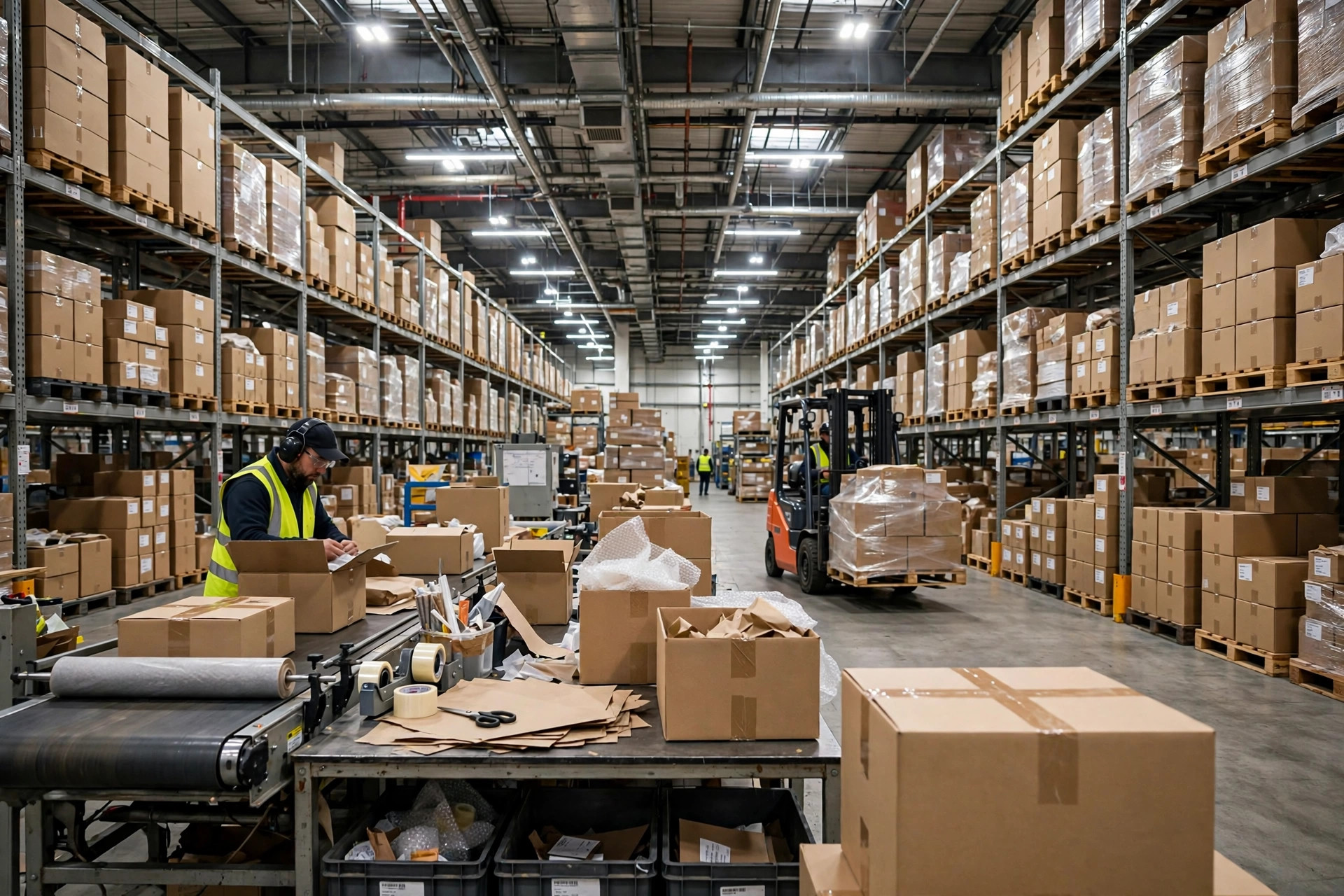
Question three: do you have someone to manage two warehouses? Two 3PLs means two sets of KPIs, two monthly closes, two exception workflows. Without at least a dedicated half-person on it, you've just hired two landlords with nobody to manage them.

If you can't answer two of the three, get your one warehouse right first. One warehouse running 98%+ on-time, damage-free, and billing-accurate beats two warehouses limping along at 90.
Don't put all your eggs in one basket — fair enough. But ask yourself first: how many baskets can you afford, and how many hands do you have to watch them?
By Lao Mi, Supply Chain Veteran (20 yrs)