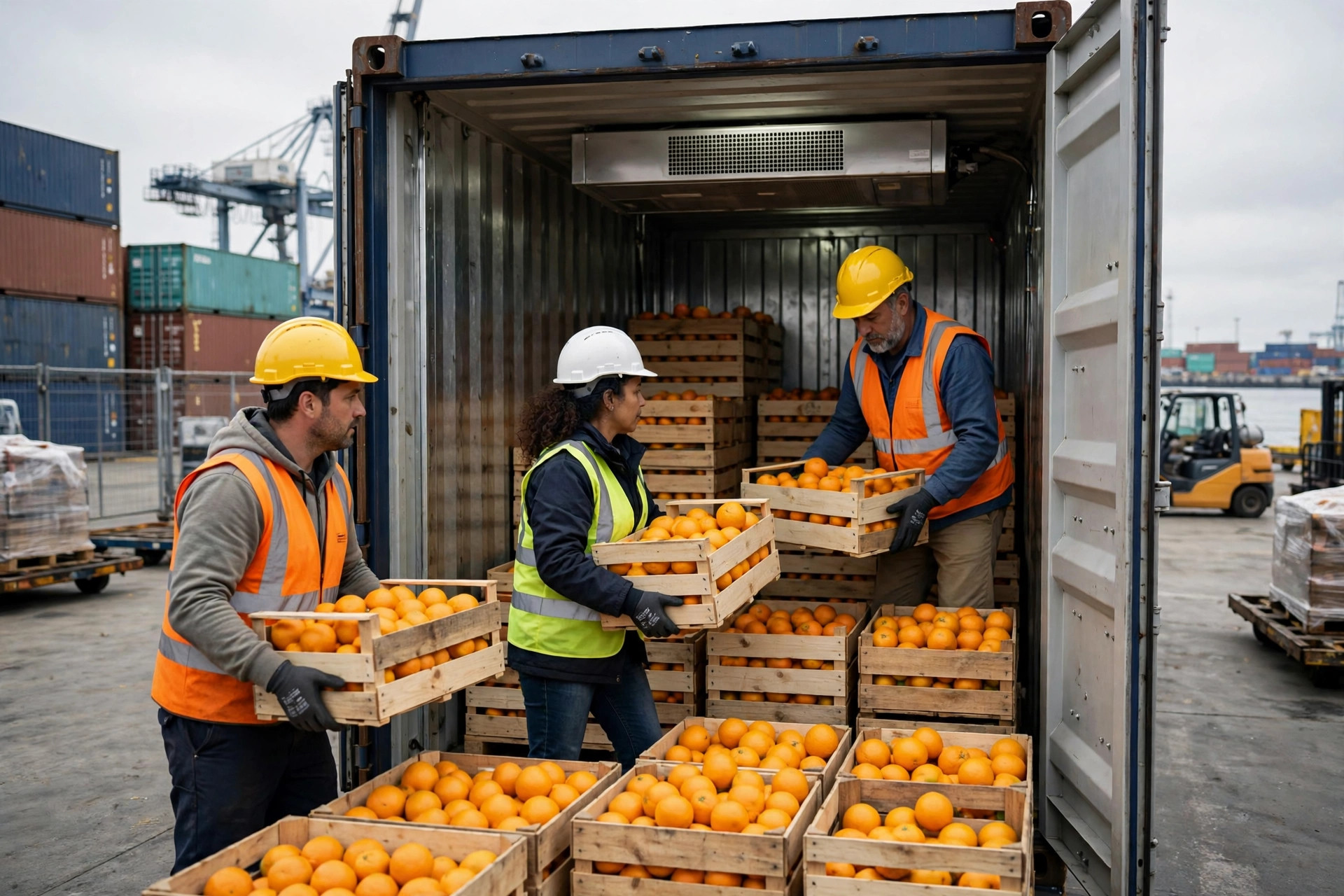
Let me tell you something. After all these years on the road, what scares me is not the distance. It is the moments when the load changes hands. One winter I hauled citrus out of Morocco's south, from the Souss region, up to the north. The fruit came off the trees and went to the local packhouse, where pre-cooling and packing went smoothly enough. Then the truck reached Tangier Med and waited two days for its vessel, and somewhere in the middle of one night the reefer's generator set failed. The driver only noticed hours later, and the temperature had already climbed. The load still sailed, and when the buyer in Europe opened it, the skins had gone soft. A big deduction followed. I could drive as steadily as I liked — none of it mattered, because the chain broke on the night nobody was watching.
That is the thing about this business. The fragile points in a citrus export run are never the hundreds of kilometers of highway. They are the handoffs. Orchard to packhouse is one. Packhouse to reefer is another. Reefer to vessel is a third. Every handoff adds a chance for the chain to break. Plenty of shippers price the job by freight alone and think a cheaper trucking outfit saves money, but what they save would not cover a fraction of one rejected container. The expensive part is always the few hours nobody is watching.
The Second Run: After the Strait, the Real Last Mile of the Citrus Cold Chain Begins
On another run I took a reefer across the Strait from Tangier Med to a Spanish port and handed it to a warehouse on the European side. Their receiving routine was nothing like ours. They checked the temperature logger first, then the container, and if a single signature was missing from the paperwork, the truck did not get in. The driver ahead of me was short one stamp and sat at the gate for most of a day. His reefer never lost power, but the delay still cost the shipper dearly. After that, I learned to line up every document and every stamp before I ever turned the key.
Years on the road taught me this: citrus does not fear distance, it fears being knocked around. A few bumps on the highway are nothing. Temperature climbing, dropping, then climbing again — that is what ruins fruit. I have watched warehouses unload with the container doors wide open, chatting while the cold air pours out, nobody noticing. At places like that, I would rather wait longer and make them shut the doors properly before a single carton moves.
The Third Run: Dealing with the Warehouse Is Won Before You Arrive
One more run, about dealing with warehouses. I once delivered to a distribution warehouse in Europe with an 8 a.m. gate appointment. I arrived at 7:30, and they told me my license plate was not in their system, so I waited outside. That wait stretched past three hours. The reefer never stopped, but any driver knows that every extra minute the load sits on the truck is extra risk. Later I asked the older hands in the fleet and learned the warehouse's rule: appointments had to be booked two days ahead in their system, and a single wrong letter in the plate meant no appointment at all.
From then on I added one step before every departure: the day before, I confirmed the appointment with the warehouse — plate, container number, arrival time, one by one. At the gate, paperwork first, doors second, always in that order. It sounds small, but whether a shipper's fruit makes it onto the shelf on time sometimes hangs on exactly this kind of procedure. The warehouse people are not trying to make life hard; they handle dozens of trucks a day, and one unscheduled truck throws the whole day's rhythm off. Follow their rules, and they are usually happy to do you a favor in return.
Peak season brings its own trouble. When citrus season peaks, the wait for a vessel gets longer and space gets tight. I once saw a shipper hire a cheap outfit that had never run this route; the driver did not know the port paperwork, had to redo the entry documents twice, and missed the sailing. The load waited days longer at the port. The reefer kept running, but the buyer's shelf plan was wrecked and the next shipment's slot slipped too. In peak season, booking the sailing and the truck early matters more than ever, and last-minute arrangements are where things go wrong. One more detail: do not mix ripeness grades in one container. The riper fruit pushes the whole load downhill faster, and grading before stuffing looks like extra work but insures the entire container.
Advice for Shippers and Warehouses: Watch Three Places and the Citrus Load Stays Safe
First, lock down the time from orchard to packhouse. Do not let picked fruit sit in the sun at the field edge; get it into pre-cooling fast. If pre-cooling is not done right, everything after is wasted effort. Second, at every reefer handover, check two things: that the generator set is actually running, and that the temperature logger is actually recording. If either one is missing, do not sign for the truck. Third, unload fast and tight at the destination warehouse: keep the doors shut as much as possible, get the fruit into cold storage, and do not let it stand on the dock in the wind.
| Leg | Where it usually goes wrong | What to check | | Orchard to packhouse | Fruit left sitting too long at the field | Hours from picking to pre-cooling | | Packhouse to reefer | Container not cooled down before stuffing | Container temperature and logger before loading | | Waiting at port | Generator failure nobody notices | Temperature checks during the wait | | Destination unloading | Doors wide open, fruit on the dock | Fast in-and-out, paperwork aligned in advance |
Here is the counterintuitive part: the fastest truck is not always the safest truck. Some drivers race to make the sailing and never properly check the reefer's generator set on the way, and the temperature has quietly climbed long before the port. The reliable driver is the one who checks the equipment before departure and matches the data at every handover. Arriving half a day late costs nothing; one broken link costs the whole container.
There is an old saying among drivers: good fruit does not fear distance, it fears the stretches where nobody is minding it. From a Moroccan orchard to a European shelf, the road is not the longest part. The hard part is having someone care at every handoff. Watch those three places, and the citrus on the shelf will look fresh and sell at full price.
By Shifu Zhao, Trucking Veteran (15 yrs)