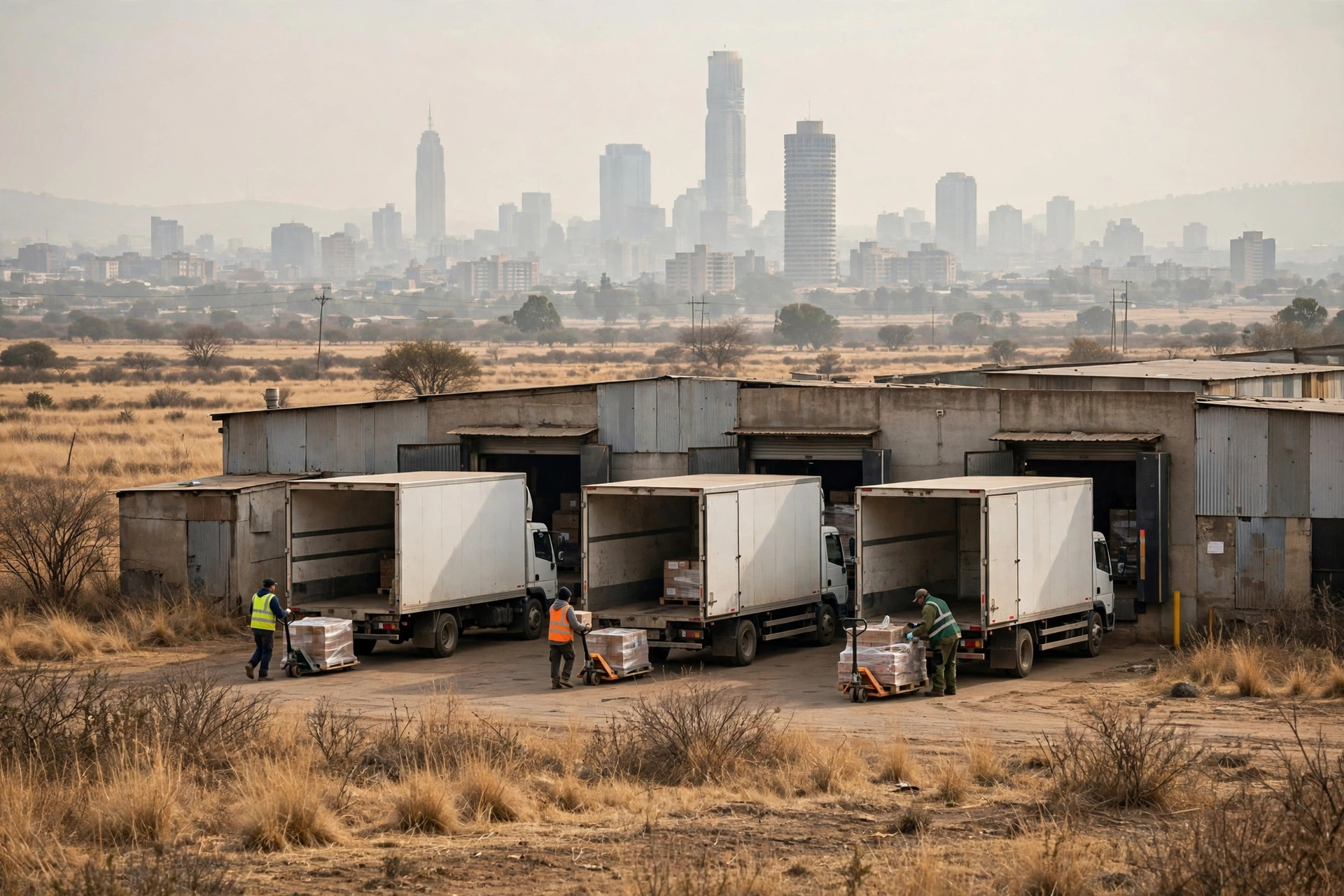
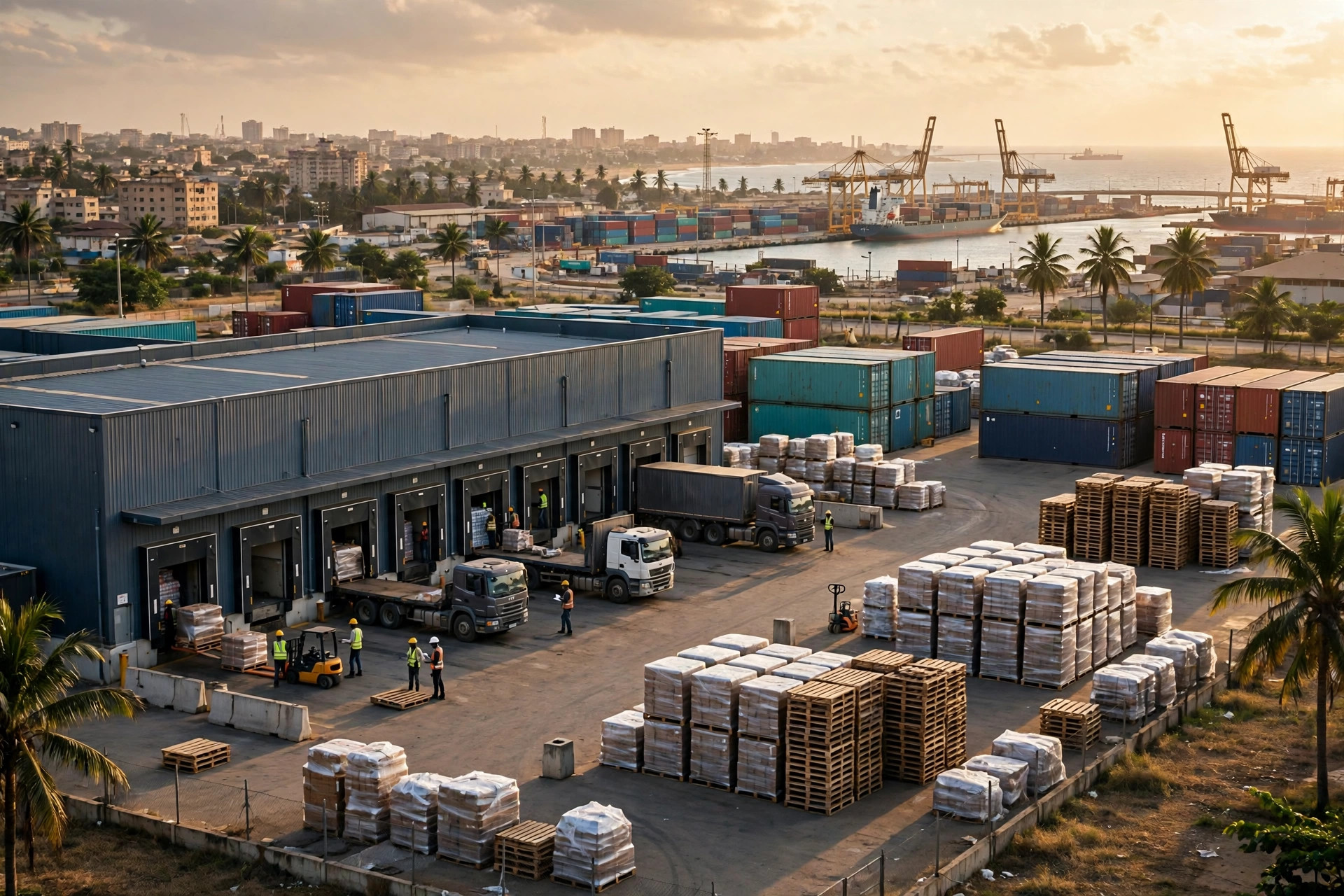
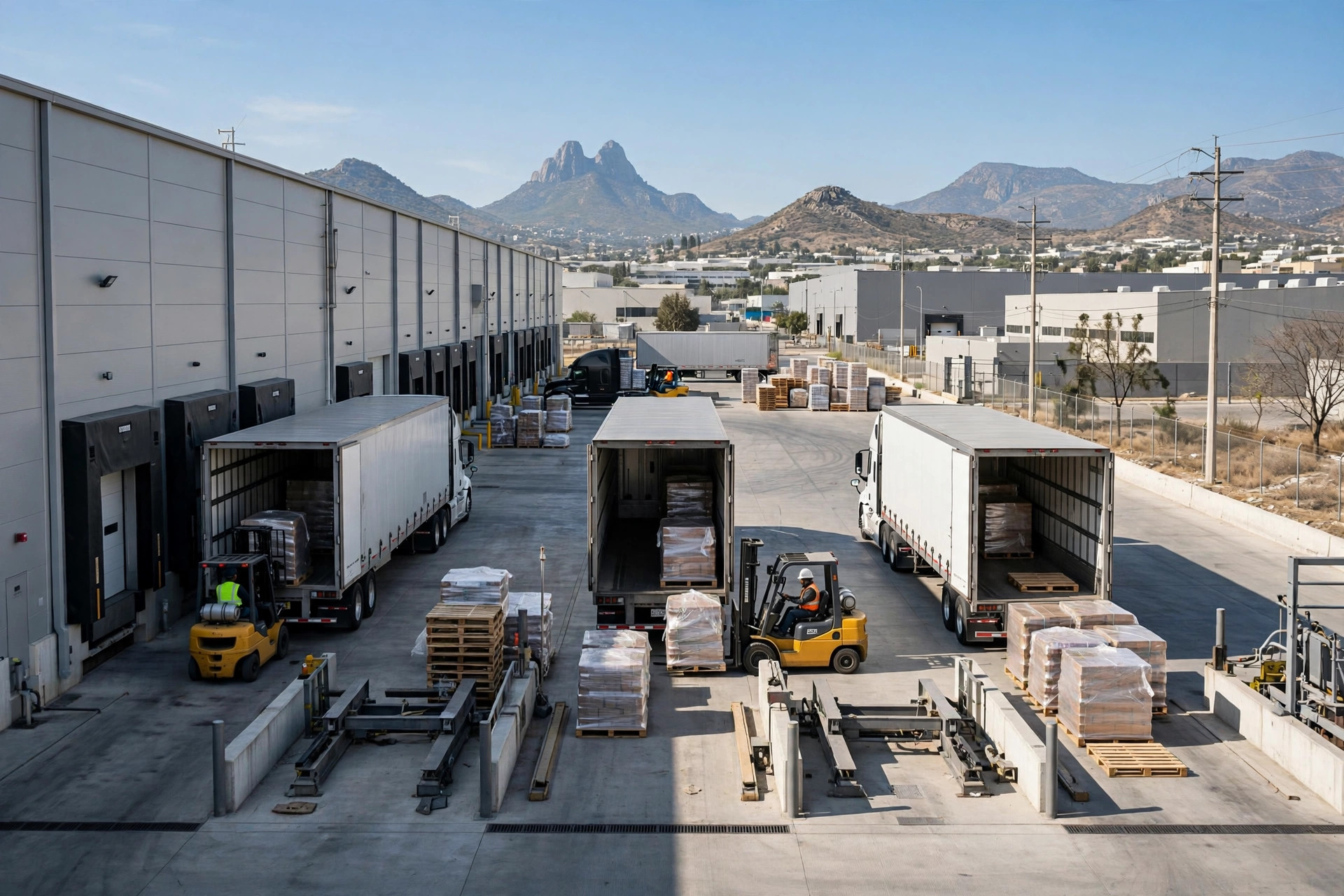
The area around Tangier Med has gradually become a case worth studying closely: on one side, car plants and a vehicle terminal; on the other, supplier warehouses spread along the port and rail lines, sending components to assembly lines on a rhythm that barely varies. That is morocco automotive logistics warehouse tangier in a single view. The layout itself is not new. The question worth asking is what supplier warehouses actually rely on to keep pace with the car plants, and where warehousing comes under strain first when that rhythm changes.
According to publicly available industry information, roughly 87 Tier 1 suppliers cluster around Tangier, the vehicle terminal handles around 1 million cars a year in capacity, and a direct rail link connects plants with the port. Taken together, those three facts describe something more demanding than "build a warehouse next to a port": a system with explicit requirements on response speed, sequencing accuracy, and recovery from disruption. That is the core of morocco automotive logistics warehouse tangier — the warehouse is no longer a passive store of parts, but part of the car plant's production rhythm.
Morocco Automotive Logistics: Supplier Warehouses Have Become Part of the Rhythm
Start with what is observable. A traditional components warehouse had a straightforward job: store goods properly, ship them out, and keep the records straight. Supplier warehouses around Tangier increasingly carry a different role: sequenced supply. Incoming components are recombined by model, configuration, colour, and batch, then dispatched as kits matched to specific vehicles in assembly-line order. What leaves the warehouse is no longer a carton of standard parts, but a kit that belongs to a particular car.
The direct consequence is that the warehouse's internal logic has been rewritten. Picking is governed not by which location is convenient, but by line sequence. Checking covers not only quantities, but the completeness of each kit. Dispatch is governed not by filling a truck, but by hitting the plant delivery window. One supplier warehouse serving a nearby plant ran into exactly this pressure: the assembly line temporarily reshuffled the production order of some models, and the warehouse had to re-sequence kits that were already prepared, where a single missing small part held up an entire kit. Traditional warehouse metrics do not capture that kind of strain.
A second observable change is the sharpening division of labour between bonded warehouses and rail-side pre-port warehouses. Bonded warehouses tend to handle temporary storage, allocation, and compliance management for imported components, while pre-port warehouses sit closer to shipment, handling consolidation, kitting, and dispatch handover. Their inventory strategies differ: the former prizes compliance and batch traceability, the latter prizes turnover speed and on-time dispatch. Managing both types as if they were one type of warehouse is often where management problems begin.
Data and Causes: Why Rhythm Requirements Reach the Warehouse
Read together, roughly 87 Tier 1 suppliers, around 1 million vehicles of annual terminal capacity, and a direct plant-to-port rail link make the transmission chain fairly clear. Many suppliers mean the assembly line faces not one supplier's fluctuation, but the combined effect of many. Large terminal capacity means any change in shipping rhythm forces a matching change in warehouse consolidation rhythm. A direct rail link compresses the handover between port and plant, leaving the warehouse less buffer time.
The causes can be separated into three layers. At the production organisation layer, the more flexible the plant's scheduling, and the more frequent model and configuration switches, the more complex the supplier warehouse's sequencing work becomes — capacity must be reserved for changes in sequence itself, not only for changes in volume. At the logistics network layer, the rail link shortens physical distance between port and plant, but it also concentrates buffer time that used to be spread across transit into the warehouse's operating window, so warehouse planning must be more precise. At the risk layer, more suppliers mean any single disruption propagates faster, and safety stock plus contingency options stop being a "just in case" formality and become part of rhythm management.
One trade-off deserves caution: the leaner the inventory, the lower the capital tied up and the cleaner the rhythm looks, but the weaker the resilience to fluctuation; the thicker the inventory, the lower the stock-out risk, but the higher the capital and warehousing cost. The real test for a supplier warehouse is not choosing one extreme, but finding a working point that can be sustained between the plant's rhythm, its own operating capacity, and upstream delivery stability. That point is not calculated once and fixed; it moves with model mix, order fluctuation, and transport conditions.
| Supply model | The warehouse's core job | Strength | Main risk |
|---|---|---|---|
| Direct to plant | Ship straight against orders, few intermediate steps | Short chain, fast response | Any upstream wobble hits the plant immediately |
| Sequenced supply | Kit and check in line order before dispatch | Matches assembly rhythm, errors caught inside the warehouse | Complex sequencing, order changes force rework |
| Pre-port consolidation | Consolidate, kit, and hand over near the port | Smooth shipment handover, suits batch dispatch | Heavy reliance on shipping windows, delays cause backlog |
Morocco Automotive Logistics: What Is Changing in the Warehouse Capability List
Following this logic forward, several directional changes are under way in what a supplier warehouse must be able to do. First, sequencing and kitting capability is moving from a bonus to a requirement: warehouse systems must read production order changes in near real time and translate them into picking and checking tasks, rather than relying on manual order-by-order adjustment. Second, recovery capability is becoming as important as everyday operating capability: a delayed batch, a reshuffled model order, a blocked transport leg — whether the warehouse has a plan, an alternative kit, and a ready communication channel determines whether the plant experiences a small fluctuation or a line-stop risk. Third, bonded and compliance management is moving from a back-office function to a front-line constraint, where batch records, documents, and inspection status directly decide whether a shipment can leave on time.
A case illustrates the recovery point. During a period of congestion around the port, one supplier warehouse saw its dispatch windows compressed and had to reconsolidate components originally planned for separate shipments. Its response was to protect kit completeness for higher-priority models first, defer part of the lower-priority kits, and synchronise the revised plan with the plant's planning team immediately. The plant did not stop, but that week's workload rose sharply. The lesson is not that any single response was clever, but whether contingency plans existed beforehand: were kit priorities ranked, were alternatives rehearsed, were communication channels already open? Improvisation without a plan relies too much on luck.
Over a longer horizon, whether the Tangier pattern can be replicated depends on three conditions holding at once: sufficient density of plant capacity and supplier clusters, continued reliability of rail and road links between port and plant, and supplier warehouses' information systems and disruption management keeping pace with increasingly flexible scheduling. If any one of the three weakens, warehouse rhythm management slides from actively keeping pace to passively firefighting. And how those three conditions move is precisely the window for watching where Morocco's automotive warehousing goes next.
So back to the original question: how do supplier warehouses keep pace with car plants? The answer is probably not one warehouse format or one set of equipment, but a combination of capabilities — sequencing precision, recovery speed, completeness of compliance records, and the judgement to keep recalibrating between high and low inventory. Together, those capabilities make up a supplier warehouse's real rhythm management in morocco automotive logistics warehouse tangier. Which way that combination tilts in the coming years — toward automation and systems, or toward contingency planning and human judgement — will likely only become clear after a few more rounds of model switches and order swings.
By Dr. Chen, Supply Chain Researcher