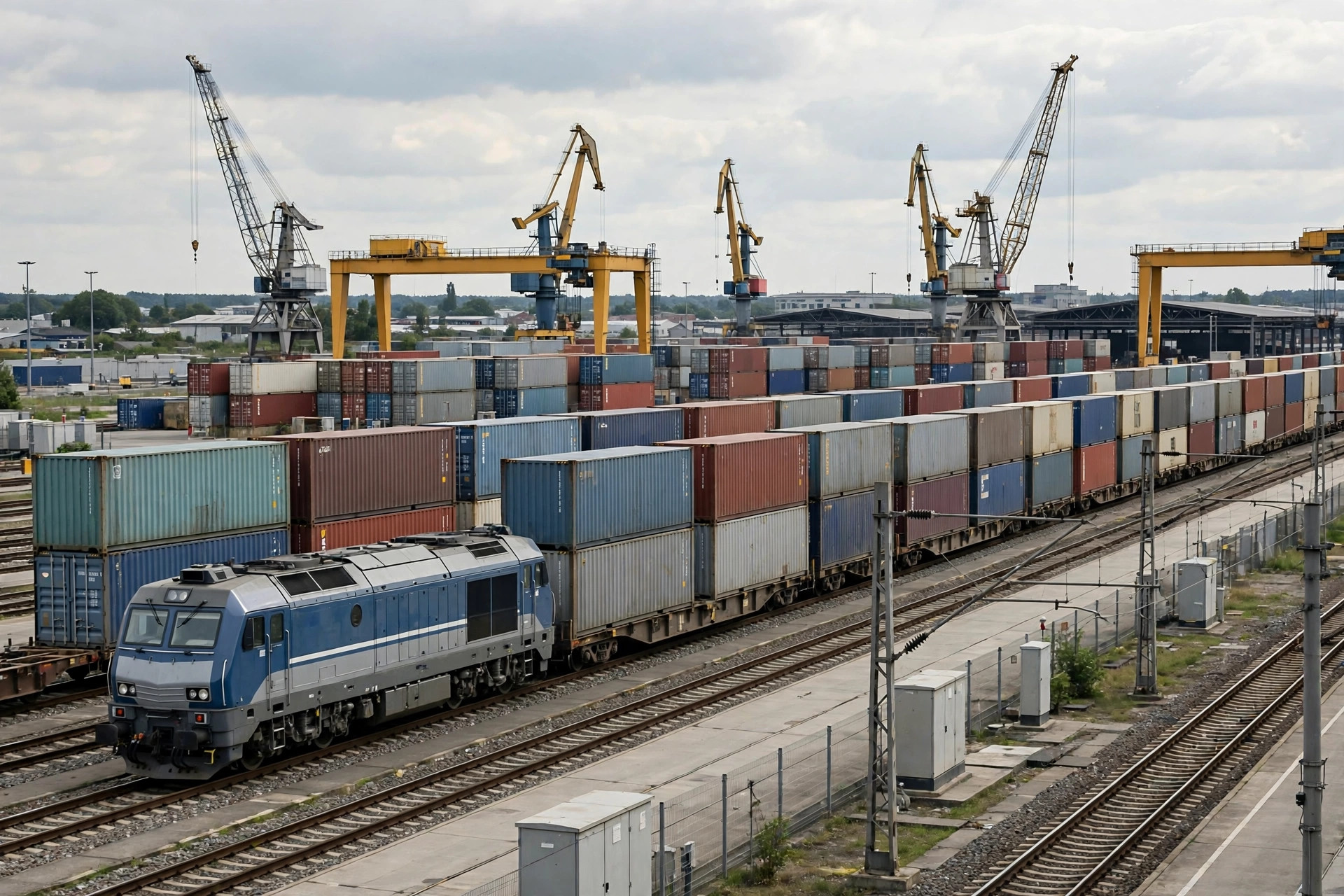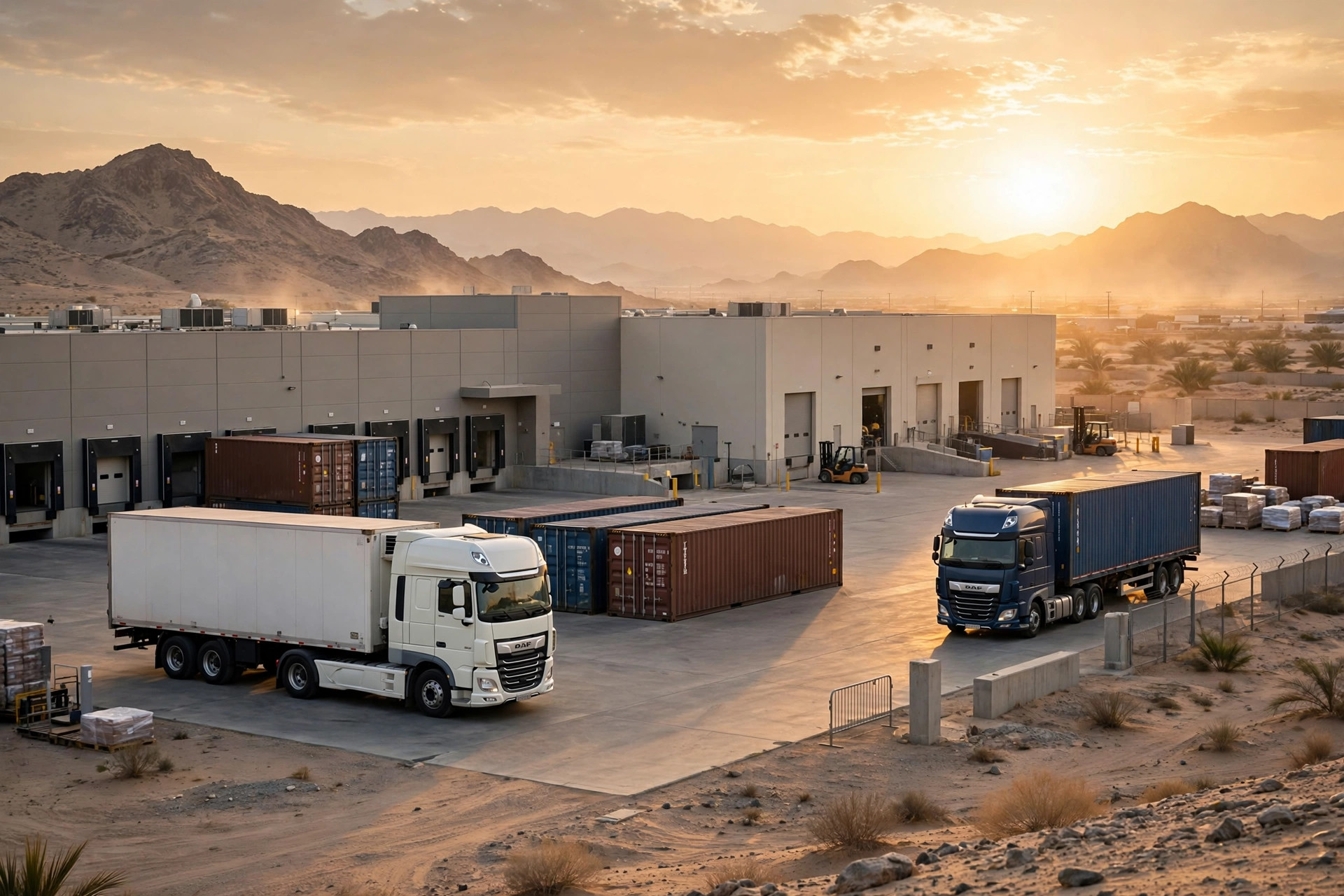
Here's the thing nobody tells you about selling in the Middle East: the most dangerous moment for your inventory isn't customs clearance or last-mile delivery. It's the extra three days your container spends baking in the sun outside Jeddah port.
Five years in cross-border, and last year I went all-in on Saudi and the UAE — Noon and Amazon.sa both. My warehouse journey here started with the fantasy of "building my own to save money" and ended with "just rent a 3PL." No theory today. Three bills: heat, customs, last mile. Run them, and you'll know whether to build or lease.
Heat Is a Cost Line, Not a Weather Report
Everyone knows Saudi summers top 50°C. What most sellers miss: that's the air temperature. Wherever your goods sit is hotter.
My first batch into Riyadh included small appliances with lithium batteries. That July, the 3PL's roof temperature alarms went off three times in one week, and cartons in unventilated corners were hot to the touch. Dozens of power banks swelled and had to be scrapped. The product value was small; the freight and clearance costs on that batch went down the drain anyway.
A cosmetics-seller friend had it worse. A container of sheet masks and lipsticks waited a few extra days at the port for paperwork. Doors opened, heat rolled out — half the lipsticks melted, serum pouches puffed like balloons. Near-total loss.
The bloody lesson in one sentence: in the Middle East, temperature control isn't a "value-added service." It's survival.
How to run this bill:
First, your category. Batteries, cosmetics, food, adhesives — all heat-sensitive. Apparel, hardware, basic goods? Skip this bill.
Second, don't just ask about rent. Ask three things: a temperature-controlled zone? Temperature monitoring records? How do you cool the roof and loading areas in summer? Hesitation means no.
Third, building your own means paying for ventilation, sprinklers, insulated roofing, and spot AC. A tin shed here is an oven in summer — your goods pay the tuition.
SABER: Get the Certificates Before the Cargo Ships
Customs clearance in Saudi Arabia comes down to one word: SABER. It's the online conformity platform run by SASO (the Saudi Standards, Metrology and Quality Organization). Two certificates: the PCoC (Product Certificate of Conformity, per model, valid roughly a year) and the SCoC (Shipment Certificate, required per shipment to clear customs). Flow: importer registers the product on SABER → accredited body issues the PCoC → SCoC for each shipment before dispatch → customs clears.
Key point, underlined twice: certificates before shipment. No certificate, no entry. Check official sources for the latest details, but the order never changes: certificates first, cargo second.
My first shipment to Saudi died on this exact rock. The forwarder said "ship it now, we'll sort the paperwork when it lands." The cargo reached Jeddah with no SCoC and sat for nearly two weeks. Demurrage burned money daily — the final clearance bill was several times what the certificates would have cost. My iron rule since: PCoC done a month or two ahead, every SCoC in hand before dispatch, screenshot it, file it.
How to run this bill:
Time — the PCoC lasts about a year, so get it early. Accredited bodies have queues; don't wait until ship day.
Money — certification is small money. Demurrage is big money. Do the math.
People — ask your 3PL or forwarder straight up: do you handle SABER? Work with an accredited body? No clear answer, walk away. In the Middle East, clearance capability is a 3PL's core competence.
Last Mile: COD Cash Flow and the Ramadan Spike
Middle East last-mile has two "features" you won't find elsewhere: cash on delivery is still one of the mainstream payment methods, and Ramadan brings an e-commerce explosion.
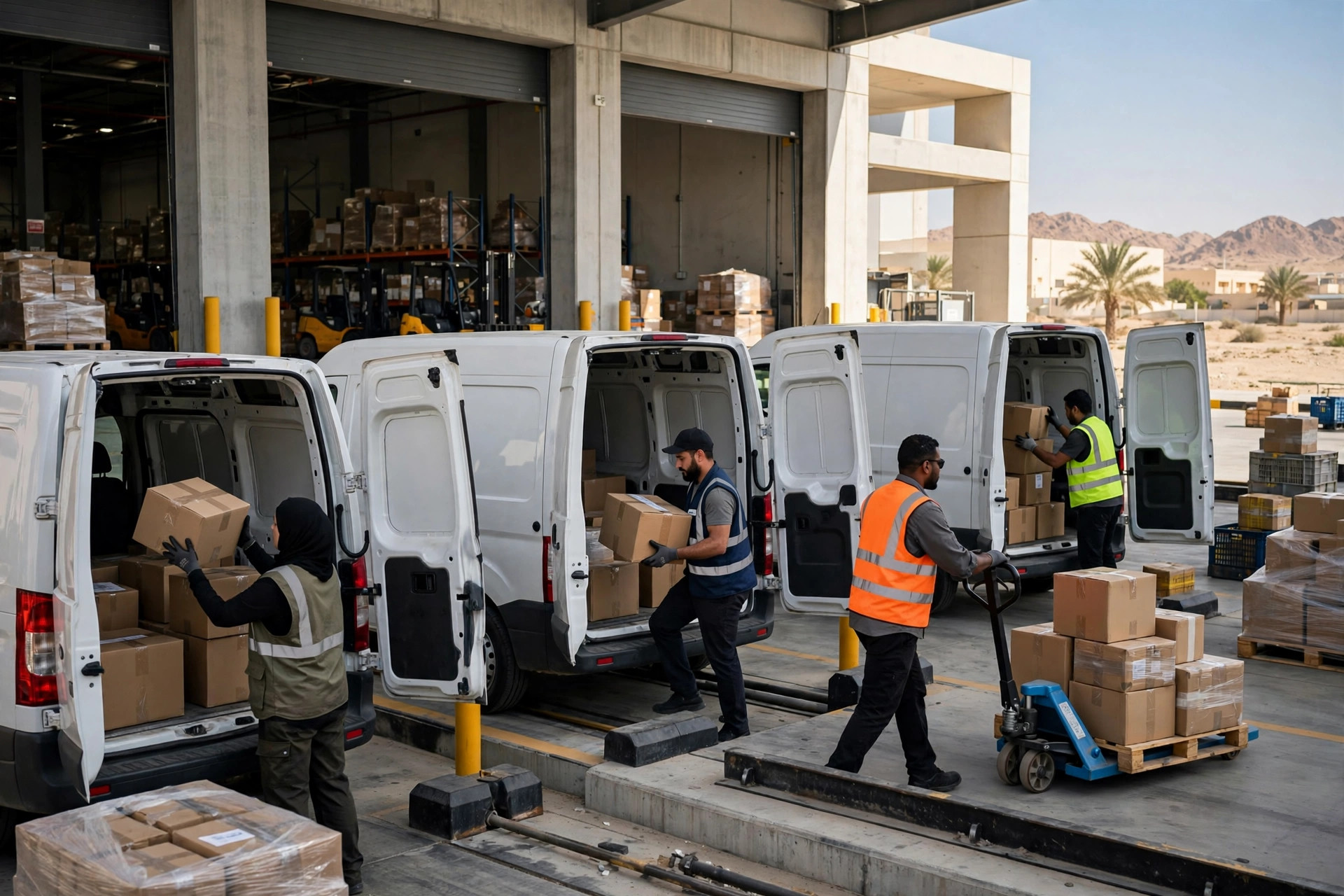
COD first. Slow payback and a relatively high rejection rate are normal here — it's not your operations failing. I spent my first month convinced something was broken, until veteran sellers told me: everyone's numbers look like that. Two consequences: plan your cash flow for slow money, and build returns processing in from day one. Rejected parcels come back, and somebody needs the space and process to inspect, relist, or scrap them.
My most expensive lesson was returns. COD rejections piled up at my 3PL for the better part of a month while I ignored them — resellable units never picked out, scrap occupying shelf space. Month-end bill: storage fees up by thousands. That's when it clicked: here, returns aren't "after-sales." They're daily operations.
Then Ramadan. E-commerce booms during Ramadan — that's the opportunity. But local working hours shrink, and both customs and last-mile can slow down — that's the risk. My playbook: start replenishing about a month before Eid and push safety stock to roughly double the normal level. I'd rather sell through slowly after Ramadan than stock out during the spike. One stockout tanks your listing momentum, and winning it back costs double the ad spend. I've done that math. It hurt.
How to run this bill:
Cash flow — build your funding plan around long payback cycles and rejection as a baseline. Keep an extra month of buffer in your stocking budget. Don't choke yourself.
Returns SOP — agree the returns process and fees with your 3PL up front (inspection, relisting, scrapping), and put it in the contract. Verbal promises don't count when there's a dispute.
Ramadan rhythm — stock early, and confirm your 3PL's staffing and operating hours during Ramadan ahead of time. If you try to push extra volume mid-Ramadan, the warehouse may simply have nobody to take it.
The Verdict: Rent First, Build Later
Three bills on the table — the question mostly answers itself:
| Cost item | Renting a 3PL | Building your own |
|---|---|---|
| Upfront investment | Deposit + system integration, a modest sum | Long lease + fit-out + racking + systems — serious money from day one |
| Labor | Near zero — the 3PL's people | Local hiring, visas, training — all on you |
| Temperature control | Use the 3PL's existing cool zones, pay per use | Ventilation, sprinklers, insulation, AC — your capex |
| Customs | Borrow the 3PL's clearance muscle and SABER experience | Your own broker, your own SABER learning curve |
| Returns handling | They have a process already | You build the SOP and find the space |
| Flexibility | Walk away if volume dries up; switching costs are low | Heavy asset — exiting means taking the loss |
| Fits order volume | Below a few thousand orders a month | Several thousand to tens of thousands, stable long-term |
The counterintuitive take: in the Middle East, renting doesn't buy "cheap" — it buys room for error. Every dollar of 3PL fees is insurance against heat you don't understand, a SABER process you've never run, and a Ramadan you've never lived through. Building just moves that risk from their hands to yours — and most people can't carry it.
My phased recommendation:
Phase one (below a few thousand orders a month): rent a 3PL, no debate. Three criteria: real temperature control, SABER and clearance know-how, a proper COD returns SOP. Don't go cheap on a no-name outfit — here, a 3PL's price reflects what it knows.
Phase two (high thousands, steady growth): go "half-built." Rent a dedicated zone in a 3PL, station your own person for QC and returns, or pair an agency with a small in-house team.
Phase three (tens of thousands a month, stable, local team mature): then talk about building. "Talk about," not "must build" — I know five-figure sellers who still rent, because the 3PL's scale beats their own build. They're happy renting.
Blunt truth: heat, customs, last mile — every bill you don't understand gets paid by someone, usually you. Renting first isn't cowardice. It's letting the 3PL pay the tuition before you enroll.
Three things you can do tomorrow: ask your 3PL three questions — temperature control, SABER handling, COD returns process. Check whether your hero products have their PCoC; if not, start this week. Look at the calendar, see how far out the next Ramadan is, and work your stocking plan backward.
This playbook worked for me — I learned it the expensive way so you don't have to. Going from "I want to build" to "happy to rent" saved me more than money. It saved me a full year of trial and error.
By Ah K, E-commerce Seller (5 yrs)