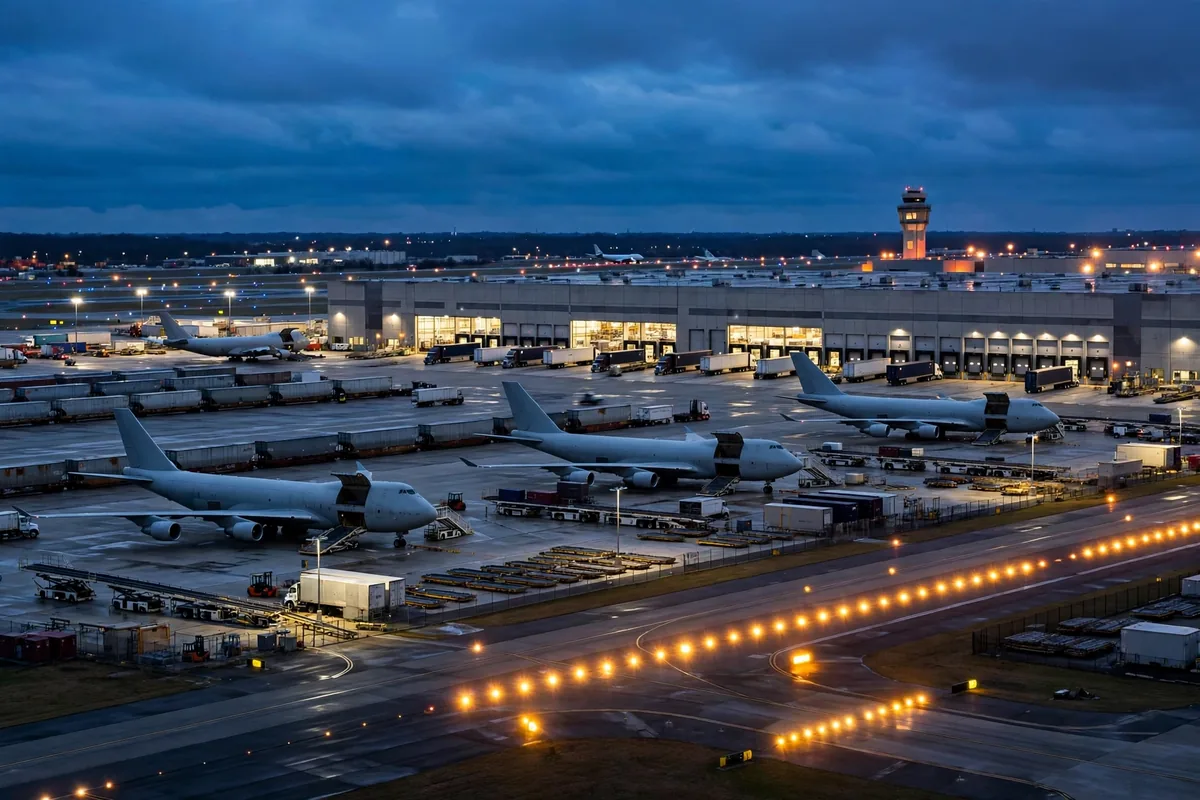
It is 3:40 in the morning and the planes are coming down over Memphis one after another, runway lights strung out in a line. Our night shift just handed over, six trucks are parked at the dock doors, and the drivers are asleep in their cabs. Listen, if you run a warehouse in Memphis, the first thing you face every day is not freight. It is airplanes. Every warehouse in this city grows out of that airport.
Most people know Memphis for one name: FedEx. The company's global World Hub sits at Memphis International Airport — about 940 acres, roughly 13,000 team members, more than 170 aircraft gates, and a sort system that can process around 484,000 packages per hour. Between 10:30 p.m. and 1 a.m., more than a hundred aircraft land in a tight window, freight comes off, gets sorted, and flies back out. Drive around the airport in daylight and all you see are parcel terminals and truck yards.
But if you only talk about the airport, you are selling Memphis short. This is one of the few American cities where four networks stack on top of each other: air, through the FedEx hub; rail, with five Class I railroads — BNSF, CN, CSX, Norfolk Southern, and Union Pacific — meeting here, making Memphis the third-largest rail center in the country; road, where Interstates 40 and 55 cross; and river, through the Port of Memphis, the nation's fourth-largest inland port, which moved 8.2 million short tons of waterborne cargo in 2022. Freight can switch modes here cheaply, and that is the real foundation under Memphis warehouse value.
Four Memphis Networks Stacked Together Set the Rent
In the fall of 2024, we moved our warehouse from the airport area to the southeast side, growing from 60,000 to 100,000 square feet. Before the move I spent three weeks touring nine buildings, and the more I looked, the clearer one thing became: Memphis rent is not priced by "how close to the airport." It is priced by which network your freight rides.
Here are numbers you can check. According to Cushman & Wakefield's Q3 2026 market report, the Memphis industrial market's overall vacancy rate was 7.9%, with warehouse and distribution rents averaging about $4.12 per square foot per year — pinned in a narrow band for four straight quarters. Net absorption that quarter was 1.2 million square feet, the sixth consecutive quarter above 1 million. Fair warning: different firms report different numbers — the same quarter shows up as 8.3% vacancy in one report and 6.0% in another, because they count different property types and sublease space differently. Always check what a report actually measures, and treat local market reports as the latest word.
Against the rest of the country, $4.12 sounds cheap. In California's Inland Empire you can pay double that. But brothers, that is the wrong comparison. In Memphis, the cheap part is the square foot. The expensive parts are people and time.
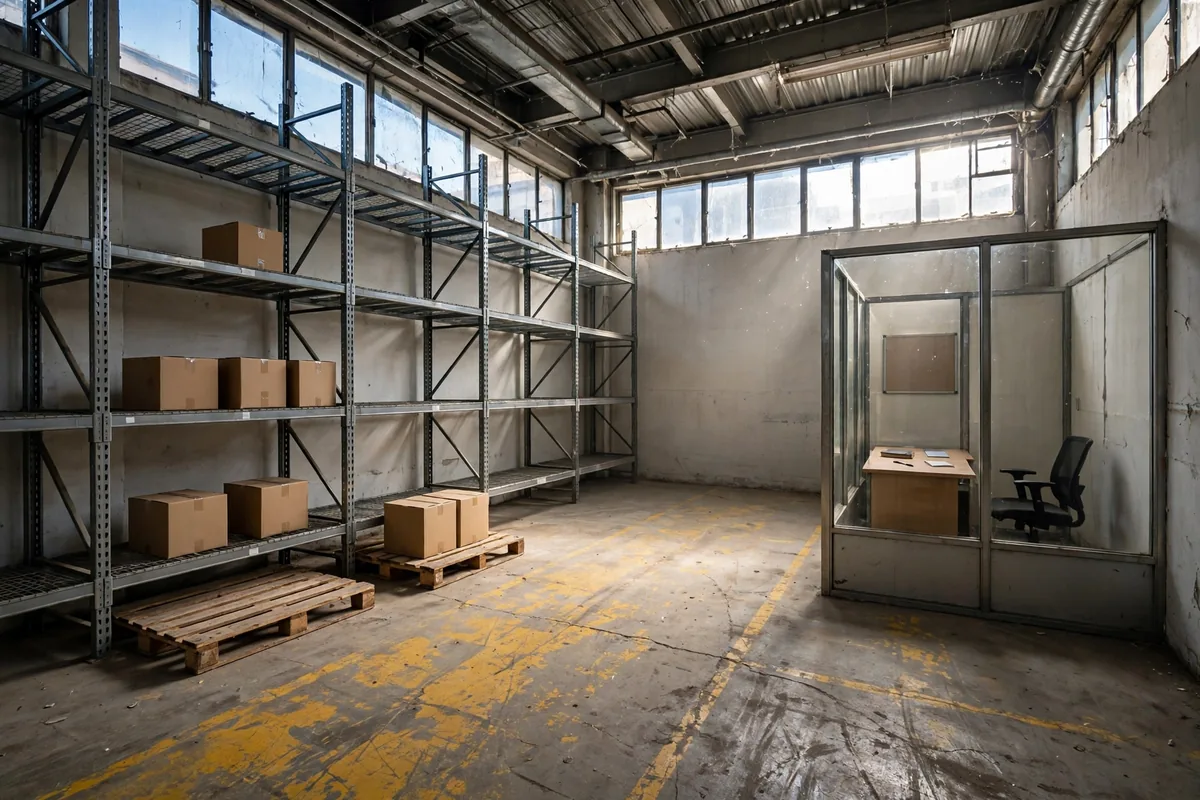
Here is the contrarian call up front: the warehouse closest to the FedEx hub is not necessarily the best value in Memphis. Buildings near the airport offer late cutoffs and overnight air, which sounds wonderful — until peak season, when truck queues at the gate can cost you an hour a night, and the older buildings near the airport have low ceilings and too few dock doors for modern operations. We priced one of them: an 80,000-square-foot older building at $3.80, about $0.50 cheaper than a new building in the southeast. That saves $40,000 a year in rent. But the old building had 8 dock doors and 28-foot ceilings against the new one's 16 doors and 36 feet. At peak we would have needed two extra shifts a day to match the same outbound volume, and the extra labor and overtime ran past $10,000 a month. The rent savings were gone in six months. I still remember that math.
Where to Lease: Airport, Southeast, or Across the River
Memphis warehouses fall into roughly three clusters, each with its own personality.
The airport area fits high-value, small-parcel freight that flies: medical devices, electronics components, rush e-commerce orders. The upside is late cutoffs next to the FedEx hub. The downside is aging buildings, congested roads, and hiring competition with the airport itself. In the 2025 peak season, one of our medical-consumables clients kept a 20,000-square-foot rush warehouse by the airport with an 11 p.m. cutoff, and freight was on a plane the next morning — the client loved it. In the same season, a big-ticket furniture client wanted to squeeze in near the airport too, and I talked them out of it. Bulky furniture was never going to fly anyway; they would have paid air-freight prices and suffered truck congestion for nothing.
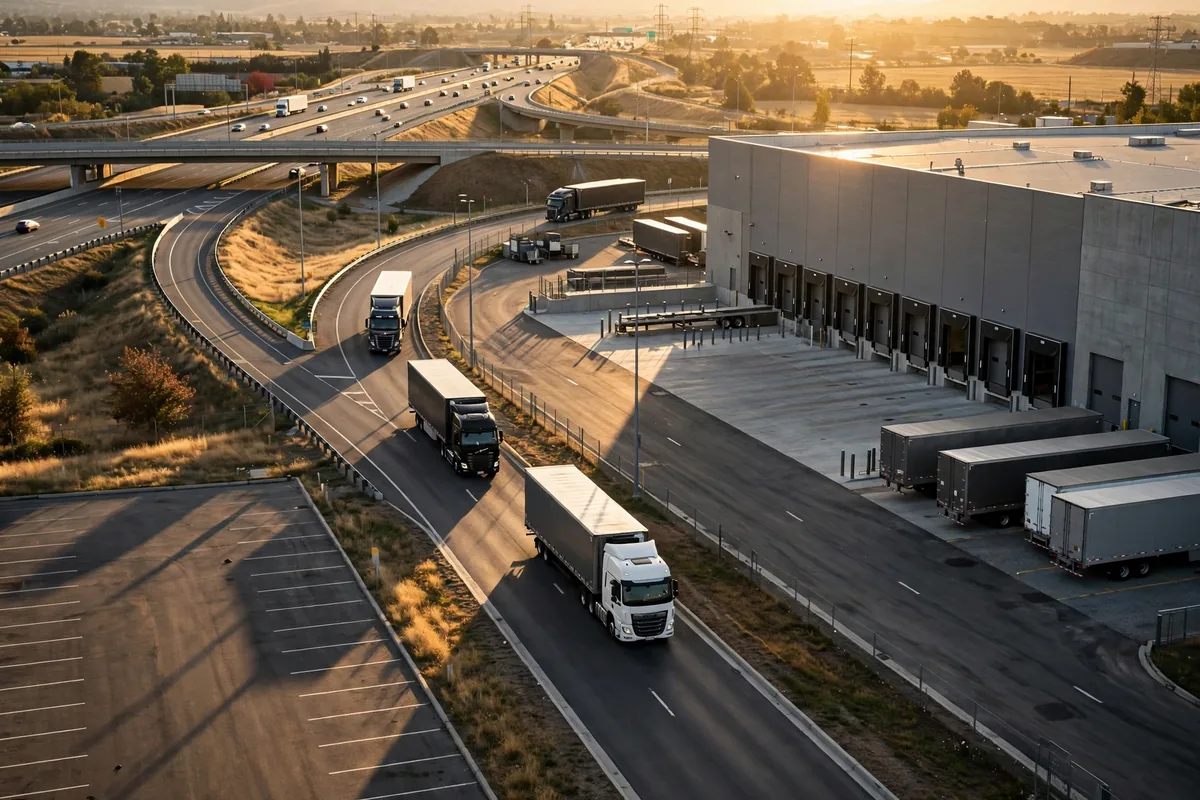
The southeast side and DeSoto County, just over the line in Mississippi, is where the new big-box buildings are concentrated: large floor plates, tall ceilings, relatively reasonable pricing, good for regional distribution and bulky goods. The tradeoff is distance from the airport — pure air freight adds 30 to 60 minutes of drive time. In Q1 2026, a single 1.5-million-square-foot lease in Marshall County pulled vacancy down sharply across the submarket. When a big tenant lands, the whole area's pricing moves with it.
Across the river in Marion, Arkansas, the rail yards dominate, and that suits intermodal freight coming off the West and Gulf Coast ports by rail. A container off a ship in Los Angeles or Savannah rides the rails to Memphis and gets broken down here for far less than an all-truck move. But here the rule is distance to the yard: five miles versus fifteen miles from the intermodal terminal can mean hundreds of dollars a day in drayage, which is tens of thousands a year.
Our fixed rule now is simple: pick the location by your freight's primary mode first, its secondary mode second, and the rent per square foot last. Air-first freight belongs near the airport. Rail-intermodal freight belongs near the yards across the river. Highway distribution belongs along I-55 and I-69 in the southeast. A $0.50 rent difference is a few tens of thousands a year; a wrong location burns that in a month of drayage, overtime, and late penalties.
What Actually Costs You in Memphis: A Scenario Budget
Take a 100,000-square-foot warehouse as a scenario — these are illustrative assumptions, not a quote:
| Cost line | Scenario math | Rough annual total |
|---|---|---|
| Rent | 100,000 sq ft × $4.12 | About $412,000 |
| Labor | 40 people, wages plus peak overtime | About $1.8M–$2.2M |
| Drayage and shuttle | 20 truck moves a day | About $250,000–$350,000 |
| Equipment and energy | Forklifts, lighting, HVAC, WMS | About $150,000–$200,000 |
See it? Rent is less than a fifth of the total. Labor is the real bill. Hiring in Memphis has gotten harder over the last two years — the airport, the rail yards, and the big warehouses are all fishing in the same pool. Night-shift premiums and peak bonuses keep climbing. In the 2025 peak we hired 30 temporary workers at $3 an hour above off-season rates, and we had to feed them a night meal or they simply did not come back the next day. Veteran workers training new hires matters more here than anywhere else I have worked — if new people do not stick, you cannot staff a peak night shift at all.
There is a hidden bill too: weather and stockouts. Memphis summers are hot, winters occasionally bring ice, and one bad storm delays flights, stalls trucks, and leaves freight sitting in the building while customer phones ring off the hook. Our fixed practice now is to pull key customers' freight in a month before peak and hold three to five extra days of safety stock. Tight floor space beats a stockout penalty every time.
So here is my reminder to fellow operators: when you lease in Memphis, do not start by asking "what is the rent per square foot?" Ask three questions first. Which network does my freight ride? Which gate do my trucks use every day? Can I staff a night shift at peak? Answer those three, and a small rent difference stops mattering. Skip them, and the cheapest lease in town will hand you a pile of holes the moment peak season arrives.
By Chen Feng, Warehouse Operations Manager