Here is the verdict up front: do not treat Marseille as one port. Marseille france port warehouse planning only works when you start from the fact that this is two port areas stitched into one business, with the container work at Fos and a very different logic at the old Marseille harbor. Get that wrong, and every later decision about location, routing, and cost will be off.
Put plainly, the first lesson of Marseille france port warehouse work is not finding a warehouse. It is figuring out which port area your cargo actually uses, and which inland corridor it feeds. In 2024, the Port of Marseille-Fos handled 70.5 million tonnes of cargo, down 2% on the year, while containers reached 1.45 million TEU, up 9%. Turnover was 224.5 million euros, up 7%. Total tonnage shrank, but boxes grew, so the warehousing play has to shift with the mix.
Marseille France Port Warehouse Work Starts With Two Port Areas
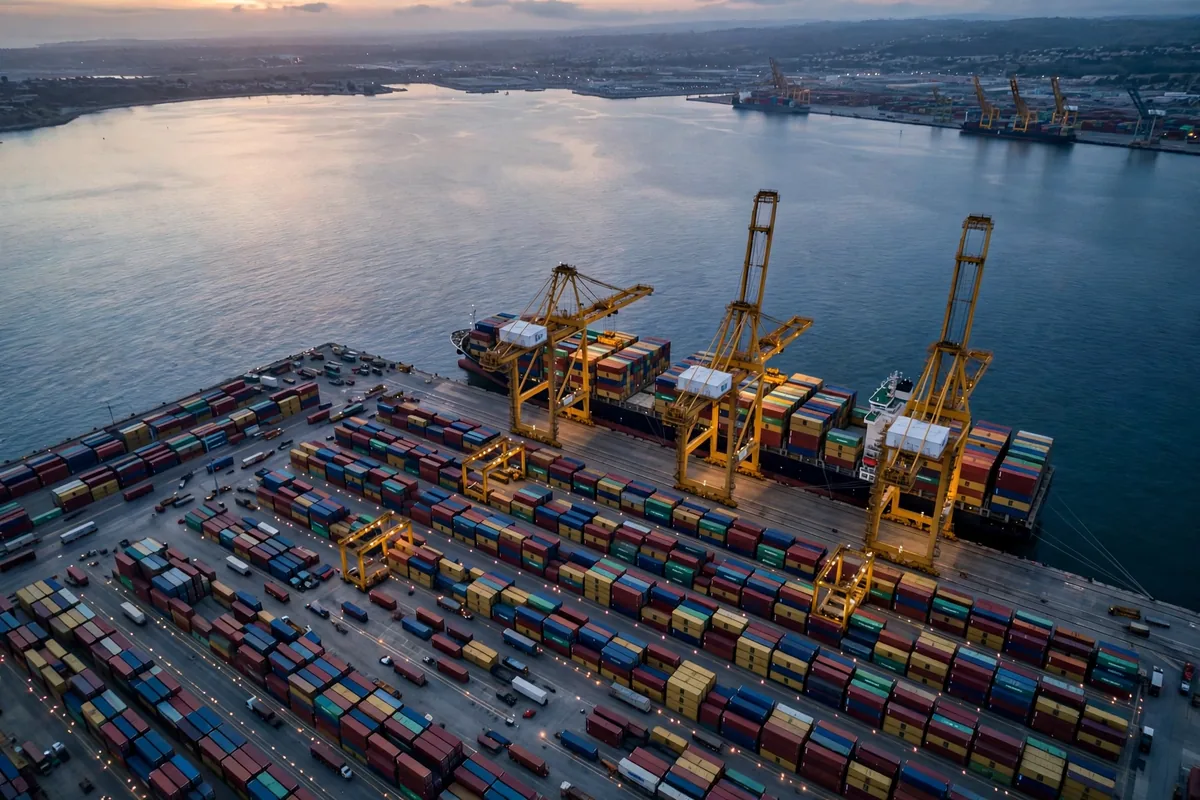
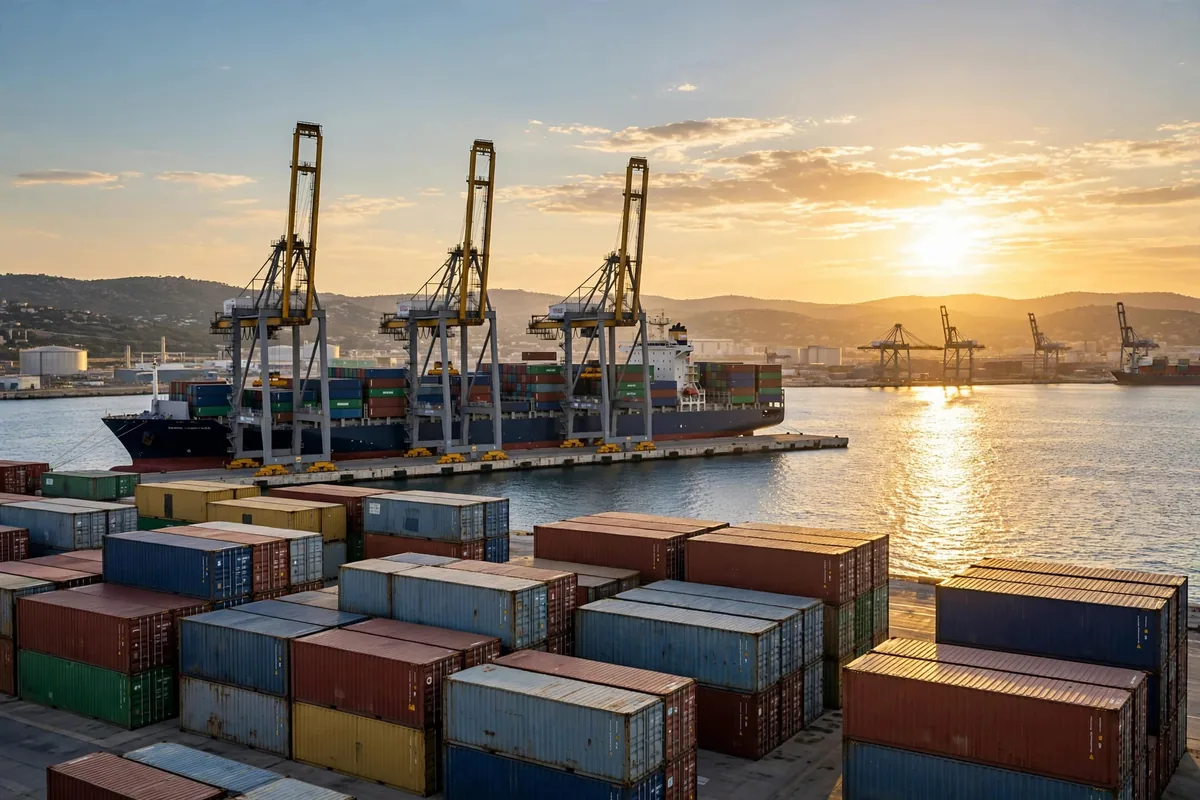
Marseille and Fos are two port areas about 30 miles apart. Do not shrug at those 30 miles. They decide which road your trucks run and which terminal your vessel calls at. Fos is the deep-water area where the big container ships berth. The old Marseille harbor sits close to the city and serves different cargoes and functions. Planning the two as a single point is like treating Los Angeles and Long Beach as one terminal: it sounds efficient and goes wrong everywhere in practice.
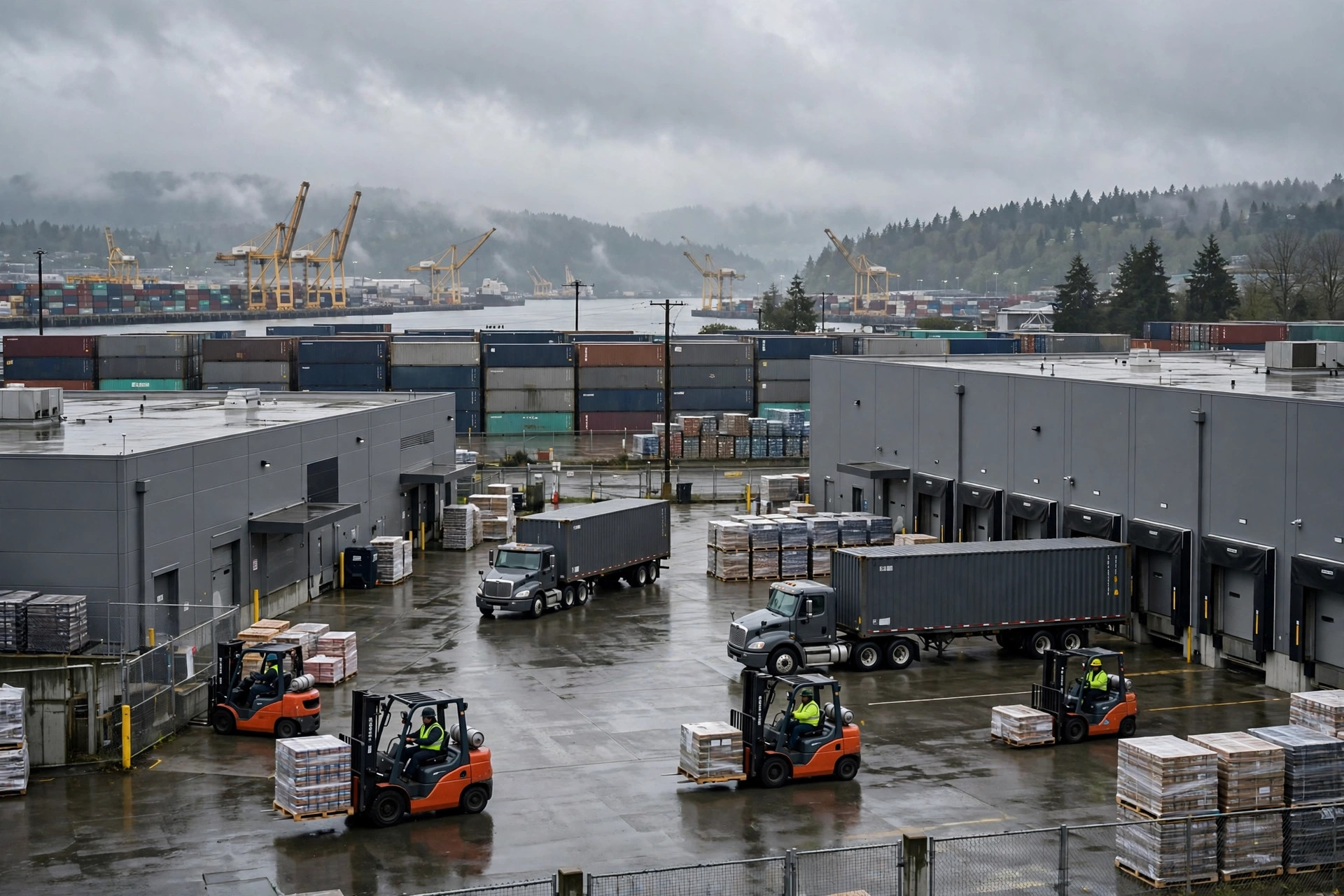
I have seen this mistake too many times. An importer of home goods had boxes discharging at Fos, yet rented a warehouse on the edge of Marseille city because it felt close to the port. Every box had to be trucked from Fos to that warehouse, adding drayage, cost, and time, and in peak season trucks were hard to book at all. When the importer moved closer to Fos, discharge, deconsolidation, and dispatch toward Lyon finally ran as one line. That was never a rent problem. It was a location problem from day one.
So my method is unfashionable but it works: pick the port area first, then pick the warehouse catchment, and only then talk about rent and square footage. Reverse that order and every dollar saved up front comes back as drayage and waiting time later. In warehouse selection here, the first question is always how far the site sits from your boxes. The second question is what it costs. I am not quoting rental rates in this piece because I do not have verified local rental figures, and publishing a guess would mislead readers.
One more number matters: roughly 10,000 vessel calls a year. That means plenty of sailing choices, but also fast terminal operations and tight windows. A warehouse far from the port area has no room for error when one schedule changes.
The Transshipment Boxes the Red Sea Detour Delivered
Container growth of 9% in 2024 included a very particular line item: transshipment boxes rose by about 65,000 TEU as vessels rerouted around the Red Sea via the Cape of Good Hope, while import and export boxes rose by 53,500 TEU. Transshipment drove a large share of the growth, but it brings terminal volume and short-term stacking demand, not long-term warehousing demand.
Here is the counterintuitive call: the faster transshipment grows, the less you should rush to rent long-term warehouse space for it. Transshipment is a fast in-and-out business. What it rewards is flexible short-term capacity near the port. Whoever locks up big space for years risks holding empty warehouses when routings normalize. The smart preparation is responsive handling capacity, not a three-year lease.
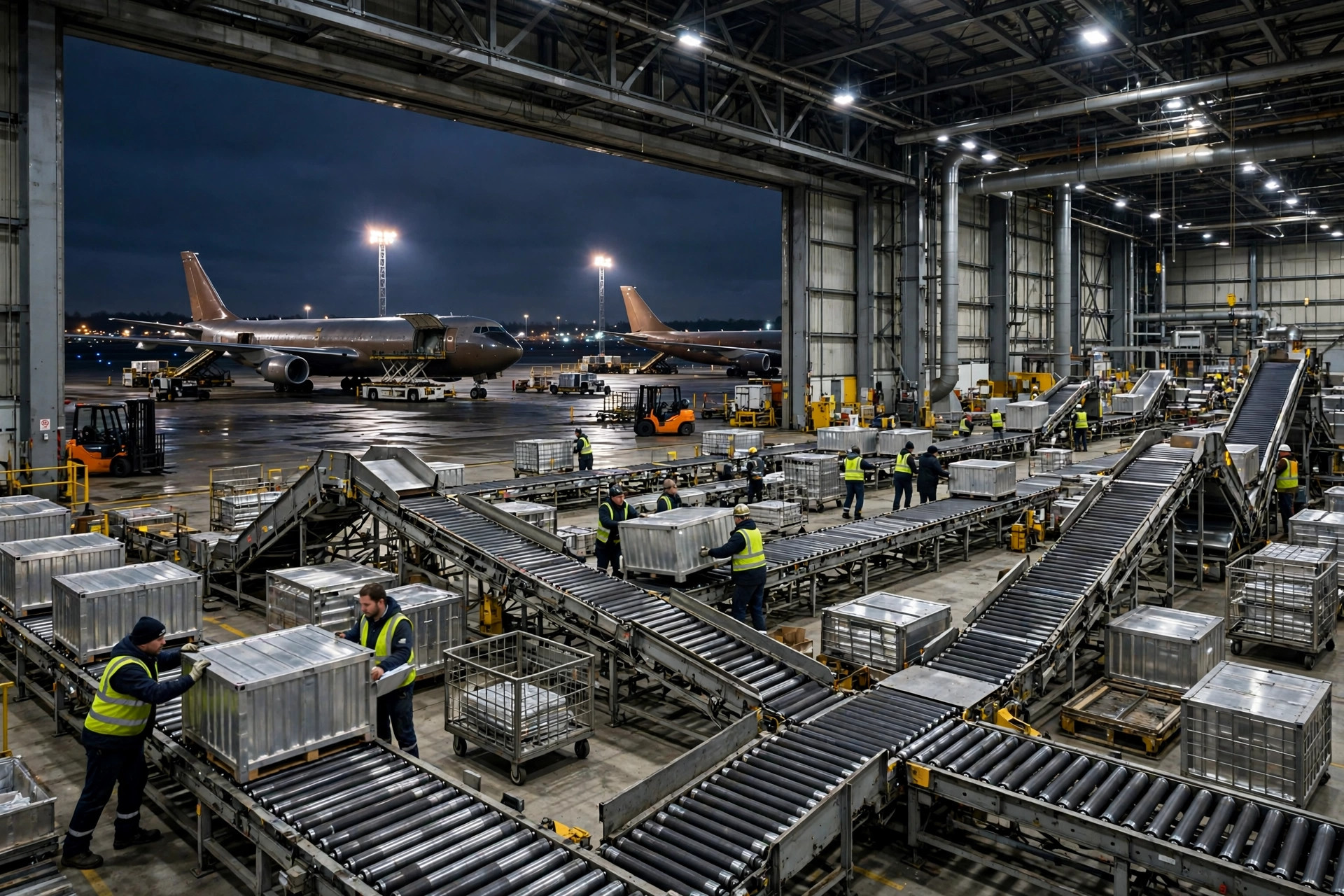
The 53,500 TEU of additional import and export boxes is the number that matters more for warehousing. Import boxes need to be stripped, sorted, and pushed inland. Export boxes need to be consolidated and delivered to the terminal on schedule. That cargo needs real warehouses: stripping space, sorting flow, and inland connections.
One more comparison belongs in the picture. Le Havre is France's largest container port at about 3.2 million TEU, more than double Marseille-Fos at 1.45 million. That is not a knock on Marseille. Its edge is its position as a Mediterranean gateway and its connection to southern Europe and the inland corridor, not a volume contest with the northern ports.
The Inland Corridor to Lyon Is the Second Half of the Marseille Story
The port story is only half the math. The other half runs inland. Rail and barge volumes to Lyon rose 10%, and I pay close attention to that number. It says the second half of the work sits not at the quayside but on the corridor inland. Lyon is a major node in southeastern France. Cargo lands at Fos, moves by rail or barge toward Lyon, and fans out into the French interior. When that line runs well, the gateway earns its keep.
Consider a hypothetical example, clearly labeled as a scenario rather than real statistics: an importer of home appliances moves a fixed monthly volume through Fos. If every shipment goes by truck straight from the port area to customers around Lyon, the per-shipment cost stays high. If the cargo is first stripped at a warehouse near Fos, rebuilt into Lyon-bound orders, and sent inland in bulk by rail or barge, the inland leg can be spread across far more boxes per move. How much that saves depends on real rates and schedules, which I am not inventing here. The point is the logic: the warehouse should sit at the junction where ocean discharge meets bulk inland dispatch, not merely close to the quay.
There are two sides to the corridor as well. Its strength is bulk movement and regularity. Its weakness is rigidity. Rail and barge do not run on demand like a truck. Miss a departure and you wait for the next one. That means your warehouse needs buffer capacity: cargo arrives and can sit, and when the departure comes, loading is fast. A warehouse without buffer becomes the bottleneck the moment vessel schedules and corridor departures bunch together.
So when you tour a warehouse, ask how this site connects to the rail terminal and the barge quay, how loading windows are booked, and what the backup plan is when departures are tight in peak season. If those questions get shrugs, do not sign, however cheap the rent looks.
Oil, Gas, and Containers Are Two Different Cargo Books at Fos
There is one more big number in the Marseille-Fos picture: oil and gas account for about 60% of total business. That makes many people call it an oil port. Put plainly, oil and gas dominate total tonnage, but containers are the book that matters for this article. Oil and gas move through pipelines and tank farms and have almost nothing to do with general warehousing. Containers move through yards, stripping warehouses, and distribution networks.
Mixing the two books together is the most common illusion in this market. Someone sees 70.5 million tonnes and assumes warehousing demand must be enormous. But six-tenths of that tonnage is oil and gas. What actually lands in container warehousing is the work behind 1.45 million TEU. Split the numbers before you do the math, or the math will lie to you.
Here is the decision framework I use with clients to think through these choices in one pass:
| Your cargo | Ask first | Put the warehouse | Fear most |
|---|---|---|---|
| Import distribution | Where does it split after stripping? | Near Fos, able to feed the Lyon corridor | Warehouse far from the boxes, drayage burning cash |
| Export consolidation | What is the sailing date? | Close to Fos, able to consolidate to cut-off | Scattered pickups missing the vessel |
| Transshipment boxes | How fast is the turn? | Flexible short-term space near the port, no long lock-in | Routings change, empty space on your hands |
| Lyon-bound cargo | How do corridor departures connect? | At the junction of ocean and inland | No buffer, one missed departure jams the yard |
No cell in that table has a universal answer. Every cell has to be filled with your own real situation, and a cell you cannot fill is information you still need to verify.
One last piece of advice: whether this gateway is worth using does not turn on one tonnage number. It turns on whether your cargo can use three things Marseille offers: the container handling capacity at Fos, the inland corridor toward Lyon, and the position of a Mediterranean gateway. If your cargo uses none of them, another port may serve you better. If it can use two of the three, Marseille deserves a serious calculation. So ask yourself: which of those three lines does your cargo actually ride?
By Lao Mi, Supply Chain Veteran (20 yrs)