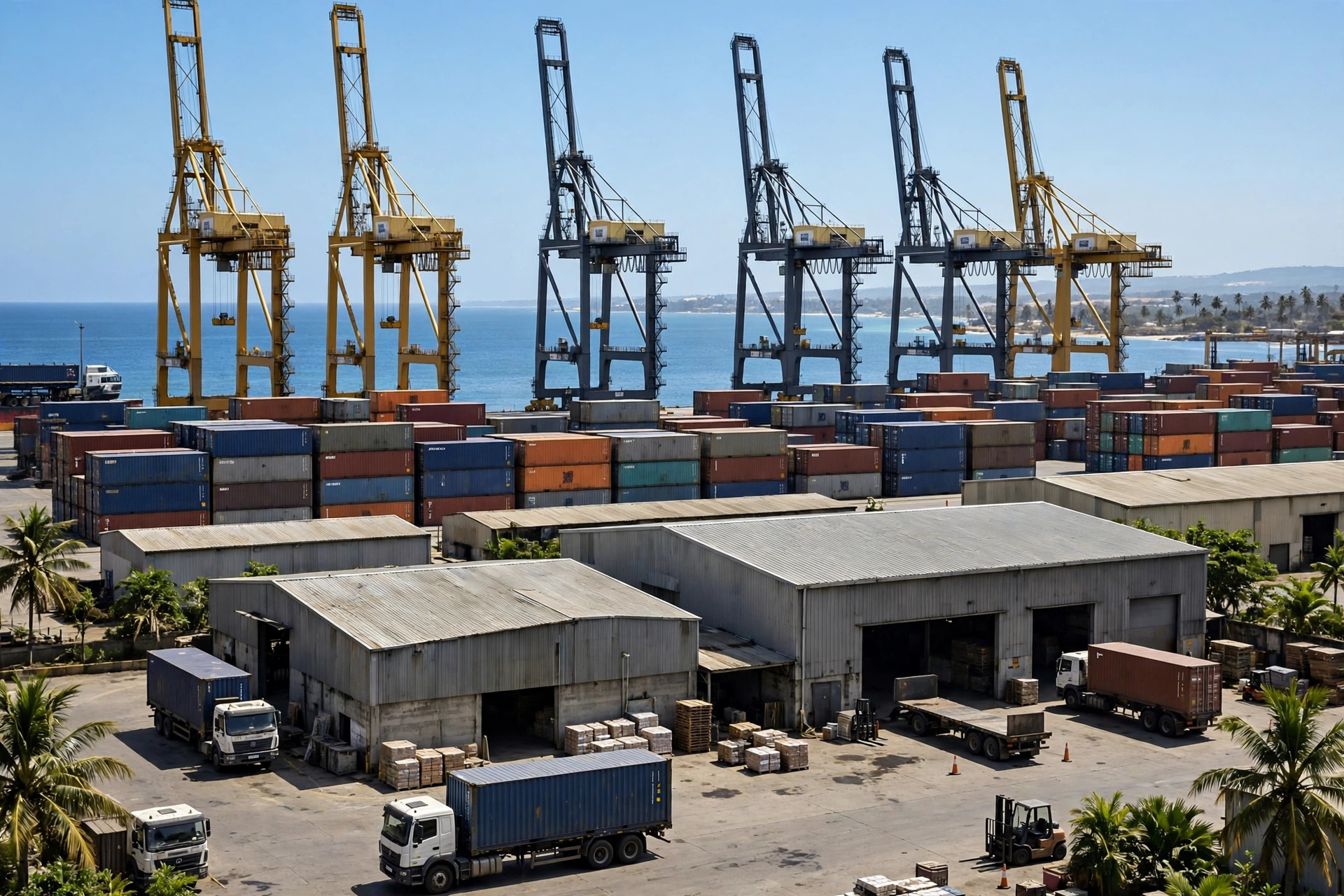
Every time someone in a seller group brings up southern Africa, somebody drops the same line: just set up in Maputo, it's the closest seaport to Johannesburg, one warehouse and you cover the whole interior. My reply is always the same: close to the port does not mean your freight moves fast.
I learned that the expensive way. In 2024 I routed a container of small home goods through the port of Maputo, planning to split it between South Africa and Zimbabwe from there and skip a leg of ocean freight. The container itself arrived without drama. Everything after the port did not. Customs paperwork went back for two rounds of corrections, the inland trucking I had booked got rescheduled twice, and stock I had promised to distributors around Johannesburg within a week took more than two weeks to arrive. Nothing was lost and no order was cancelled, but my stocking rhythm was wrecked and a promo window in South Africa came and went without my goods on the shelf. Since then, whenever anyone pitches me a "port city warehouse," my first question is never about the rent. It is: once the freight leaves the port, who moves it, on what road, and where does it get stuck?
Close to the port is not the same as easy in
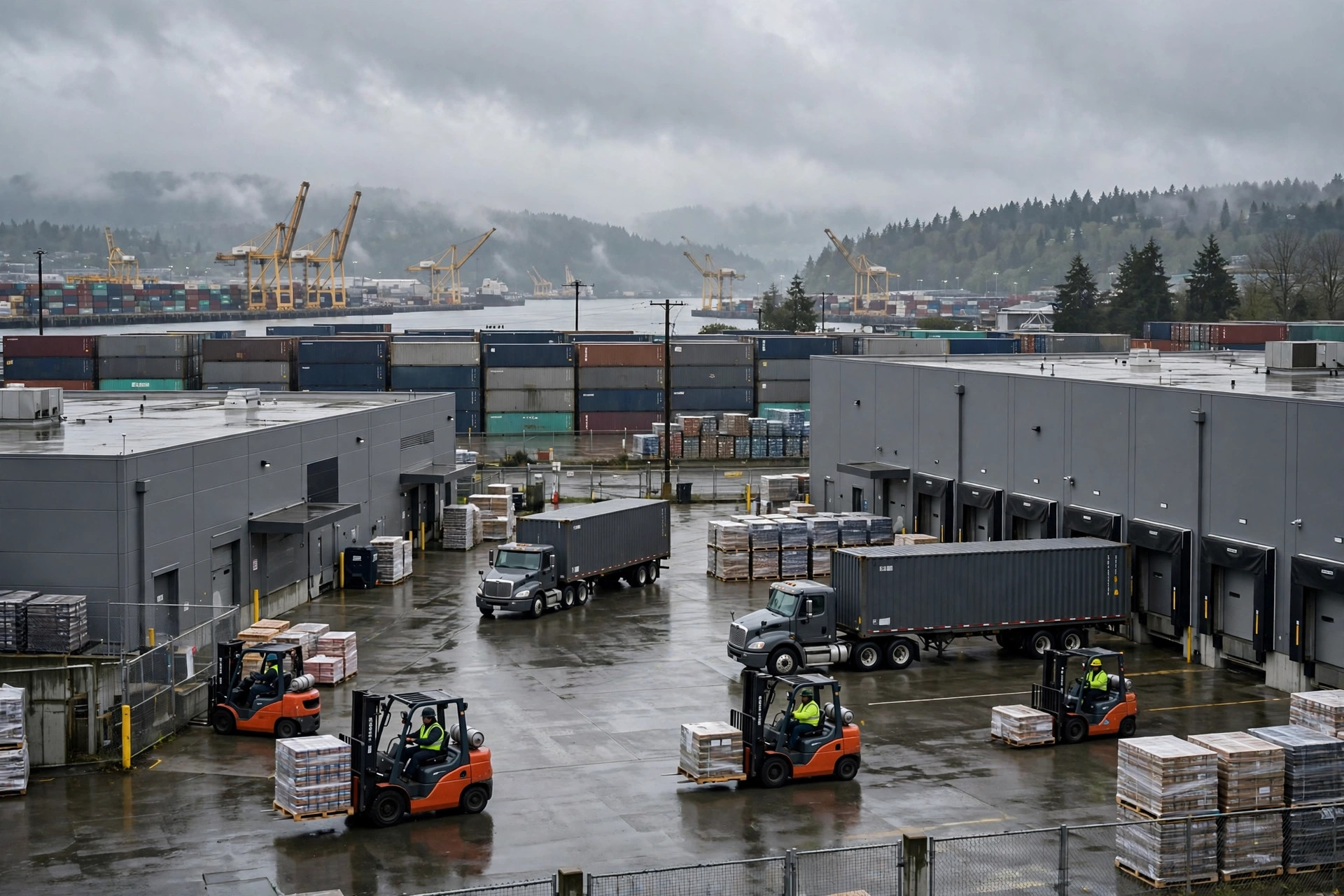
Maputo is Mozambique's capital port on the Indian Ocean, and its geography is genuinely attractive. It is one of the nearer sea outlets for the southern African interior, with road corridors running toward Johannesburg, Harare, and Mbabane. For a cross-border seller, the pitch writes itself: one stocking point, several markets within reach.
The pitch leaves out the parts that actually cost money. Port handling capacity, clearance speed, and the handoff to inland transport each take a bite out of the location advantage. A friend of mine who sells into South African retail rented a small warehouse outside Maputo in early 2025, planning to hold stock in the port city and dispatch inland as orders came in. The first two months went fine. In the third month the rainy season hit, a feeder road deteriorated, and his trucks ran days late. Stock sat in his warehouse while inland customers chased him for deliveries. He told me later that rent and labor were not the painful part. The painful part was the rescheduling, the expediting, and the customer-soothing, all of it unbudgeted. A port-city warehouse bill is never just the rent line.
There is a second trap. Maputo's local market on its own is modest, so a warehouse there mostly earns its keep as a transit and distribution point, not as a store serving local demand. That means you are really running an inland-distribution operation that happens to sit near a port, and you have to understand the inland leg's clearance, transport, and delivery rules just as well as the port's. Stare at the port and ignore the road inland, and you have only costed half the journey.
When I visit a site now, I have a rough rule: look at the road before the building. Can two trucks pass in and out at the same time? Does the access road flood in heavy rain? Is anyone on site at night? My friend's suburban warehouse was fine as a building. Its problem was the feeder road in the wet season, when every dispatch depended on the road drying out. Check the road first. I say it to everyone now.
Three spots, three very different bills
Same city, different landing spot, completely different bill. Here is how the three options I actually weighed stack up:
| Location | Upside | Downside | Best for |
|---|---|---|---|
| Near the port | Fastest pickup, good for quick turnarounds | Few suitable sites, congested at peak, access windows hard to control | Sellers with fast-moving, high-turnover small goods |
| Suburban warehouse | Easier hiring and services, staff can live nearby | An extra leg to both the port and the inland corridor, city traffic eats time | Sellers who need people on site daily for picking and packing |
| Corridor-node warehouse | Closer to inland customers, shorter distribution leg | Thin local support, slow to find help or a truck when something goes wrong | Sellers whose inland orders dominate and whose product range is stable |
On the specific numbers, I will be honest with you: I got three quotes for rent, labor, and clearance handling, and they were far apart. Quoting any of them here as "the Maputo rate" would mislead you, so I will not. Check current local conditions and get at least three on-the-ground quotes before you compare anything. My own math is crude but it works: convert each location's extra leg into time and rescheduling events, then multiply by the cost of a missed sales window. The location that wins on rent alone is, in my experience, rarely the one that ends up cheapest overall.
Here is the counterintuitive part. Most sellers assume closer to the port is always better. For a distribution seller, I have found the opposite can be true: being half a leg closer to your inland customer is sometimes worth more than being half a leg closer to the port. The port leg is scheduled and predictable. The inland leg is where surprises live. Moving the warehouse toward the corridor shifts uncertainty onto ground you can actually manage.
The inland leg is the real invoice
If you do go ahead in Maputo, my working checklist has three items, and each one was paid for in real money. First, lock in your inland carrier and clearance agent before the freight arrives, in writing. A verbal booking is not a booking, and in peak season a truck that was "definitely available" can vanish. Second, do not plan stocking around ocean arrival time. Plan around port arrival plus the full inland journey plus a buffer, and make that buffer generous: mine is now longer than the ocean leg it follows. Third, run one small batch through the entire chain first, from port arrival and clearance through warehousing, dispatch, and inland delivery confirmation, before you scale up. That trial batch is the best money in the whole location decision.
One more thing on contracts. Read the warehousing contract line by line before signing: who bears the cost when inbound or outbound timing slips, how damage is defined, and what peak-season extra labor and extra trucks actually cost. Get verbal promises onto paper. I have watched a seller sign a vague contract to save time and then spend more time arguing about it than the goods were worth. A detailed contract is not distrust. It is a clear road for both sides.
And the warning I give everyone: do not treat Maputo as a substitute warehouse for the South African market. South Africa has its own ports and distribution networks, and its customers have their own expectations on speed and after-sales support. Shipping from Maputo adds a border crossing and an inland haul, so promise delivery times based on the slowest leg, not the fastest. Also, do not push a big inbound batch in just before the rainy season. When roads and port operations slow down, the stock sitting in your warehouse is cash sitting still.
One last piece of plain talk: do not expect one warehouse to solve every market. Maputo fits one specific play, southern African distribution, and it does not fit every order profile. Draw your own order map first: what share of orders go inland, how many days of delivery time your customers actually expect, and how returns are handled. Get that picture straight before you argue about locations. The order matters.
This one I tested myself, and it works: take a small batch and walk the full Maputo-to-inland route for real, collect your own timing and cost data, and only then decide where the warehouse goes and how much to stock. No guide beats your own trial run.
By Ah K, E-commerce Seller (5 yrs)