Start with the account, not the building. When people talk about madagascar vanilla export warehouse logistics, the first question is usually rent. It is the wrong question. Vanilla is high value in a very small volume. A few cartons can be worth more than a full container of ordinary cargo, so rent rarely ranks in the top three costs. The money leaks in three other places: beans spoiled in storage, lots mixed together, and stock that cannot be accounted for. Any one of those costs more than a year of rent savings.
I am not a vanilla trader. I analyse logistics costs. That is actually useful here, because cost logic does not care about the crop. Break every cost down, ask what it buys and where it leaks, and the warehouse design follows on its own. I will not quote real vanilla market prices in this piece. Prices move sharply by season, grade and buyer, so check the latest figures from traders and official channels. Every number below is an illustrative example, built only to show the structure of the account.
Madagascar vanilla export warehouse logistics and the moisture account
Consider an illustrative example. Imagine an origin warehouse near Antalaha in the Sava region during a wet month. Three incoming lots that have finished their first curing steps are stored in one room with ventilation only, no humidity zoning and no daily log. Two weeks later, an inspection finds the lot against the outside wall damp and flat in aroma, fit only for a lower grade. The lot in the middle is fine. The lot by the door, opened and closed all day, has swung wet and dry and no longer matches its intake weight. Same building, same month, same crop. The difference was position and monitoring, nothing else. This is an invented scene, not a report on a real warehouse, but it describes the most common origin leak: curing and storage are one chain, not two jobs. Beans keep losing moisture and changing in the store. Pack them before that process settles and you buy rework for the whole season.
So the first money in an origin warehouse should not buy floor space. It should buy humidity control and measurement. Run the account this way, still as an illustrative example. Take a lot and call its value 100 units. A downgrade from damp storage costs, say, 8 to 15 units. A season of dehumidification, ventilation work and the labour to log temperature and humidity might cost 1 to 2 units. You do not need precision to see the order of magnitude. The counter-intuitive point is this: for vanilla, the first job of a warehouse is not to hold stock, it is to stabilise moisture. If you run out of space you can rent the building next door. If you lose control of moisture, you lose the grade, and once the grade is gone no freight saving brings it back.
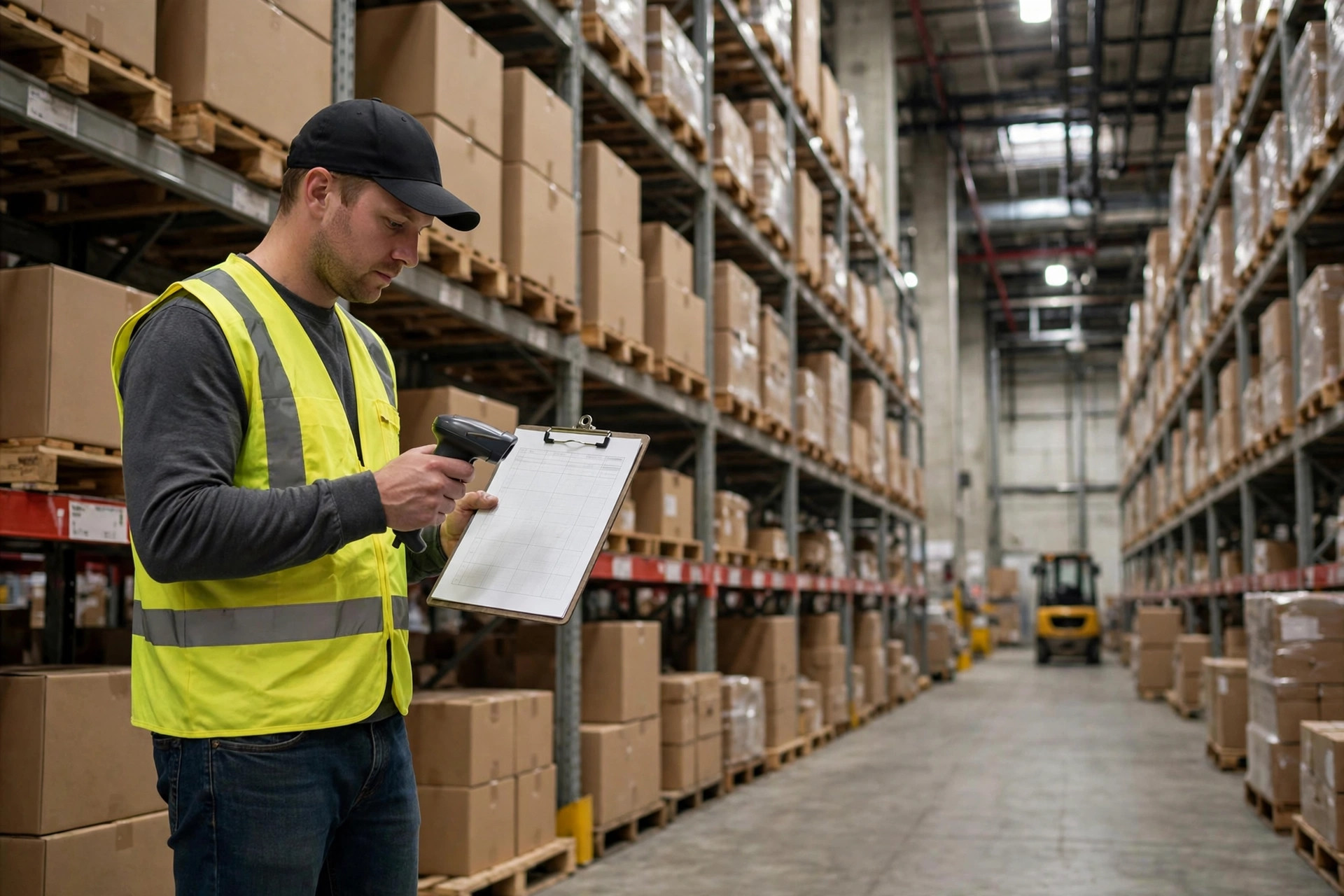
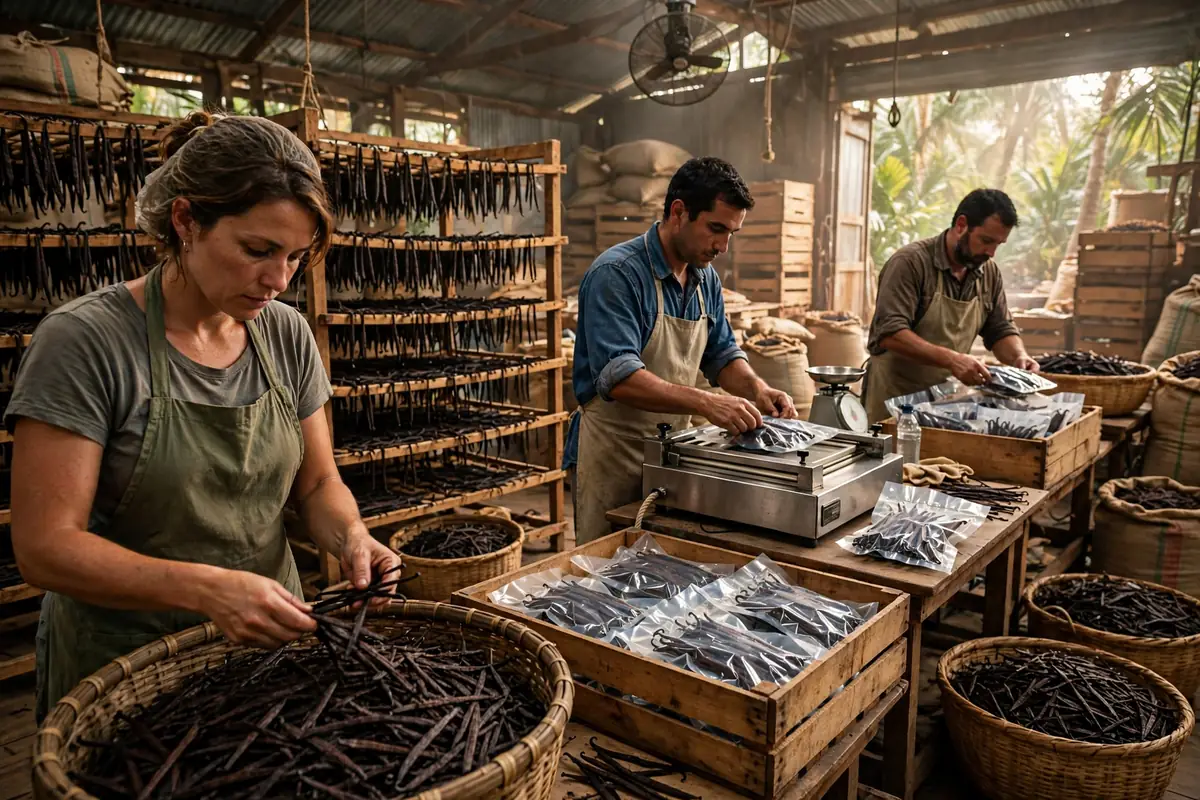
The practice is plain. Zone the store so ungraded, graded and held-for-recheck stock never touch. Log conditions at fixed times each day and pull a suspect lot out early instead of waiting for the whole room to turn. Grade and separate lots at intake, with each lot given its own number, its own location and its own record, so vacuum packing, consolidation and export paperwork all follow that same number. None of this is clever. That is why it saves money. It blocks the biggest leak first.
Madagascar vanilla export warehouse logistics and the shrinkage account
Now the second account. Another illustrative example: Warehouse A is cheaper each month but has no internal fencing, no two-person check on goods in and out, and one watchman at night. Warehouse B costs about a fifth more in rent, but has locked zones, a gate log, re-weighing by lot, and cameras over the main aisles. Over a year, Warehouse A in this example has two stock discrepancies, one missing carton of high-grade beans and one labelling error that mixes lots and triggers a buyer deduction on the whole shipment. Warehouse B finishes the year clean.
| Illustrative example | Warehouse A: cheap and simple | Warehouse B: costlier, controlled |
|---|---|---|
| Rent (index) | 100 | 120 |
| Humidity control and monitoring (index) | 10 | 35 |
| Security and checking labour (index) | 15 | 40 |
| Expected yearly loss from shrinkage and lot errors | 180 | 20 |
| Total for the year (index) | 305 | 215 |
The figures are invented to show structure, not quotes from any real site. The structure, however, is real. With this value density, a single point of shrinkage outweighs a large rent difference. Ordinary bulk cargo loses money by weight. Vanilla loses money by grade and by the reputation of the whole lot. My advice is blunt: spend first on fencing, locked zones, two-person verification and weighbridge or scale records, then negotiate rent. Half an hour saved on the rent negotiation is worth less than one hole closed in the goods-out process.
Note also that loss is not only theft. A wrong label, a mixed lot, a record that does not match the physical stock — to a buyer these look exactly like missing goods, and they are charged the same way. Half the security budget buys protection against stealing. The other half buys a stock record that can be trusted, and without that record traceability is fiction.
Vacuum packing has its own small account. Pack too early, while moisture is still moving, and the beans keep changing inside a sealed bag. Pack too late and you pay in extra handling, extra space and extra shrinkage risk. There is no universal number of days that fits every lot, so follow the moisture test on that lot and the buyer's current specification. The calculable method is to test a small sample by lot, pack the full lot only when moisture and aroma are stable, then label, weigh and photograph it the same day. That labour looks expensive until you compare it with a downgrade.
Traceability labour is the account most people skip. Origin supply comes from many small growers and buying points, all with different grades and moisture. If intake mixes them into one pile to save time, any later demand to certify, sort or ship by lot forces a full re-sort, re-weigh and re-record, at double the labour and with more errors. Spending on lot numbers, photos, weights and retained samples on day one is a fixed cost. Doing it later is rework. They are not close.
Air or sea: compare the total, not the freight rate
The last decision is mode. On freight rate alone, sea always wins. On total cost, it often loses. Sea means a longer window in transit and in waiting, which means more capital tied up and a longer exposure to damp and theft. Air costs more per kilo but moves in small lots, turns capital faster, and limits any single failure to a small batch. In an illustrative example, a sea shipment might carry a freight figure of 30 units and another 25 units in time, capital and risk cost. An air programme split into batches might carry 70 units of freight and only 8 units of time and risk cost. On those invented figures sea still looks cheaper, 55 against 78 — until one part of the sea lot is downgraded after a long wait. Add an illustrative 30 units for that loss and sea becomes 85, now the expensive option. The numbers are hypothetical. The lesson is not: never compare a high-value crop on freight rate alone. Put a price on time and add it to the bill.
So my calculable conclusion is simple. For madagascar vanilla export warehouse logistics, run three accounts before you argue about rent or freight: the moisture account, the shrinkage account, and the turnover account. The best origin warehouse is not the biggest one. It is the one where every lot's moisture, grade and destination can be checked and reconciled. If the account reconciles, the money does not leak. If it does not, cheap rent is just a cheaper way to lose expensive beans.
By Lao Zhou, Logistics Cost Analyst