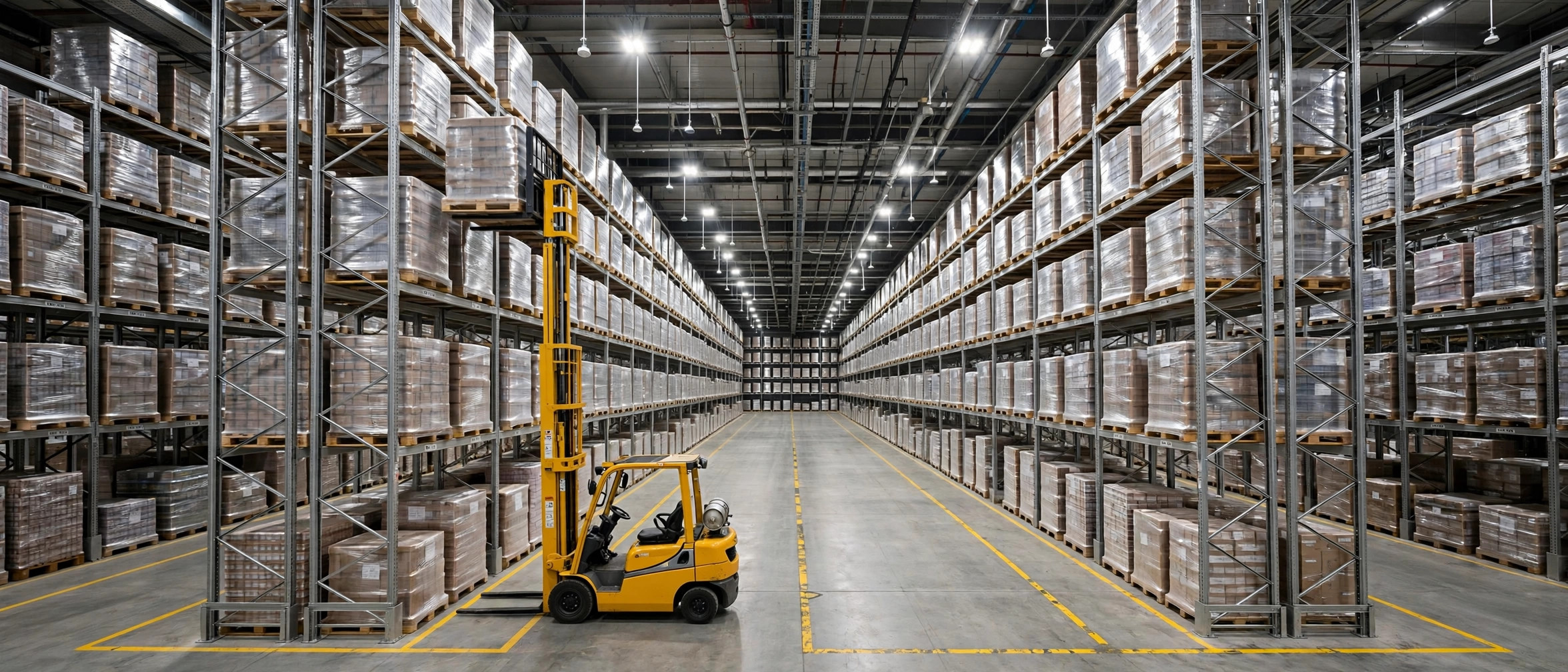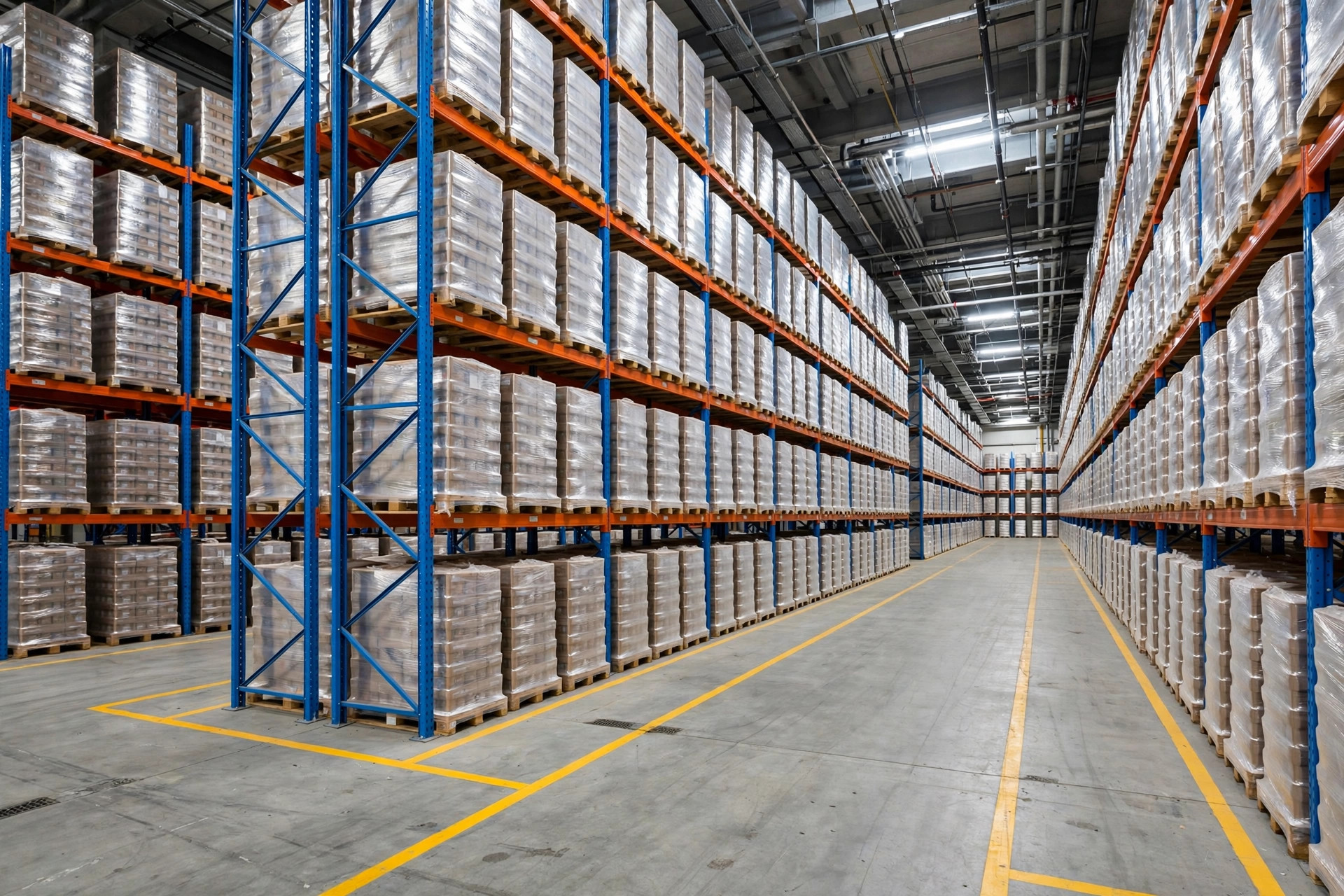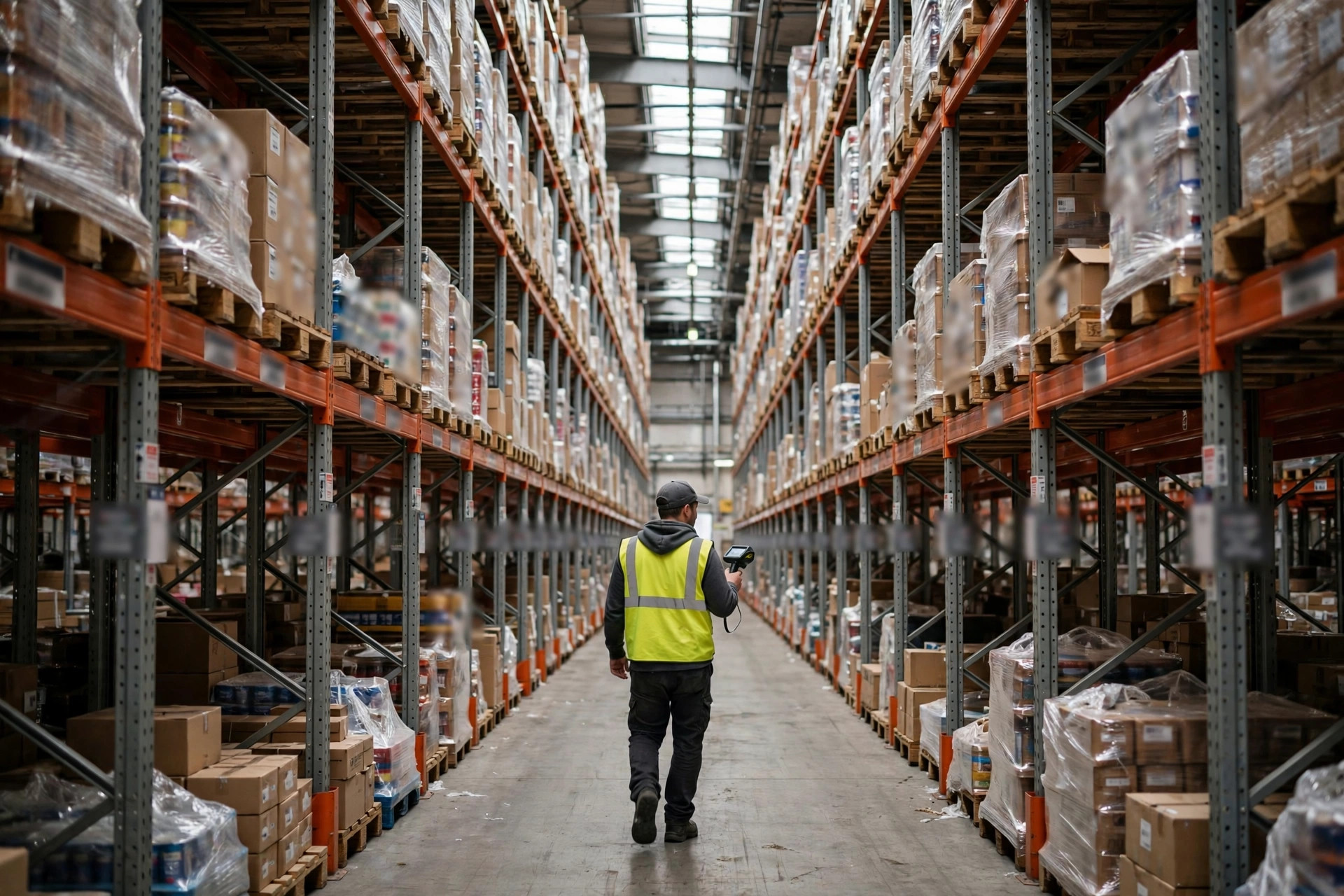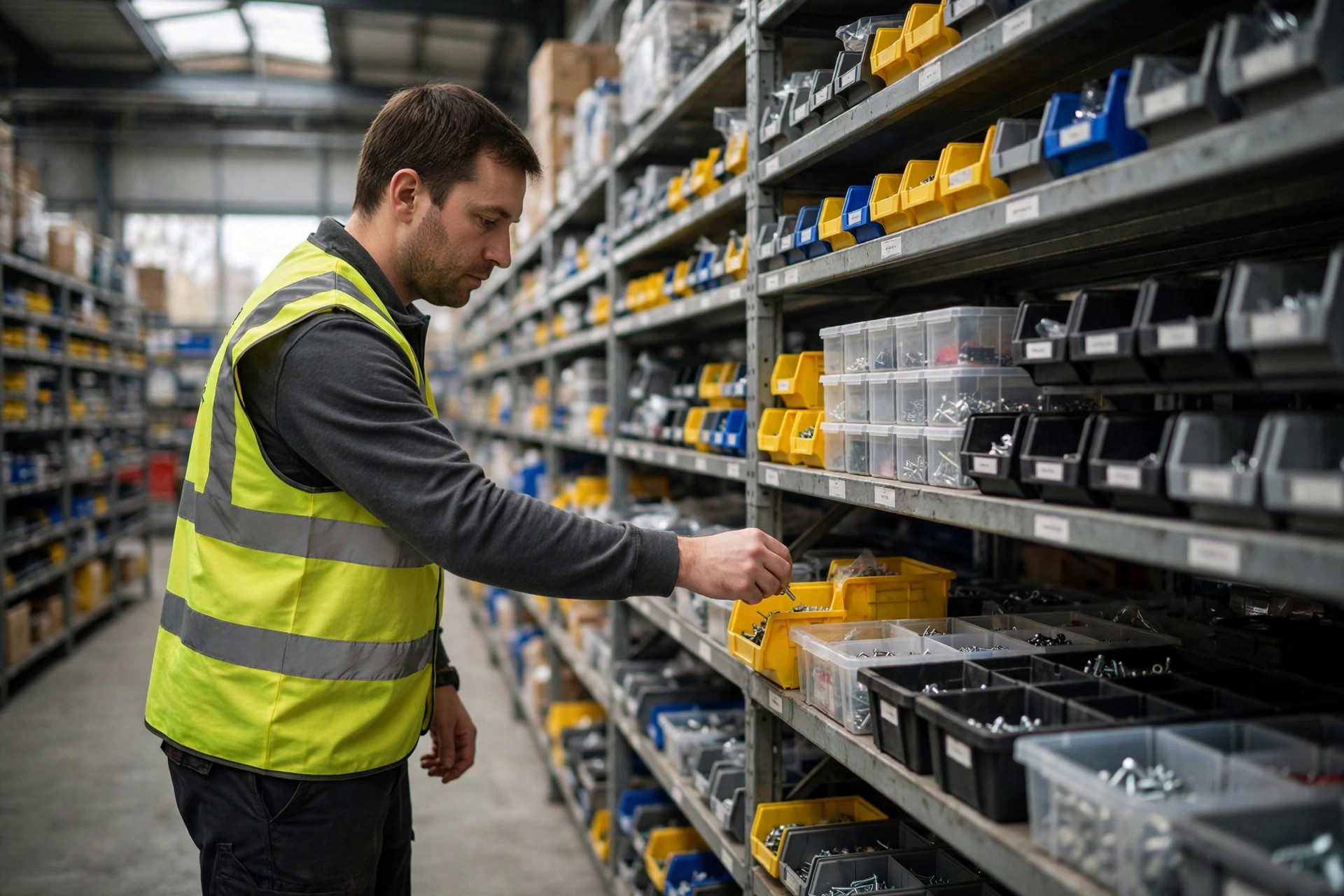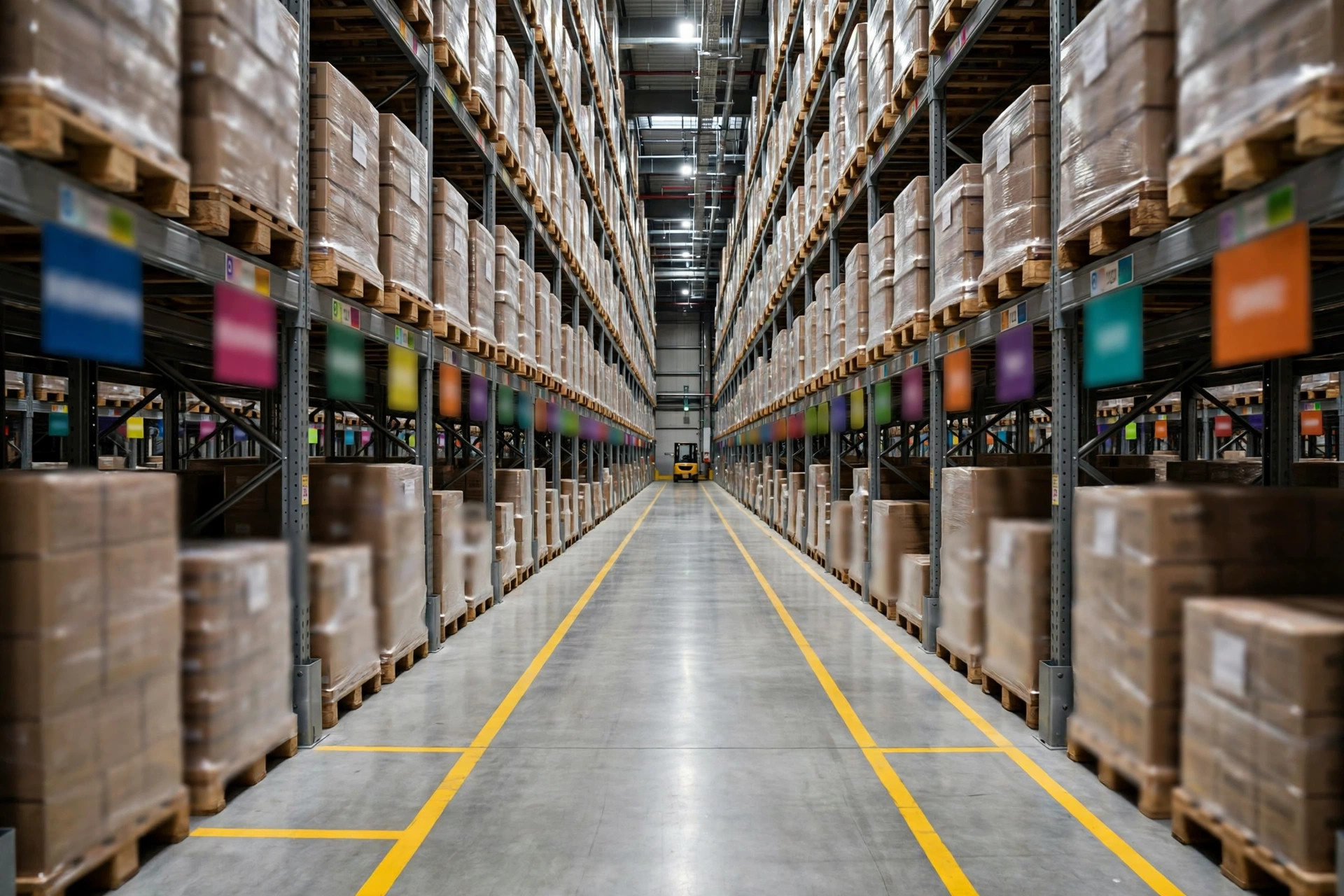
In 2019, I was working on a project at a warehouse in Fontana. 180,000 square feet, apparel returns. Their location code had seven segments: major zone, sub-zone, aisle, rack row, column, level, position. A full address looked like this: A-N-07-12-03-2-45.
The seven-segment scheme was designed by the IT team. Their logic sounded airtight in the conference room: build it once, encode every expansion you might need in the next decade, never touch the rules again. Nobody walked the floor with a printed label before they voted yes.
Reality showed up after go-live. On a paper pick list, one address took up two lines, printed so small that pickers had to squint. Scanning a location took two scans: first the zone prefix, then the specific position. Creating one location in the system meant filling in seven fields — get one wrong and the inventory was "lost": in the system, but nowhere to be found on the floor. Most cycle-count variances traced back to a segment entered in the wrong slot.
Three months in, the operations manager cornered me by my desk and asked whether we could shorten the codes. I told him the truth: shortening now meant tearing down and re-labeling tens of thousands of locations and touching tens of thousands of master-data records, with peak season six weeks out. He dropped it. The following year, during the slow season, they redid the whole thing anyway — three weeks of re-labeling, cut down to five segments.
Location coding looks trivial. It is anything but. I have seen schemes as short as four segments and as long as eight. Both ends are traps.
Too Few Segments, and Pickers Navigate by Shouting
A 3PL in Riverside ran about 60,000 square feet handling small appliances. Their code had four segments: zone, row, level, position. Sounds clean — until you learn that a single zone held more than three thousand pallet positions.
Pickers would walk to the zone and then just wander. The address got them to the neighborhood, and the rest was legwork. During peak, the aisles were full of radio chatter: "Which end of the aisle is this on?" "That row at the far back — is that zone B or zone C?" New hires spent their first week essentially lost.
The warehouse later did its own rough math: the extra walking across a dozen-plus pickers over one peak season cost more in labor than re-labeling the entire building three times over. Whatever they saved on short labels, they paid back in footsteps.
Too few segments pushes the job of pinpointing onto people. People are the most expensive positioning system you can buy, and the least reliable one.
That said, four segments is not a sin by itself. In a warehouse under 50,000 square feet, four is often plenty — provided zones are drawn small. The moment a zone passes two thousand positions, split the zone; do not add a segment. Splitting a zone is a planning change. Adding a segment is surgery on everything.
Too Many Segments, and the Label Cannot Hold Them
Go the other direction — seven, eight segments — and the problems flip, and get more expensive.
Start with the label. A location label is roughly palm-sized. Cram seven segments onto it and the type shrinks to the point where pickers have to lean in. On level four of a high-bay rack, under bad light, they are guessing. When the type is too small, the scanner is supposed to save you — except a long code prints as a long, dense barcode that the gun struggles to read, so one scan becomes two.
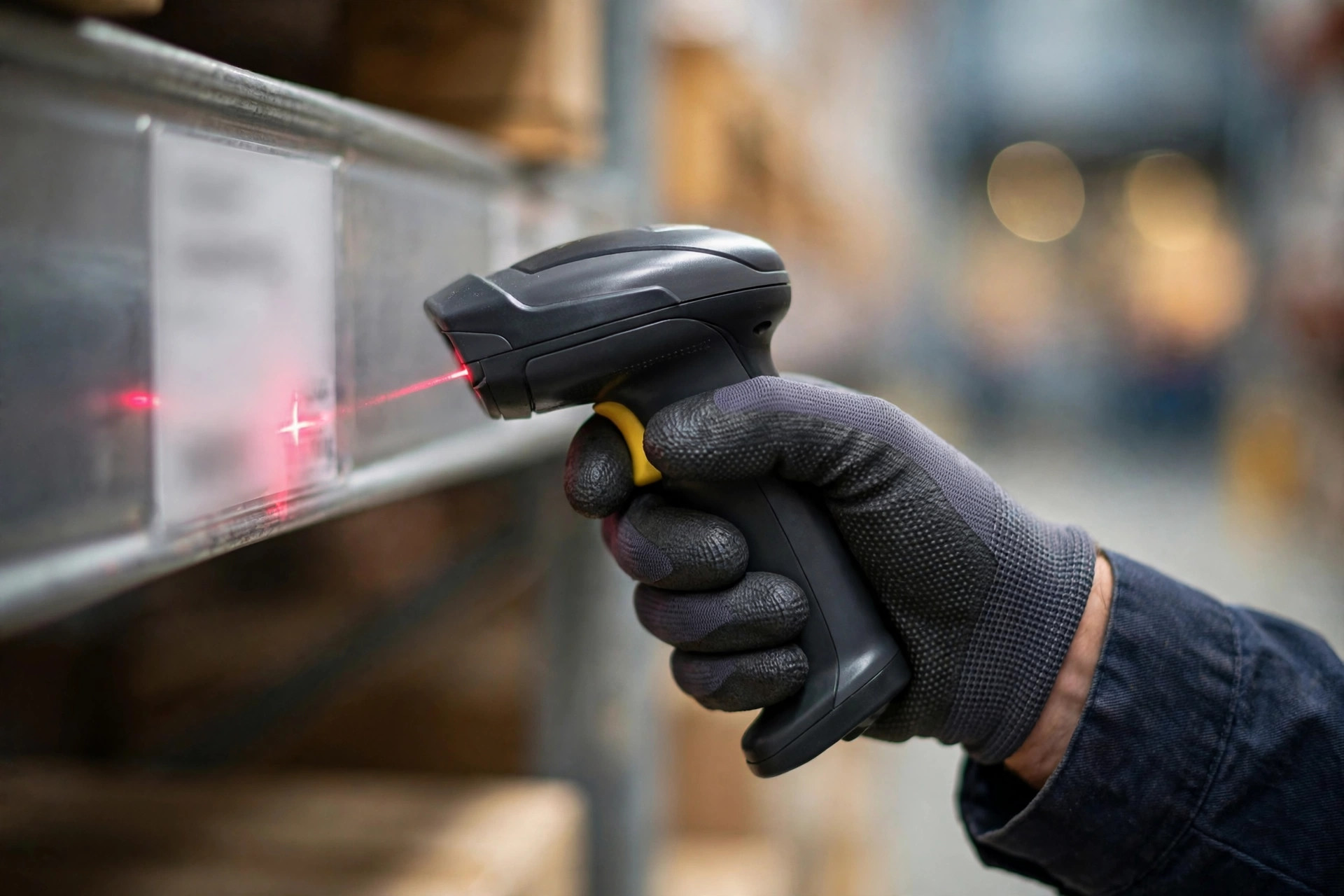
The worst case I ever saw needed three scans per pick: scan the aisle code to confirm you are in the right aisle, scan the row, then scan the position. Ten-odd extra seconds per pick, thousands of picks a day — the hours evaporate into beeping. The hidden cost is training: new hires spend their first week memorizing the coding rules, and veterans spend half their mentoring time explaining what segment five means versus segment six.
There is a related trap worth naming: encoding product attributes into the location code. I have seen segment two mean temperature zone and segment three mean product category. Clever — until product moves. The moment ambient goods shift into a cooler zone, the code lies, and that location is effectively dead in the system. A location code describes a place, never the product. Product attributes belong in the SKU master. Keep them out of the address.
So here is my call: for most warehouses under 100,000 square feet, five segments is the ceiling. Zone, aisle, bay, level, position. That is enough. Every segment beyond that solves fewer problems than it creates.
How do you pick your number? Three questions.
First, size. Under 100,000 square feet, five is the max. Past 200,000, six becomes defensible — but that sixth segment should be a coarse grain like "sub-zone," never a finer split of column and position. The finer the grain, the faster maintenance cost compounds.
Second, rack type. Selective pallet rack gives you levels and positions for free — use them. Flow rack picks from the first two levels, so the code needs to resolve down to each lane. Bulk floor storage has no levels or positions at all; do not fake five segments there. Three honest ones (zone, row, stack) beat five with two empty ones. The code serves the people, not the other way around.
Third, workflow. Still picking from paper? The code has to be short enough to read at a glance and say out loud — "Zone A, aisle 12, bay 3, level 2, position 5" should survive one pass over the radio. Full RF scanning buys you a little more length, but not past five: the label is still palm-sized, and small type still defeats eyes and scanners alike.
One more practical detail before you finalize: fix the length of every segment and kill ambiguous characters. Aisles get two digits (01-36), not a mix of one and two. Never let the letter O and the digit 0 — or I and 1 — appear in the same scheme. Half the "system errors" I have ever debugged were a human misreading a label, not a system problem at all.
Here is something you can use tomorrow: before you lock in a scheme, print the longest address at actual label size, stick it on a rack, and step back. If you cannot read it, cut a segment on the spot. Design codes on the floor, not in a conference room.
And one question for you: how many characters is the longest location address in your warehouse? Count them. If it is past fifteen, tell me in the comments how you are surviving.