Most loading docks are exactly four feet tall. That single fact explains why dock areas draw so many OSHA citations — the entire work zone sits precisely on the legal tripwire, and most operators don't realize it until the inspector shows up.
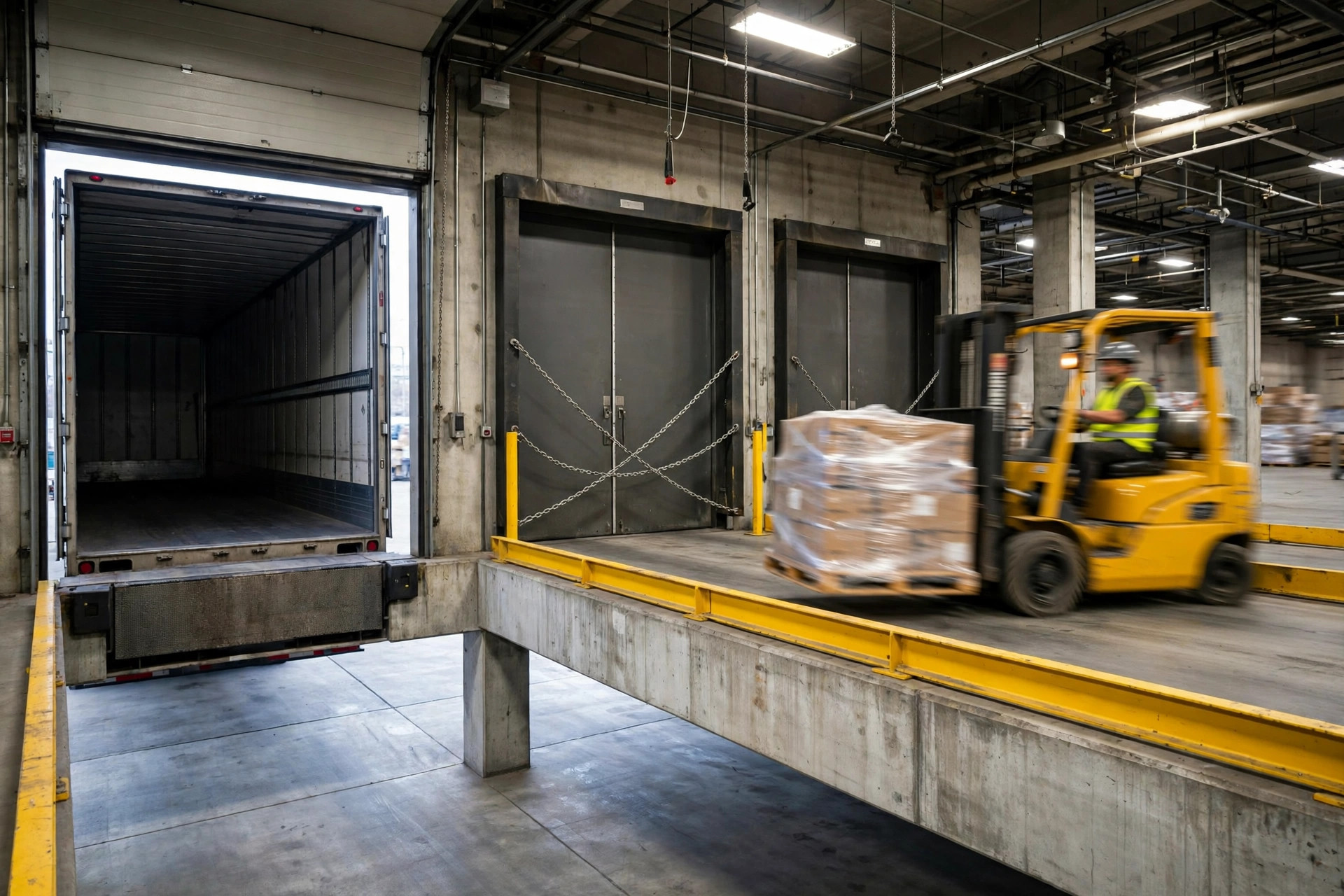
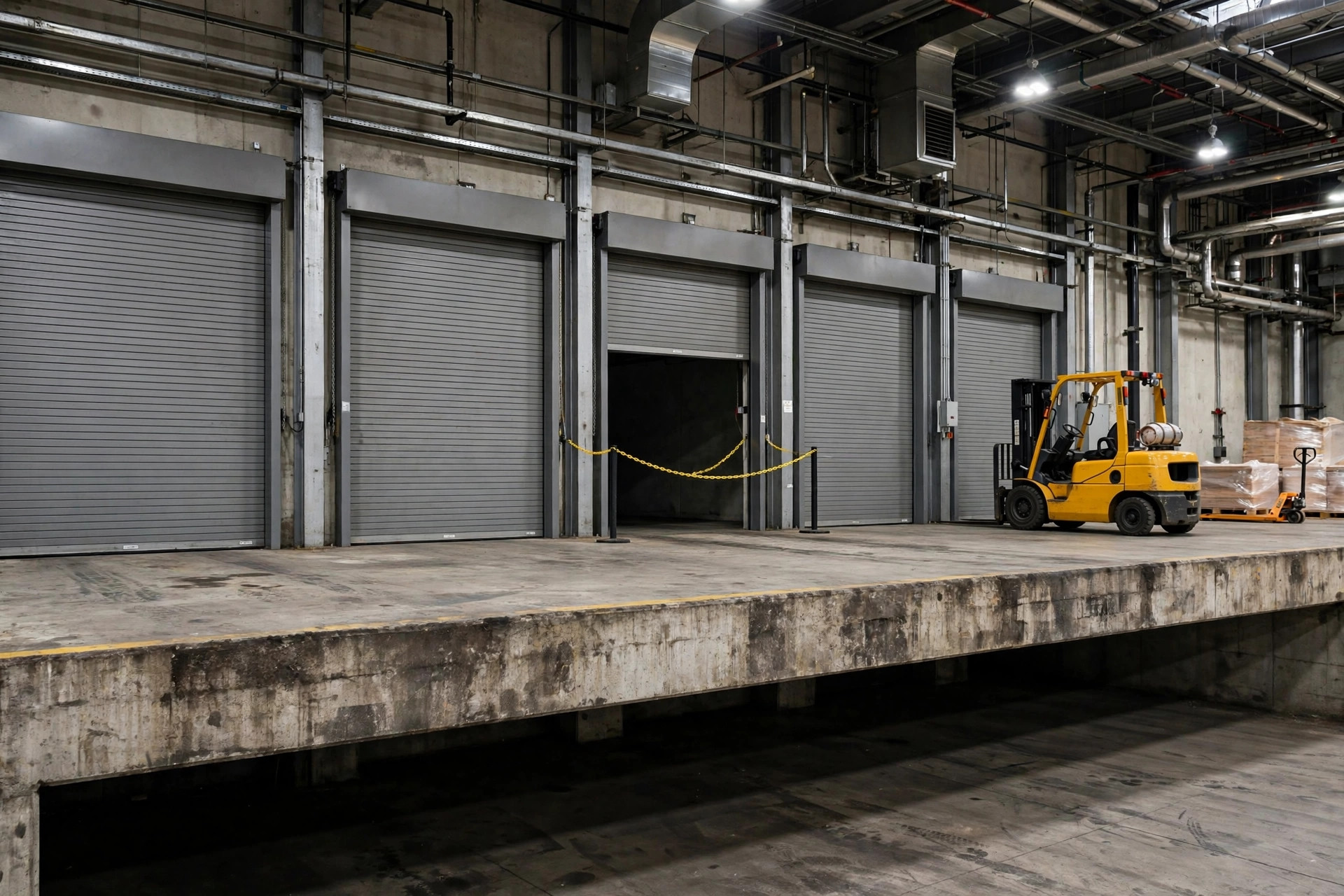
I was at a 120,000-square-foot food distribution warehouse in Fresno last week, walking the dock with the operations manager. Eight doors, three standing open, trailers long gone, wind blowing through the empty openings. Two pickers were staging pallets within a meter of the edge, four feet of concrete below them. A forklift swung past half a meter from the opening. When I asked who owned edge safety with the doors open, the manager blinked: "We need to manage that?"
Yes. And here is how the rule actually works.
The four-foot line is stricter than it sounds
Under 29 CFR 1910.28(b)(1)(i), the general industry fall protection trigger is brutally simple: any employee on a walking-working surface with an unprotected side or edge, four feet (1.2 m) or more above a lower level, must be protected. Guardrails, travel restraint, personal fall arrest — pick one.
A standard dock runs about 48 inches high. Right on the line. Fall protection is not just a roofing issue; dock edges are a standing line item on warehouse inspection checklists.
OSHA built in two exceptions, and both are harder to claim than they look. Under 1910.28(b)(1)(iii), if the employer can demonstrate that fall protection on the working side of a loading dock platform is genuinely infeasible, the work can proceed without it — but only while the operation is in process, only with access limited to authorized employees, and only if those employees are trained under 1910.30. All three, or the exception collapses. The second exception covers dockboards under 1910.28(b)(4)(ii): no guardrail required only when the board is used solely for motorized materials handling, no one is exposed to falls over 10 feet, and the operators are trained under 1910.30.
Notice the common thread: training records. When an inspector walks your dock, the first question is rarely about measurements. It is: "Show me the 1910.30 training records for everyone who works these doors." If you cannot produce them in minutes, the exception does not exist and the citation writes itself. My advice to every warehouse I visit: build the training records before you study the exceptions. The paperwork needs a date, the topics covered, the trainer, attendee signatures, and retraining entries. Paper or digital, it does not matter — what matters is retrieval in under five minutes.
One more nuance people miss: the exception only covers the working side during active operations. An open door with no trailer and nobody loading is not "in process." That empty opening gets no exception at all. Close the door, chain it, or gate it.
Where the citations actually come from
Open, empty doorways. This is the Fresno warehouse's problem and the most common dock violation I see. Doors stand open for airflow, trailers are gone, and the opening is a four-foot hole in the building. People stage freight, sweep, or wait near the edge. The fixes are cheap: a safety chain, a retractable dock safety gate, a door interlock that will not release without a trailer present — or simply a written rule that doors stay closed with no trailer, enforced on the shift checklist. What costs money is the "just for a minute" habit. Inspectors have heard that one ten thousand times.
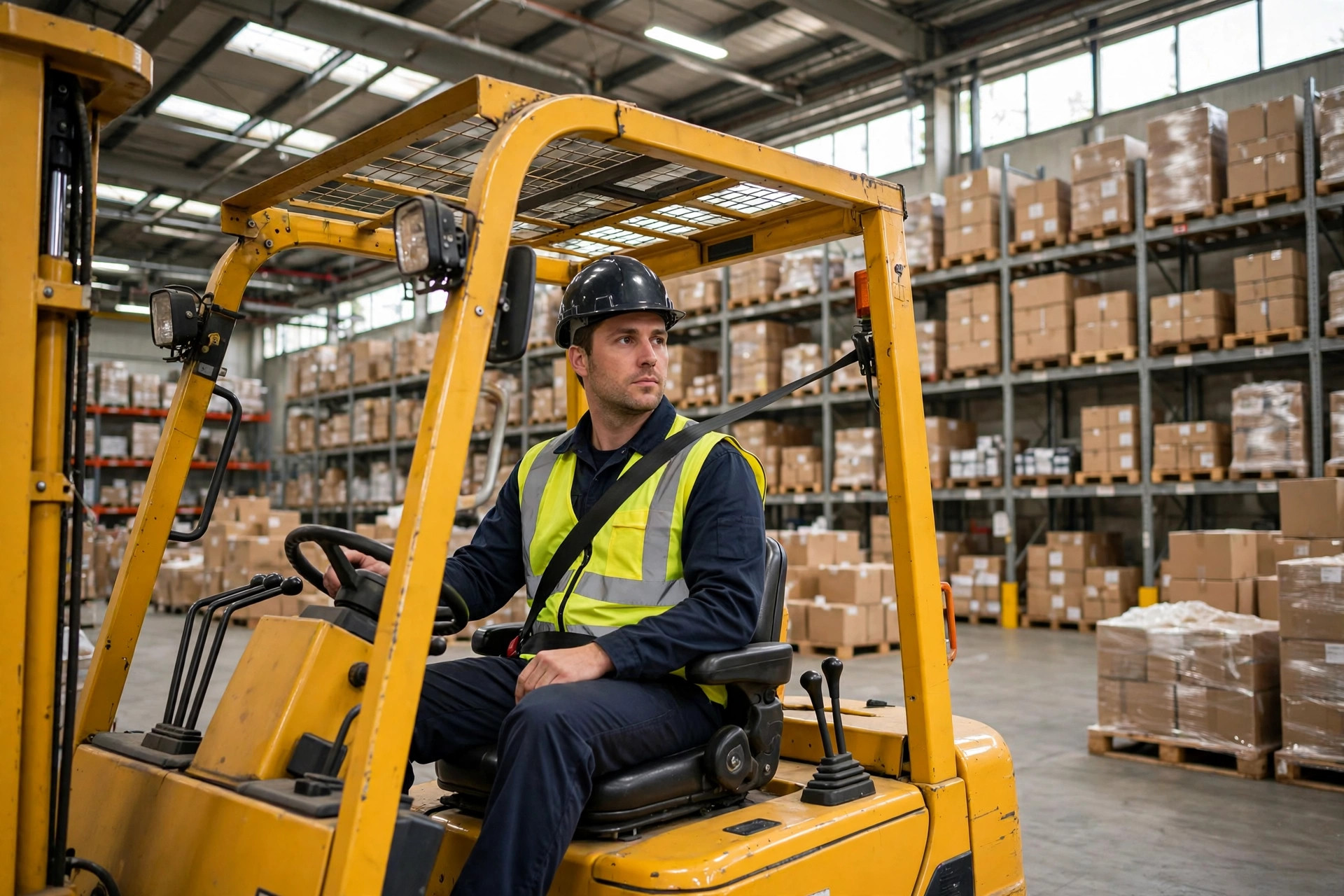
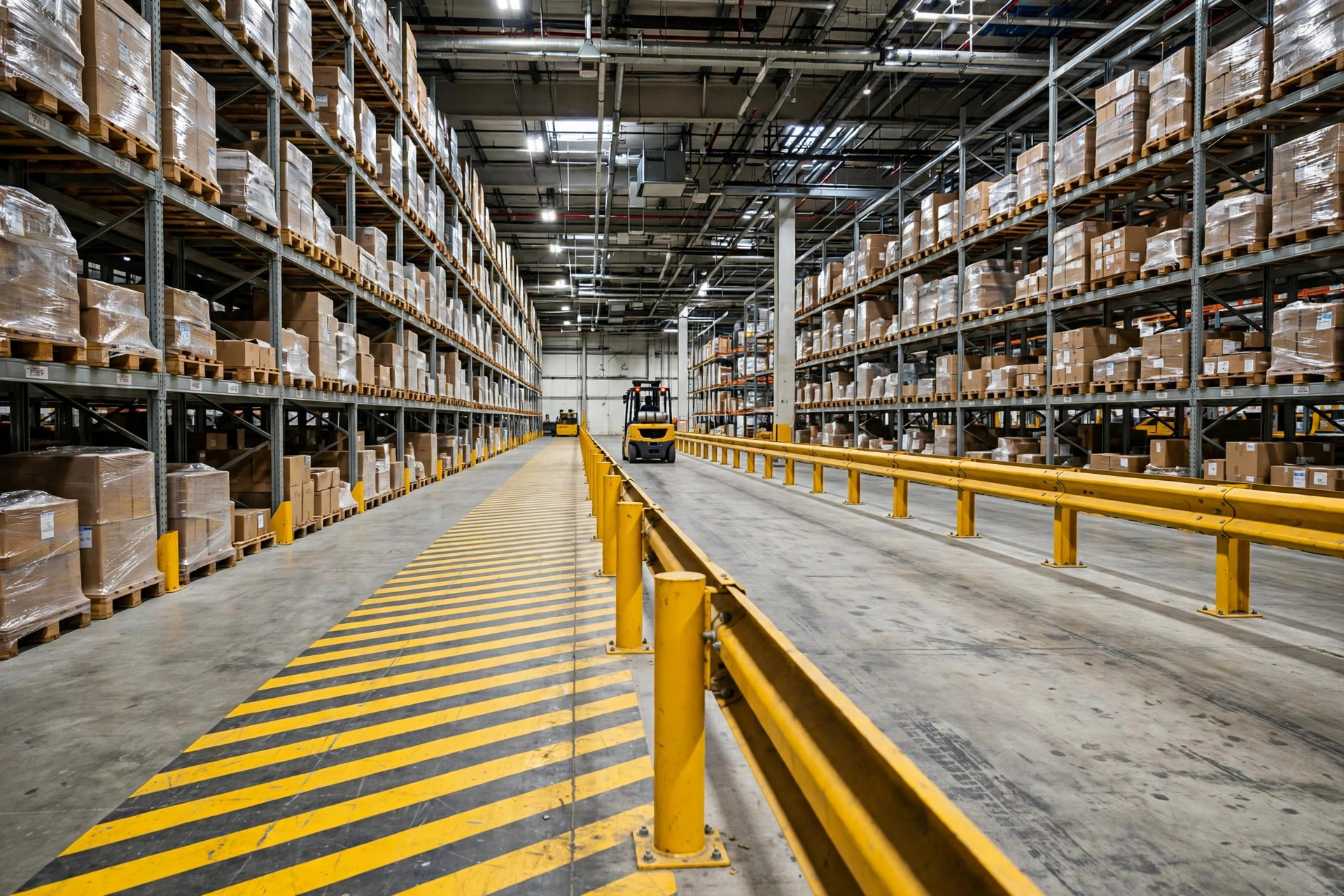
Forklifts crowding the edge. 1910.178(m)(6) requires operators to keep a safe distance from the edges of ramps and platforms. Most docks have no markings, so drivers judge distance by feel — and feel is the first thing to go during a peak-season rush. The cheapest fix I have seen work: paint a yellow line one meter from the edge, declare everything beyond it a forklift exclusion zone, and walk every new hire to the line on day one. Under a hundred dollars in paint and labor. For a bit more, add wheel stops or edge warning lights, which pay for themselves on night shifts.
Unsecured trailers. Before a forklift boards a trailer, brakes set and wheel blocks under the rear wheels — 1910.178(m)(2), an old rule that still catches people every year. The mechanism is trailer creep: repeated forklift entries nudge the trailer forward until a gap opens between the dockboard and the trailer floor, and a forklift drops through it. I have read more than one fatality report with exactly this sequence, and nearly all of them start with "nobody chocked the wheels." Wheel chocks cost tens of dollars a pair; a powered vehicle restraint runs into the thousands per door. If the budget is tight, start with chocks and a checklist — but the communication protocol is non-negotiable: driver and dock worker confirm brakes, chocks, and trailer lights before the first entry, and nothing moves until all three check out. A simple red/green dock light system costs a few hundred dollars and beats shouting across the yard.
And check the dockboards themselves. Boards crack, curl, and lose their anchoring pins. A board failure gives no warning — the person standing on it goes down with it. Ten minutes a month: check for cracks, curled edges, missing pins, and worn tread. A replacement board costs a few hundred dollars.
Penalty math versus retrofit math
Here is the arithmetic, using OSHA's 2026 penalty schedule (confirmed in OSHA's May 21, 2026 memo; no inflation adjustment for 2026, so the 2025 levels still apply): a serious violation tops out at $16,550 per violation, and a willful or repeated violation at $165,514 per violation. Each open door is a violation item. Eight doors, eight items — plus a separate item for missing training records. You can do the multiplication yourself.
Now the retrofit side: a retractable gate or safety barrier per door, several hundred to a little over a thousand dollars. Floor striping, a roll of tape and an hour of labor, one to two hundred dollars. Wheel chocks, tens of dollars a pair. A dock signal light set, a few hundred dollars. The training record template costs nothing but discipline. The powered vehicle restraint is the big ticket — several thousand per door — so phase it in: high-traffic doors first, low-traffic doors next.
My verdict: dock edge protection is the highest-ROI compliance spend in the building. It is cheap, it is fast, the inspector sees it immediately, and so do your people — safety only changes behavior when it is visible. Leaving it unfixed means keeping a five-figure citation and a serious injury in the same basket. After an actual incident, the workers' comp and downtime bill would pay for the whole retrofit ten times over.
Before I left Fresno, I gave the manager a self-audit list. It works for any warehouse, starting tomorrow:
- Walk every door: with no trailer present, is the door closed or blocked by a chain or gate? Empty openings do not stay open overnight.
- Is the one-meter yellow line painted at each edge, and does forklift training cover the edge rule? Every new hire walks the line on day one.
- Is the three-point entry protocol in place — brakes, chocks, trailer lights — with a confirmed signal between driver and dock worker before the first entry?
- Can you produce 1910.30 fall protection training records for every door worker within five minutes?
- Monthly dockboard check: cracks, curled edges, anchoring pins, tread wear.
Pass all five and your dock will survive an inspection. Fail one, and close it out this month. Compliance is not about speed — it is about not leaving a known problem sitting there.