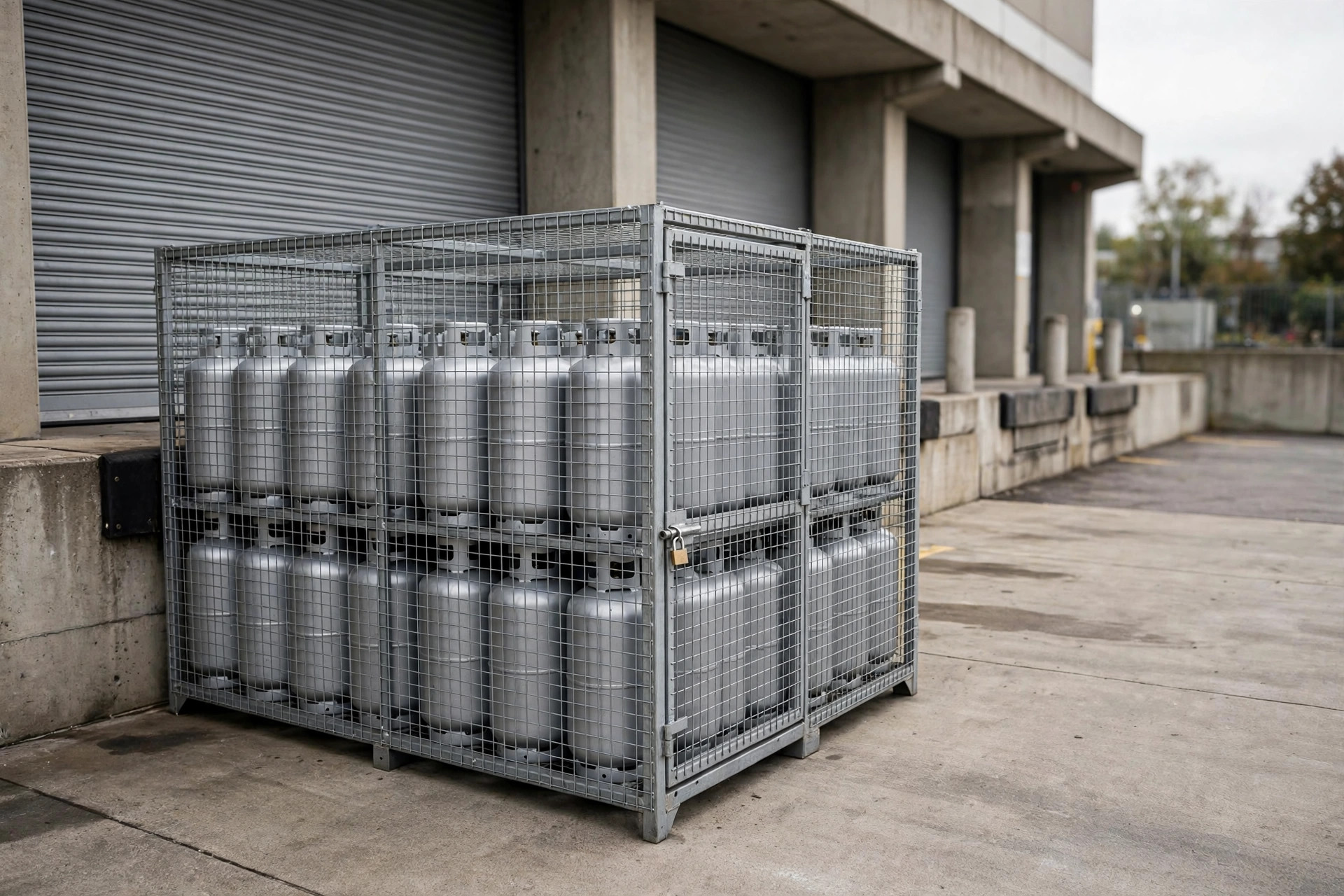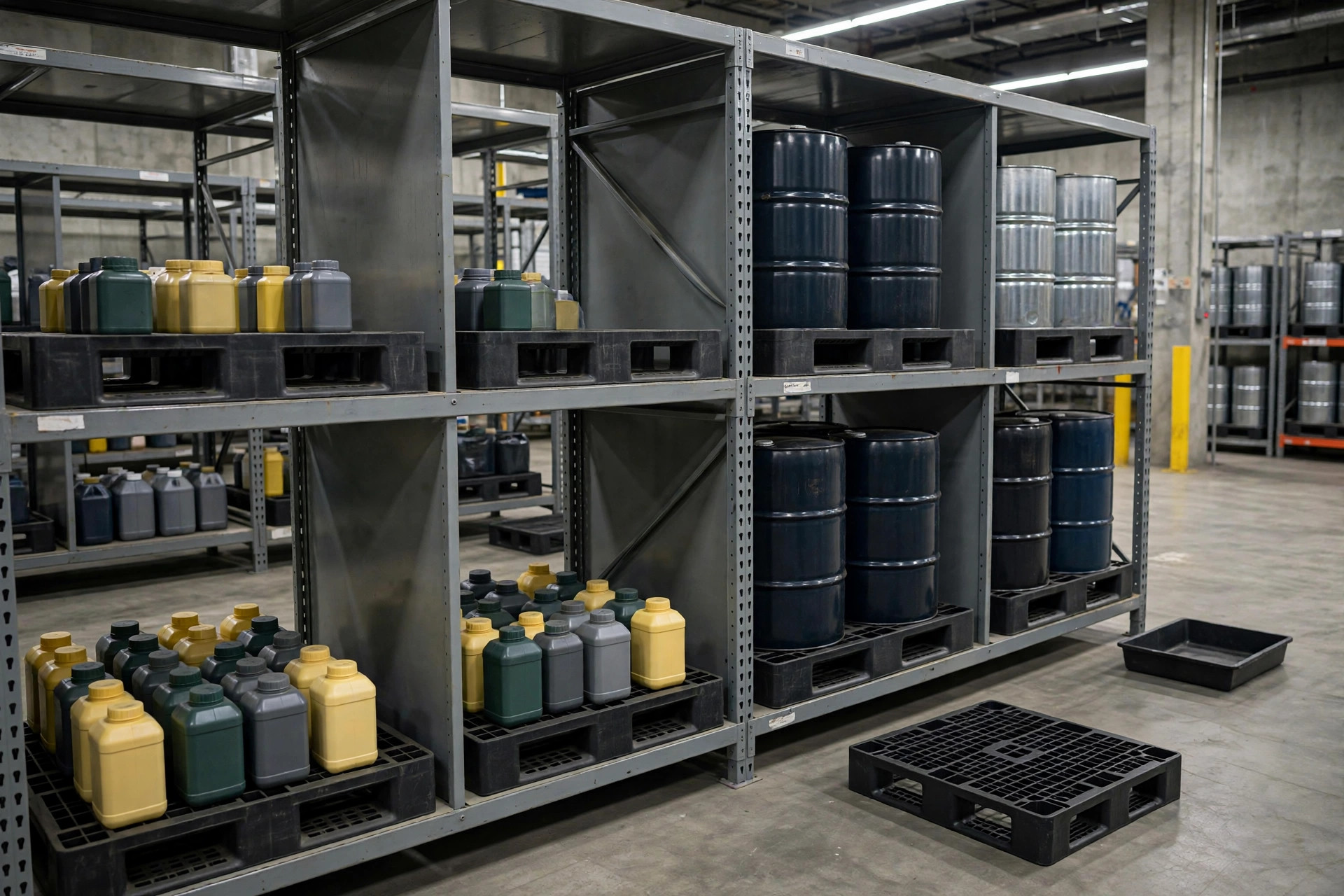
Here's my verdict up front: if you're going to store lithium batteries in your warehouse, budget two to three times what you'd spend on fire protection for an ordinary warehouse. Set that expectation now, or reality will set it for you later.
If that sounds exaggerated, I can usually guess why: you're holding a UN38.3 certificate and thinking, "the batteries are certified, so what's the problem with storing them?" Half right. UN38.3 is the battery's ID card, but it covers transport — not your warehouse. It governs the battery's trip onto the airplane and the container ship. Once the pallets roll through your dock door, two different authorities take over: the fire marshal and your insurance company. Their requirements are far more detailed than UN38.3, and far more expensive.
UN38.3 Covers Transport. Your Warehouse Is a Different Country
UN38.3 is Section 38.3 of Part III of the UN Manual of Tests and Criteria: eight tests (T.1 altitude simulation, T.2 thermal, T.3 vibration, T.4 shock, T.5 external short circuit, T.6 impact/crush, T.7 overcharge, T.8 forced discharge) that prove a battery can survive the abuse of transportation. Pass, and the battery can fly and sail. Fail, and it goes nowhere.
But note the boundary: it's a transport certification. It says nothing about your warehouse storing those batteries for three months — what the state of charge drifted to, what the temperature was, whether a forklift clipped the pallet. And the fire marshal doesn't care about your UN38.3 certificate during an inspection. They look at how you store, your spacing, your sprinklers, your detection. Waving a transport certificate at a storage inspection is like showing a driver's license at passport control. Wrong document.
The Two Documents That Actually Decide Things
For in-warehouse lithium battery storage, two documents really call the shots. One decides whether the fire department lets you store; the other decides what insurance costs you.
First: NFPA 855, the Standard for the Installation of Stationary Energy Storage Systems. The current edition is the 2023 version, published in January 2023, and its scope explicitly includes the storage of lithium metal and lithium-ion batteries. Many fire marshals enforce it directly — the 2024 International Fire Code (IFC 2024) references NFPA 855-2023, so if your city enforces IFC 2024, this is essentially what you'll be inspected against.
The logic of 855 isn't complicated: regulate batteries by energy, in groups. Key points: lithium-ion systems with aggregate energy above 20 kWh fall under its scope; batteries get divided into groups of no more than 50 kWh each, with at least 3 feet of separation between groups and between groups and walls (unless test data justifies less); and water is the preferred suppression agent — because thermal runaway generates its own heat and oxygen, gaseous agents knock down flames but can't stop reignition; only water cools. These numbers get revised between editions, so check the latest version on NFPA's website before you design anything.
Second: FM Global Data Sheet 7-112, Lithium-Ion Battery Manufacturing and Storage. This is the one insurers read, and in practice it's the one that hurts. Its master variable is state of charge (SoC), with two lines that matter:
Sixty percent is the dividing line. Batteries stored below 60% SoC — provided you also meet the conditions on pile height, ceiling height, aisle width, and rack arrangement — can typically be protected without in-rack sprinklers. Above 60%, rack storage generally needs in-rack sprinklers plus horizontal barriers. The day sprinkler retrofits enter the quote, the whole math changes.
Thirty percent is the other line. Research across multiple institutions, including FM Global's own test data, shows that batteries at 30% SoC or below present significantly reduced fire severity and a much lower likelihood of thermal runaway. So many insurers simply require it: long-term storage batteries must sit below 30% SoC, or there's no policy. In 2024, a warehouse near the Port of Los Angeles storing e-scooter batteries got exactly that condition at renewal — the owner had to go back upstream and change the charging spec before shipment. With batteries, how charged they are is sometimes the insurer's call, not yours.
Remember the division of labor: NFPA 855 decides whether the fire marshal lets you store; FM DS 7-112 decides what the insurer charges you. You need to clear both.
The Insurance Company Is Harder to Please Than the Fire Marshal
Many operators think passing the fire inspection is the finish line. It isn't. The fire marshal decides whether you may store; the insurer decides who pays when things go wrong. To insurers, a lithium battery warehouse is high risk among high risks, and the standard treatment comes in three parts: higher premiums, higher deductibles, and a remediation list attached to the policy.
The list usually reads like this: a compliance assessment against FM DS 7-112 with a written report; SoC capped at an agreed value (usually 30% or 60%, depending on battery type and quantity); damaged, returned, or recalled batteries isolated from normal stock; 24-hour temperature and humidity monitoring with alarming; hot-work controls for welding and cutting. Can't comply? Fine — the premium doubles, or they decline to quote at all. An insurance broker once put it to me bluntly: "It's not that we won't insure battery warehouses. The premium has to cover us getting woken up at 3 a.m."
One more trap: the "known risk" clause. If your warehouse had a small incident before — say a pallet of batteries swelled and smoked, and you handled it quietly without reporting — and the insurer finds out at claim time, they can deny the claim for failure to disclose a known risk. Document incidents formally, every time. "It was a small thing" is the most expensive sentence in insurance.
Seven Things to Check Every Morning
Daily inspections for a battery warehouse belong on the wall, with names assigned. Every morning, check these seven:
Temperature and humidity first. Batteries hate heat and moisture; hold the warehouse within the battery manufacturer's spec (typically cool and ventilated — follow the spec sheet), and high-temperature alarms need a human response, not a "we'll look at it later."
Second, spot-check SoC. For batteries in long-term storage, sample the state of charge regularly and confirm it's under the insurer's cap. Don't trust the label alone; the meter is the truth.
Third, eyeball the product. Swelling, leaking, odor, discoloration — any one of these sends the pallet straight to quarantine. Any pallet a forklift has hit gets opened and inspected the same day; mechanical damage is one of the most common triggers of thermal runaway.
Fourth, detectors. Smoke, heat, and gas detection (thermal runaway releases flammable gases early) — press the test buttons, confirm they're online.
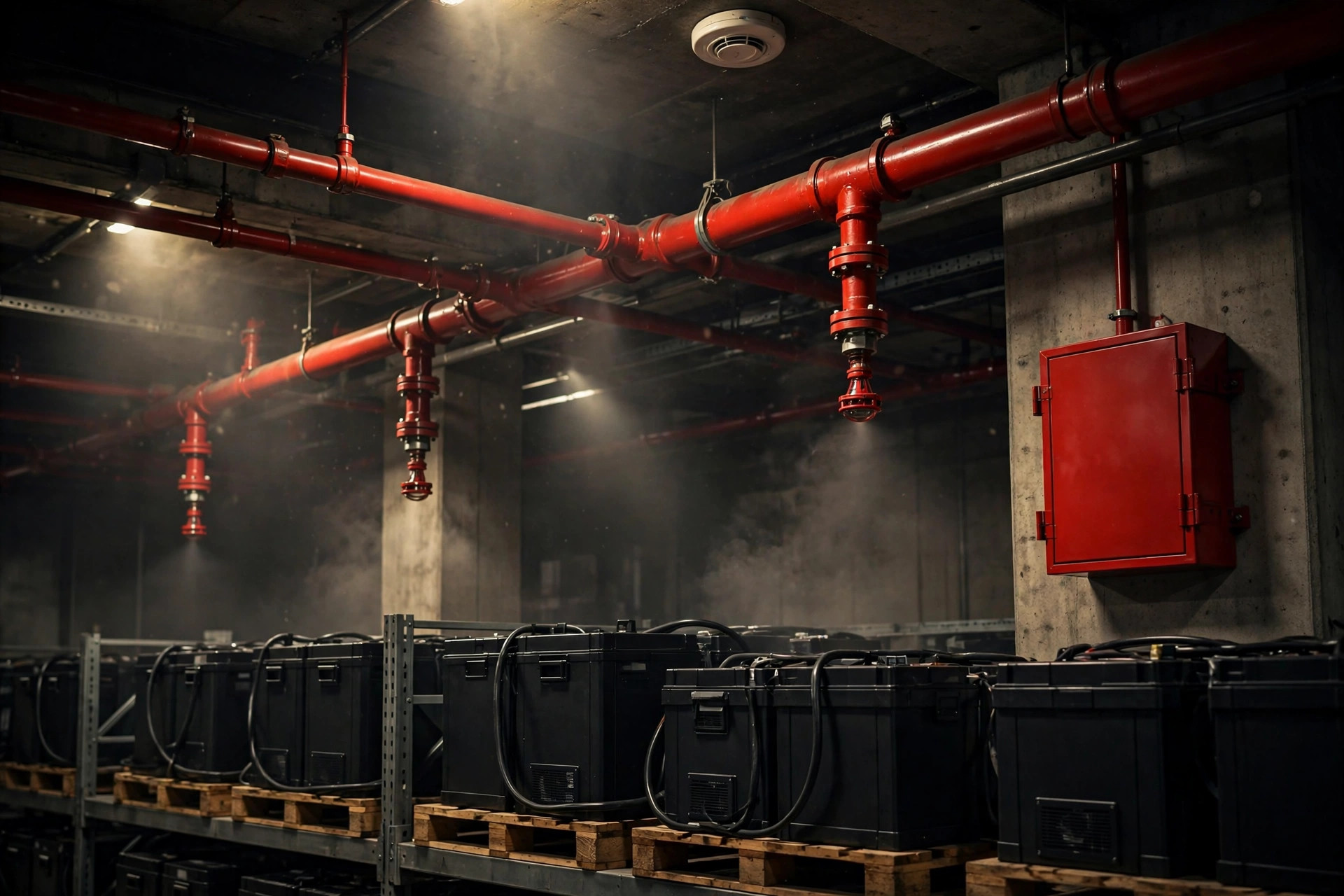
Fifth, suppression. Sprinkler valves, extinguisher pressure, fire aisles — nothing blocked, nothing expired. Lithium battery fires are fought with cooling water, so water supply and pressure are the whole game.
Sixth, the quarantine area. Damaged and returned batteries sit apart from normal stock, clearly marked. Quarantine isn't a junk pile; it's a system.
Seventh, the logbook. Sign the inspection sheet, photograph anything abnormal. If something ever goes wrong, that logbook is your evidence of diligence.
Tuition Paid by Others
One case to close with. In April 2019, an energy storage facility in Surprise, Arizona exploded, injuring four firefighters, two of them seriously. Investigators pointed to flammable gases accumulated after thermal runaway — and firefighters who entered without a clear picture of what was inside. After that accident, the industry's attitude toward gas detection, ventilation, and emergency pre-planning changed completely.
The lessons are blunt. First: your local fire department needs to know what's stored in your battery warehouse — what, where, and the floor plan — before anything happens, not while it's happening. Second: the gases released early in thermal runaway are an invisible killer; gas detection and ventilation aren't "nice to have," and they need to work together. Third: the emergency plan has to be drilled. The one on paper doesn't count.
Back to the opening verdict: budgeting two to three times an ordinary warehouse's fire-protection spend for lithium battery storage isn't scaremongering — it's the real cost structure of this business. Battery warehousing earns premium rates; a pallet of batteries pays far more in storage fees than a pallet of household goods. The bet you're making is whether you treat fire protection as a cost or as an investment. Treat it as a cost, and you'll pay it back double in premiums, retrofits, or accidents. Treat it as an investment, and you'll sleep at night.