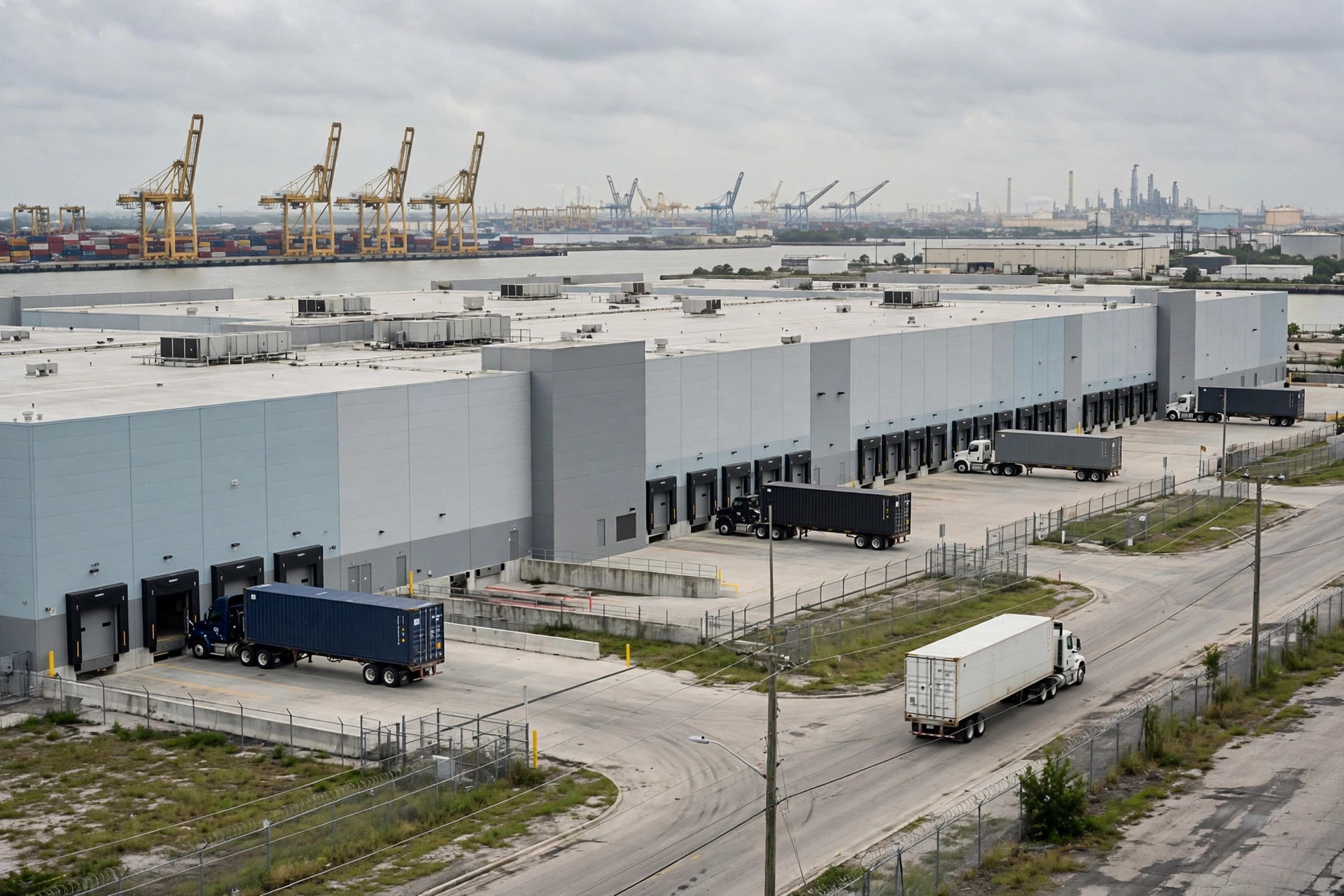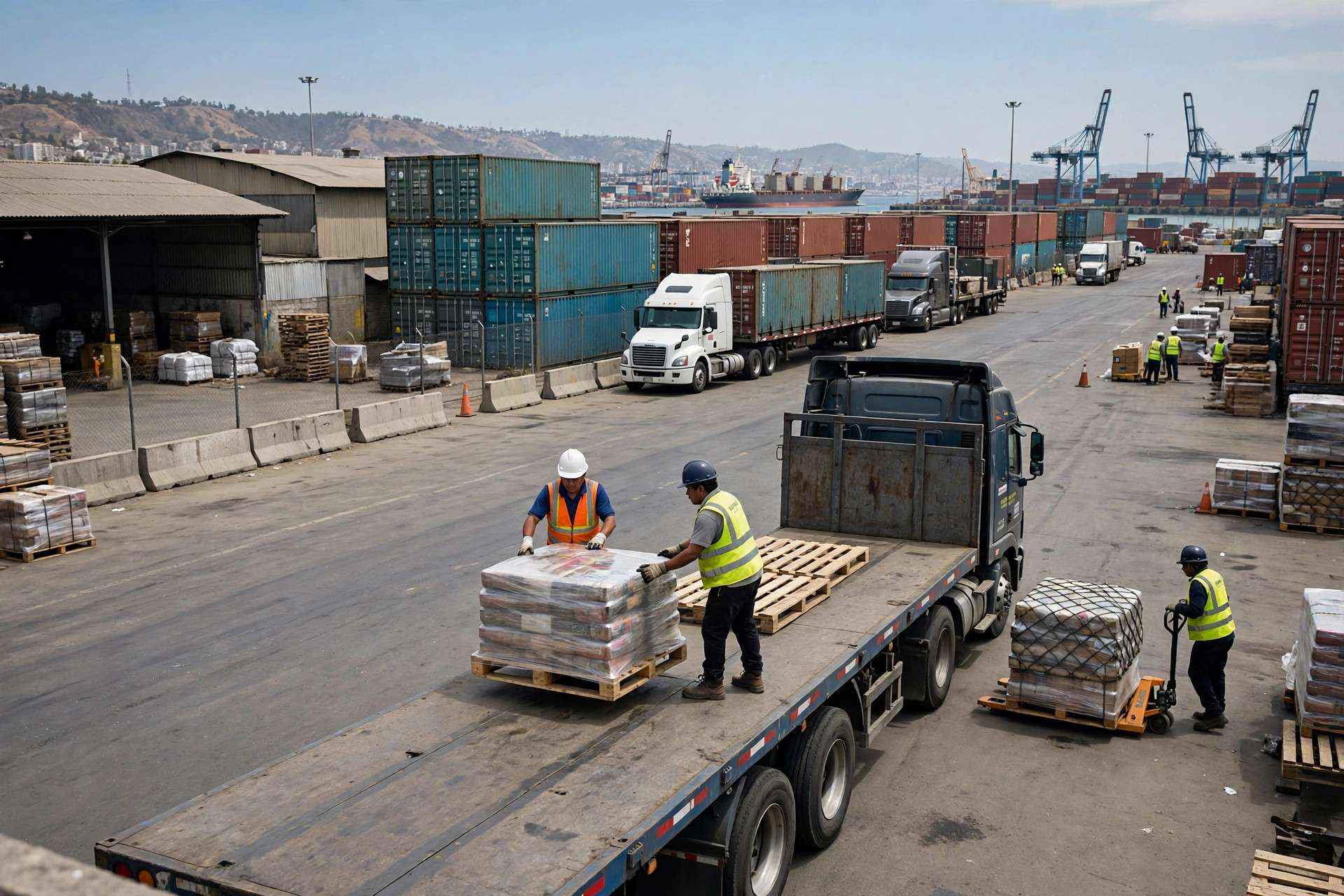
On a rainy morning last year, I stood with an importer outside a warehouse near the port of Callao, watching trucks queue to enter the port area, and he asked me the question at the heart of his first Lima warehouse market decision: when setting up in Lima, is it better to be close to the port, or close to the customer? I did not answer directly, because the question itself points in the wrong direction. Most newcomers are led astray by the same map, imagining that site selection means finding a single point close to everyone, when the real trade-off is about the direction in which the goods actually flow.
What makes Lima distinctive is that the city plays three roles at once: port city, consumption centre, and starting point for distribution into the Andean interior, and each role asks something different of a warehouse. The port role wants a warehouse near the docks, so containers can be received without delay and a volatile vessel schedule has somewhere to be absorbed. The city role wants a warehouse near shops and households, so frequent small orders can be served quickly. The interior role wants a warehouse that can consolidate freight, so goods travel inland in coherent loads rather than fragments. A single site rarely serves all three roles well. The first step in Lima, therefore, is not to compare rents, but to split your own freight into lines and ask which line is most sensitive to delay.
The First Lima Warehouse Trade-Off: Port Proximity or Customer Proximity
A warehouse near the port buys certainty above all else. Once a container lands, it can be received, checked, and broken down in one sequence, and when a vessel schedule slips, the warehouse still has room to absorb the disruption rather than passing it straight down the distribution chain. For an importer whose inbound flow follows the shipping calendar, that certainty is itself a form of value, measured less in any single freight saving than in the firefighting that no longer has to happen.
That certainty comes with a cost that is easy to underestimate. The port area is congested, inspection consumes time, and the warehouse rhythm tends to follow vessel arrivals. A port-side warehouse is also usually far from the city's consumers, so city orders must travel another leg that can be slow at peak hours. This is a pattern I have seen repeatedly in a Lima warehouse siting discussion: the port-side option wins the first round because it looks decisive on the map, and only once operations are running does the daily cost of the city leg become visible, because it is paid trip by trip rather than once at signing.
The importer I stood with in the rain did not put all of his stock at the port. He kept import stripping near the port, where lumpy arrivals could be handled, and placed goods for city shops in a satellite warehouse closer to the city, linking the two with replenishment. Once the roles were separated, the economics of each site became far easier to judge.
Lima Warehouse Costs in the Suburbs: Cheap Land, Expensive Last Mile
The suburban warehouse story always sounds the most economical at first hearing, because the plots are larger and the layout can expand. For goods that turn over steadily and do not demand urgent replenishment, the suburbs are genuinely worth a serious conversation, since operations can be planned with more room.
But the suburban account cannot be closed at the warehouse door, and this is the easiest bill to miscalculate in a Lima warehouse decision: what is saved on land and rent can be paid back gradually on the last mile. Longer trips to city shops mean more fuel, more driver hours, and slower vehicle turnaround, and the more fragmented the orders, the heavier that bill becomes. A suburban site also demands stricter replenishment discipline, since a city warehouse that runs short can sometimes improvise within the day, whereas a suburban warehouse that misses a replenishment slot leaves a longer gap before the next one.
Earlier this year, a home-goods distributor moved its warehouse from the edge of the city to the suburbs. The move itself went well: there was more space, and operations inside the building ran more smoothly. Yet after several months, urgent replenishment for city shops had become harder to serve, goods that once arrived within half a day now waited until the following day, and shops responded by holding more safety stock of their own. The point is not that the suburbs are a bad choice, but that the suburban choice has a boundary: it rewards steady, bulky, predictable freight, and it punishes fragmented, time-sensitive orders that constantly need urgent top-ups.
Andean Distribution: When a Route Climbs, the Cost Structure Changes
There is a third line that newcomers routinely underprice: distribution toward the Andean interior. Many site plans drawn up in Lima account carefully for local city delivery and then treat the inland leg as an afterthought, as though it were simply a longer version of the same journey, when in reality it is a different kind of operation, with different roads, different weather exposure, and a different number of handovers, each of which adds damage risk and delay risk.
The counterintuitive judgement here is that the most distant inland point is not necessarily the most expensive leg to serve, and the truly expensive part of an inland route is often the transfer rather than the distance. A long direct route, although far, can be simple to load and simple to hand over, whereas a route that changes vehicle several times multiplies cost and risk at every interchange, in waiting time, in re-handling labour, and in errors that creep in when information passes from one carrier to the next. The question to ask about an inland route is therefore not how far it goes, but how many times the freight changes hands and who is responsible at each change.
That logic redefines what a Lima warehouse is for inland distribution. It should be treated less as a storage point and more as a consolidation and dispatch organiser: grouping freight by inland direction before it leaves Lima, setting a departure rhythm that transfer points can rely on, and writing down who owns each handover. A dispatch warehouse sends freight that arrives at a transfer point ready to change vehicle rather than to be sorted.
Putting the Three Lines Side by Side
When the three lines are laid out together, the decision becomes clearer, because the port line is judged on certainty, the city line on frequency and speed, and the inland line on handovers and organisation. The table below is the one I ask importers and distributors to fill in before signing anything: describe the character of your own freight on each line before writing down any price.
| Option | Better suited to | What it buys | What it costs | Ask yourself first |
|---|---|---|---|---|
| Near the port | Import-led freight following the vessel schedule | Connected receiving, a buffer against volatility | Another leg into the city, operations paced by arrivals | Is my freight lumpy, import-led, and volatile |
| Suburban | Steady, bulky, predictable freight | Room to expand, unhurried operations | A longer last mile, slower urgent replenishment | Are my orders fragmented and time-sensitive |
| Port site plus city satellite | Both lumpy imports and frequent city orders | Each site serves one role well | Two sites to manage | Am I willing to pay management effort for specialisation |
| Lima consolidation plus inland dispatch | Freight heading inland | Direction-grouped departures, lighter transfer burden | High organisational demands | How many times does my inland freight change hands |
Filling in that table often changes the question itself, because many operators discover that what they wanted was never a single warehouse at all, but a combination of sites, or a warehouse plus a transfer arrangement. Returning to that rainy morning question, it can now be reframed more usefully: on which line is your freight least able to tolerate delay, and on which line does repeated cost hurt most, because the warehouse should serve that line first. The Lima market will keep shifting as port capacity, suburban development, and inland routes evolve, so keeping room to adjust beats locking a location in. As for which combination fits your own freight, the answer is unlikely to be found in someone else's site report; it is far more likely to be found in your own order pattern and dispatch record. That is an open question rather than a verdict, and it is the right place to leave it.
By Dr. Chen, Supply Chain Researcher