Here's a number to start with: the same conveyor line pays back in 5.5 years on a single-shift warehouse and 2 years 9 months on a two-shift one. Same equipment. The difference is that your math was wrong.
Every Q4, some owner asks me: "Labor keeps getting more expensive — time to automate?" My answer is always the same: don't sign anything yet. Lay out two curves first — labor cost compounding upward, and equipment cost (depreciation plus cost of capital) sliding downward. The point where those two lines cross is when you move. Automate before the crossing and you're spending early; wait too long after it and you're bleeding slowly.
Labor compounds, equipment sinks: the formula first
Think of it this way: labor cost is a snowball rolling uphill, equipment cost is an ice cube melting. One grows, one shrinks.
Most people do the labor math wrong — they use the hourly wage. What you actually need is the fully loaded cost: wage plus payroll taxes, workers' comp, overtime, recruiting and training, supervision overhead. In the US, a warehouse associate at $22/hour costs roughly $28–33/hour fully loaded (illustrative range — it varies a lot by state, so run your own numbers). The killer is the growth rate: US warehouse frontline labor has been climbing 3–5% a year, with seasonal temp rates spiking harder. At 4% compounded over 7 years, labor cost rises 32%.
Equipment is the mirror image: one big upfront outlay, then it depreciates every year after. The IRS classifies most material-handling equipment as 7-year MACRS property (that's a tax classification, used here illustratively), and then there's the cost of capital — $1 million spent today at a 7% cost of capital is really $1.6 million in opportunity cost over 7 years. So the equipment's "true annual cost" = (equipment price + integration) amortized at your cost of capital + annual maintenance.
The breakeven formula:
Annual net savings = headcount eliminated × fully loaded annual cost per head × capacity realization rate − annual maintenance − equipment's annualized capital cost
Pay attention to that "capacity realization rate" — it's where 90% of ROI business cases quietly die. The nameplate says 98% uptime, but changeovers, jams, software crashes, and waiting on upstream material flow drag real-world throughput down. A 90% realization rate means you're managing well. I once reviewed a feasibility study that plugged the vendor brochure's theoretical cycle rate straight into the model, projected an 18-month payback, and was still underwater after 4 years of operation. That's not a calculation, that's a wish.
Let me walk through a full worked example (numbers are illustrative; the logic is universal). An e-commerce fulfillment center with 24 pickers across two shifts, fully loaded cost of $60K per person per year ($28/hour × 2,080 hours plus some overtime), labor growing 4% annually.
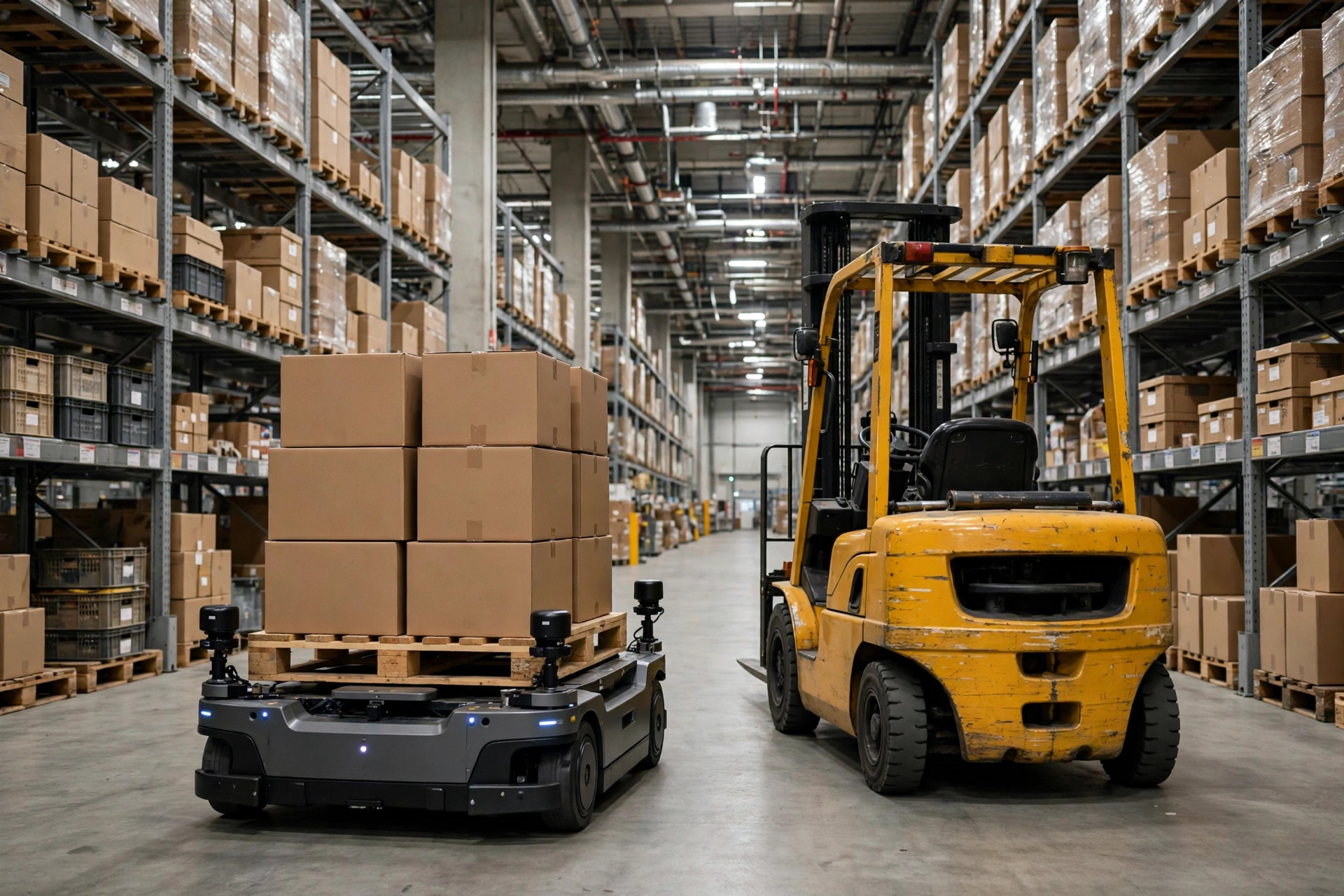
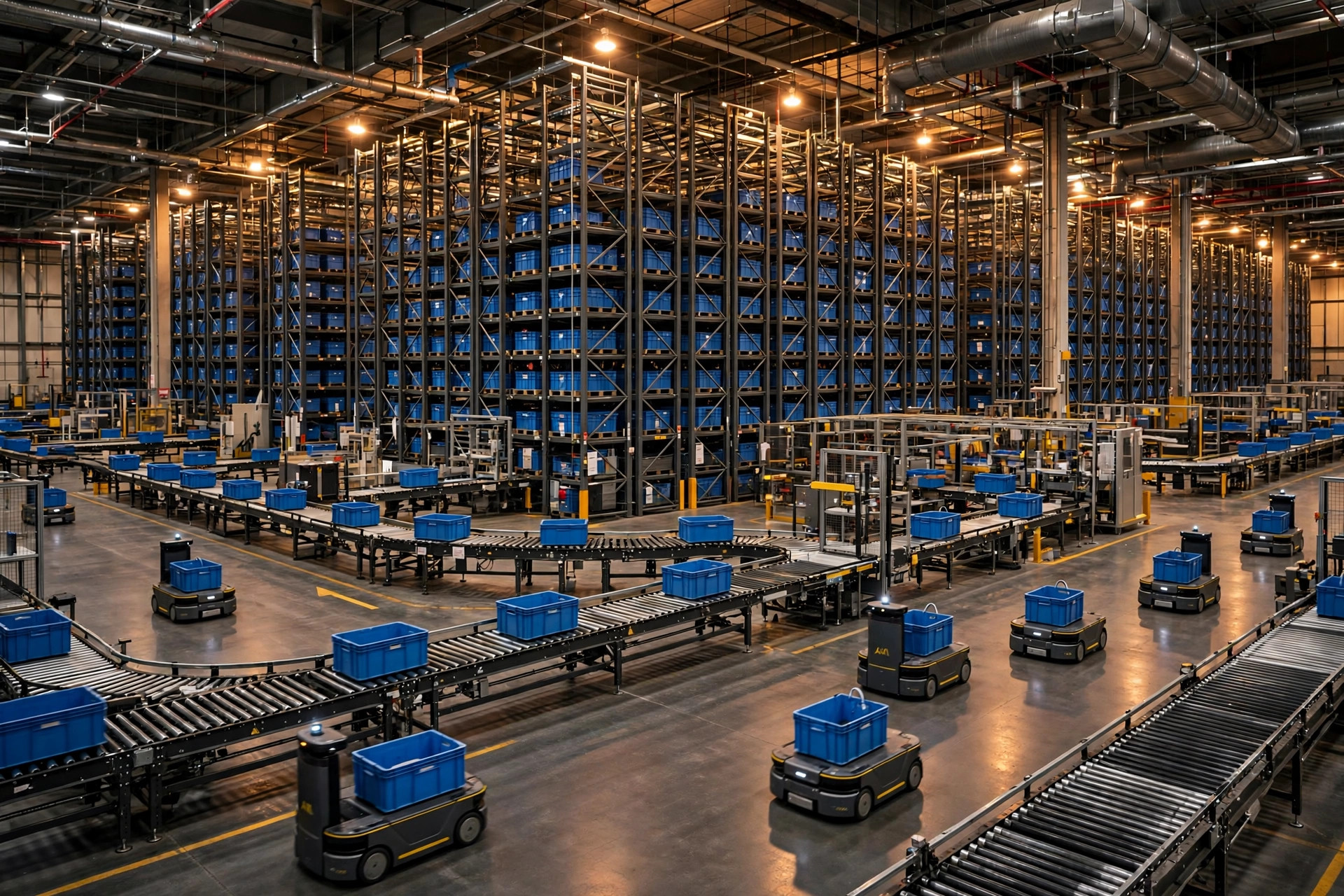
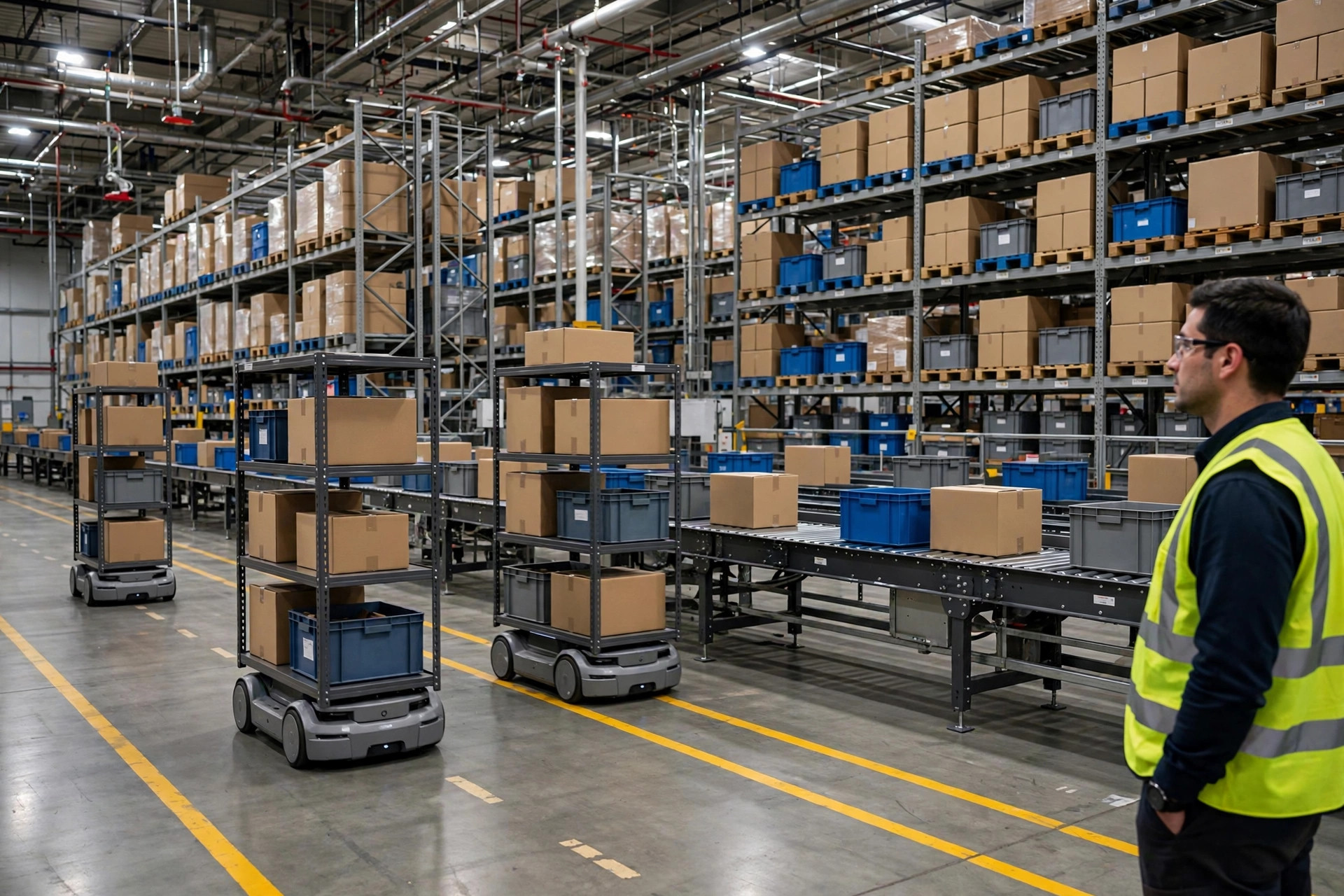
The proposal: 12 AMRs plus a conveyor loop, $950K all-in including integration, 7-year depreciation, 7% cost of capital, $60K/year in maintenance (spares plus service contract), 90% capacity realization.
Year one: eliminate 14 positions (not all 24 — you still need people for upstream handoffs and exception handling). 14 × $60K × 90% = $756K; minus $60K maintenance; minus about $176K annualized capital cost ($950K at 7% over 7 years). Year-one net savings = $756K − $60K − $176K = $520K. Cash flow turns positive in under 2 years.
Now make it single-shift and only 7 positions eliminated: year-one net savings = 7 × $60K × 90% − $60K − $176K = $142K. Payback stretches past 6 years. Same equipment, different shift pattern, completely different answer. That's why I say: calculate your shifts before you talk equipment.
The selection line: three warehouses that should not automate yet
Principles done — now the dividing line. Three situations where I talk people out of automation, every time. No politeness toward fake demand.
First, warehouses with wild order swings. Automation's worst enemy isn't being busy, it's being idle. Equipment is a fixed cost — it depreciates in the slow season and the service contract bills regardless. In 2022 I looked at a seasonal-goods warehouse in Ohio: 18,000 orders a day in Q4, 3,000 a day in Q2, with a sortation line sized for the peak. Annual utilization sat under 45%. That's like buying a hotel kitchen for one New Year's dinner — it sits empty the rest of the year. High-volatility operations should fix processes and flexible labor first; talk automation once your peak-to-trough ratio is under 3x.
Second, warehouses with extremely fragmented SKUs and low volume per SKU. AMRs and conveyors feed on standardization and repetition. With tens of thousands of SKUs and thin, scattered demand, the fastest cycle rate in the world can't save you from constant pick-face changeovers. My rule of thumb: average daily pick lines per SKU. Below 5, automation is usually decoration.
Third, warehouses whose management isn't ready. Equipment doesn't fix you — it amplifies whatever management level you already have. Put AMRs into a warehouse with chaotic slotting and inaccurate system inventory, and the robots will still hunt all over the floor for product — just faster than people, and wrong faster too. Get ABC classification, slotting optimization, and cycle-count accuracy above 98% first. Unpleasant advice, but it saves millions.
The maintenance trap: the real bill starts the day the equipment arrives
This is the part of the article I most want you to remember. Too many ROI models stop counting on "go-live day." Everything after that gets ignored.
Start with MTBF. The vendor quotes 10,000 hours mean time between failures — sounds impressive. Do the math: a 24/7 warehouse runs 8,760 hours a year, so 10,000 hours MTBF means a major failure roughly once a year. On a single shift (2,600 hours/year), it stretches to nearly 4 years. Same MTBF, two completely different stories depending on your shifts. When you ask a vendor for MTBF, always ask under what conditions it was measured — lab data on an unloaded unit and your 40-degree dusty floor are not the same thing.
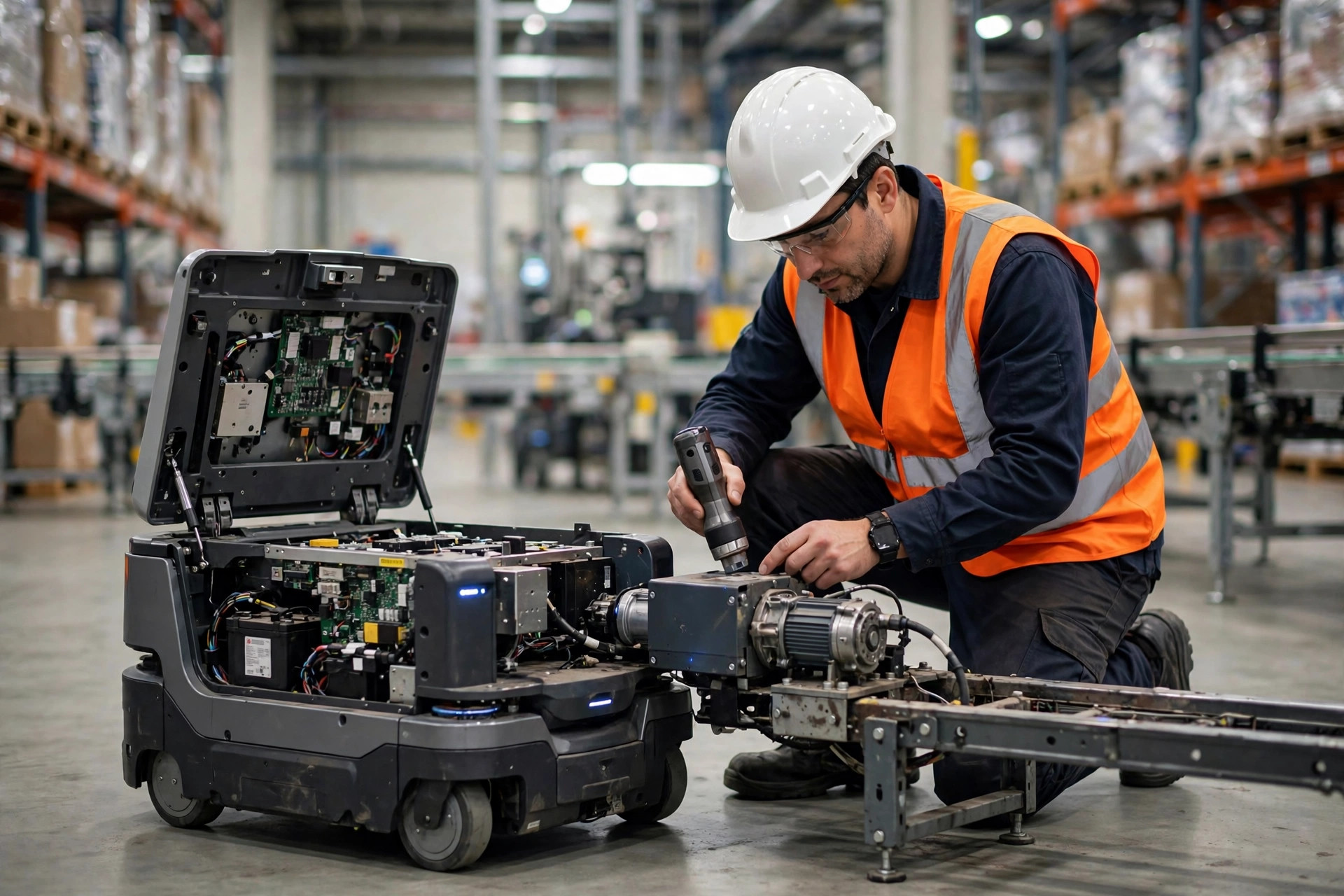
Then spares. Industry rule of thumb: critical spare inventory runs 3–5% of the equipment's original value — motors, drives, sensors, the wear items, you need safety stock. Order after the breakdown and you're looking at 6–8 weeks of lead time with your line down for 6–8 weeks. Service contracts typically run 8–12% of equipment value per year; staffing your own team is an option, but a competent automation maintenance engineer doesn't come cheaper than the equipment.
And software. Control-system licenses, WES interface upgrades, firmware updates — these recur every year and only go up. The worst case I saw: five years in, cumulative software upgrade fees had reached 15% of the original equipment price, and the original ROI model had budgeted exactly zero for it.
So the corrected formula adds three items to annual maintenance: spares amortization, maintenance labor or contract, and annual software fees. Add those back in and a lot of "3-year payback" projects become 4.5-year projects. Better to see it now than later.
Final verdict. Whether this money is worth spending comes down to one number: after you factor in the capacity realization rate and all three maintenance costs, does the cash-flow breakeven point fall within half the equipment's technology lifespan? AMRs iterate fast — in 5 years there may be a cheaper, better option — so call the technology life 7 years and half of that 3.5 years. Adjusted payback ≤ 3.5 years: go. Between 3.5 and 5: pilot first. Beyond 5: don't buy; fix your labor and processes first.
Labor rising and equipment getting cheaper — that's the trend, and it's real. But trends tell you the direction; the math tells you the timing. Right direction, wrong timing, and you still lose money.
By Da Liu, Automation Engineer