Let me be blunt about "Singapore plus one": the Johor warehouse math works, but the JS-SEZ's famous 5% tax rate has nothing to do with most of you. The real money is in rent and labor.
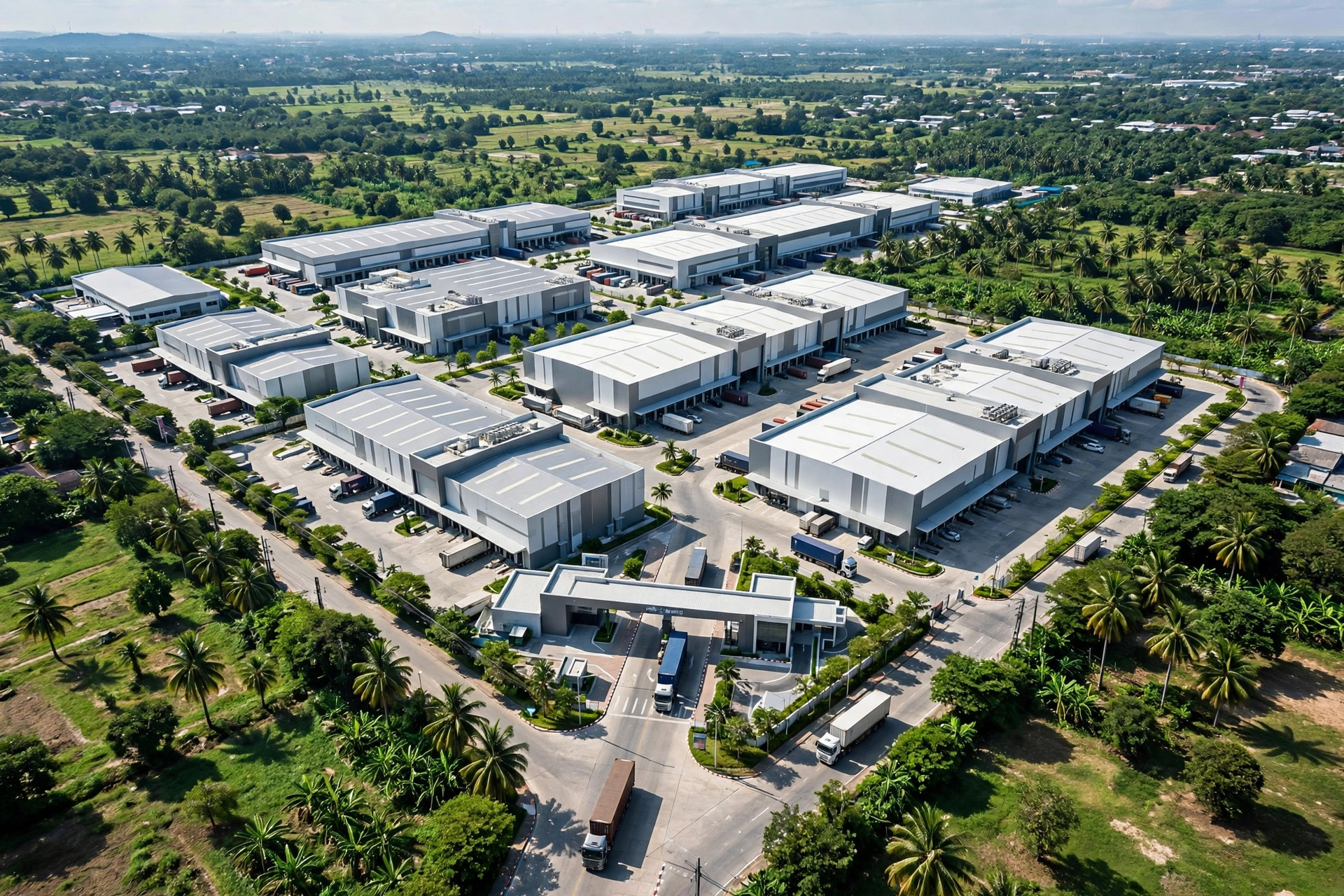
The Singapore spillover story isn't new. Singapore warehouse rents are brutal, labor is brutal, so freight slides north into Johor. It's the most grounded distribution play in Southeast Asia right now. On August 20, 2026, DP World opened an 11,514-square-meter contract logistics warehouse in Johor — inside the JS-SEZ (Johor-Singapore Special Economic Zone) — with a second Malaysian facility in Kuala Lumpur coming before year-end. When giants vote with their feet, the direction is right. But the right direction doesn't mean every way of doing it is right. This one cuts two ways, and I'll take them one at a time.
The verdict first: go to Johor for the rent, not the tax
The moment people hear "JS-SEZ," they light up: 5% corporate tax, up to 15 years! I've seen too many operators put the tax break in the pitch deck before doing the math.
Slow down and read the threshold. Under the Malaysian Investment Development Authority (MIDA) framework: the 5% rate goes to qualifying new investments, with applications open from January 1, 2025 through December 31, 2034. Over RM1 billion invested gets you 15 years; RM500 million to RM1 billion gets 10. And it's limited to sectors like AI, quantum computing, medical devices, aerospace, and global services hubs.
Translated into plain language: this was designed for giants. An ordinary 3PL or a cross-border e-commerce seller basically can't reach it. Malaysia's standard corporate rate is 24%; Singapore's is 17%. Five percent is sweet — but sweetness you can't taste has nothing to do with you.
So what actually makes Johor pencil out? Rent and labor. Per industry outlet ValueChain Asia, Johor warehouse rents run roughly one-third of Singapore's. JLL's end-2025 data puts Singapore's islandwide net effective warehouse rent at about SGD 14.52 per square meter per month — divide by three and you know what Johor costs. Add labor that's dramatically cheaper, and that's the savings a mid-size seller can actually touch.
So the first conclusion: don't go to Johor chasing the 5%. Go chasing the one-third rent.
A trap I've watched: chasing the JS-SEZ tax break, missing the border
A friend in 3C accessories was renting a small Singapore warehouse a couple of years back, and the monthly rent hurt. When the JS-SEZ launched, he got excited: move to Johor, cut rent by two-thirds, grab the 5% tax. He executed the move.
Then the problem showed up. Most of his goods still had to reach Singapore customers and distributors. Warehouse in Johor meant crossing the Malaysia-Singapore border every day: paperwork on both sides. For low-value, time-sensitive 3C accessories, one extra border crossing turned delivery uncertainty straight into customer complaints.
Worse, he later discovered the 5% rate was never his — his investment was orders of magnitude below the threshold. Rent went down, sure. But the added cross-border operating cost, the time lost, the duplicated clearance headcount — the final tally cut his savings by more than half.
This cuts two ways: a Johor warehouse saves you "static costs" (rent, labor) and charges you "dynamic costs" (border time, operating complexity). The static savings are certain. The dynamic costs are not. If your freight can't tolerate uncertainty, don't do this math at all.
The Johor warehouse cost sheet, line by line
Here's the comparison, Singapore vs Johor (indexed to Singapore = 100 so you can see it cleanly):
| Cost item | Singapore | Johor (JS-SEZ and surrounds) | Notes |
|---|---|---|---|
| Warehouse rent | 100 | ~33 | Roughly one-third of Singapore (ValueChain Asia) |
| Labor cost | 100 | Materially lower | Johor set premium starting-pay guidance for JS-SEZ graduates — still far below Singapore |
| Corporate tax | 17% | 24% standard, 5% for qualifying investment | 5% threshold starts at RM500M; most firms pay 24% |
| Cross-border ops | 0 (local) | One extra border clearance | Truck clearance between Johor and Singapore: one more procedure, one more uncertainty |
| Talent supply | Mature | Tight | Warehouse buildout is outpacing local workforce supply |
See it? Johor wins on rent and labor, loses on the extra border and tight talent. The JS-SEZ's 15% flat personal income tax for knowledge workers (10 years) exists to attract talent — which tells you talent is genuinely the constraint.
The Singapore spillover border math: is one extra clearance worth it?
This is the single most important line in the whole "Singapore plus one" model, and the most underestimated.
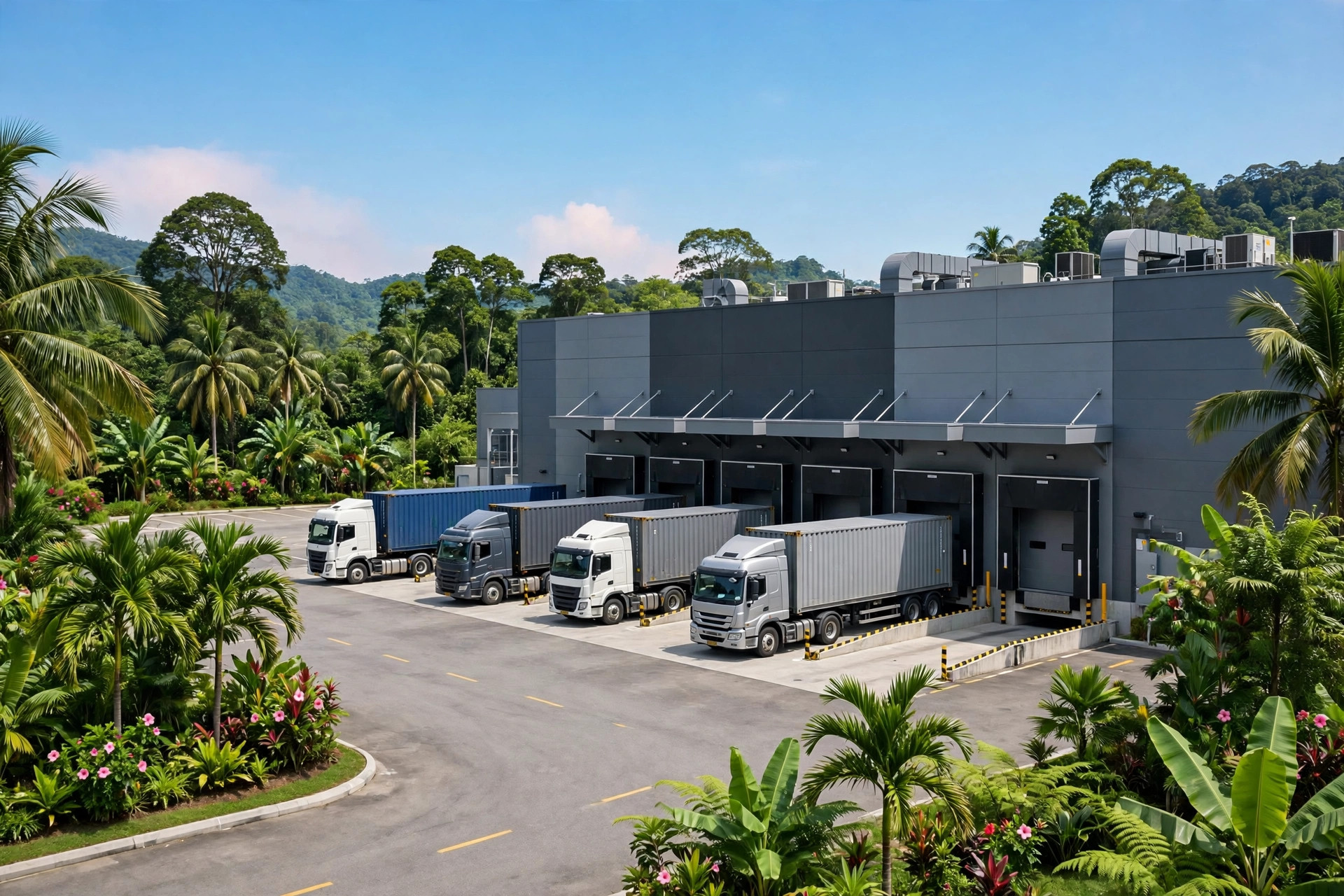
Cargo sits in a Johor warehouse; the customer is in Singapore, or the freight ships out of Singapore's port. Every order crosses the border once. The JS-SEZ is pushing digitized clearance and single-transhipment permits to smooth this (the 103° free zone was designed around exactly that), and the direction is right. But streamlined or not, it's still a border: documents, inspections, queues. One hiccup anywhere and you're hours — sometimes a day — late.
My test is simple: how time-sensitive is your freight?
- Time-sensitive, high-frequency small replenishments (hot SKUs restocking a Singapore warehouse daily): one extra border is one extra landmine. Don't add it if you can avoid it.
- Big, slow-moving, regional distribution (freight from Johor across Malaysia, even transshipping to Indonesia or Thailand): the border cost gets diluted, and Johor's rent advantage lands in full.
- Using Johor purely as "Singapore's back warehouse": safety stock in Johor, only fast-moving forward stock in Singapore. This is the smoothest model I've seen — expensive space holds only expensive freight (fast movers), cheap space holds cheap freight (slow safety stock).
And the counterintuitive call: the best "Singapore plus one" play isn't moving your Singapore warehouse to Johor — it's splitting it in two. A small fast warehouse in Singapore, a big staging warehouse in Johor. Move everything and you save rent but lose time; keep everything and you keep time but bleed rent. Split it. That's the trade-off done right.
The JS-SEZ free zone: what the FCZ is actually for
Inside the JS-SEZ sits the 103° Free Commercial Zone (FCZ) — 55 hectares at Sunway City Iskandar Puteri. When it opened in March 2026, the first two warehouses (1.5 million square feet) were fully leased on day one — DSV-level operators were already moving in. A third 750,000-square-foot building completes in early 2027, another million square feet in early 2028, with a masterplan above 6 million square feet.
Fully leased at opening tells you what? That "Singapore plus one" isn't a concept — it's paid-for square footage. The FCZ play: duties deferred inside the zone, ideal as a regional distribution hub. Freight comes in from China or Vietnam, sits in the FCZ untaxed, and clears only once the destination is set — Singapore, domestic Malaysia, transshipment to Indonesia. One inventory pool serving several countries, much lighter on cash flow.
But note the flip side: fully leased also means good space gets fought over, and rents will rise. Negotiating in 2026 vs 2028 may be two different prices. First movers eat; latecomers get the scraps — and in Johor right now, that's not a metaphor, it's the market.
Which freight belongs in Johor, in one paragraph
- Belongs: bulky goods, slow-moving safety stock, multi-country Southeast Asian distribution, price-sensitive freight.
- Doesn't: extremely time-sensitive small-parcel replenishment, anything living on Singapore same-day delivery.
- Best answer: small fast warehouse in Singapore plus big staging warehouse in Johor, run as a pair.
One last question for you: are you going for the 5% tax, or the one-third rent? Get that straight and the Johor math won't go wrong. Tax breaks are icing; rent is the cake — and icing should never be in your cost model.
By Lao Mi, Supply Chain Veteran (20 yrs)