Let me tell you something after fifteen years behind the wheel: the road doesn't scare me. What scares me is cargo that reaches the port and can't get out.
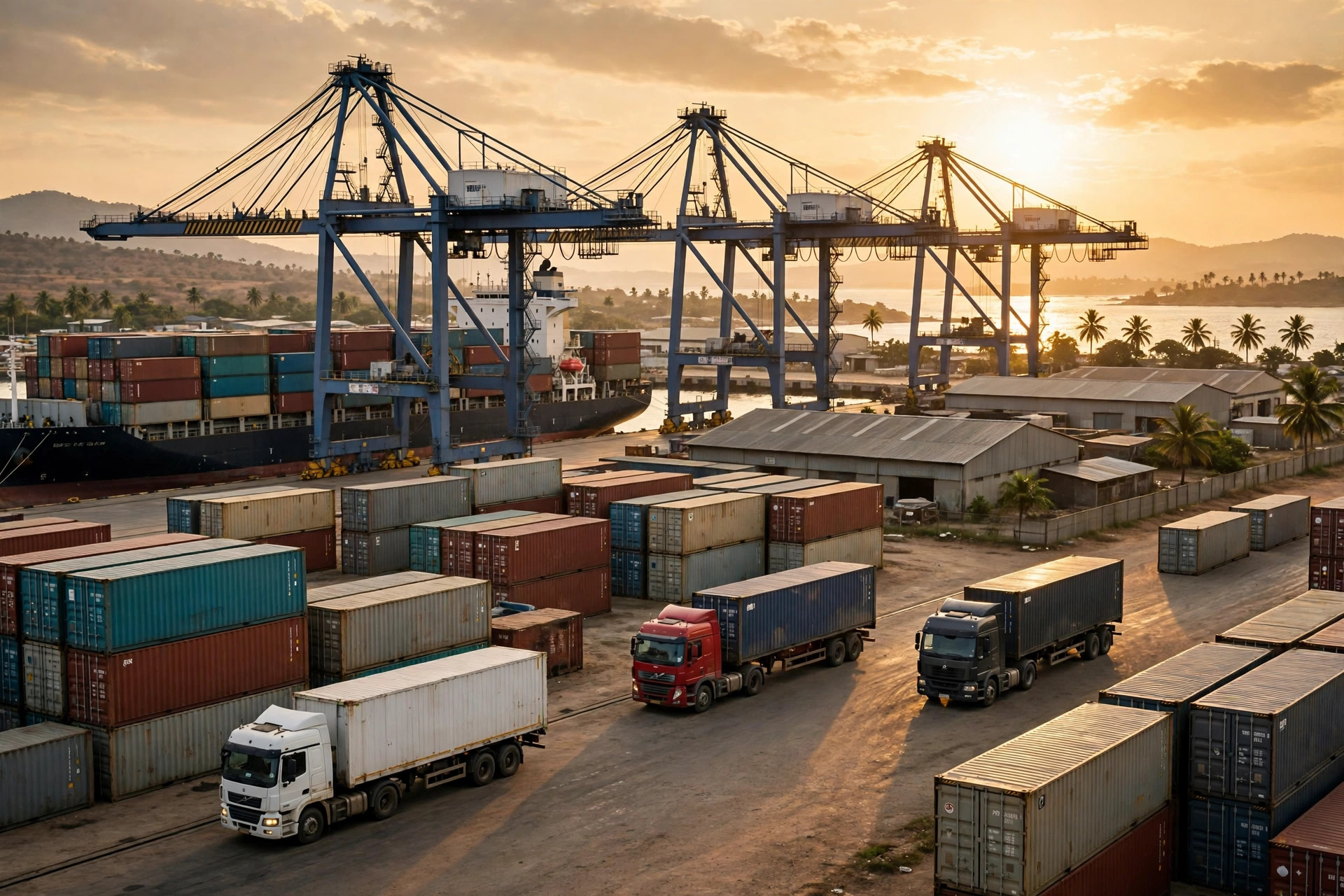
Abidjan port warehouse distribution logistics — here's a number from just this month to set the scene. Hapag-Lloyd's week 43 operations update, dated October 19, 2026: vessels waiting outside Abidjan averaged 4.5 days to berth. The unluckiest one waited 12 days. A container leaves China, spends over a month at sea, then sits another week at the gate. You can have the prettiest distribution plan in the world — it means nothing if the freight isn't in your hands.
First, the scale of this port, because it matters. The Abidjan Port Authority's own figures: 1,238,195 TEU handled in 2023, up 43.3% from 840,926 TEU in 2022. The second container terminal (TC2) went live in November 2022 and hit its millionth TEU by July 2024 — eighteen months. Thirty-four berths total. This is West Africa's leading maritime gateway, and everything heading north — Mali, Burkina Faso, Niger, three landlocked countries — comes through this door.
So if you do West African distribution, you don't get around Abidjan. And the warehousing math here follows different rules than anywhere else you've worked.
A story from the road: the cargo sits, the money bleeds
A buddy of mine, Old Chen, ships building materials. Last year he had a box bound for Burkina Faso and told me, "Shifu, the cargo's landed, I've got the warehouse sorted right by the port — truck rolls in, we load, we go."
Here's what happened instead. The vessel waited days offshore. After berthing, the box joined the pickup queue. The shipping line's free days ticked away, and then demurrage started stacking up, day by day. Chen's port-side warehouse was rented, his crew was hired, his trucks were idling at the gate — and the container was still sitting in the port yard, untouched.
This is the first thing Abidjan teaches you: at this port, "fast" doesn't depend on your warehouse. It depends on whether you can get your cargo out. Four and a half days of berthing delay, plus pickup queues, plus customs — your freight can easily spend two weeks inside the port perimeter. You're paying rent, you're paying labor, and the goods aren't in your hands. That math belongs in the contract, before you sign anything.
Abidjan port distribution, option by option: port-side, bonded, or inland
Once cargo lands at Abidjan, there are generally three plays. Let me walk you through each:
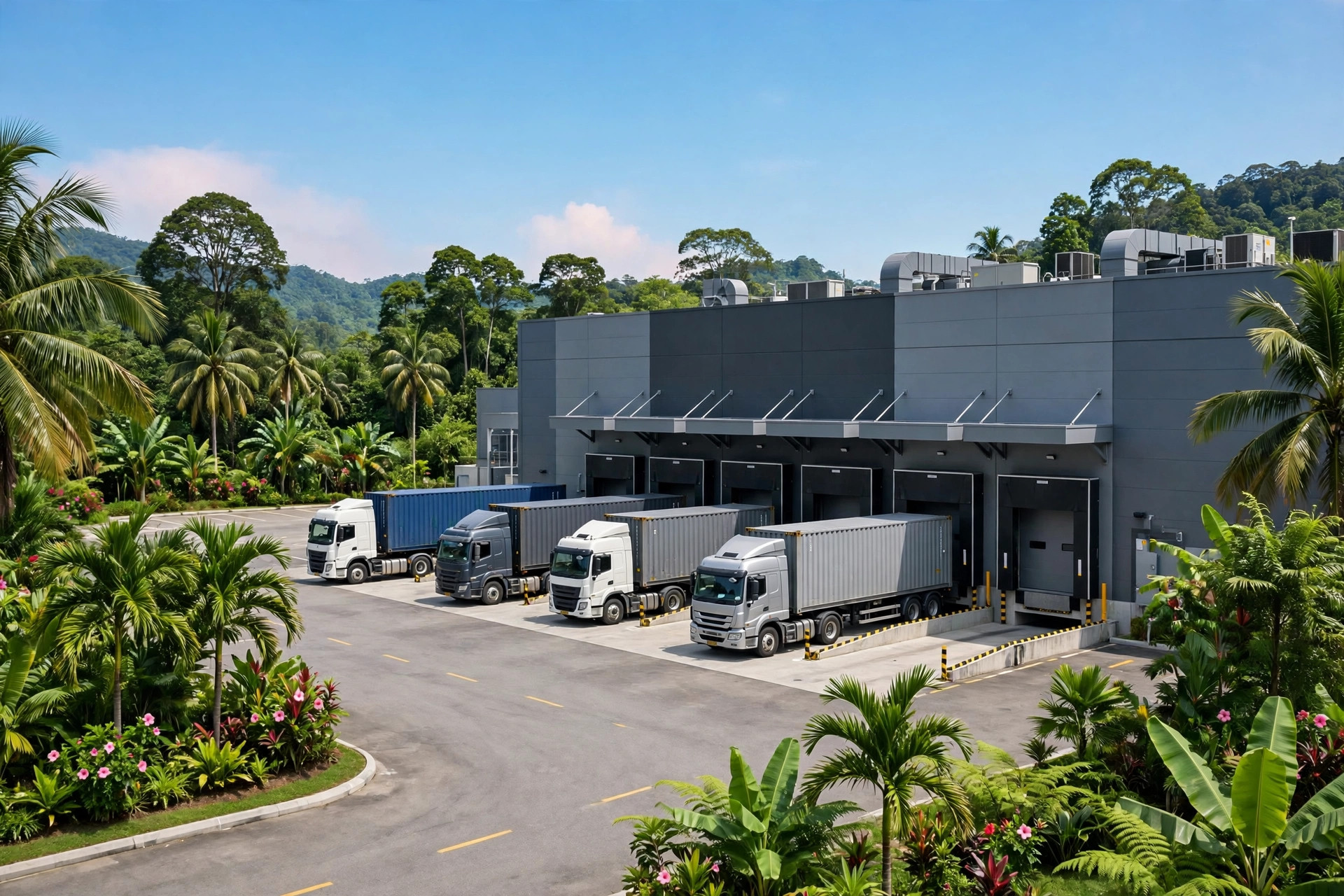
Port-adjacent warehouse — closest to the quay, a few kilometers from box pickup. Best for high-velocity, time-sensitive freight. The price is direct: highest rent, and when vessels bunch up, your warehouse becomes an involuntary buffer — nothing comes in, nothing goes out, and you eat it from both sides.
Bonded warehouse — the port authority's bonded zone covers 651,000 square meters, with 19 bonded warehouses totaling 106,200 square meters. The big win: duties are deferred. Cargo sits, clears in batches, and ships inland in batches. For transshipment and multi-country distribution, this is close to standard equipment. The cost is an extra layer of paperwork — and good bonded space gets fought over in peak season just like everything else.
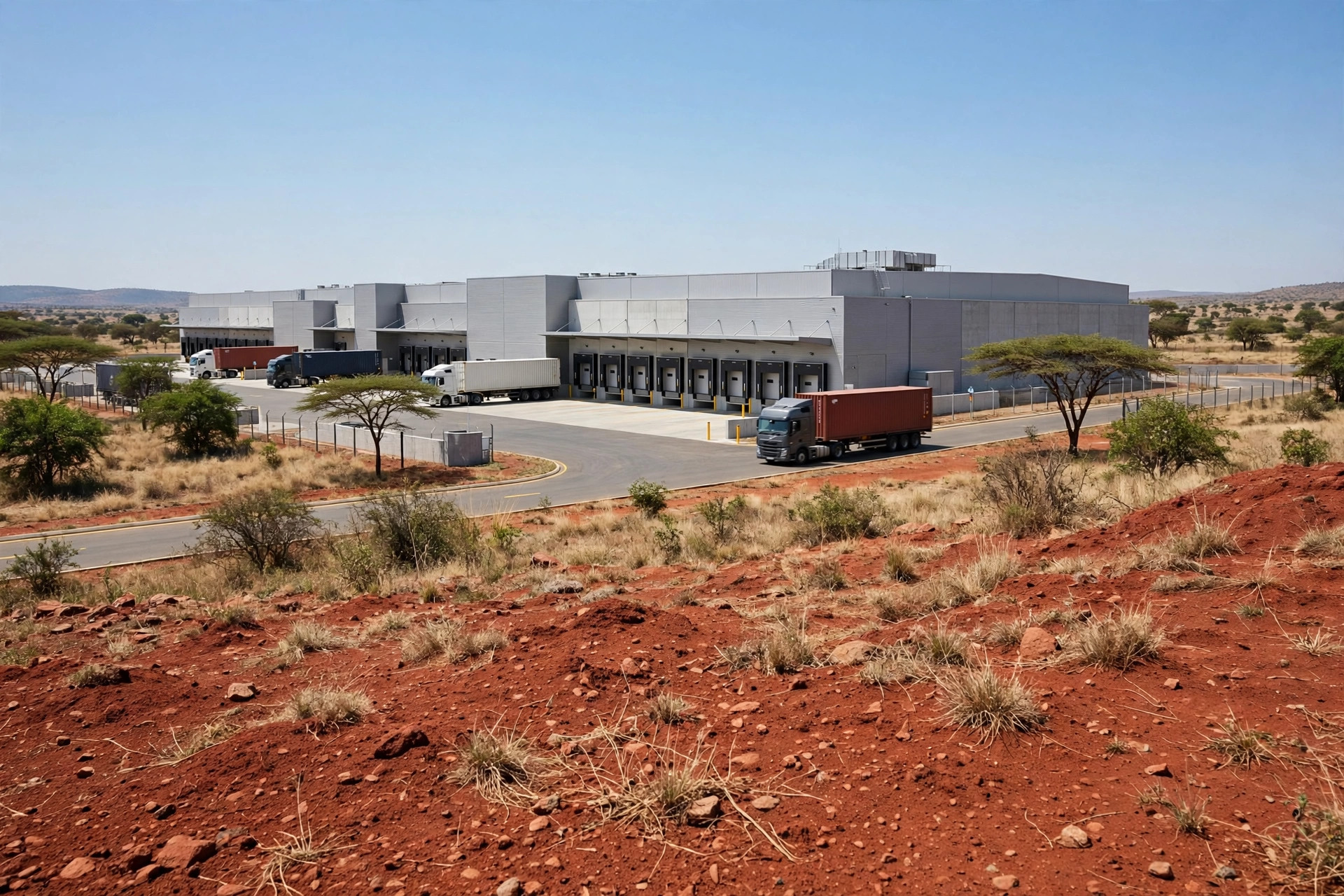
Off-port / inland staging — further from the quay, cheapest rent, right for slow-moving safety stock. But you own the drayage from port to warehouse, and customs has to be cleared at the port before anything moves. This route bets on your planning ability: plan well, save serious money; plan badly, the cargo is on the road and your customer is on the phone.
Here's the comparison, plain and simple:
| Port-adjacent | Bonded | Off-port / inland | |
|---|---|---|---|
| Distance to quay | Closest | Close (in/near port zone) | Far |
| Rent level | Highest | Mid-to-high | Lowest |
| Duties | Paid on arrival | Deferred, paid in batches | Paid on arrival |
| Best for | High-velocity, time-sensitive | Transshipment, multi-batch distribution | Safety stock, slow movers |
| Biggest trap | Becomes a buffer when vessels queue | Extra paperwork, peak-season space fights | Drayage and planning fall apart |
There's no universal answer — it depends on your cargo and your rhythm. But one rule is iron: before choosing a warehouse, get three numbers from your forwarder in writing — free days, the demurrage rate after that, and average customs clearance time. Without those three, any rent negotiation is theater.
The hidden bill: demurrage and customs
Most people costing West African distribution count ocean freight plus rent plus trucking. They're missing the two items that hurt most:
First, demurrage. Free days from the line are only a handful. In a month like October 2026, with 4.5-day average berthing delays, half your free time can be gone before the vessel even berths. After that, storage charges run daily and climb. Do the math: a box sitting in the port yard an extra ten days can cost you more than a month of warehouse rent. It won't appear as a line item on your forwarder's quote — but you'll pay it.
Second, customs timing. Abidjan customs is fine when your documents are complete, and a nightmare when one paper is missing. I've watched shippers stall for a week over a single stamp — bill of lading, certificate of origin, packing list, one missing chop and the box doesn't move. My advice is unglamorous but it works: the day the vessel leaves the Chinese load port, send the full document set to your Abidjan agent for pre-check. Don't wait until arrival. By arrival, it's too late.
Here's the counterintuitive one: at a port like Abidjan, getting your customs paperwork ready one day earlier is worth more than a 10% cheaper warehouse lease. Rent is the visible bill. Demurrage and delays are the invisible one. The invisible bill always eats more.
The inland corridor: running freight to Mali and Burkina Faso
North of Abidjan lies the inland corridor. Mali, Burkina Faso, Niger — no coastline, everything imported through gateways like Abidjan. The port authority says it plainly: this port exists to serve the landlocked hinterland.
Trucks do this leg. Three things I've learned:
First, the border is a second port. Crossing from Côte d'Ivoire into Burkina Faso or Mali means border inspection, and incomplete documents queue up exactly like vessels do. Advance paperwork is the only fix — same as the seaside.
Second, don't plan the inland leg like a domestic run. Road conditions, checkpoints, border queues — more variables than you'd think. Build in redundancy and make it generous. I tell shippers: if you think five days, promise the customer eight. Early arrival is a pleasant surprise; late arrival is an incident.
Third, place your staging point by the cargo's final destination. If freight splits across several landlocked countries, a bonded warehouse at Abidjan as the master staging point makes sense: no duties paid upfront, clear and dispatch once the destination is fixed, much easier on cash flow. If nearly everything is consumed inside Côte d'Ivoire, skip the bonded complexity and stage off-port.
Practical advice for anyone running West African distribution
- Get the three numbers before signing a lease: free days, demurrage rate, average clearance time. From the forwarder, in writing.
- Pre-clear documents when the vessel sails, not when it arrives. One missing stamp can cost you a week.
- Plan at least two weeks ahead in peak season. October 2026: 4.5 days at Abidjan, 5.8 days average at Tema — the whole West African coast is congested. "We'll figure it out on arrival" is not a plan.
- Look at bonded warehousing first if you do transshipment or multi-country distribution. The duty cash flow it frees up matters more than any rent differential.
- Leave real slack on the inland leg. Borders, checkpoints, road conditions — any one of them can cost you two days.
And an old driver's saying to close: on the West African run, you don't win on the cheapest rent. You win by delivering when you promised. Whatever the cheap lease saved you, one demurrage overrun gives back — plus your reputation on top. Count the whole bill, not just the visible one.
By Shifu Zhao, Trucking Veteran (15 yrs)