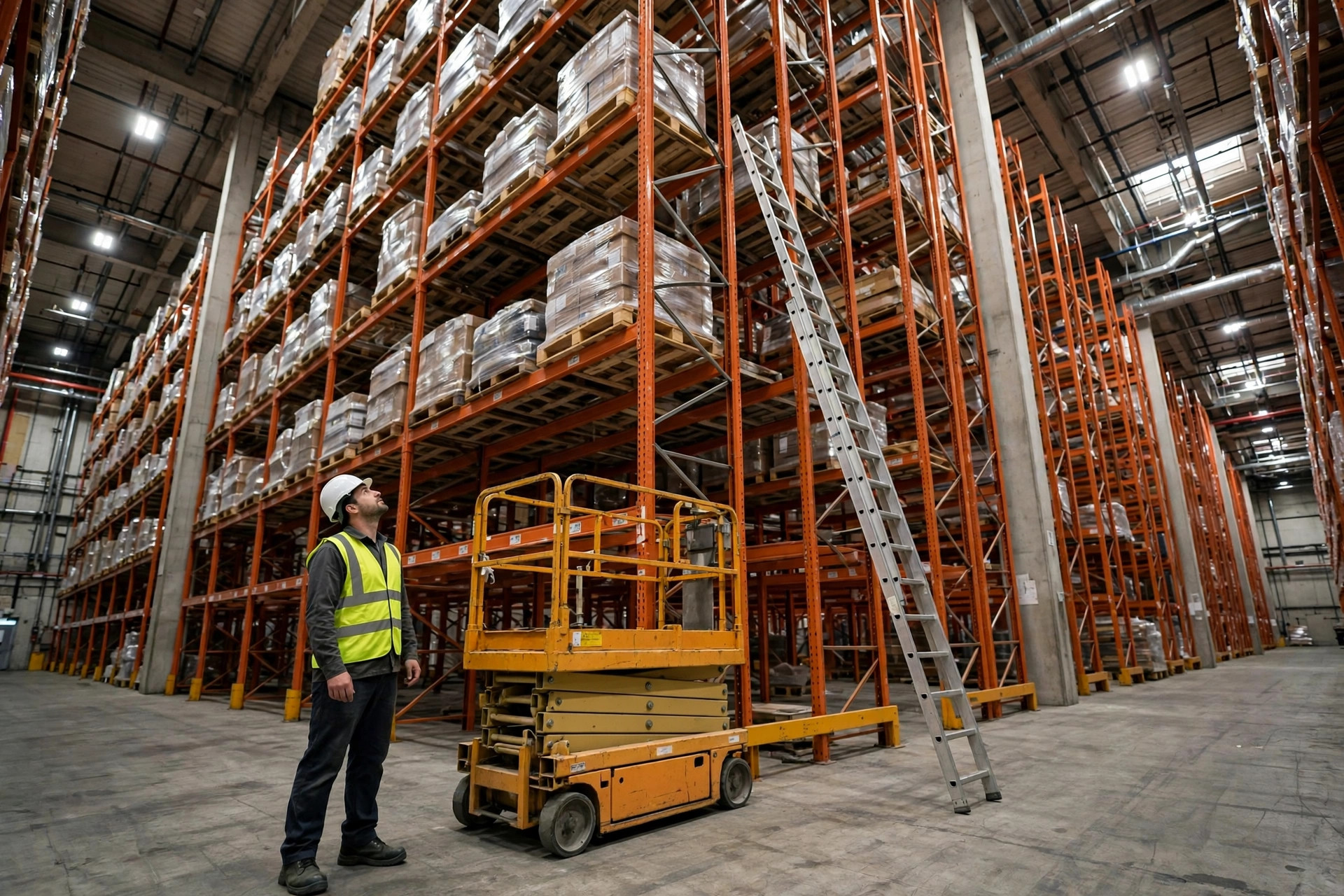
Every count season, our little warehouse has a standing tradition: renting a scissor lift.
Not because we don't want to own one — we genuinely can't afford it. A used lift that reaches 10 meters runs twenty, thirty grand. We small warehouses can't burn money like that. So four times a year, we hand the rental company its cut, and get two guys with wrecked backs in return. That was life for three years, until this year, when I decided to try a different way of living — sending a drone up instead of my crew.
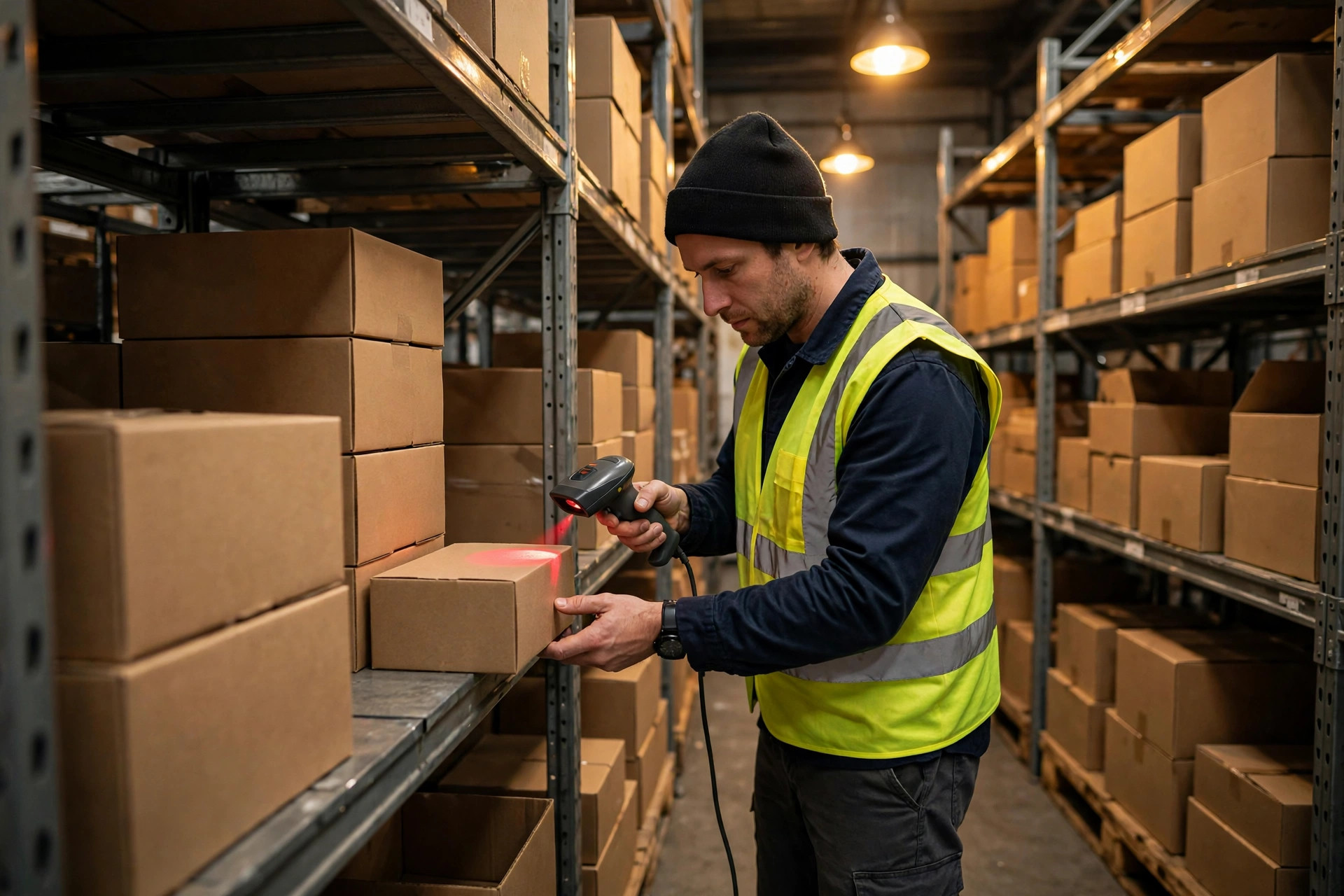
Take our September 2025 quarterly count. Six levels of high-bay racking, the top level nearly 10 meters off the floor, around 1,200 high-bay locations. Two days of lift rental: over 700 bucks. Two of my guys took turns going up — one holding the scanner over his head, the other steadying the lift, moving it along, writing things down. Three full days. Thirty-seven variances. When we rechecked, more than twenty were "couldn't see it, wrote it down wrong" — from 10 meters away, with a barcode glaring back at you, when the scanner beeps, was that A-05-06 or A-06-05? Nobody would bet on it. After the count, two sore backs for three days, and one sore wallet for three days — mine.
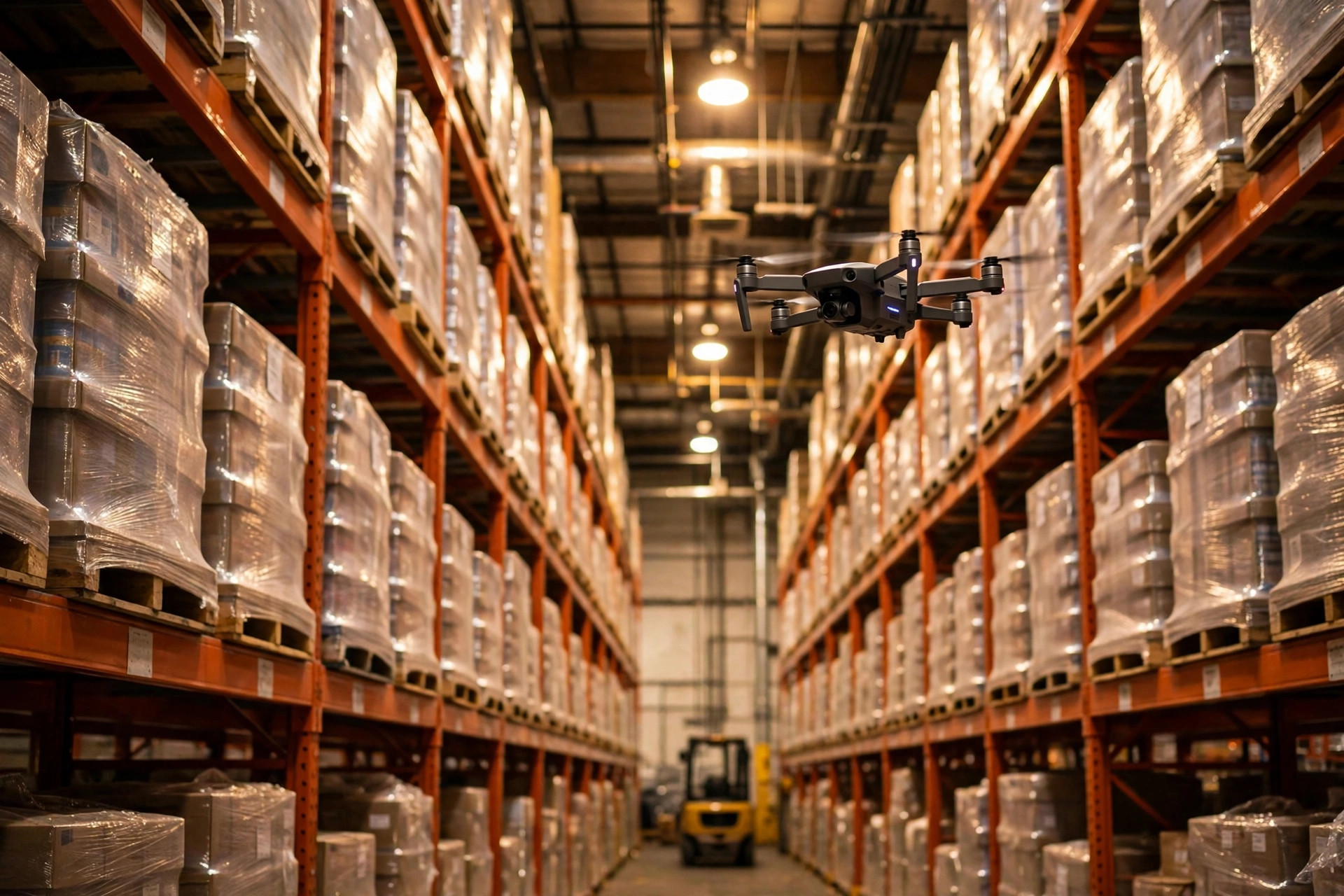
The turning point came in March 2026. Old Zhang next door, who does auto parts, knows a guy in drone inspection. He sweet-talked him into coming over "for fun." One quadcopter with downward visual positioning — no GPS indoors, this is what keeps it from drifting. Half a day: 900 high-bay locations flown. In well-lit aisles, barcode read rates above 95%; in the dark corners, around 85%. The variance report was out that same evening. Zhang treated his friend to barbecue. Total cost: one dinner. I was jealous.
The drone flew a lap: genuinely great, but three traps first
Bottom line up front: it's really fast; accuracy depends on conditions. Nine hundred high-bay locations take two to three days with a lift and crew; the drone did it in half a day. But three traps, each capable of wasting the whole flight:
Trap one: indoor positioning drifts. Outdoors you have GPS; indoors you don't. It's all downward visual positioning plus algorithms holding it steady. Dim light in the aisle, a reflective floor, and the drone starts sleepwalking, drifting sideways. On Zhang's run, deep in the last aisle, the thing suddenly leaned toward the racking — his friend grabbed the controller just in time. Someone has to stand there and watch it fly. Don't treat it like a self-driving car.
Trap two: batteries die fast. One battery gives you twenty-some minutes, tops. Nine hundred locations means four to six batteries in rotation. Charging can't keep up with flying — two rounds and you're grounded. Zhang's friend brought five batteries plus a car charger and barely kept the streak alive. Show up with two batteries and you'll spend half the day staring at a charger.
Trap three: light decides everything. Daylight plus every aisle light on: 95%+ read rates. Night shift, or one dead bulb at the end of an aisle: good luck hitting 85%. The drone reads barcodes with a camera — bad light, and even the smartest AI is useless. Fix the dead bulbs before count day. It costs almost nothing and beats any algorithm.
Run the numbers: lift rental vs. drone, per year
Here are the numbers. Twenty-two bucks an hour is our warehouse's actual wage; the service quote is what Zhang paid — rates vary by market, get your own quote before you fly:
| Scissor lift + crew | Drone service visit | |
|---|---|---|
| Equipment/service | Lift about $350/day x 2 days = $700 | Local provider flies once, about $600 including variance report |
| Labor | 2 people x 2 days x 8 hrs x $22/hr, about $700 | 1 person assisting half a day, about $90 |
| Per count | about $1,400 | about $700 |
| Four counts/year | about $5,600 | about $2,800 |
Half the cost per year — $2,800 saved. Pocket change for a big DC; for us, that's two months of electricity and internet. And the savings don't even sting — nobody goes up in the air anymore, which is a safety win too. One fall from height costs a lot more than $2,800.
Quick self-check: is your warehouse a fit?
Don't copy Zhang just because it looked cool. Drones aren't magic. Three questions — the more "yes" answers, the better the fit:
One: do you have four-plus levels of high bay, more than about 500 high-bay locations? Below that, a guy on a ladder might be faster and cheaper.
Two: is your barcode system complete? Every pallet, every location scannable? If your labels are a mess, fix the labels before you talk drones — otherwise it flies up there and stares blankly.
Three: do you count often? Once a year — just rent the lift and get it over with. Quarterly or monthly — that's when the drone pays off.
We checked all three boxes, so we jumped in. If you check none, save your money for something sharper.
The counterintuitive part: speed isn't the real prize
Here's the counterintuitive bit: the drone's biggest value isn't speed. Speed is a bonus.
The real prize is that it makes you count the high bays you used to avoid. Honestly, our high bays used to get one serious count a year, tops. Rental's expensive, the work's exhausting, and it's risky — rows five and six basically lived in out-of-sight-out-of-mind territory. Variances piled up there, month after month, until year-end reconciliation showed the books and the floor miles apart. And those gaps are real money.
With the drone, high-bay counting went from "one painful count a year" to "fly whenever we feel like it." Zhang flies monthly now. He told me his high-bay variance rate dropped from around 3% to under 1%. Variances are like cavities — the earlier you catch them, the cheaper the fix. Find one six months late and nobody can save it. That invisible ledger is worth way more than the $2,800.
One trade-off to be clear about: the drone doesn't replace people — it replaces the "working at height" part. Ground-level locations, levels one and two: a person with a scanner walks it faster and more accurately. Don't fly the whole building just to show off. The money you'd spend flying the low bays buys the crew a much better lunch.
A few street-smart tips for fellow small warehouses: one, skip the big vendors' subscription plans — tens of thousands a year, we can't burn that. Find a local drone service, pay per visit, a few hundred bucks, try before you buy. Two, fly only the high bays; let people do the low ones — everyone does what they're good at. Three, wipe the barcodes and straighten the crooked ones before the flight; read rates jump noticeably, and it costs nothing. Four, fly in daylight with all the lights on; don't fight the lighting.
Small warehouses have their own way of surviving. The big guys play full automation; we play small money, big results — high bays we finally dare to count, fewer variances, money saved, backs unbroken. That's a deal I'll take any day.
By Xiao Ma, Small Warehouse Owner