Here's my verdict up front: whether an influencer campaign blows up has less to do with the influencer than with your warehouse.
I've watched too many sellers pour all their money and energy into finding creators, negotiating commissions, and staring at dashboards — while samples get tossed aside as an afterthought. Samples mixed in with regular inventory. Sample shipments arranged over a chat message. Then the creator's video actually goes viral, and the warehouse becomes the first thing to break. Let's be blunt: influencer orders are pulse-shaped. Dozens of orders a day normally, tens of thousands when something pops. If your sample operation still runs like a garage, the day you go viral is the day everything falls apart.
The day it blew up, the warehouse broke first
In March 2025 I worked with a home-fragrance seller running a small warehouse outside Los Angeles, a team of about a dozen people. They had sent roughly 200 samples to more than 40 creators — about $12 per kit in materials and shipping, so well over two thousand dollars sunk into samples. In early April, a mid-tier creator's unboxing video exploded: 4 million views in three days, and more than 8,000 orders flooded the store in 72 hours.
The traffic arrived. The warehouse collapsed. Three things hit at once.
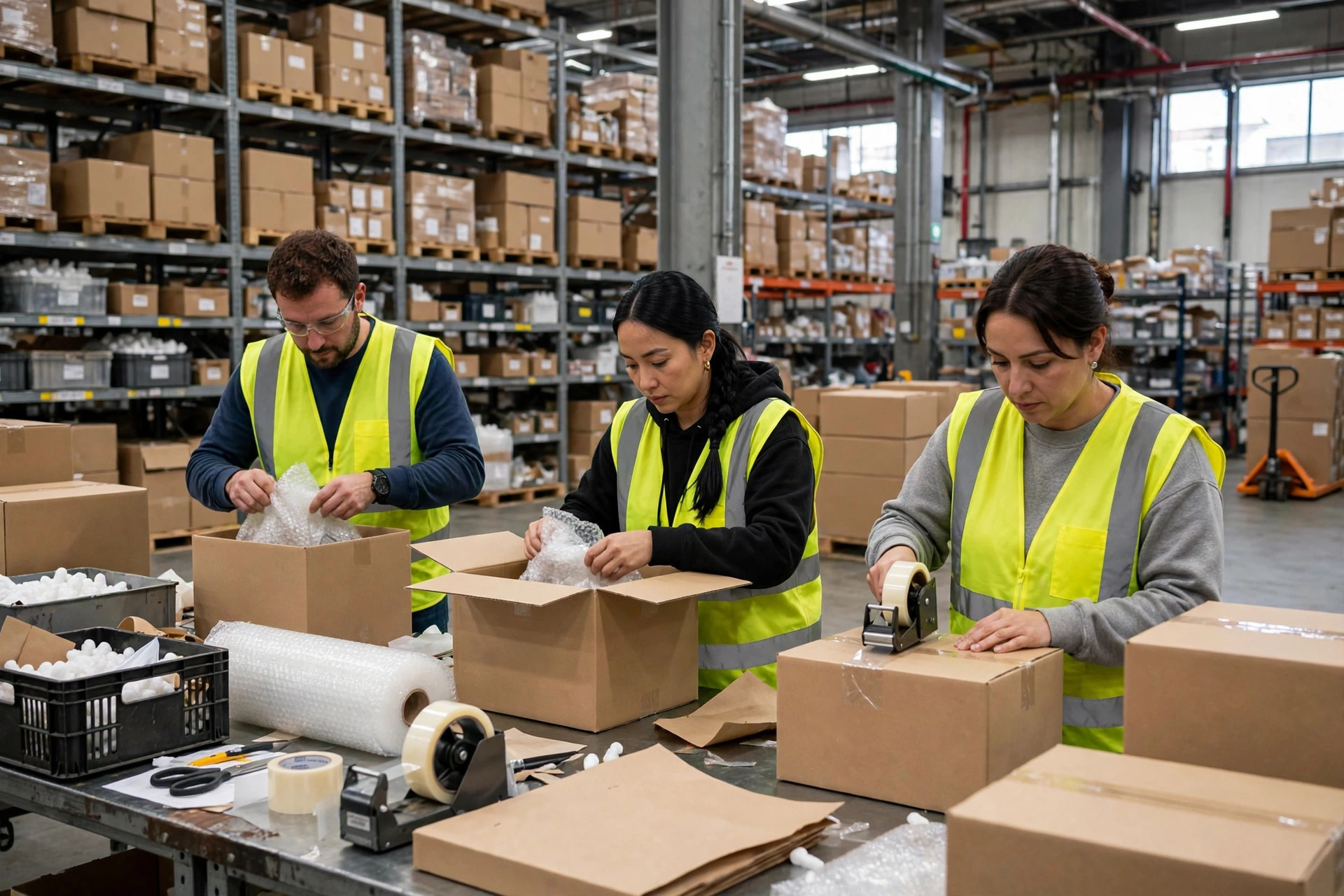
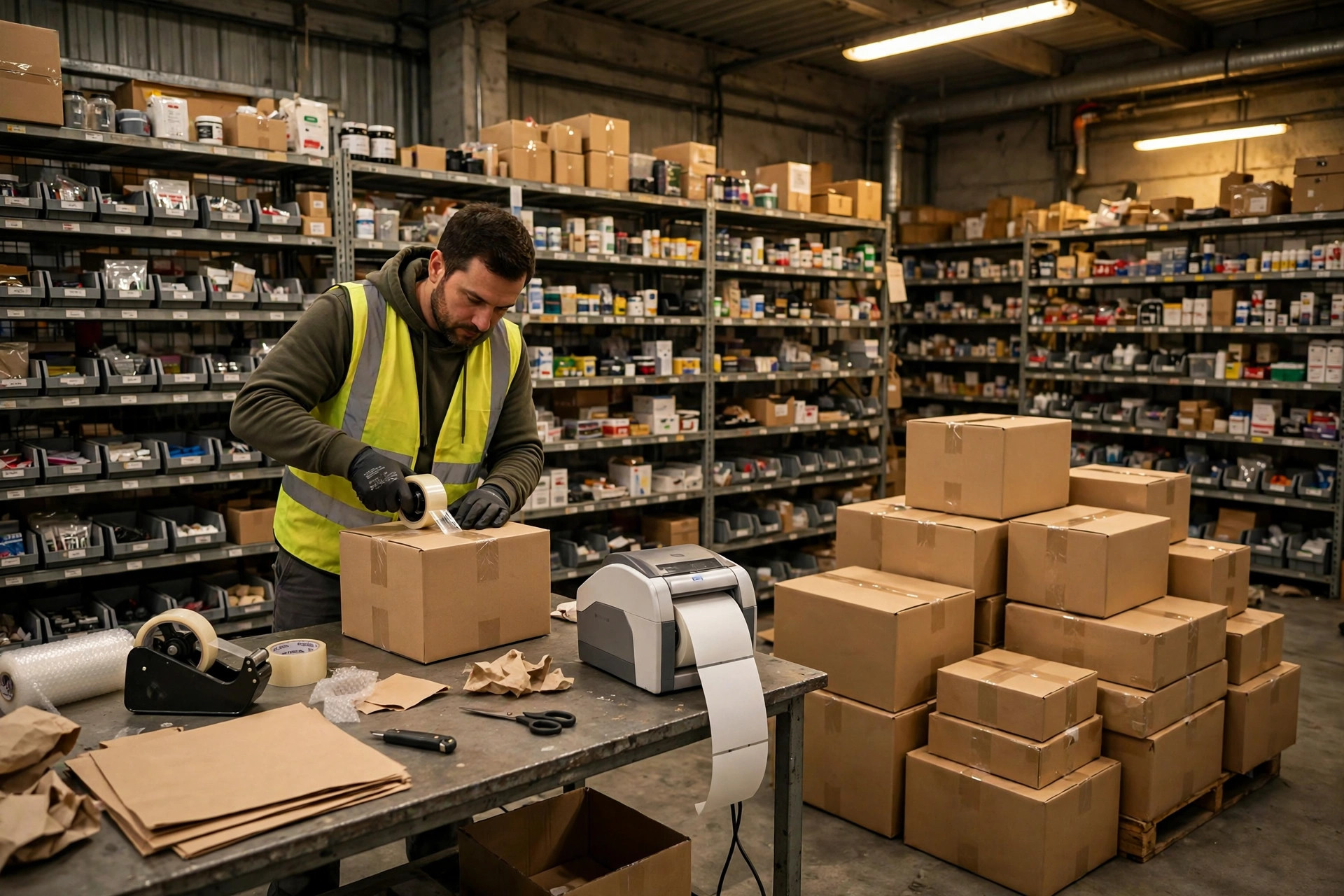
First, samples and regular stock shared the same racking. When operations decided on the fly to add creator-exclusive packaging plus a free gift, pickers spent two hours digging through shelves to assemble the first batch. Ship times slipped a full tier that week.
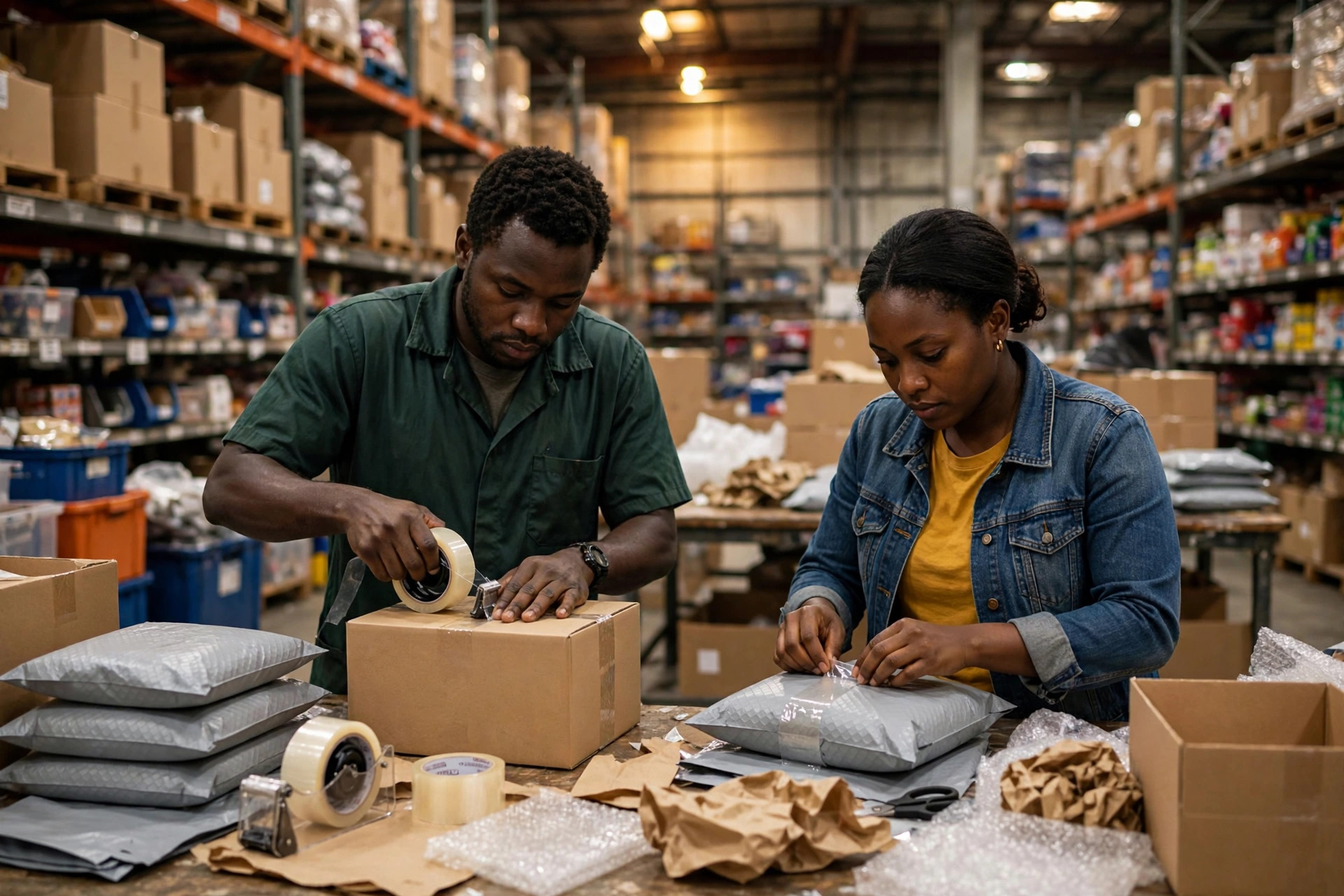
Second, the sample version had never been set up as its own SKU in the system. Fulfillment relied on handwritten notes to tell versions apart. More than 300 orders shipped the wrong version — the video showed the upgraded formula, customers received the old one — and the return rate spiked to 18%.
Third, safety stock was a guess. The bestselling scent sold out on day two of the spike. Air-freight replenishment from overseas took 9 days. The comment section filled with "ordered but nothing shipped," and the listing's ranking took two weeks to recover.
When the seller ran the numbers afterward, roughly a third of that traffic wave's gross margin had been eaten by returns, reshipments, and bad reviews. Traffic is borrowed; fulfillment capacity is yours. That's a line I've repeated many times since.
Two sides of the same coin: is a sample warehouse a cost or an option?
Everything has two sides. On one side, a sample warehouse costs real money: a dedicated zone, separate SKUs, a separate process. Small teams see it as big-company fussiness and cut it first. On the other side, influencer seeding is essentially buying a lottery ticket that might go viral — and the sample warehouse is the redemption window for that ticket. If the window is jammed, winning does you no good.
Here's the contrarian take: a sample warehouse is not a cost center. It's an option. You spend small money to buy delivery capability at the exact moment virality hits. Overstock samples and you're sitting on a few thousand dollars of inventory; understock and a viral moment becomes a five-figure disaster. The math only leans one way — and here's the twist most people miss: small sellers need this more than big ones. A big seller can reroute across multiple warehouses when one chokes. A small seller has one warehouse. If it breaks, everything breaks.
Breaking it down: three sample-management moves you can start tonight
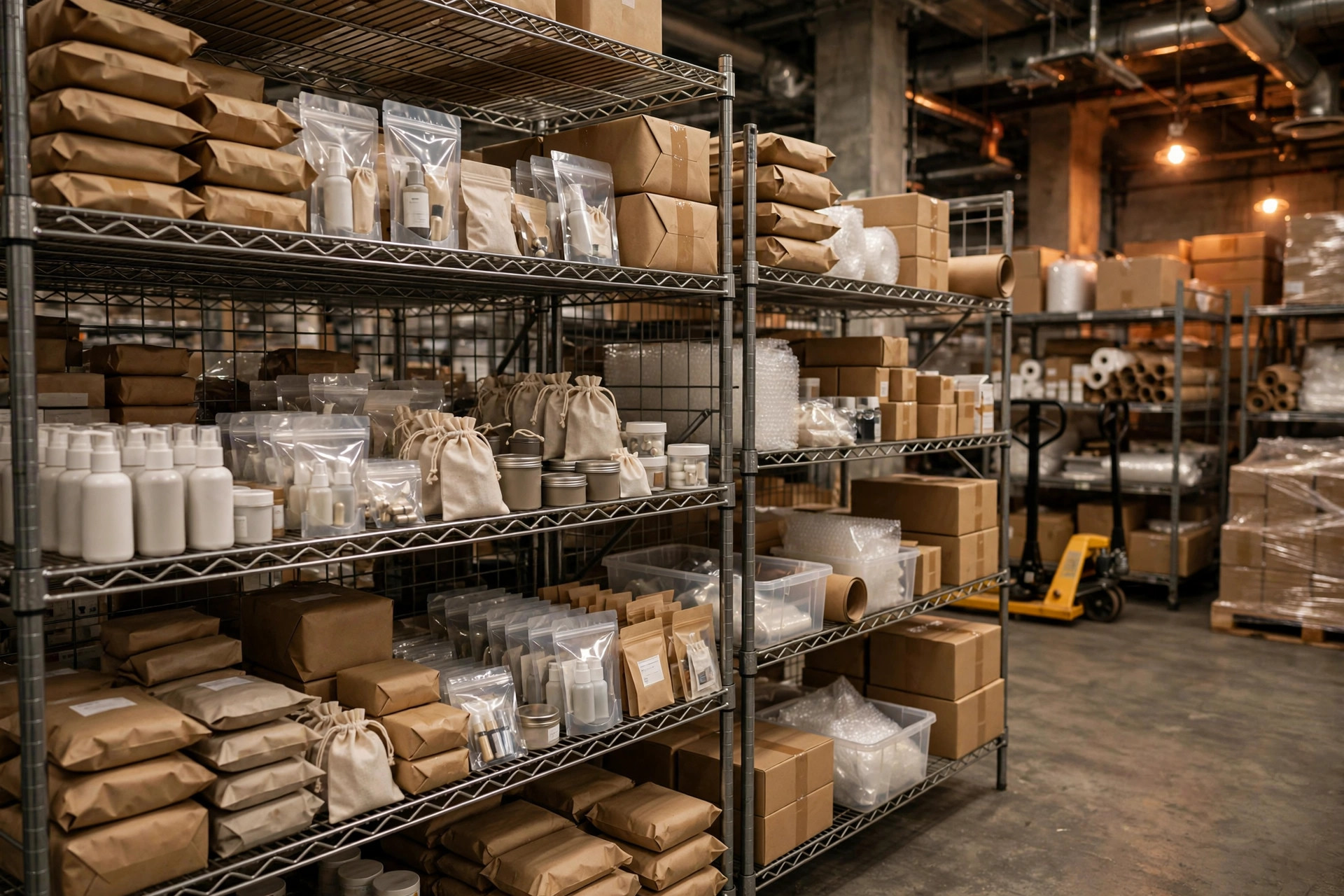
First, SKU discipline: samples get their own SKUs and their own physical zone.
Every sample needs an independent SKU in the system — if the regular product is SKU-A, the sample version is SKU-A-SMP — with separate inbound, putaway, and outbound flows. Physically, carve out a sample zone, even if it's just two racks. Why? Because a sample has a different identity from sellable stock: it ships free, the packaging may differ, and the version is often different — creators usually get pre-production runs first. Mixing them is exactly what caused those 300 mis-shipments above. The cost of separation? A few dozen square feet and one SKU setup session. You can do that math yourself.
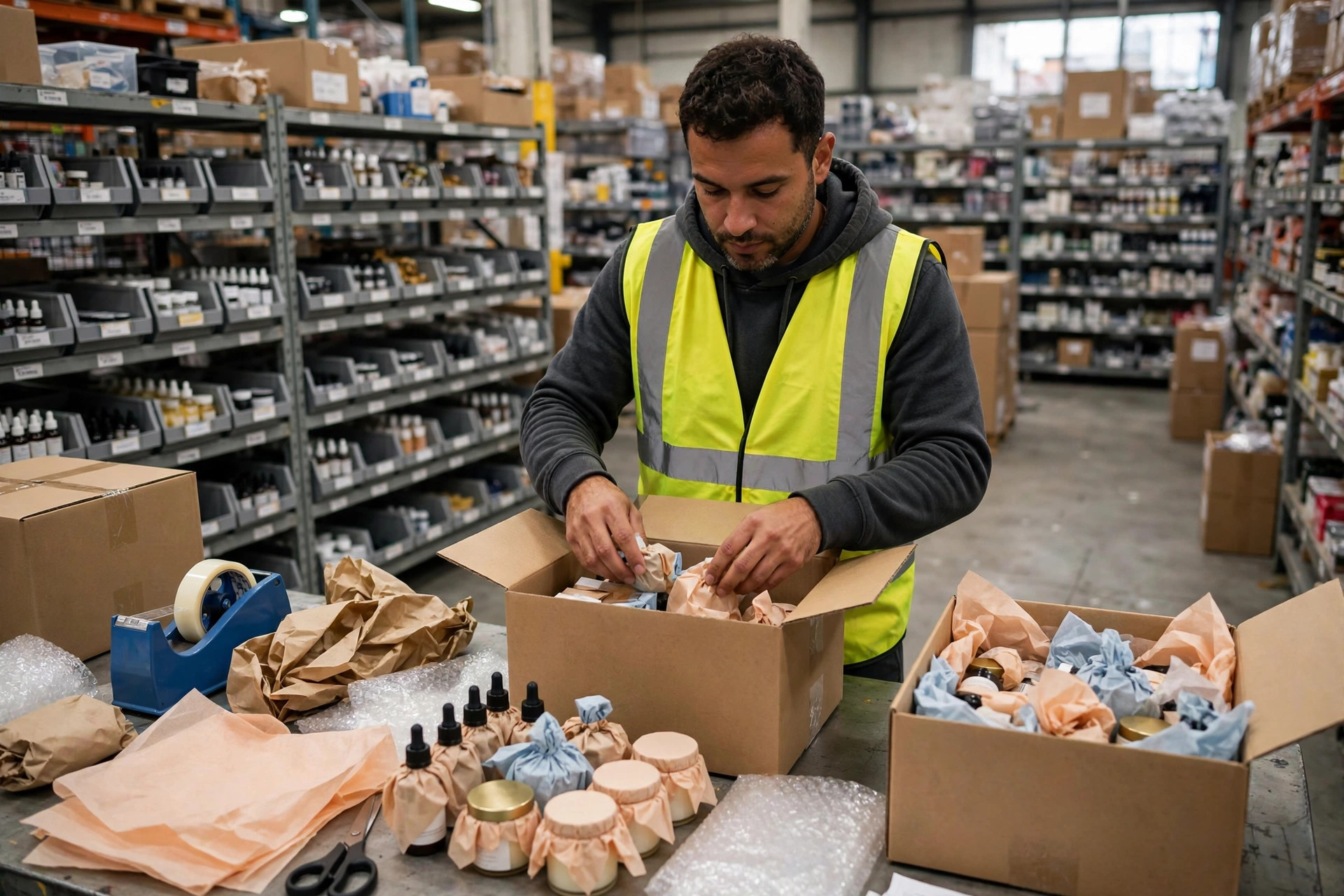
Second, standardize the seeding workflow: request, approve, ship, track. All four steps, no skipping.
When a creator needs samples, marketing files a request: creator profile, which samples, how many kits, target ship date. A manager approves — and sanity-checks whether the creator's tier justifies the ask. Top-tier creators can get more; mid-tier creators get the standard kit. The warehouse picks and ships against the request, and the tracking number goes back into the creator tracker within 24 hours. On day 7 and day 14 after shipping, marketing follows up: did it arrive, is there a posting schedule? Sounds bureaucratic? Without a process, sample seeding is a black hole — kits vanish, nobody knows who got what, and post-campaign reviews can't even answer "which creator received which batch." The process costs ten extra minutes of form-filling per shipment. The return is that every sample dollar is recorded and reviewable.
Third, write the viral-spike playbook now — not in the middle of the spike.
The playbook needs at least four lines. One: standing safety stock in the sample warehouse sized for "one creator going viral" — say three days of spike volume, 2,000 to 3,000 units of core SKUs, roughly 3 to 5 times your historical peak daily volume. A rough number beats no number. Two: creator-exclusive packaging and gift materials staged in advance, so you can switch packaging the same day without hunting for a supplier. Three: an emergency flex channel — pre-negotiated surge picking labor and carrier capacity with your 3PL or a nearby warehouse. It can cost more; what matters is that you can actually call it in. Four: a stock-out circuit breaker. When a SKU drops below a set level, creator-link promotion pauses automatically, so you never get the "orders in, nothing to ship" review avalanche. A playbook sits unused 90% of the time — and pays for itself the one time you need it.
I've seen the flip side done right, too. In November 2024, a Shenzhen-based beauty-tools seller shipping from a California 3PL had set up sample SKUs and a spike playbook the previous quarter. When a creator's video drove 5,000 orders in a weekend, the 3PL switched to pre-staged creator packaging on day one and flexed weekend labor it had pre-booked. The mis-ship rate stayed under 1%, and the listing held its ranking through the spike. Same lottery ticket, different redemption window.
And the cautionary tale: in September 2024, a pet-supplies seller stored samples mixed with regular stock. During a spike, pickers shipped more than 500 sample-version units as regular orders, and not a single order got the promised creator gift. The creator got hammered in the comments — "where's the gift you promised?" — and killed the partnership. Sample management feels unimportant until the day it becomes the only thing that matters.
Running the numbers
| Practice | Sample-warehouse model | Mixed-storage model |
|---|---|---|
| Sample SKU | Independent SKU, fully traceable | No separate code, manual notes |
| Physical storage | Dedicated sample zone | Mixed with sellable stock |
| Seeding workflow | Request-approve-ship-track loop | Chat messages, no records |
| Spike response | Playbook: switch packaging, flex labor | Scramble, high mis-ship rate |
| Cost of one viral spike | Contained | Returns + bad reviews + reships, easily five figures |
A 2,000-square-foot small warehouse giving up 100 square feet to samples pays a few hundred dollars a year in extra rent; SKU setup and process design cost a few days of work, once. Compare that with one unhandled viral spike: mis-ship returns, review damage, air-freight replenishment — easily thousands to tens of thousands of dollars. The ROI of a sample warehouse isn't measured in dollars saved. It's measured in disasters avoided. That's the option logic.
One last question before your next creator campaign: if you woke up tomorrow to 5,000 extra orders, could your warehouse handle it? If not, the sample warehouse is the first thing you should build tonight.
By Lao Mi, Supply Chain Veteran (20 yrs)