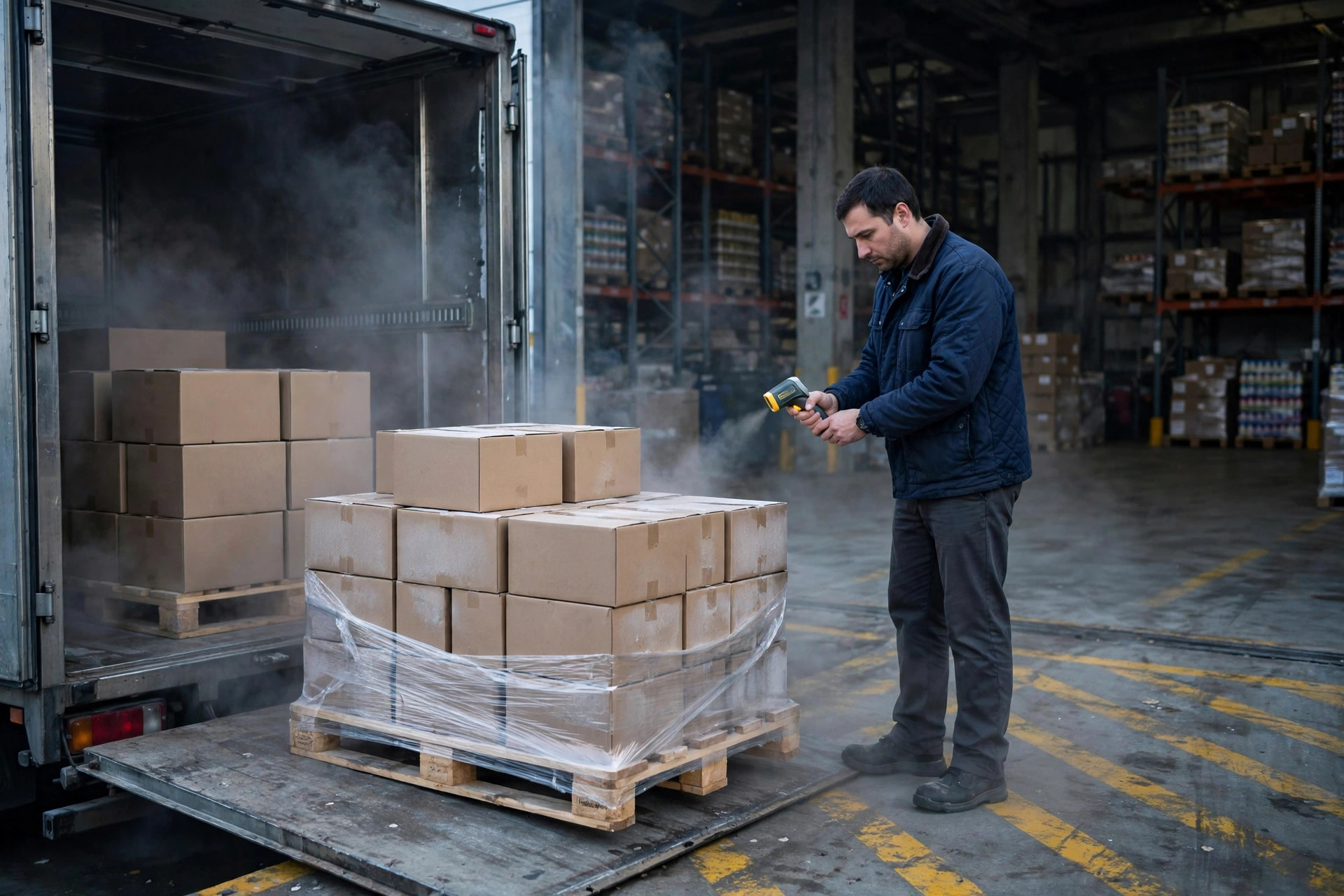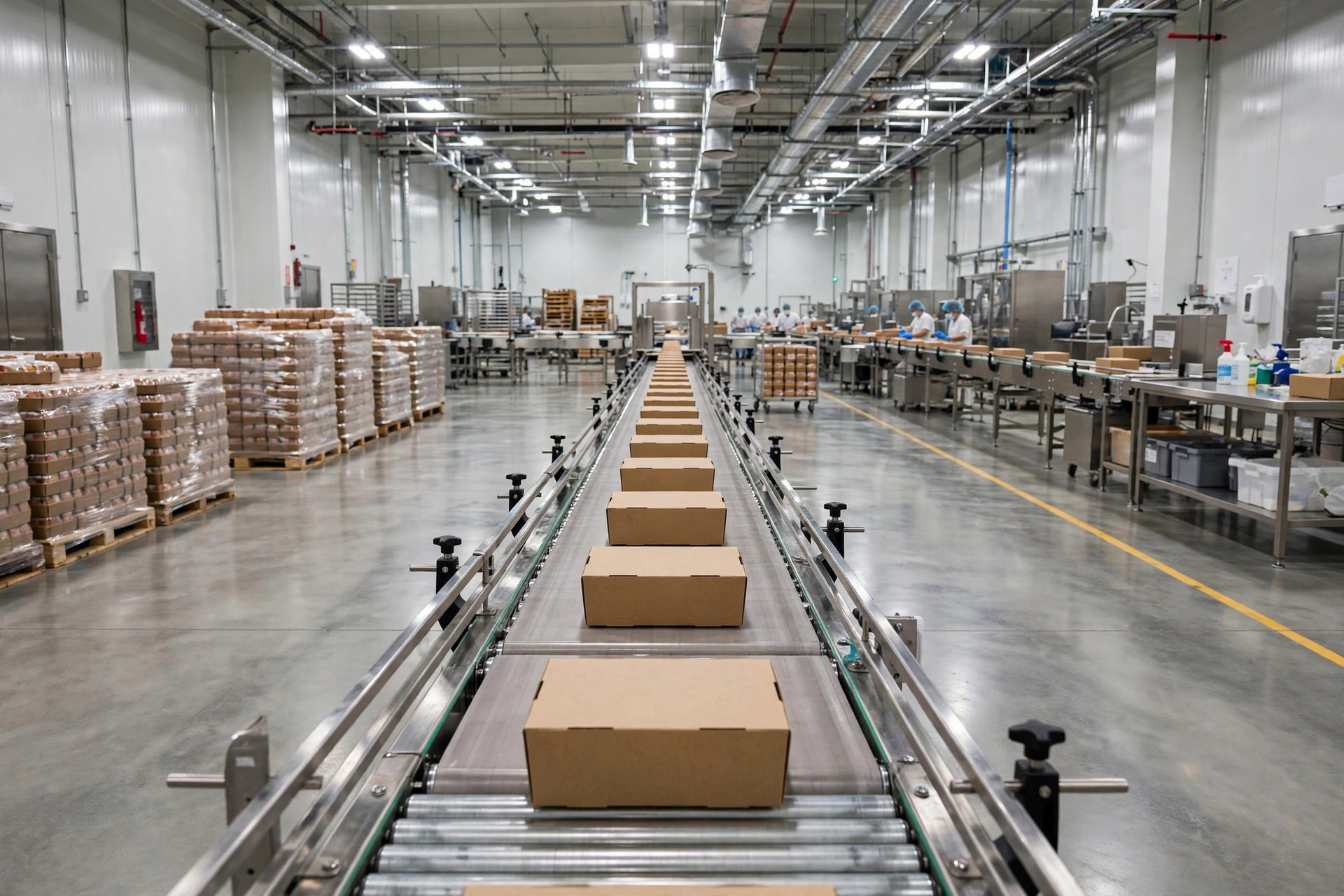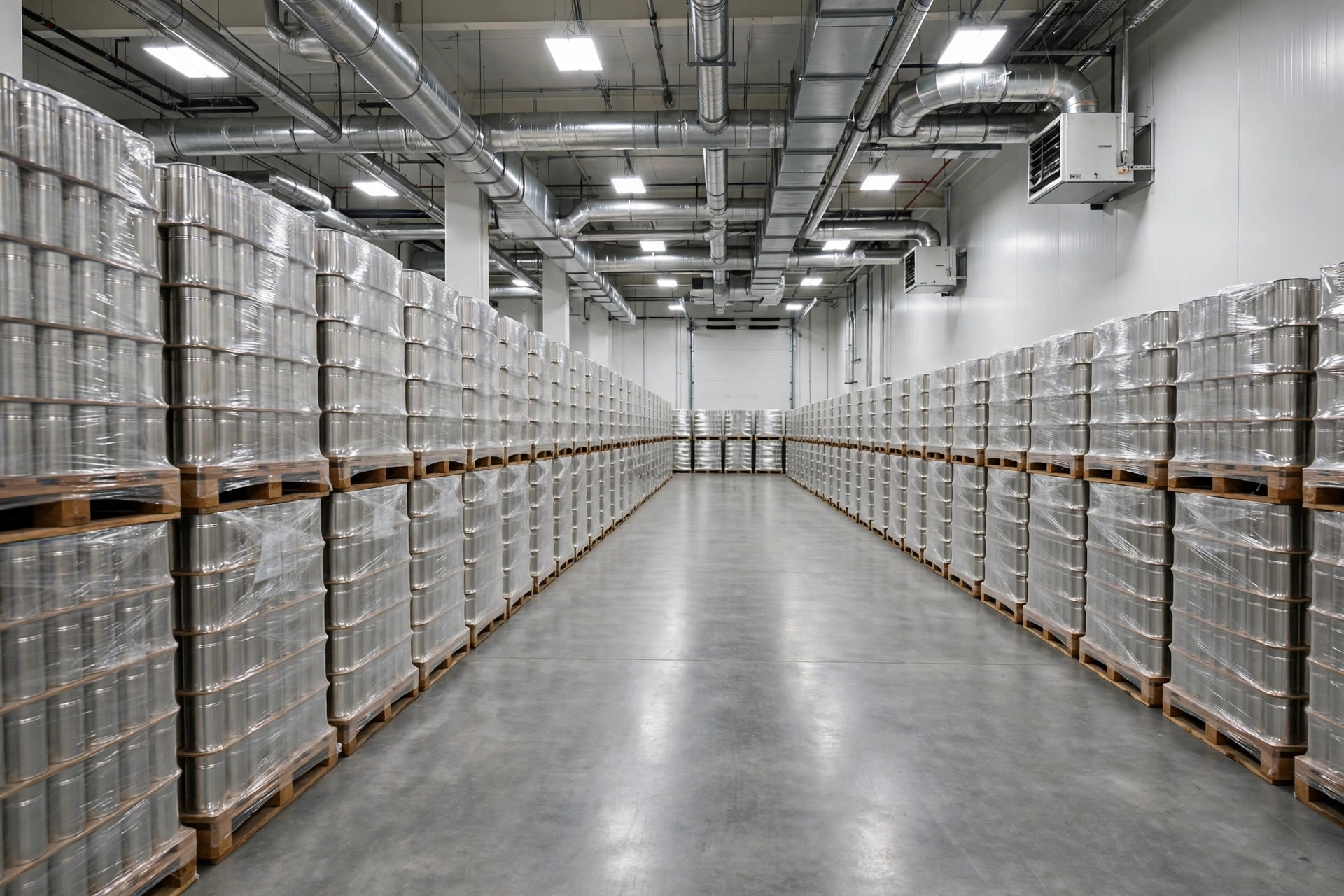
It was a Tuesday morning in May 2023, 7:40 AM. I had just parked outside the warehouse when I spotted two plainclothes visitors with badges at the receiving dock. FDA investigators, here to look at the infant formula brand we handle for a client. My first move was to call the brand owner. My second was to dig out the login for our temperature monitoring system — because after this many years on the floor, I know exactly what they ask for first.
Here's the real talk: plenty of warehouse operators think 21 CFR 107 is the manufacturer's problem, not theirs. Wrong. FDA's infant formula rules are the strictest food regulations in the country — Congress wrote a dedicated statute for infant formula (Section 412 of the Federal Food, Drug, and Cosmetic Act). How strict? On February 17, 2022, Abbott recalled Similac, Alimentum, and EleCare powdered formula made at its Sturgis, Michigan plant — 788,000 square feet, the largest infant formula plant in the U.S. Four Cronobacter sakazakii infections plus one Salmonella Newport infection, all five infants hospitalized, two deaths possibly linked. FDA found Cronobacter in five environmental samples inside the plant. The plant shut down February 17, signed a consent decree in May (five years of federal oversight), and resumed production in June. The fallout: a nationwide shortage lasting months.
After that, FDA's posture changed completely. On March 28, 2023, the agency released its Immediate National Strategy to Increase the Resiliency of the U.S. Infant Formula Market, promising tougher inspections — in practice, at least one surveillance inspection per year for every formula maker, with investigators specially trained on the formula rules. If your warehouse holds this product, don't count on flying under the radar.
What 21 CFR 107 Actually Demands From a Warehouse
Let me translate the clauses that land on our side of the fence into plain language:
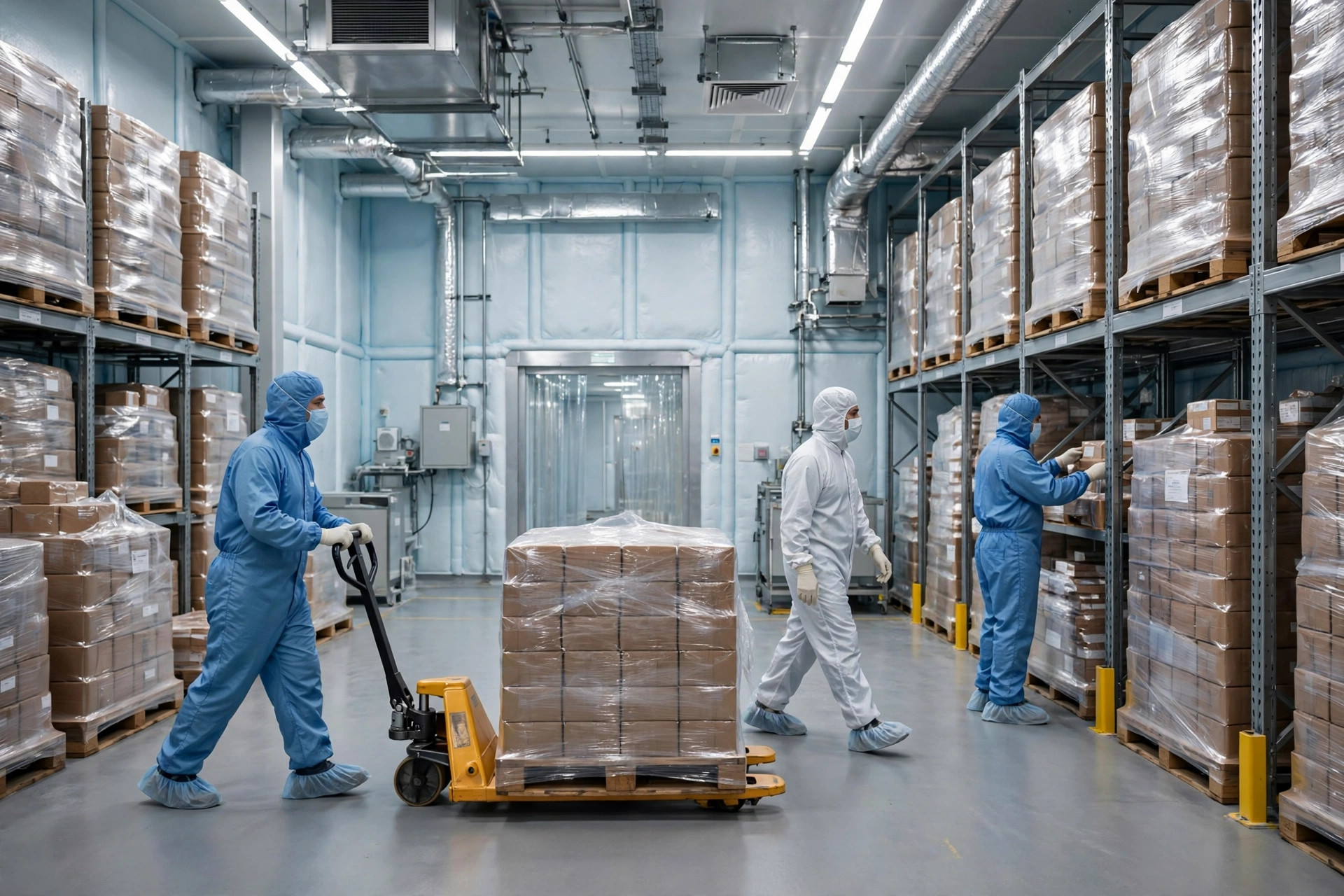
First, "held under conditions to prevent adulteration" (21 CFR 106.70). Product must be stored under conditions that prevent contamination — and that word "held" is talking about your warehouse. FDA doesn't hand warehouses a single temperature number, but the storage conditions on the product label are law. If the label says "store in a cool, dry place" and your building hits 100°F in July, that's your problem.
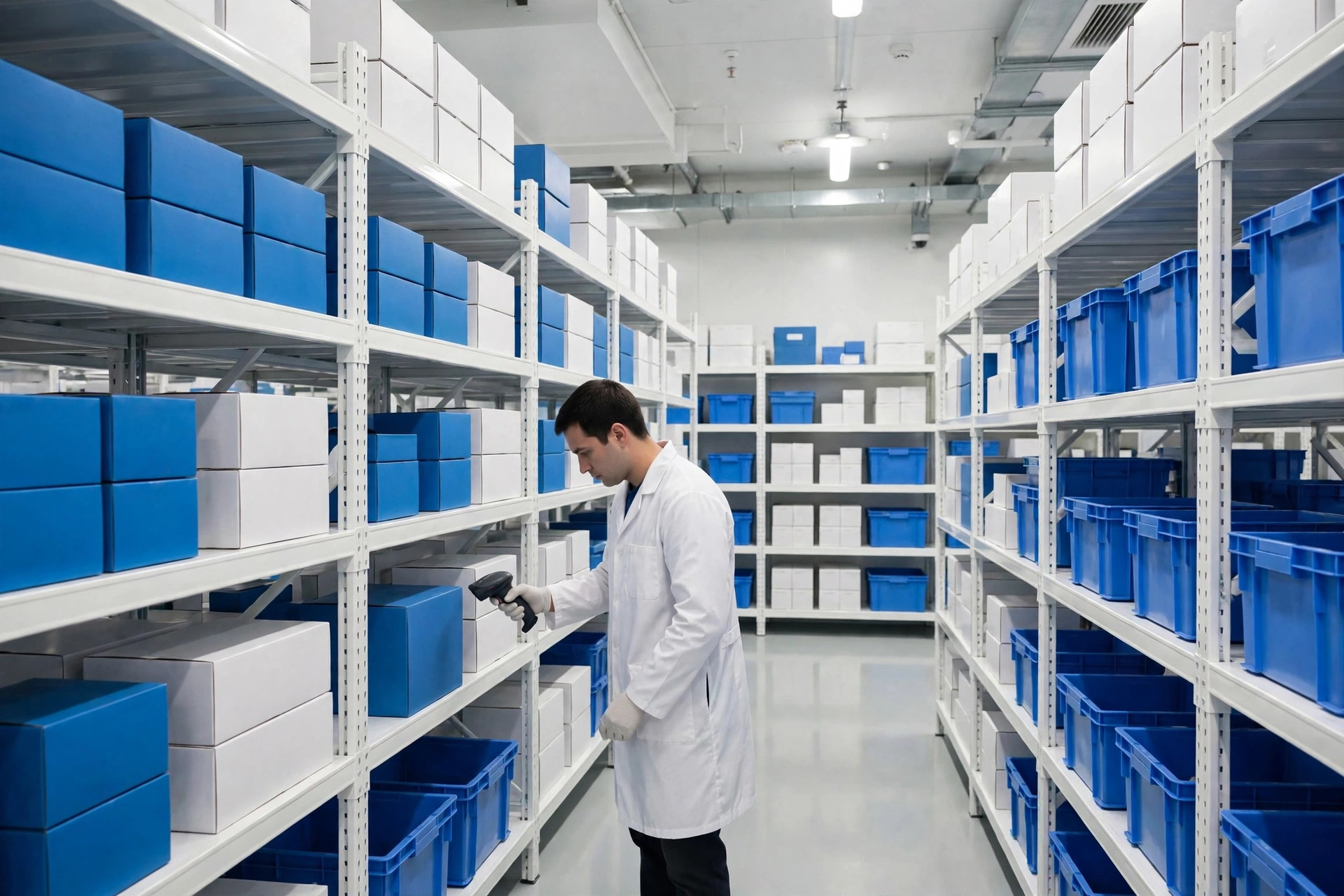
Second, lot traceability (21 CFR 106.80). Every production aggregate must carry a sequential code identifying the product, the packing plant, the year, the day of the year, the packing period — and it must allow tracing back to raw material receipt and handling. In warehouse terms: scan the lot number at receiving, scan it again at shipping, and the lot-location-pallet linkage never breaks, not for a minute.
Third, record retention (21 CFR 106.100). Production control, testing, complaint, and distribution records must be kept for one year past the end of shelf life, or three years from manufacture — whichever is longer. Your temperature logs, inbound/outbound records, and cycle count records need the same retention, written into the client contract. That morning, the investigators asked me for receiving paperwork from 2020. We went electronic in 2021 — the paper copies would have been long gone.
Fourth, audits (21 CFR 106.90 and 106.94). Manufacturers must run regularly scheduled audits, done by people with no direct responsibility for what's being audited, with a written audit plan kept at the facility for FDA review. As the contracted warehouse, you get the brand's annual audit — and FDA's unannounced visits whenever they feel like it.
Fifth, distribution records (21 CFR 107.280). Manufacturers must keep distribution records covering every establishment the formula passes through, for at least one year past shelf-life expiration, so a recall can actually find the product. Your warehouse is one of those establishments.
See the pattern? The word "warehouse" never appears in the rule, but every clause lands on us. That's my first counterintuitive takeaway: in infant formula warehousing, the strictest thing isn't temperature — it's records. When inspectors walk in, the first thing they ask for is never a thermometer. It's the record chain.
Three Things Inspectors Check First
Those two investigators spent a full day in my office. Looking back, their playbook was as fixed as a checklist. Here's what they went after, so you can self-audit:
One: the temperature and humidity record chain — has it ever broken? They don't care what the reading is right now. They look for gaps, corrections, and conveniently missing stretches. We learned this the hard way: in August 2023, an AC compressor died for six hours and the curve went blank. Backfilling the log afterward? Useless. The investigator's exact words: "Who proves the product stayed in spec for those six hours?" Our fixed procedure now: dual probes, automatic readings every 15 minutes, data written straight into the system with no edits allowed, SMS alerts to me and the shift lead on any excursion, and UPS backup so a power cut doesn't stop the logging. Our internal red line is 68–77°F and under 60% humidity — that's our own SOP standard; the enforceable one is still the product label.
Two: lot traceability — can you tell me where a lot went within four hours? In late February 2022, right after the Abbott recall broke, another brand we warehouse called at night: several of their lots shared a contract-manufacturing network with the implicated plant, and they wanted a precautionary lockdown. At 11 PM I took four people onto the floor, and by scanning lot numbers we locked down three lots — about 1,200 pallets — in six hours: frozen in the system, physically cordoned off. That night taught me something: recall readiness isn't "having a procedure." It's whether the procedure runs at 11 PM on a weeknight. We now run a mock recall every year, and the red line is locating every destination of any given lot within four hours.
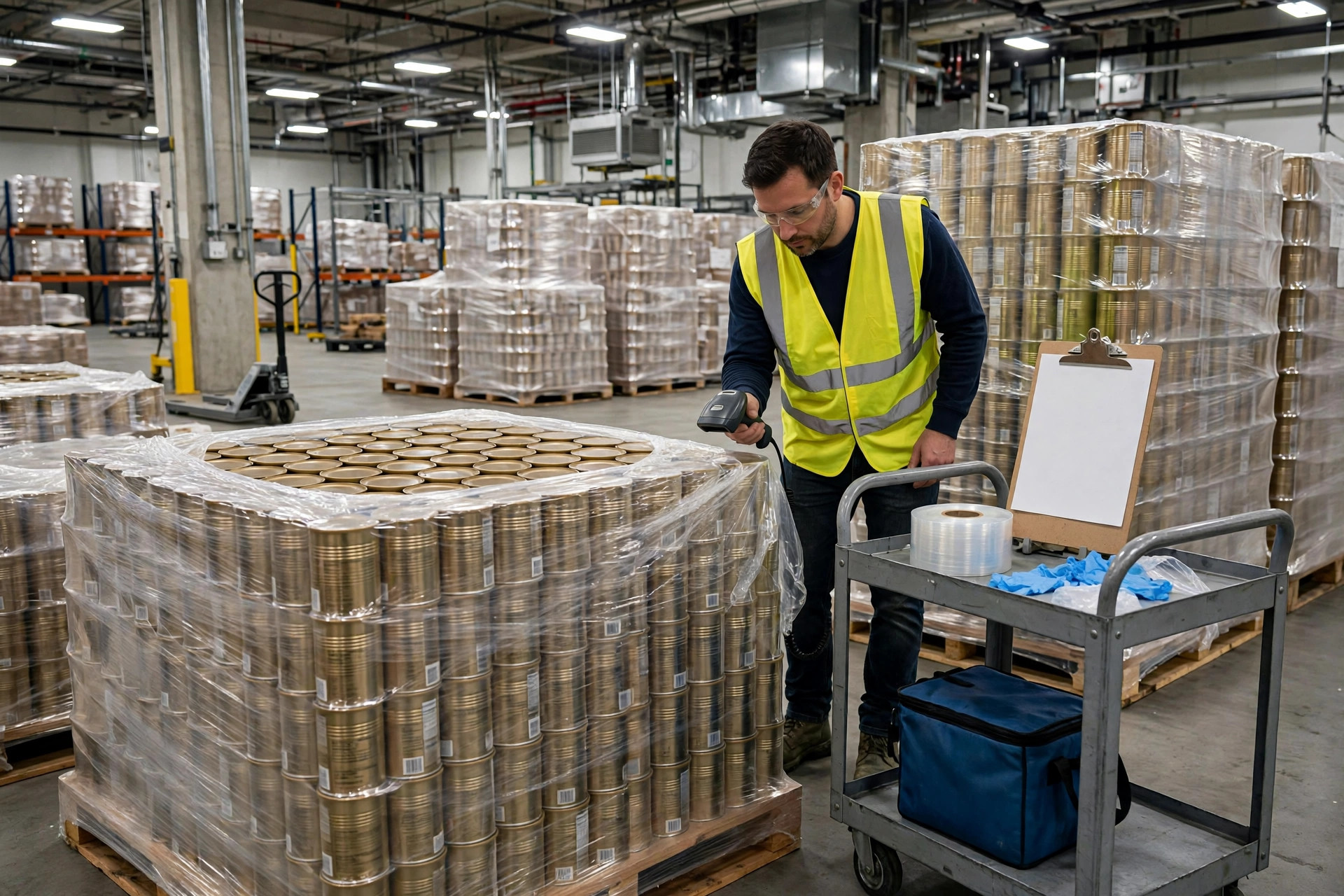
Three: damaged goods and quarantine — is there a locked cage? Powder cans fear two things: moisture and damage. Investigators always ask to see the quarantine area: are damaged cans in a separately locked zone, is there a log, are disposition records complete? Our rule now: any dented, swollen, or bad-seal can found at receiving goes straight into the quarantine cage — photo, system flag, client notified within 24 hours, nothing moves until the client confirms in writing. In the Abbott case, FDA's review of the company's own records showed environmental contamination findings and product destroyed over Cronobacter hits. Records talk.
Infant Formula Warehouse vs. Regular Food Warehouse
| Item | Regular food warehouse | Infant formula warehouse |
|---|---|---|
| Temp/humidity logging | Manual readings twice a day | Automatic every 15 min, excursion alarms, tamper-proof data |
| Lot control | SKU level | Lot/LPN level, scan in and scan out, lot-location-pallet linkage |
| Record retention | 1–3 years | 1 year past shelf life or 3 years from manufacture, whichever longer (in the contract) |
| Cycle counts | Monthly | Weekly, with lot reconciliation, variances closed within 24 hours |
| Recall drills | Basically none | At least one mock recall per year, 4-hour lot-location target |
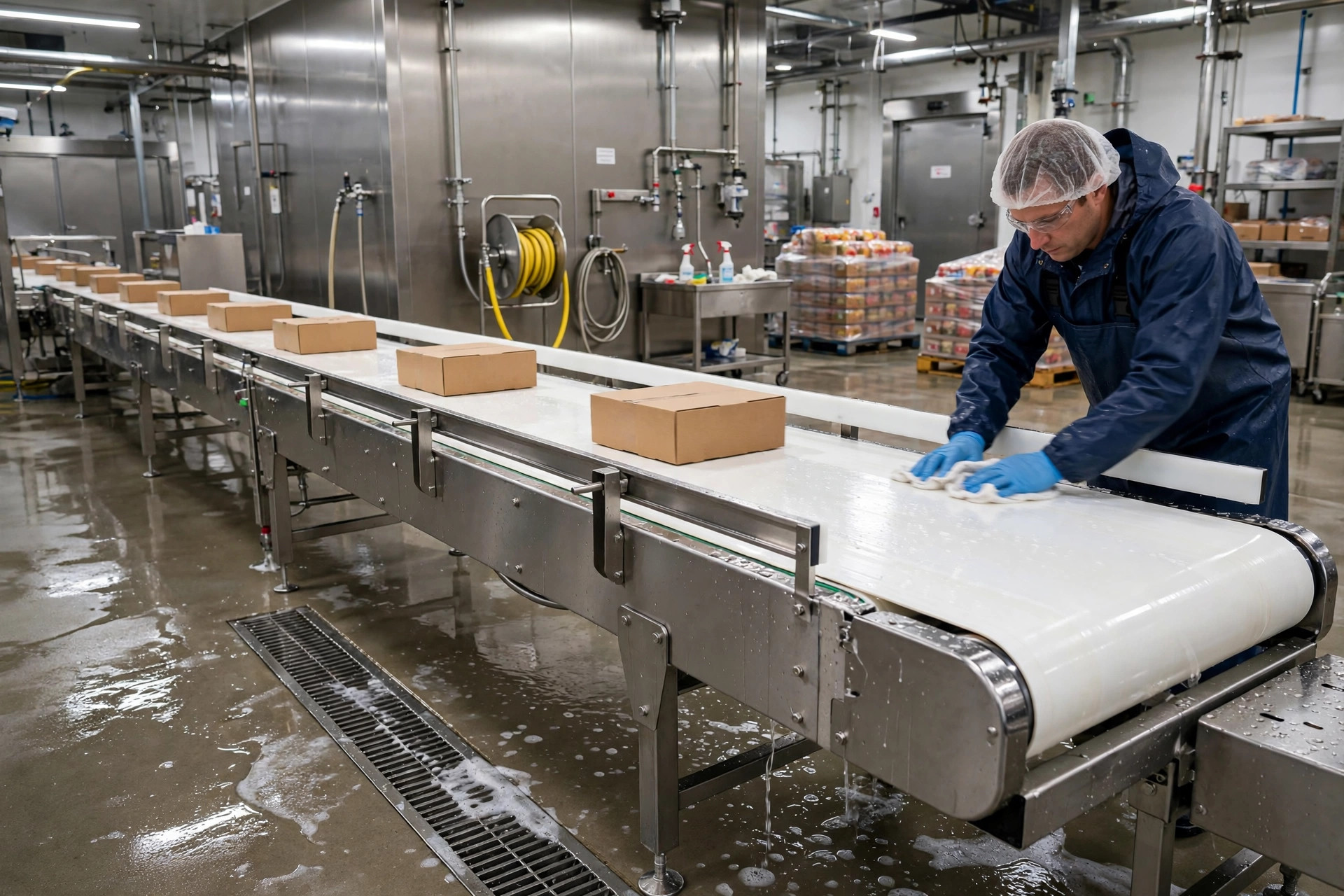
| Sanitation/pest | Standard program | Food-grade GMP, powder area protected from moisture and cross-contamination, damaged goods locked in quarantine |
| Audits | One client audit a year | Unannounced FDA visits anytime, written audit plan on file |
That table is also the math behind the business decision. Real talk on the trade-off: on our rate card, infant formula handling runs 20–30% above regular food. Sounds sweet. But the other side: 1.5 dedicated QC heads (training, qualifications, record review), a one-time temperature-monitoring investment, higher insurance, and half a day of stopped work every time inspectors walk in. My verdict: if your monthly throughput is under 5,000 pallets, don't take the business. The fixed costs don't spread thin enough, and one incident wipes out the margin.
One more counterintuitive point most people miss: formula is an ambient product, and ambient products are the hardest to temperature-control. A cold-chain warehouse has a hard constraint — skip the refrigeration and the product melts. An ambient warehouse? The label says "cool, dry place," and in California's Inland Empire a warehouse hits 100–104°F on a summer afternoon as routine. Plenty of operators shrug: "it's ambient, it's fine." FDA doesn't see it that way — "held under conditions to prevent adulteration" is exactly where unmonitored buildings fail. Our fix: roof exhaust fans plus a heat map of the building, and in summer the top rack levels and west-wall slots get downgraded — no formula stored there.
Can Your Warehouse Survive Recall Day?
One last fixed practice of ours, on shelf life. Infant formula expiry management is far more brutal than regular food: plenty of retailers flat-out refuse short-dated formula, and one consumer complaint can put you on FDA's recall radar. Our red line: nothing ships with less than nine months of shelf life left. Client sales teams push back — "just push this seven-month lot through the promo channel." No. FEFO here isn't a suggestion; it's survival. During the 2022 shortage, American parents were driving dozens of miles to find formula. Every short-dated can on a shelf was a PR time bomb — you don't want your warehouse in that news story.
There's a line in FDA's March 2023 national strategy that stuck with me: last year we saw how a safety issue at one facility could trigger a nationwide shortage. Flip it around: in this category, the warehouse isn't a cost center — it's a link in the safety chain. If your link holds, nobody remembers you. If it breaks, you're the headline.
So here's my reminder to fellow operators: next time FDA people show up at your dock, you get about 30 minutes to prove you haven't been faking it for three years. Thermometers break, people forget — only records don't lie. Assuming you actually kept them.
By Chen Feng, Warehouse Operations Manager