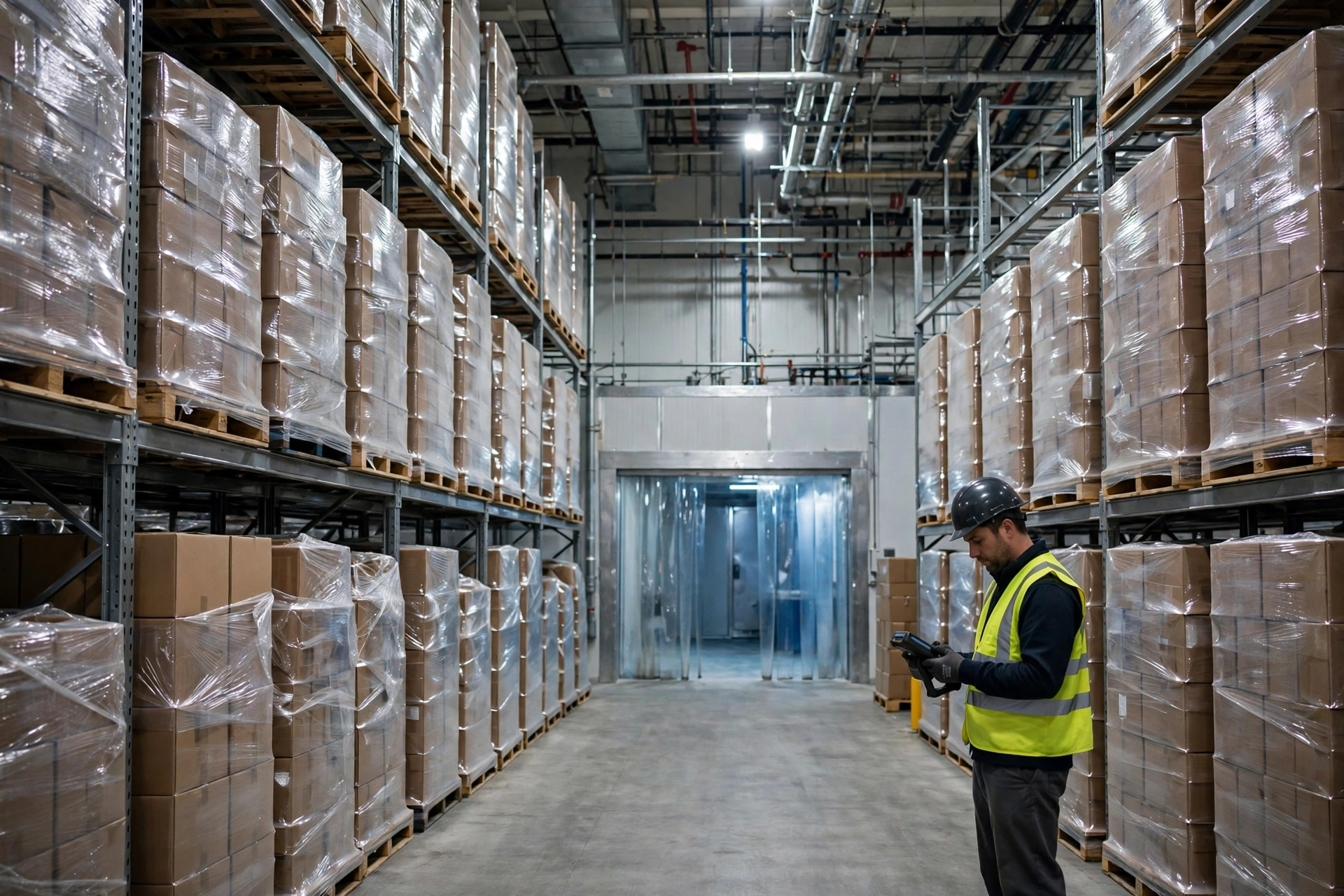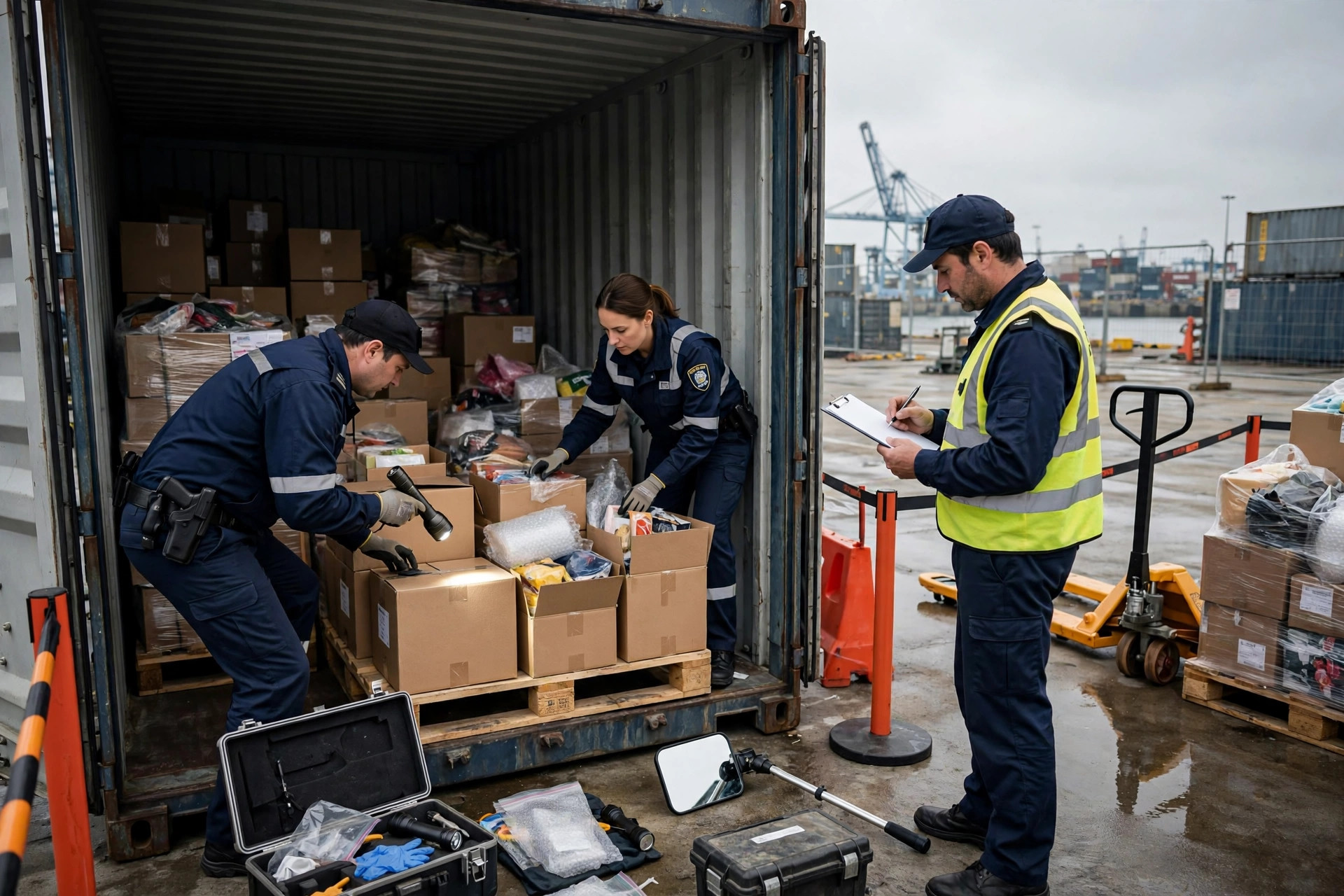
I have a client — a generic drug distributor out of New Jersey — who came to us in March 2025 with a two-year 3PL contract for 30,000 square feet of temperature-controlled storage. The first thing the client asked wasn't about rates. It was: "Are your warehouses DSCSA-ready?"
My stomach dropped. The Drug Supply Chain Security Act: enacted in 2013, fully enforced as of November 27, 2024. Every prescription drug package, traceable from manufacturer to patient. We knew the law, of course. But "knowing the law" and "running a compliant warehouse" turned out to be separated by a very large check.
We won the contract. The price: four and a half months of retrofit work and $270,000 — EPCIS integration, new scanning hardware, rewritten SOPs, full staff retraining. Here's what warehouses and 3PLs actually need to prepare, with the receipts to prove it.
What DSCSA Really Asks of a Warehouse
Strip away the legalese and DSCSA puts five obligations squarely on warehouse operations:
First, trade only with authorized trading partners. Your upstream shippers and downstream customers must be legitimate, licensed partners — verified and documented on an ongoing basis, not just glanced at during contract signing.
Second, capture electronic transaction data at receiving and shipping. Since November 27, 2024, the enhanced requirements demand package-level traceability via EPCIS event data. Every inbound scan and outbound scan generates an electronic record: "I received this case, I shipped this case." No paper logs, no spreadsheets.
Third, keep transaction records for six years. Six — not three. Electronic, searchable, retrievable on demand when FDA or a trading partner comes knocking.
Fourth, respond to verification requests within 24 hours. When a downstream partner suspects a package and asks you to confirm the product identifier matches what you originally applied, the clock starts. Twenty-four hours is statutory, not aspirational.
Fifth, quarantine and report suspect product. The moment you determine product may be illegitimate, notify FDA and your immediate trading partners within 24 hours, and pull the product out of the supply chain until it's cleared.
Here's the part many 3PL operators miss: none of these are "the shipper's problem." Whoever holds the inventory produces the data. Take on pharma warehousing, and you've taken on half a compliance officer's job.
Where the $270,000 DSCSA Retrofit Went
Let me break down our New Jersey retrofit, line by line, because nobody else in this industry will show you their invoice.
The biggest chunk was systems: $140,000. Our WMS tracked cases and locations; DSCSA wants EPCIS events — receiving, putaway, picking, shipping, returns, each one generating a standardized event exchanged with trading partners. The WMS vendor's pharma compliance module came with an annual license fee, plus EDI development to connect with the client's systems. Year one: $140,000, gone.
Hardware was next: $60,000. Every scanner in the building was replaced with units that can read 2D barcodes — pharma product identifiers are 2D, and our old laser guns couldn't read them at all. Two fixed-mount readers went into the receiving dock.
Then people: $40,000. An outside consultant wrote the SOPs — receiving verification, exception handling, suspect-product quarantine, the works. Then full staff training with pass/fail testing; fail the test, and you don't touch pharma freight. When FDA inspectors visit, the first person they question is the floor operator: "What do you do when a barcode won't scan?"
The last $30,000 was an annual verification-service subscription. Downstream partners send product-identifier verification requests that must be answered within 24 hours, so we bought a third-party service as a backstop.

Four and a half months later we went live. The client walked the floor, scanned three cases, watched the EPCIS data pop up in seconds, and signed off. But here's the insider part — the bit only the 3PL side of the table knows: who actually paid that $270,000? The contract's "compliance surcharge" clause: a fixed monthly fee plus a per-case traceability charge. The cost landed exactly where it belongs — in the quote, passed through to the client. Compliance spend is never a 3PL's profit black hole. It's a line item, right out in the open.
Who Owns What: Shipper vs. 3PL
Too many 3PL owners still think DSCSA is the shipper's headache and they're just storing boxes. That thinking expired on November 27, 2024. Here's the responsibility split I now bring to every contract negotiation:
| Compliance item | Shipper / Distributor | Warehouse / 3PL |
|---|---|---|
| Authorized trading partner vetting | Owns: vets and maintains partner credentials | Supports: provides own credentials |
| EPCIS event data generation | Receives and archives | Owns: scans at receiving/shipping, generates events |
| Six-year transaction record retention | Keeps own records | Owns: keeps all warehousing-leg records |
| 24-hour verification response | Initiates or cooperates | Owns: responds within 24 hours of request |
| Suspect product quarantine and reporting | Cooperates with investigation | Owns: quarantine on discovery, report within 24 hours |
| System investment (EPCIS integration) | Negotiable cost-share | Invests first, recovers via pricing |
That last row is where the money conversation happens. The 3PL invests first — that's structural — but the negotiation must cover cost-sharing, the per-case or monthly traceability fee, and what happens to unamortized costs if the client terminates early. Miss those three clauses and the $270,000 becomes your tuition.
Returns: Where It Actually Blows Up
Second story. August 2025, different warehouse: a pharmacy chain returned 400 cases of prescription drugs. Substantial value. Under DSCSA, saleable returns must have their product identifiers verified before they go back into sellable inventory — and they need complete transaction history.
Sixty of those cases had a broken data chain. The pharmacy's system upgrade had dropped a stretch of EPCIS data. By the book, those 60 cases couldn't be stocked — quarantine only. We called the client to backfill the data; their IT said "two weeks." For two weeks, 60 cases sat in quarantine, storage fees ticking, outbound plans scrambled.
The data came through and it was a false alarm. But the lesson stuck: DSCSA compliance on returns is harder than on forward shipments. Your contract must spell out the "undocumented returns" playbook: daily quarantine storage rates, what happens when data isn't backfilled in time, who pays for the verification labor. Clients are charming until a returns dispute starts — then the smile comes off fast.
The Counterintuitive Part: Compliance Is a Good Business
Here's what nobody tells you: DSCSA isn't a burden. It's a moat.
Do the math with me. $270,000 amortized over a two-year contract is a bit over $11,000 a month. Our compliance surcharge was $15,000 a month fixed, plus per-case fees. Over two years we didn't just break even — we cleared 20% on top. And the real prize: with the capability built, we signed two more pharma clients at near-zero marginal cost. The system was already there; each new client is pure service revenue.
The other counterintuitive truth: small 3PLs should do the math before signing pharma contracts, not after. Pharma warehousing margins look 30%–40% fatter than general warehousing, but that's a compliance premium, not free money. If your floor has no 2D-capable scanners and your WMS is a decade old, that $270,000 retrofit can eat your entire first year of profit. Get the pharma module quote from your WMS vendor first, then negotiate. Never sign on vibes.
One more thing to watch: the small-dispenser exemption expires November 27, 2026 (confirm against current FDA guidance — FDA has floated further extensions). That means the second half of 2026 will bring a wave of small pharmacies and clinics hunting for compliant warehouse space. Build the capability now, and you'll be the obvious answer when that demand arrives.
Three Questions for Your Next Contract Talk
Question one: Can the client deliver EPCIS data on time? If not, how is your receiving process designed? No data, no receiving — say the ugly part upfront.
Question two: How are retrofit costs shared — per-case, monthly fixed, or split? And if the client terminates early, who covers the unamortized remainder?
Question three: Who owns verification responsibility and quarantine costs on returns? When undocumented returns sit in your building for a month, what's the storage rate?
Ask those three and the other side knows they're dealing with a professional. In pharma warehousing, the barrier to entry is the competitive advantage — those who clear it eat well, and those who don't never even see the menu.
By Susan, 3PL Sales Director