
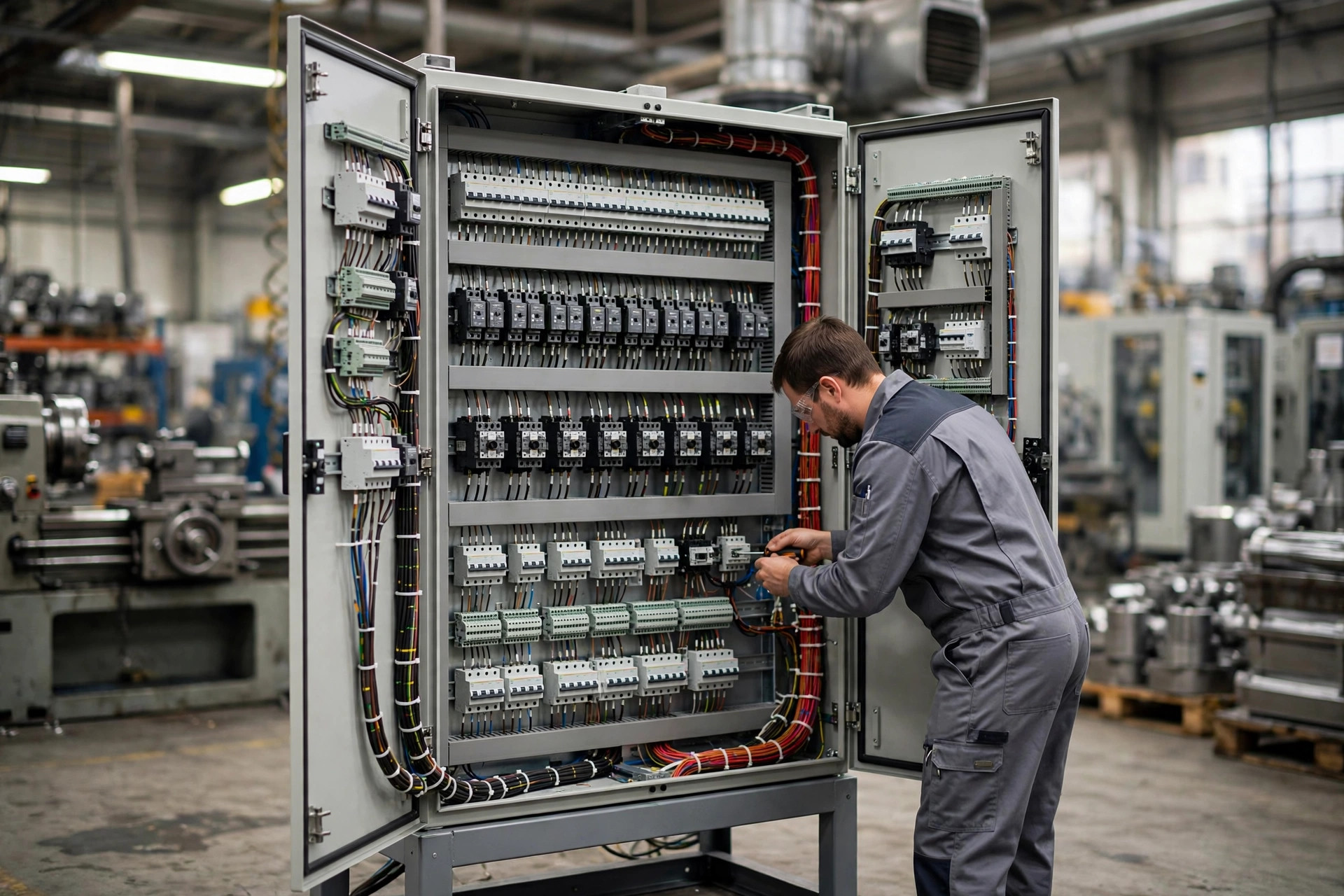
We had a client — a 3PL out of Ohio — who bought a conveyor sortation line from one of our systems integrator partners in Suzhou. Twelve control cabinets, a contract worth several million RMB. Everything sailed through until a month before shipment, when the customer sent an engineer for a pre-shipment inspection. He opened a cabinet door, took one look, and asked: "Where's the UL 508A industrial control panel certification file?" Nobody on our side had an answer. The result: 30% of the contract value held back, the cabinets sitting in a Shanghai warehouse waiting for a field evaluation, three-plus months of delay, and a project manager who nearly got fired.
This is not an edge case. If you sell automation equipment, conveyors, or AS/RS electrical controls into the United States, sooner or later someone will ask you that exact question. Let me walk you through the business math and the field reality — plus a few things only the vendor side ever tells you.
What UL 508A industrial control panel certification actually examines
First, scope: UL 508A doesn't certify your whole line. It certifies the box — the industrial control panel itself, the cabinet full of breakers, contactors, relays, terminal blocks, and the PLC. The American logic is simple: equipment can be weird in a thousand ways, but electricity starts fires, so the cabinet has to be built to one rulebook. The local electrical inspector (the AHJ) and the insurance company both recognize exactly this.
It comes down to three things.
First, the short-circuit current rating — SCCR. In plain terms: how much short-circuit current the cabinet can survive without blowing apart. This is the number American customers ask about most. Plenty of cabinets built domestically in China never had this number calculated, let alone printed on a nameplate. To an American engineer, that's the equivalent of going swimming without a life vest.
Second, component selection. Every device inside has to be UL Listed or UL Recognized. Sneak in one cheap uncertified contactor and the whole panel fails. And here's where a lot of first-timers trip: CE-marked components don't count for UL. CE gets you nowhere in this game.
Third, markings and drawings. The inside of the cabinet door must carry the required markings — manufacturer name, voltage rating, SCCR value, wiring diagram reference, and so on. Miss one, and the field evaluation engineer can fail you on the spot.
Now the counter-intuitive part, and I'll stake my reputation on it after years on the vendor side: the certification fee is never the expensive part of UL 508A industrial control panel certification. Rework and schedule slips are. Design a cabinet to UL 508A from day one and the extra material cost might be under 5%. Get a finished cabinet rejected and have to swap components, re-route wire ducts, and rewire — the cost multiplies, and three months of delay can eat the entire project margin. Certification gets cheaper the earlier it enters the picture, and more expensive the later. Ask our Suzhou client what that sentence is worth.
Three paths to compliance: run the numbers before you quote
There are basically three ways to get there. Decide which one during quoting, not after the PO lands:
| Path | Best for | Cost scale (confirm with your certifier) | Timeline | The trap |
|---|---|---|---|---|
| Full panel shop listing | Integrators shipping to the US regularly, in volume | Tens of thousands to several hundred thousand RMB range, plus annual fees and factory inspections | Several months for the first listing | Annual fees, inspections, and design changes must be reported |
| Field evaluation | One-off projects, small cabinet counts | Per-panel pricing, from tens of thousands up per batch | Weeks to months once documentation is complete | Covers only that shipment — next project starts over |
| Customer handles it locally in the US | When you're out of time and the customer agrees | Cost pushed to the customer | Customer's schedule, not yours | The customer uses it as a bargaining knife and cuts your margin |
We had another client in Dongguan building vertical lifts who learned to play this smart. Quoting a California project in 2024, they put a separate line item on the quote: "UL 508A field evaluation coordination fee," with a previous evaluation report number attached. The customer's reaction? This vendor knows what they're doing. They won the bid at a price 8% higher than a competitor who never mentioned it. The customer's own words: "I'd rather pay more now than fight about it at the port." See the lesson? Compliance buried in fine print is a cost. Compliance on the quote, in plain sight, is a premium. A vendor who negotiates well can turn certification into the reason to charge more.
The three rework items that burn the money
Going by the field evaluation reports we've seen, rework almost always comes down to three things. One hour in the design phase saves tens of thousands later:
First, breaker-to-SCCR coordination. The main breaker in the cabinet is rated 10kA SCCR; the site transformer calculates out at 22kA. Mismatch. The fix is either higher-interrupting devices or current-limiting measures — real money, unbudgeted.
Second, wire ducts, spacing, and routing. UL has hard requirements on duct fill rates and spacing between live parts. Cabinets wired the domestic way — stuffed to the brim — all get reworked here. Our veteran electrician's face went pale the first time he heard "ducts can only be filled to about seventy percent."
Third, grounding and markings. A ground bar that doesn't meet spec, a nameplate missing the SCCR value — these are the cheapest fixes, but they're pass/fail items. The engineer walks away, you fix it, you rebook the visit — and the calendar burns.
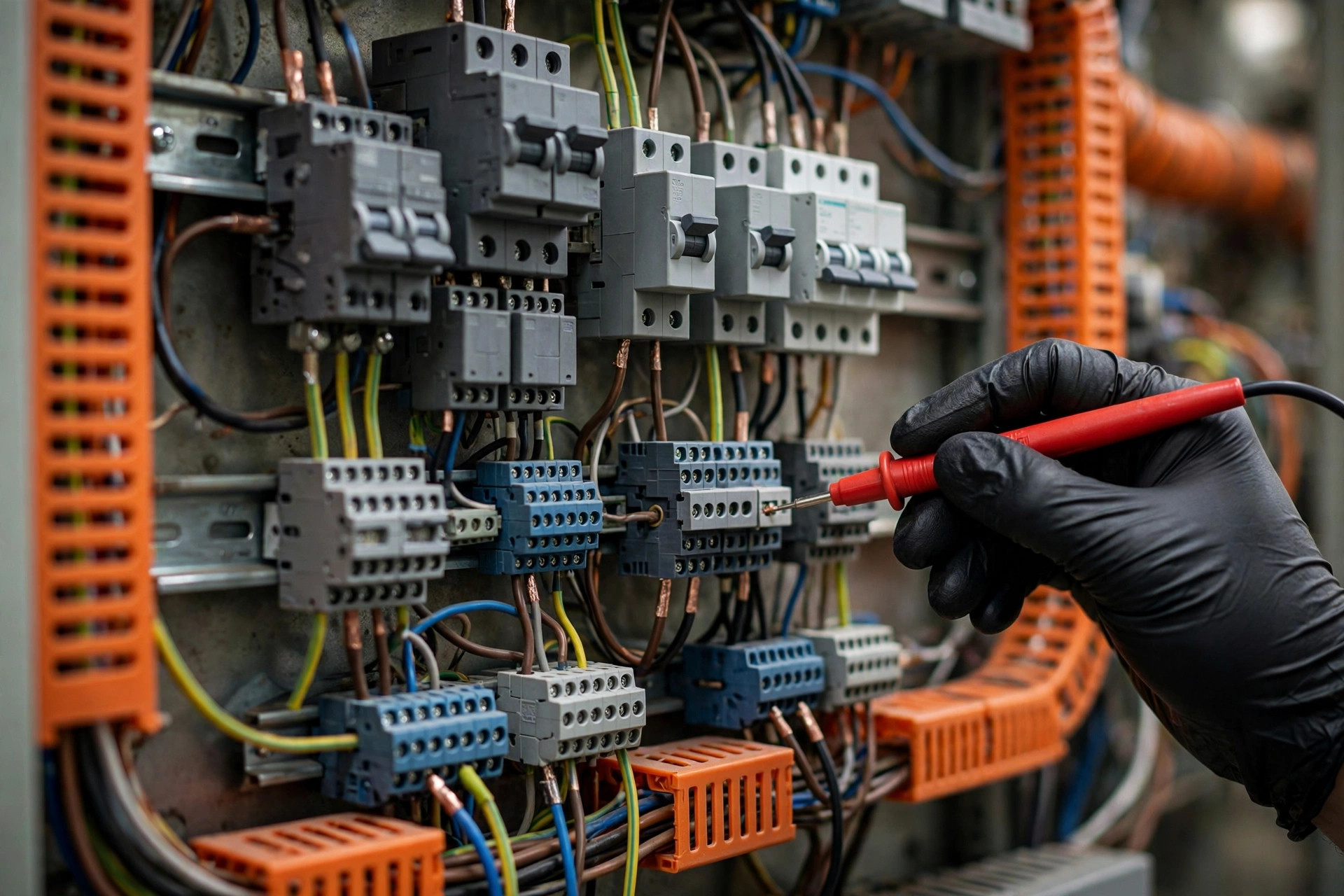
One more thing people get wrong: CE versus UL. CE is mostly self-declaration — slap it on and ship. UL 508A is third-party certification — no certificate, no deal. The two systems don't recognize each other. Walking into the US electrical market with a CE mark is like bringing a driver's license to fly a plane. Wrong credential.
Next time you're negotiating a contract, ask these three questions
Question one: "Who pays for certification, and in which clause?" Don't settle for a verbal promise. Put it in the technical appendix of the PO — full listing or field evaluation, lump sum or actuals.
Question two: "Whose name goes on the listing?" If it's your factory's name, every future US order can ride on it — that's an asset. If it's under the customer's name or a third party's, the money is a one-time sunk cost.
Question three: "Who owns the rework?" If the design gets rejected for UL 508A non-compliance, who pays for the fix and who absorbs the delay? Write it down now, so you're not arguing about it at the port. Our Suzhou client learned this one the hard way — by not asking.
They've changed since. Every US project quote now carries UL 508A industrial control panel certification as its own line item, priced in the open. And the customers are more comfortable, not less. I've now told you everything the vendor side knows. The rest is up to you at the negotiating table — don't go soft.
By Susan, 3PL Sales Director




