Here is my verdict up front: ninety percent of warehouse positioning use cases do not need centimeter-level accuracy. Stable, reliable sub-meter tracking beats raw precision every time. UWB, cameras, and LiDAR each break down in their own way indoors. Fusing them together genuinely covers the gaps — but fusion is expensive, complicated, and maintenance-hungry. Only specific scenarios earn the investment back. For most warehouses it is overkill. I am comfortable leading with that because I have watched too much money die on "precision surplus."
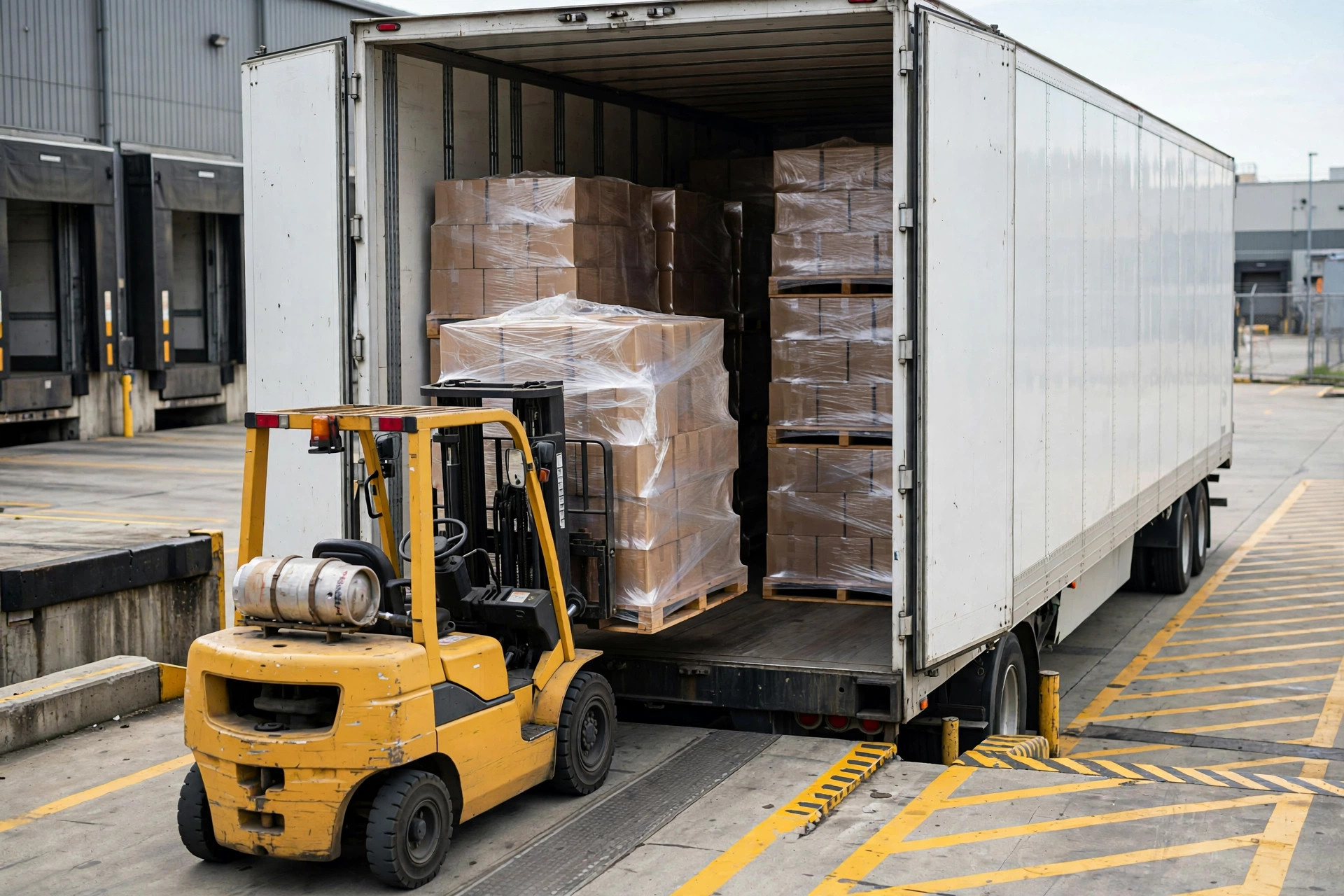
The underlying need is real. Forklifts sharing aisles with pedestrians need collision warnings. AMR fleets need dispatch down to the slot level. Picker travel data feeds route optimization. All of it needs to answer "who is where in this building." GPS dies indoors, hence the whole indoor positioning industry. But before picking a technology, ask yourself one question: do I need to know "roughly which zone," or "precisely within tens of centimeters"? Those two requirements differ in cost by an order of magnitude.
Where Does Each Single-Sensor Approach Break?
UWB has been the most hyped in recent years. The principle is simple: anchors mounted on ceilings and walls, tags on forklifts or people, distance computed from radio time-of-flight, accuracy genuinely in the decimeter range. The devils live in the details. First, metal racking is UWB's natural enemy — radio signals bounce between racks, and multipath eats a big chunk of that lab accuracy. Lab numbers and warehouse numbers are two different things. Second, anchors have to be dense, covering a large building is real engineering work, and every racking layout change means re-surveying anchor positions. Third, tags need charging — managing charging, issuance, and loss across hundreds of tags is an operations job in itself. I have seen a project where the positioning worked fine and the whole thing still collapsed under "we cannot find the tags."
Vision-based approaches (cameras plus visual SLAM) are cheap — the warehouse already has cameras, so hardware cost is near zero. But the weakness is blunt: change the lighting and it drifts. Day shift versus night shift, a row of dead fluorescents, a forklift headlight aimed at the lens — accuracy wobbles along. Racks block the view, pallets stack up and feature points vanish. And one thing vendors rarely mention: cameras filming workers triggers privacy compliance work of its own. In US warehouses with strong unions, that alone can kill a project.
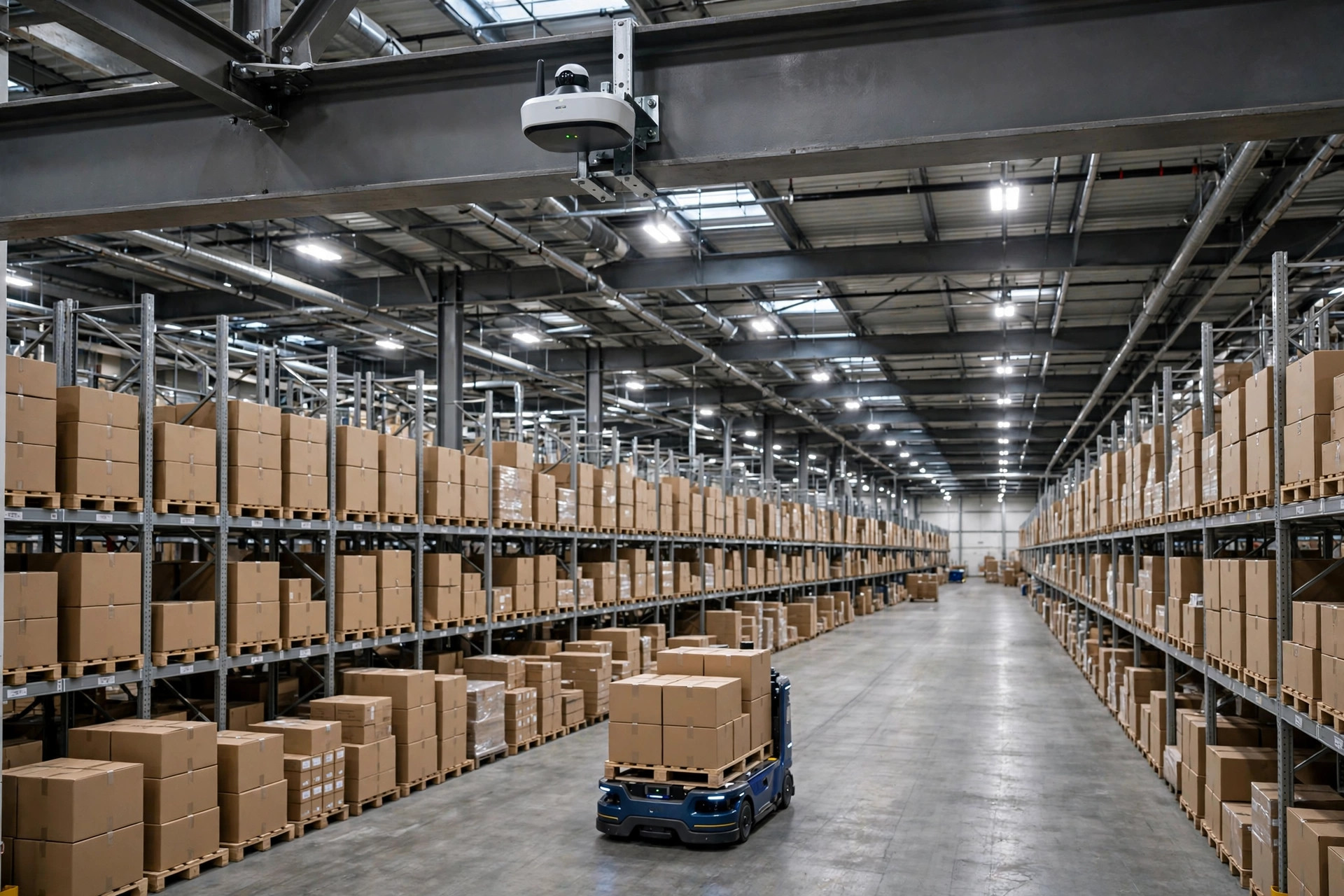
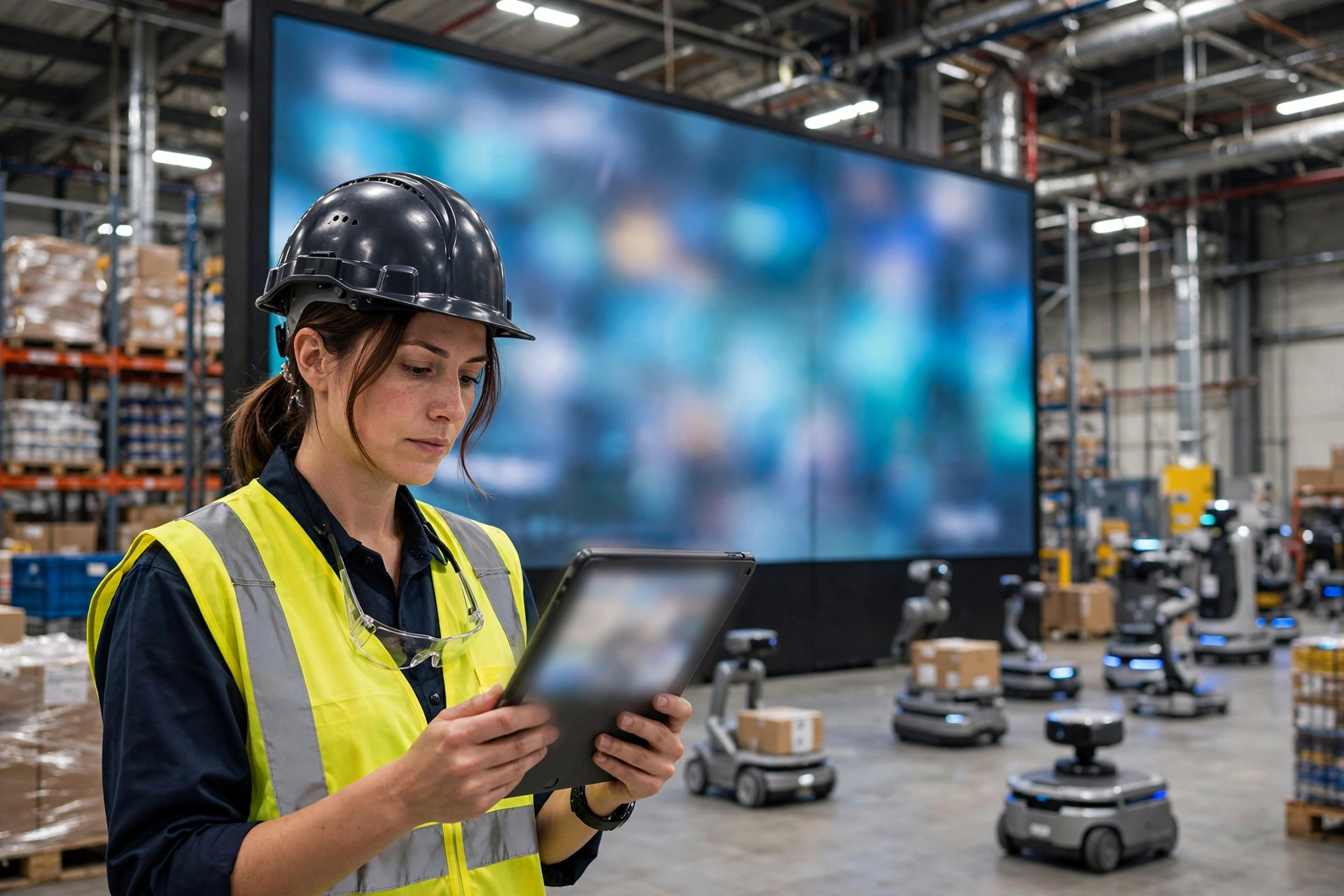
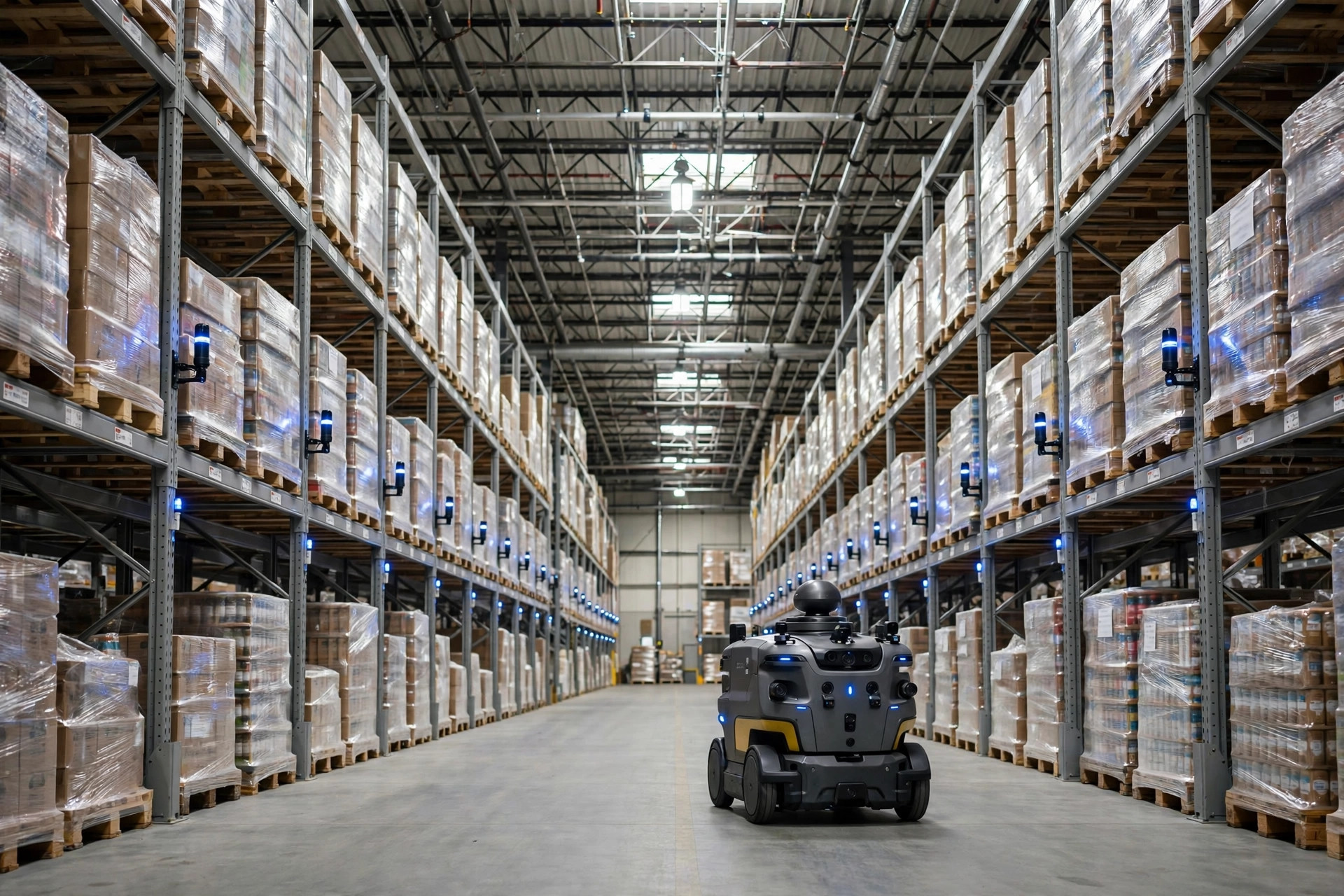
LiDAR, the route most AMRs take with onboard SLAM, is accurate and lighting-proof — but expensive, and fragile in dynamic environments. A warehouse is not static: forklifts crossing constantly, pallet positions changing daily, a temporary staging area appearing during peak season. Maps go stale every few days and need rebuilding. At a 120,000-square-foot distribution center near Chicago, the AMR fleet's first job every morning was re-scanning the map — during peak season that routine ate half an hour of capacity.
The shared problem: every sensor has a comfort zone, and warehouses are uncomfortable everywhere.
How Fusion Actually Covers the Gaps
Fusion in one sentence: let each sensor do what it does best, and let them cover for each other. UWB provides the absolute coordinate — "I am at this spot in this building." Vision or inertial units provide relative motion — "I just moved this far in this direction." LiDAR provides local geometry — "this is what the obstacles around me look like." Filtering algorithms stitch the streams together so that when one drifts, the others pull it back.
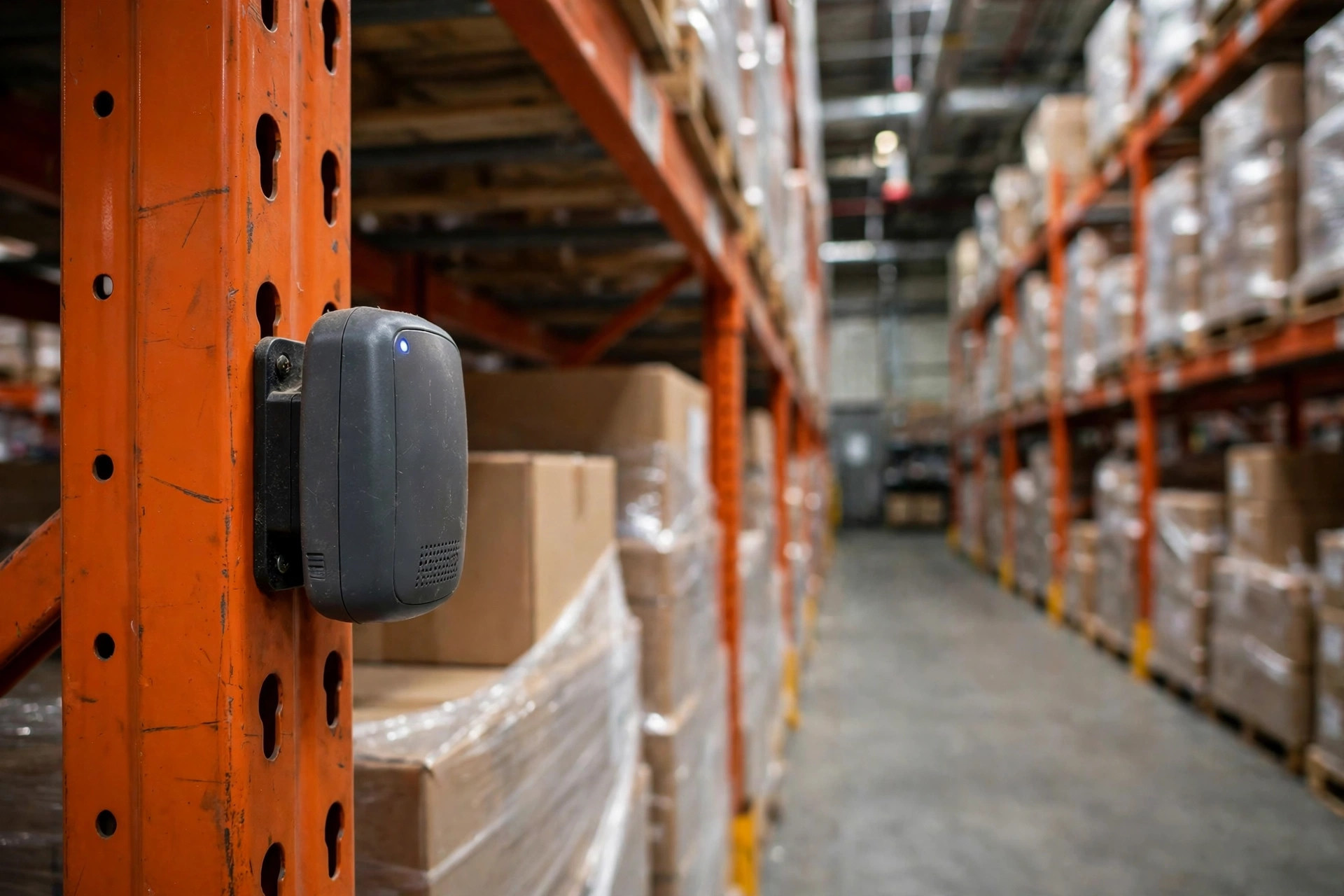
The effect is real: during the seconds UWB gets hammered by rack reflections, inertial and vision hold the line; in camera blind spots, UWB's absolute fix holds the line. One plus one can exceed two. But a cold shower is owed here: only if calibration is done right. Time sync and spatial calibration across sensors done poorly turns fusion into one plus one being less than two — several streams of wrong data contaminating each other, harder to debug than any single sensor. Fusion's debugging complexity grows multiplicatively, not linearly.
So fusion is not "bolting sensors together." It is an engineering commitment. It needs long-term care: calibration, parameter tuning, anomaly triage. A mid-size warehouse without that technical bench buys a system that needs permanent feeding.
When It Pays Off — and When It Is Wasted Money
Three scenarios earn it. First, safety-critical: dense high-bay areas where forklifts and pickers mix, needing proximity alerts and collision avoidance — accuracy tied directly to human safety is not where you cut corners. Second, AMR fleet dispatch at slot-level precision, where scheduling algorithms amplify position errors as the fleet grows. Third, travel optimization in big buildings — above roughly a hundred thousand square feet, picker miles saved times headcount produces labor savings you can put in a spreadsheet, and the precision investment shows a return.
The not-worth-it list is longer. A twenty-to-thirty-thousand-square-foot building does fine with QR floor markers plus the WMS slot logic — the forklift scans a marker passing by and the position re-calibrates. Simple, cheap, zero maintenance. If all you need is "is the forklift roughly in receiving or shipping," Bluetooth beacons or Wi-Fi positioning are plenty — worse accuracy at a fraction of the cost. The most common waste I see: management hears "the warehouse next door installed UWB," installs it too, then discovers no business process actually needs that precision. The extra money sits there gathering dust.
Three more traps the vendor deck will not show you. First, anchor installation is a one-time project but maintenance is forever — every rack move or layout change triggers re-surveying, and that belongs in total cost of ownership. Second, vendor lock-in: tags, anchors, and algorithms all from one house, switching vendors means starting over. Third, what happens to the data matters more than the positioning itself — once location streams hit the WMS, is anyone watching, and do optimization actions follow? If not, even perfect tracking is just an expensive dashboard.
Actionable advice for tomorrow: buy no hardware yet. Take your floor plan and circle every scenario that truly requires precise position. If you cannot circle three, stop talking about fusion. If you proceed, pilot one aisle for a month and log packet loss, drift events, and weekly maintenance hours. Good data earns expansion. A positioning system's value is calculated, not pitched.