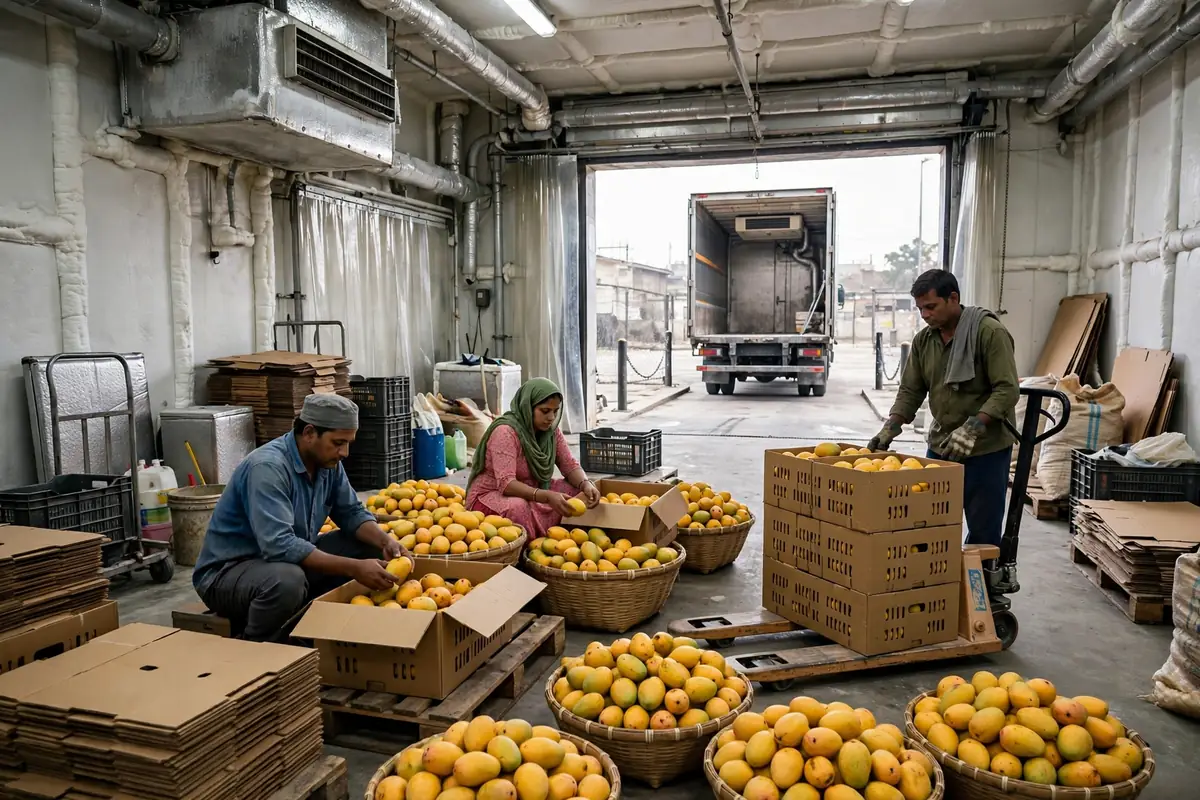
Let me tell you something. After fifteen years behind the wheel, the most delicate cargo I have ever seen isn't glass, and it isn't precision instruments. It's mangoes. The India mango export warehouse cold chain runs on one word: speed. From the moment a mango comes off the tree, the clock is counting down. One hour late into the pre-cooling room, and that much more of the shipment rots before it reaches the port.
Start with a few numbers I checked. India grew about 26.3 million tonnes of mangoes in 2024, the most in the world. Yet in fiscal year 2024-25, fresh mango exports were only about 29,938 tonnes worth $56.5 million, according to APEDA, India's agricultural export authority. The world's biggest grower exports a fraction of what it grows. The problem isn't how much is planted. It's how much survives the trip. Post-harvest losses run 15-20%, and that is the money rotting on the road. Alphonso is the pride of Maharashtra, with Ratnagiri and Devgad producing the most sought-after fruit, but the finest variety in the world is still just a box of rotten fruit if the cold chain breaks.
India Mango Export Warehouse Cold Chain: The First Two Hours Decide Everything
A mango comes off the tree carrying field heat, and orchards in India routinely sit at 35-42°C in harvest season. Pre-cooling is the most time-sensitive step in the whole chain. Within 2-4 hours of harvest, the fruit's core temperature has to come down, and the standard method is forced-air cooling: cold air drawn through the packaging pulls field heat out 4-10 times faster than plain room cooling, with the target of getting pulp temperature below 15°C within 4 hours.
Picture this scene (illustrative scenario). An orchard in Ratnagiri, picking starts at 5 a.m., workers load the fruit into ventilated plastic crates, and the crates go straight onto an ordinary truck with no refrigeration. Two hours to the pre-cooling facility, the sun comes up, and the inside of that truck is heading for 40°C. The fruit starts ripening fast right there on the road. By the time it reaches the pre-cooling room, it's too late. The flesh has gone soft, the skin still looks fine, but the bottom of the crate is already weeping juice. Out of an 8-tonne load, the exporter rejected half on inspection. The same two hours, with a pre-cooling room at the orchard gate or a reefer truck instead of a dry one, and that load would have been saved.
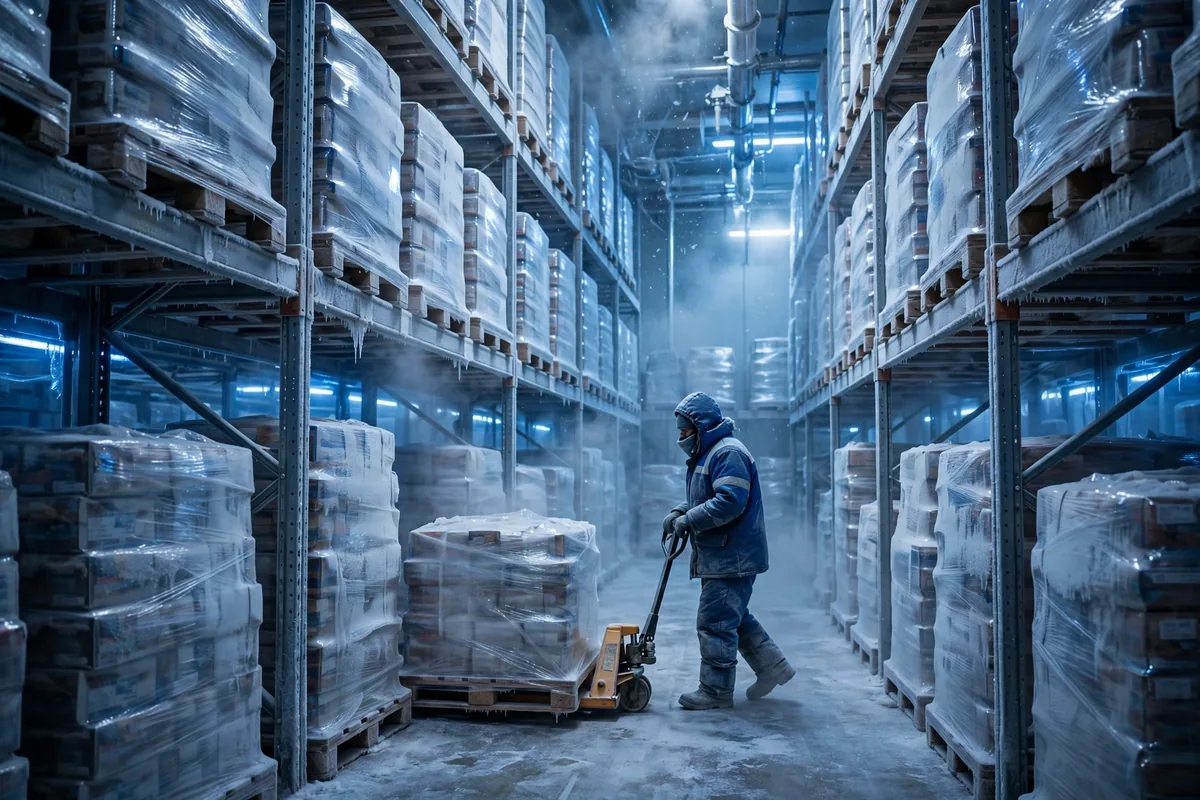
So the first iron rule of exporting mangoes: the pre-cooling room has to sit close to the orchard, close enough that fruit goes in right after picking. Orchard, pre-cooling room, and packhouse work best inside one compound, so the fruit is picked, pre-cooled, graded, and packed in one continuous run. A cold chain only works unbroken. Let the temperature climb back to ambient at any single point, and everything spent before that point is wasted.
In the Mango Cold Chain, Too Cold Hurts More Than Too Hot
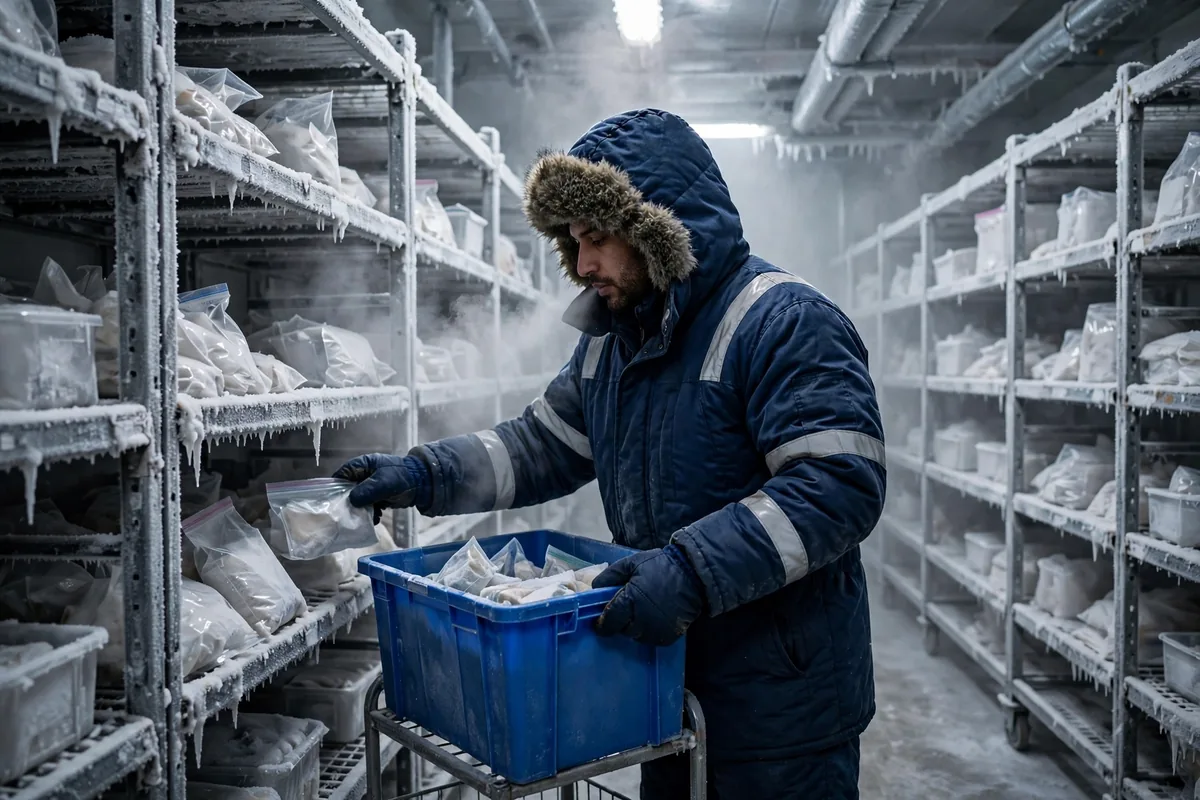
Here is the counterintuitive part of the India mango export warehouse cold chain: mangoes fear cold more than heat. Plenty of people assume colder is always better for freshness. Mangoes don't work that way. Alphonso needs 12-13°C at 85-90% relative humidity, and that buys you 3-4 weeks. Drop below 10°C and the fruit takes chilling injury: skin blotches, dark flesh, and uneven ripening when it comes back to room temperature. India's own standard says it plainly: at 13°C and 85-95% humidity, mangoes keep for 20-25 days, and below 13°C they are prone to chilling injury. One slip of the cold store operator's hand, two degrees too low, and the whole room is ruined.
Post-harvest handling has another gate: hot water treatment. Under the Indian standard, mangoes go into 48°C water for one hour to kill fruit fly, a hard quarantine requirement for many importing countries. After the bath, the fruit has to be cooled fast and surface-dried before packing. Hot water treatment, pre-cooling, cold storage, the order and the temperatures can't be shuffled. Get one step wrong and the whole container can be rejected at the destination port.
One more detail: the fruit has to be de-sapped, washed, and graded before pre-cooling. Sap left on fruit that goes straight into the cold room sets on the skin in the cold, and the appearance is ruined. Every old grower knows this step. Skip it to save time, and you pay for it yourself.
Air or Sea? The Math Depends on the Variety (Hypothetical Example)
| Mode | Transit time | Cost | Best for |
|---|---|---|---|
| Air freight | 2-4 days orchard to destination port | Highest, charged per kilo | Premium varieties like Alphonso, early-season market |
| Reefer sea container | 2-4 weeks orchard to destination port | Far lower, charged per container | Hardier varieties like Kesar, large orders |
| Air plus consolidated sea | Depends on sailing and flight schedules | In between | Mid-size orders that still need freshness |
The figures in this table are a hypothetical example, for comparing directions, not for quoting prices. The real decision turns on three things: how well the variety holds up, how far the destination port is, and whether the buyer will pay extra for freshness. Alphonso is delicate and expensive, so air freight pays. Kesar is hardier and ships in volume, so a reefer container makes more sense. Stuff Alphonso into a sea container to save freight, and the money saved won't cover the rotten fruit. Put bulk fruit on a plane, and the freight eats the whole margin.
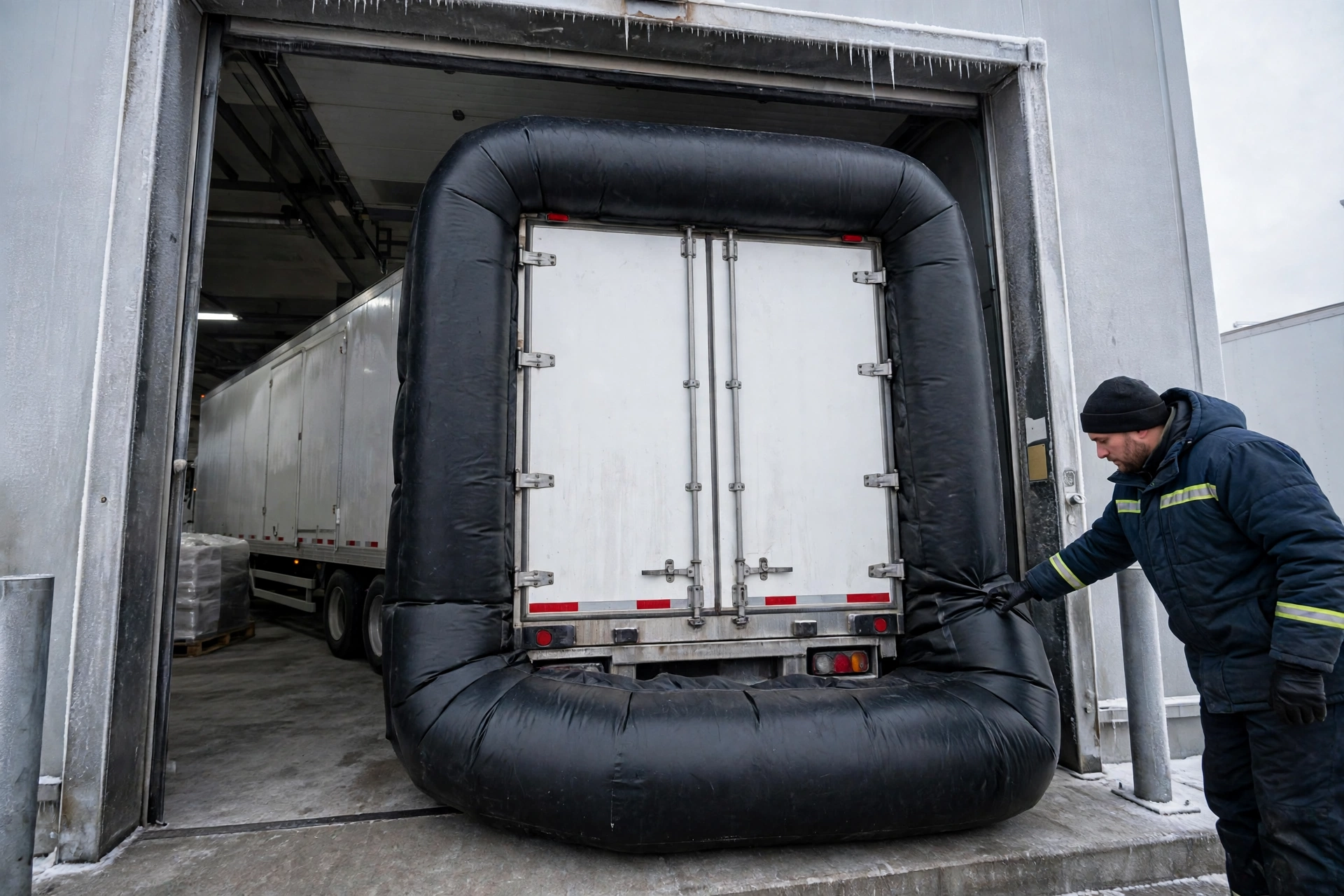
Sea freight has its own trick: the reefer container isn't done once it's on the ship. From the packhouse to the port, the container has to stay plugged in, temperature unbroken. The truck from the orchard belt to Mumbai Port runs most of the day, and if the reefer unit fails on the road, or the container sits in the yard waiting for its sailing without a power plug, the temperature inside starts climbing and the fruit starts ripening. At the destination, the buyer opens the container, finds overripe fruit, and rejects it.
At Mumbai Port, the Cold Chain Still Has Three Traps
By the time the fruit reaches Mumbai Port, the India mango export warehouse cold chain has one last stretch, and the fight isn't over. Jawaharlal Nehru Port is India's largest container port, handling around half of the containerised cargo across the country's major ports, ranked 22nd among the world's top 100 container ports, commissioned on 26 May 1989, and connected to more than 200 ports worldwide. Big port, plenty of ships, but for delicate cargo like mangoes, every extra day in port is extra risk.
The first mistake is paperwork. The phytosanitary certificate, certificate of origin, and cold treatment records for mango exports: miss one, and the container sits in the port. The sailing won't wait for paperwork. The ship leaves, the container waits for the next sailing, a week goes by, and the fruit inside can't wait.
The second mistake is booking the sailing and the reefer plug separately. Reefer containers have to be booked ahead, the shipping line has a limited number of reefer plugs, and in peak season you can't get one. When you book, confirm the sailing, the port cutoff, and the reefer plug together. Don't chase only the cheapest freight rate.
The third mistake is insurance. Read the cargo policy on fruit loss carefully: does temperature failure count as covered, and what is the deductible? Don't wait until something goes wrong to discover the policy doesn't pay. That's the real loss.
Mangoes can't be rushed, and they can't be left waiting either. In the orchard, it's a race against two hours. On the road, it's about never breaking the chain. At the port, it's about whose paperwork is ready first. The cold chain ledger comes down to one sentence: every rupee lost to rotten fruit is money saved at some earlier step that shouldn't have been saved.
By Shifu Zhao, Trucking Veteran (15 yrs)