Here's the bottom line: on February 20, 2026, the U.S. Supreme Court ruled 6-3 in Learning Resources v. Trump that IEEPA never gave the President authority to impose tariffs. Every IEEPA duty you paid from February 2025 through February 2026 — the reciprocal tariffs, the fentanyl-linked rounds on China, Canada, and Mexico — was collected illegally. That money can come back.
But here is the part nobody is telling you loudly enough: it will not come back on its own. Nobody at CBP is about to mail you a check. The importers who get their money are the ones who go get it.
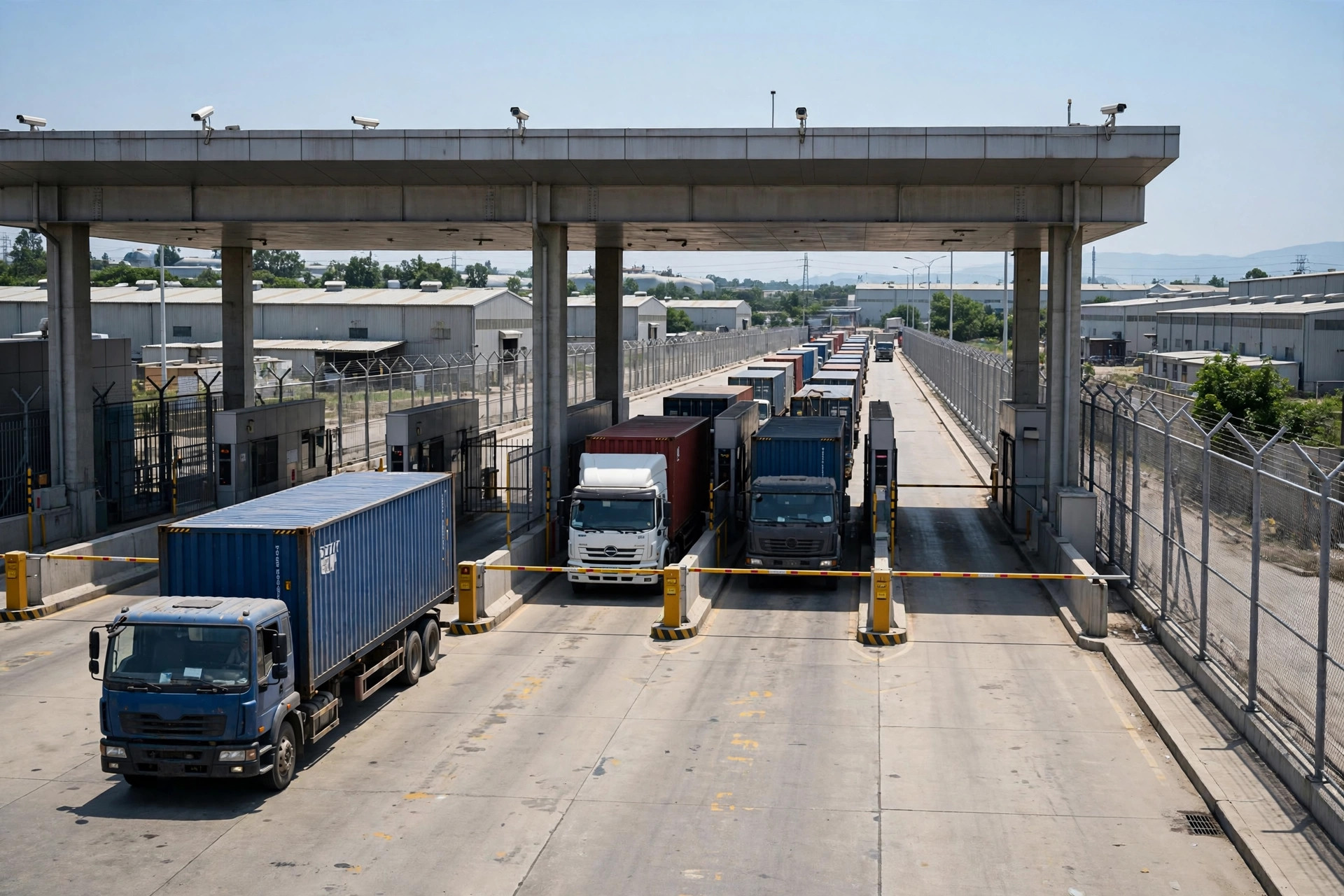
The scale is hard to wrap your head around. Penn Wharton puts the number at roughly $175 billion, spread across about 330,000 importers and 53 million entries. If you brought containers through LA/Long Beach after the reciprocal tariffs landed in April 2025, you probably paid tens of thousands of extra dollars per 40-foot box — and that is not a number I'm inventing, it's the math every importer in that lane already did. One thing to keep straight from the start: Section 232 and Section 301 tariffs are untouched by this ruling and stay in force. Your refund claim is for the IEEPA portion only.
CBP is building a new module inside ACE called CAPE to process refunds in phases, but it is not finished and the procedures are still moving. Treat everything procedural in this piece as a working picture, and confirm each step against CBP's latest published guidance.
One more piece of context before we go further: the ruling answers "was this legal," not "how do I get my money back." Collection stopped on the spot, but the backlog of past payments only moves through process. That is why you hear two contradictory things in the market — "it's automatic" and "you'll have to fight" — and both are half true. The stoppage is real; the refund still requires you to act.
Figure Out Which Door Is Yours
There are three paths, and which one you take depends entirely on where each of your entries sits right now. Status first, path second.
If the entry has not liquidated yet, your path is a Post-Summary Correction. This is the lightest of the three. It is essentially a fix to the filing before CBP's final settlement, done through your broker, removing the IEEPA duty rate and recalculating what you owe. Do it now, because the alternative — a formal protest after liquidation — is heavier in every way.
If the entry has already liquidated, you file a CBP Protest. Entries generally liquidate around 314 days after import. Once that happens, the only way to undo the assessment is a formal protest within a strict statutory window. Miss the window and the door closes. The filing mechanics and deadlines are procedural details, so verify them against CBP's current guidance rather than relying on anything you heard in a group chat three months ago. Your grounds are simple — the legal authority behind the assessment was struck down by the Supreme Court. Simple grounds do not mean a simple process: assemble the full evidence chain (entry summaries, duty payment records) up front, so CBP has no reason to park your case at the back of the queue.
The third path is a protective CIT action — suing in the Court of International Trade to preserve your rights. This one is for importers with large dollar amounts, messy fact patterns, or a real risk that the first two paths stall. The lawsuit is not the point; it is insurance on your refund claim, a way to make sure no procedural trickery kills your right while the agency works through its backlog. Lawyers cost money, so the decision rule is straightforward: walk this path only when the amount at stake makes the legal fees a sensible fraction of the recovery.
My judgment: for most small and mid-size importers, paths one and two are enough. The CIT route is a strategic instrument, not a requirement. Reserve it for amounts big enough to justify a trade lawyer.
Get Your Books Straight Before You File Anything
Before your broker files a single thing, do three pieces of homework yourself.
First, dig out your entry summaries and your actual duty payment records. How many entries carried IEEPA duties, and how much did each one cost you? Keep your own ledger. Do not outsource this entirely to your broker — when you hold the data yourself, every conversation about corrections goes better.
Second, get the liquidation status of every entry. Which ones are still open, which have liquidated — that determines the path. Ask your broker to pull a complete entry-status list from ACE and walk it line by line. The earliest entries from February 2025 are running up against the liquidation window right now, so triage those first. And learn to spot the IEEPA line yourself: on the entry summary, it is the duty line tied to the surcharge actions, distinct from 301 and 232. Match it against your ACH debit records. If the amounts line up, the ledger is real.
Third, separate IEEPA from 301/232 in your accounting. Most importers' books have them blended, but the refund only touches the IEEPA piece. Blended math means you either over-claim or under-claim, and both are bad — one invites trouble, the other leaves money on the table. A practical format that works: split every duty statement into three columns — IEEPA, 301, 232 — and keep using it for every reconciliation from here on. Set it up once and it pays off forever.
Three Ways Importers Lose This Money
The first is the passive one: assuming the refund is automatic and sitting at home waiting. The CAPE module will process refunds in phases, but it is not a magic button. Entries with no action taken will still liquidate and expire on schedule. The people who wait end up waiting past the deadline.
The second is letting liquidation lapse. That roughly 314-day window is a hard line. Once it passes without action, the right is gone permanently. I have watched importers drag their feet on deadline-driven work for twenty years, and this is the one where dragging costs real money. Set yourself a standing habit: review the status list every Friday. Your broker has hundreds of clients and will not babysit your deadlines for you.
The third is commingling IEEPA with 301/232. You are claiming back IEEPA duties; 232 and 301 stay in force. Keep them separated in your books and even more carefully separated in your filings. Throw ineligible amounts into a claim and you risk slowing down the whole case. The flip side matters too: do not abandon a legitimate IEEPA claim just because sorting it out feels like work.
One more thing to watch: after the ruling, the government shifted to temporary surcharges under Section 122 of the Trade Act of 1974, which come with a 150-day clock. New taxes are still on the table. The refund and the new taxes are two separate matters — don't let anyone convince you they net out.
Your Three Moves This Week
- Call your customs broker and demand a complete entry list with liquidation status, flagged for which entries carry IEEPA duties.
- Pull every duty payment record since February 2025 and build a standalone IEEPA ledger, precise down to the individual entry.
- Once you have the status list, match each entry to its path: open entries get a Post-Summary Correction, liquidated ones get a Protest, and the big-dollar ones get a hard look at whether a protective CIT filing is warranted.
The clock on this one is real. Move while the entries are still actionable.