A friend who imports outdoor lighting called me a few years back, frustrated. "Lao Mi, my broker classified my lights under a code with 25% duty. A competitor sells basically the same lamp and pays 7.5%. That 17.5-point gap is costing me close to a hundred grand a year. Tell me I'm not crazy."
He sent me the code. The difference was in the last few digits. Same product, different classification logic, wildly different duty rate. Since then, whenever someone new to importing asks me where to start, I say the same thing: learn the HTS code first. It is the ID number of your import — how much your goods are worth on paper, how much duty you pay, and whether Section 301 tariffs stack on top all come down to this string of digits.
Where the 10 Digits Come From
The Harmonized System is global. More than 200 countries use it, and the first 6 digits are identical worldwide. Each country adds its own digits after that. The US version is called the HTSUS — Harmonized Tariff Schedule of the United States — and it runs 10 digits.
Take a laptop, typically 8471.30.0100:
- 84 — Chapter 84: machinery and electrical equipment
- 8471 — Automatic data processing machines (computers)
- 8471.30 — First 6 digits, same worldwide: portable automatic data processing machines
- 8471.30.01 — Digits 7 and 8: the US tariff rate line
- 8471.30.0100 — Digits 9 and 10: statistical suffix, no effect on the duty rate
The rule of thumb: digits 1–6 set the category, digits 7–8 set the duty rate, digits 9–10 are statistics only. When your broker argues about classification, the fight is almost always over digits 7 and 8.
Where to Look It Up: One Official Source
Skip the third-party "duty calculator" websites — their data can be years stale. There is exactly one source that matters: the US International Trade Commission's search tool at hts.usitc.gov. Free, no registration.
How to use it:
- Type a plain-English product keyword, e.g. "portable lamp"
- It returns candidate codes with descriptions
- Click through to see the full duty table — Column 1 General is the normal rate for China-origin goods (the MFN rate)
- Scroll for "Additional Duties" notes — that is often where Section 301 tariffs show up
My habit: screenshot the duty table, stamp it with the date, and file it. Rates change. If Customs ever questions your classification, that screenshot is your proof that you did your homework.
Reading the Duty Table: What the Three Columns Mean
The HTS page shows three rate columns, and newcomers always get confused:
- Column 1 General: the normal rate for WTO members, including China. This is the MFN rate. Many electronics are Free, apparel can run 16–32%, ordinary consumer goods 3–10%.
- Column 1 Special: preferential rates for free-trade partners like Mexico and Canada under USMCA. Irrelevant for China-origin goods — glance and move on.
- Column 2: rates for Cuba, North Korea, and other non-normal-trade-relations countries. Punishingly high. You will probably never use it, but know it exists so you don't read the wrong column.
Here is the catch: Column 1 General is only layer one. China-origin goods stack Section 301 tariffs on top — 25% for Lists 1–3, 7.5% for List 4A, up to 100% for electric vehicles. Those extra duties don't appear in the HTS rate table; you check them against the USTR lists by tariff number. So your real landed-duty formula is: MFN rate + Section 301 rate + MPF (0.3464%) + HMF (0.125% on ocean freight). Quote a price off Column 1 alone and the loss comes out of your pocket.
The General Rules of Interpretation: Customs' Rulebook
The tariff schedule opens with six General Rules of Interpretation (GRI). Customs officers and courts decide classification disputes with these. You don't need to memorize all six, but two will save you:
- GRI 1: classification is determined by the terms of the headings. Chapter and section titles are for reference only and have no legal weight. Don't lock in a code just because a chapter title mentions your product.
- GRI 6: the same rules apply at the subheading level. Once digits 1–6 are set, digits 7–10 get the same rigorous treatment — no shortcuts.
I learned this the hard way. Years ago I classified a backpack with a built-in charger as "luggage" at 17% plus. On review, Customs said the essential character was an electronic accessory, different rate entirely. Back duties plus interest — that one stung. Since then, every new product gets a GRI check before I let a code go out the door.
Three Traps New Importers Walk Into
Trap one: classifying by what it looks like instead of what it is.
Classification follows objective characteristics and function, not your marketing copy. I've seen Bluetooth-enabled desk lamps classified as ordinary lighting, when Customs decided the essential function had shifted toward audio equipment. Double-digit rate difference. For multi-function products, the "essential character" decides — it's written right into the rules.
Trap two: using one code for samples and bulk goods.
Samples sometimes travel under special provisions like 9811; bulk shipments classify normally. Mix them on one entry and an audit will find it. Samples go one way, commercial goods another.
Trap three: treating your broker's word as final.
Your broker files hundreds of entries a day. Nobody knows your product better than you do — and legally, the classification is the importer's responsibility. The penalty lands on you, not the broker. My advice: for every new product, spend 30 minutes on hts.usitc.gov yourself, then compare notes with your broker. Ship only when both sides agree.
Get a Binding Answer Before You Bet Big: CROSS Rulings
If the classification is genuinely ambiguous and the stakes are high, there is an official channel: request a binding ruling from CBP through the CROSS system at rulings.cbp.gov. It's free.
Describe the product — materials, function, use — attach photos and spec sheets, and CBP issues a written ruling telling you the correct classification. It binds every US port, your broker, and Customs alike.
Use it in two situations: the product is high-value and one rate point means tens of thousands of dollars; or the product sits between two plausible codes and you and your broker disagree. Rulings take weeks to months, so plan ahead — don't start the process the week your vessel sails.
Build Your Own Classification Ledger
I push every client to do this, and it takes almost no effort:
- One 10-digit code per SKU
- Next to it: the date you verified it, the basis (screenshot), and who at the brokerage confirmed it
- When rates change (Section 301 list updates, for example), log the date and the new rate
The ledger does two jobs. First, when Customs examines your shipment, you produce your classification basis on the spot. Second, duty drawback — refunds of duties on re-exported goods — requires the import and the export to share the same 8-digit code. Clean records, smooth refunds. I'll walk through drawback in detail in part four of this series.
The HTS code looks boring. It isn't. It's the master switch for your entire import cost. Get the switch right and clearance, duty payment, and refunds all run smooth. Get it wrong and everything downstream is trouble. Next up: I'll follow one container from Shanghai to a Los Angeles warehouse and show you exactly what happens at each step of US import clearance.
Regulations and rates change. Verify against cbp.gov and your customs broker before acting.
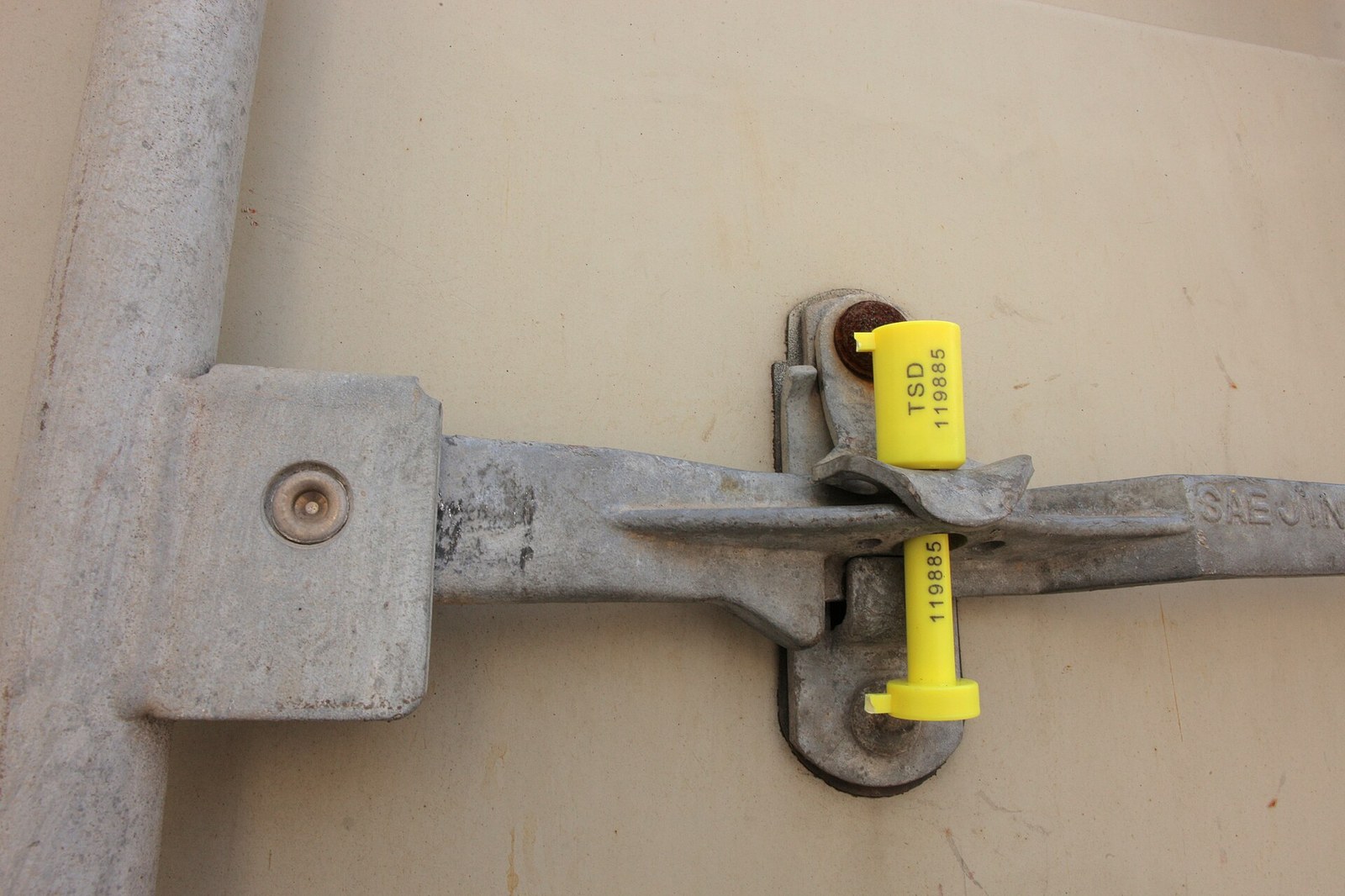
Photo credits: "ISO Container Seal" by ElHeineken, CC BY 3.0, via Wikimedia Commons; container yard photo by Fæ, public domain, via Wikimedia Commons.