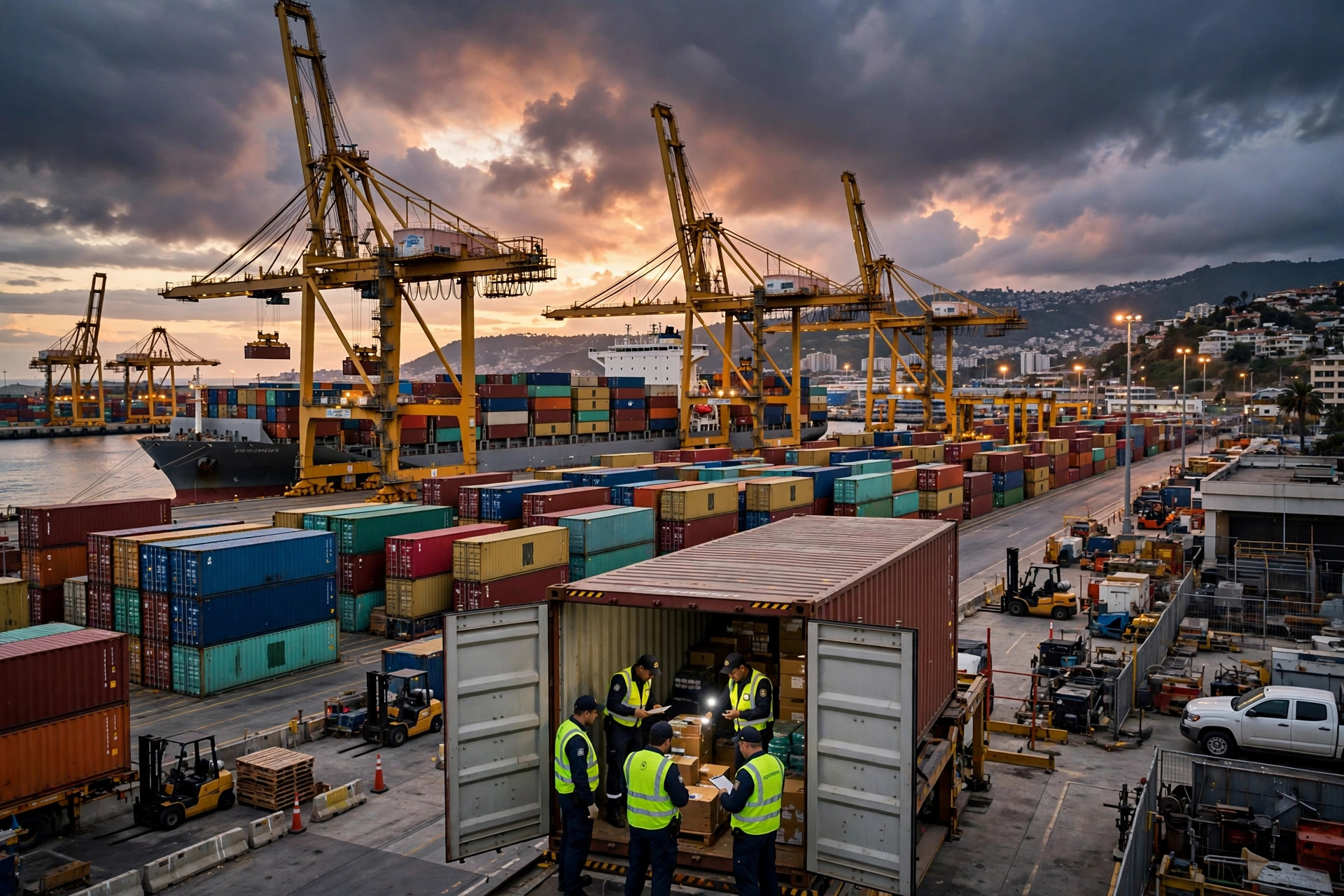
Here is my conclusion up front: Chile import customs clearance runs on the most calculable rulebook in South America - a flat 6% ad valorem duty on CIF value, with 19% VAT (IVA) stacked on top. The tax math is dead simple. But calculable does not mean easy. I have seen too many importers confuse "I can compute the duty" with "clearance will be smooth," then watch their container sit at San Antonio port for two weeks while demurrage eats every dollar of margin.
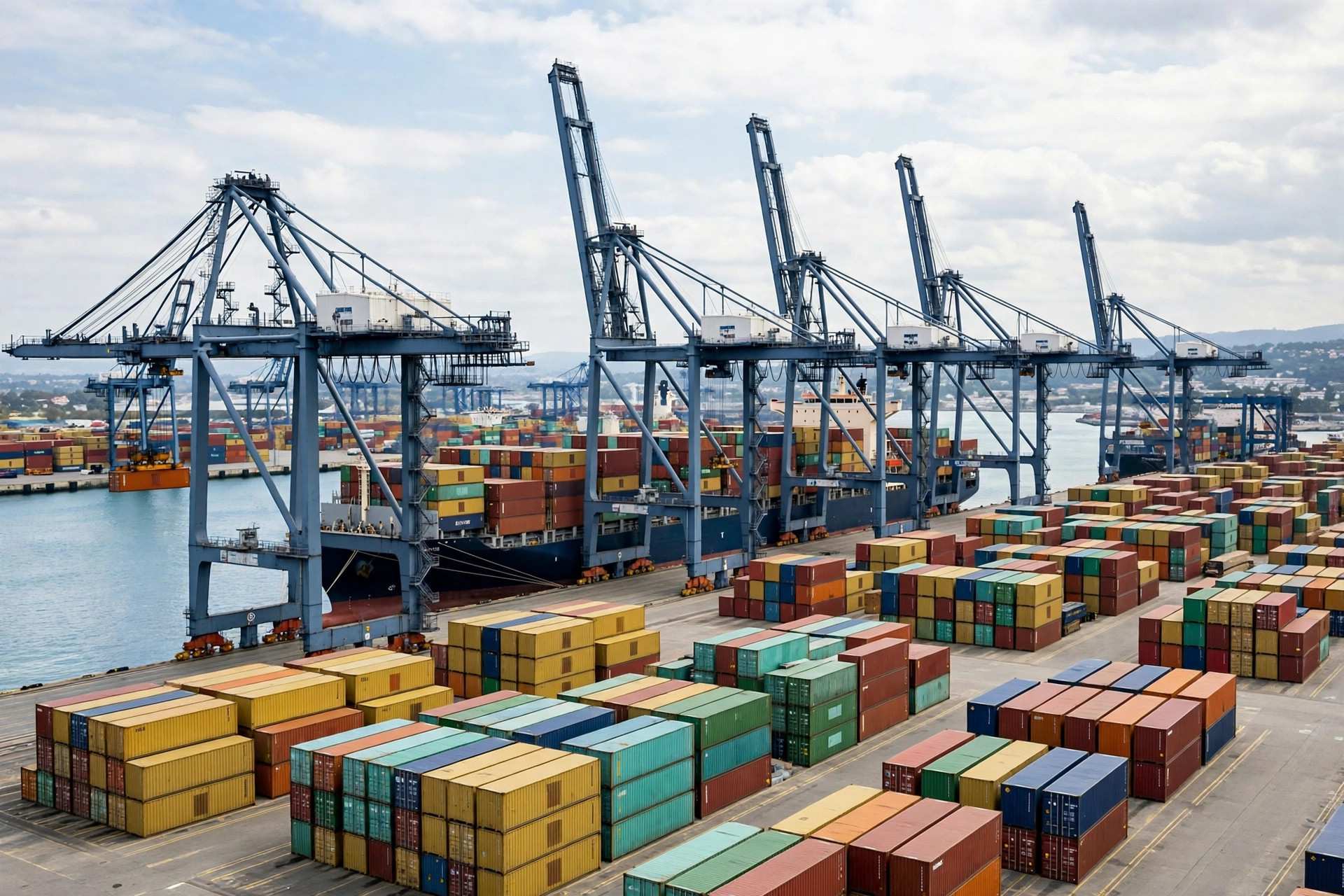
One correction first, because I see it constantly: Santiago is landlocked. It has no seaport. Your cargo actually lands at the Port of San Antonio (Chile's largest container port) or Valparaiso, roughly 100 kilometers from Santiago. If your forwarder's quote says "Port of Santiago," be suspicious - someone who cannot name the destination port probably cannot handle the paperwork either.
Frankly, there are two sides to this. On one side, the rules are transparent: the document checklist, the duty rates, the inspection process are all published by Chile's Servicio Nacional de Aduanas. No gray zones. On the other side, the rules are rigid: miss one item on the checklist and there is no "work something out." Put the two sides together and you get the real picture: this is the best market in South America for people who work from checklists, and the most punishing one for people who wing it.
I Have Seen Too Many People Trip on the First Piece of Paper
August 2023. A client exporting hardware components shipped a full container, CIF value $48,000, from Qingdao to San Antonio. On day three after arrival, the customs broker called: no Form F certificate of origin in sight.
Form F is the origin certificate under the China-Chile free trade agreement (in force since 2006). With it, most Chinese-origin goods qualify for 0% duty. Without it, you pay the flat 6% MFN rate, no discussion. The client's forwarder had stuffed Form F into the same courier pouch as the original bill of lading. The pouch got lost in transit. The B/L was reissued. Nobody remembered to reissue the origin certificate.
The damage came in three layers. First, the duty: 6% of $48,000 is $2,880, paid in full. Second, the time: mismatched documents triggered a manual review, and the box sat at the port for 11 extra days. Third, demurrage and port storage: the shipping line's free time is typically around 7 days (check your B/L terms), so the overage plus terminal storage burned another $1,000-plus. One missing piece of paper, roughly $4,000 gone.
The fix was to pay the 6%, release the cargo, and file for a refund later. The broker's exact words: "You can get it back, if you are patient." In Chile, that refund process routinely takes half a year or more. Ever since, item one on my Chile shipping checklist reads: ship Form F separately from the B/L, and email a scan to the broker for pre-clearance before the vessel sails. Paper can be reissued. Sailing schedules cannot.
The second trap is sneakier: wooden packaging. Early 2024, another shipment - equipment on wooden pallets, no fumigation certificate. SAG (the Agricultural and Livestock Service) held it at the port. SAG is famously strict in South America; seeds, soil, and untreated wood packaging are all on its watch list. The options were fumigation at the port or re-export. The client chose port fumigation: one extra week, several thousand dollars. My rule since then: cargo bound for Chile either rides on plastic pallets or travels with a fumigation certificate. There is no third option.
The Chile Import Customs Clearance Document Checklist: Miss One Item, Get Stuck
Here is the full list, ordered by "will definitely hold your cargo if missing":
- Commercial invoice, itemizing product names, unit prices, and totals. Do not write vague descriptions like "consumer goods" - that is an invitation to a physical inspection.
- Original bill of lading. Chile's customs does not accept telex release - a fact that surprises first-timers. The consignee or notify party must be a Chilean company, and the documents must show its tax ID (RUT). Also note: phrases like "care of" or "on behalf of" in the consignee field will kill your clearance.
- Packing list, mandatory for full-container loads.
- Form F certificate of origin for the FTA preferential rate. Without it: 6%. With it: 0% for most goods. That $4,000 lesson above is the price tag of this document.
- Insurance policy / expense statement if freight and insurance are not included in the commercial invoice (e.g., EXW shipments).
- Special permits by product type: SAG approval for agricultural goods and wood packaging, ISP (Public Health Institute) clearance for cosmetics and pharmaceuticals, SEC certification for certain electrical products. Chile's customs site publishes the full list of controlled goods - when in doubt, go by the latest official policy.
- Importer's price affidavit, on a form your broker supplies. You are legally standing behind your declared values.
One more operational note: formal imports (commercial shipments over $500 FOB) must be filed by a licensed customs broker (agente de aduana) through a Declaration of Entry. Do not try to DIY this. Chile does not play that game.
Chile Import Customs Clearance Timelines: Three Days Normally, Inspections Extra
Here is how the clock runs after the vessel berths:
- Ocean leg: roughly 24 to 30 days from major Chinese ports to San Antonio, depending on the carrier's rotation. Go by the published sailing schedule.
- Normal clearance: with complete documents and no inspection, release commonly takes 1 to 3 business days. A good broker pre-files so the declaration is ready the day the vessel arrives.
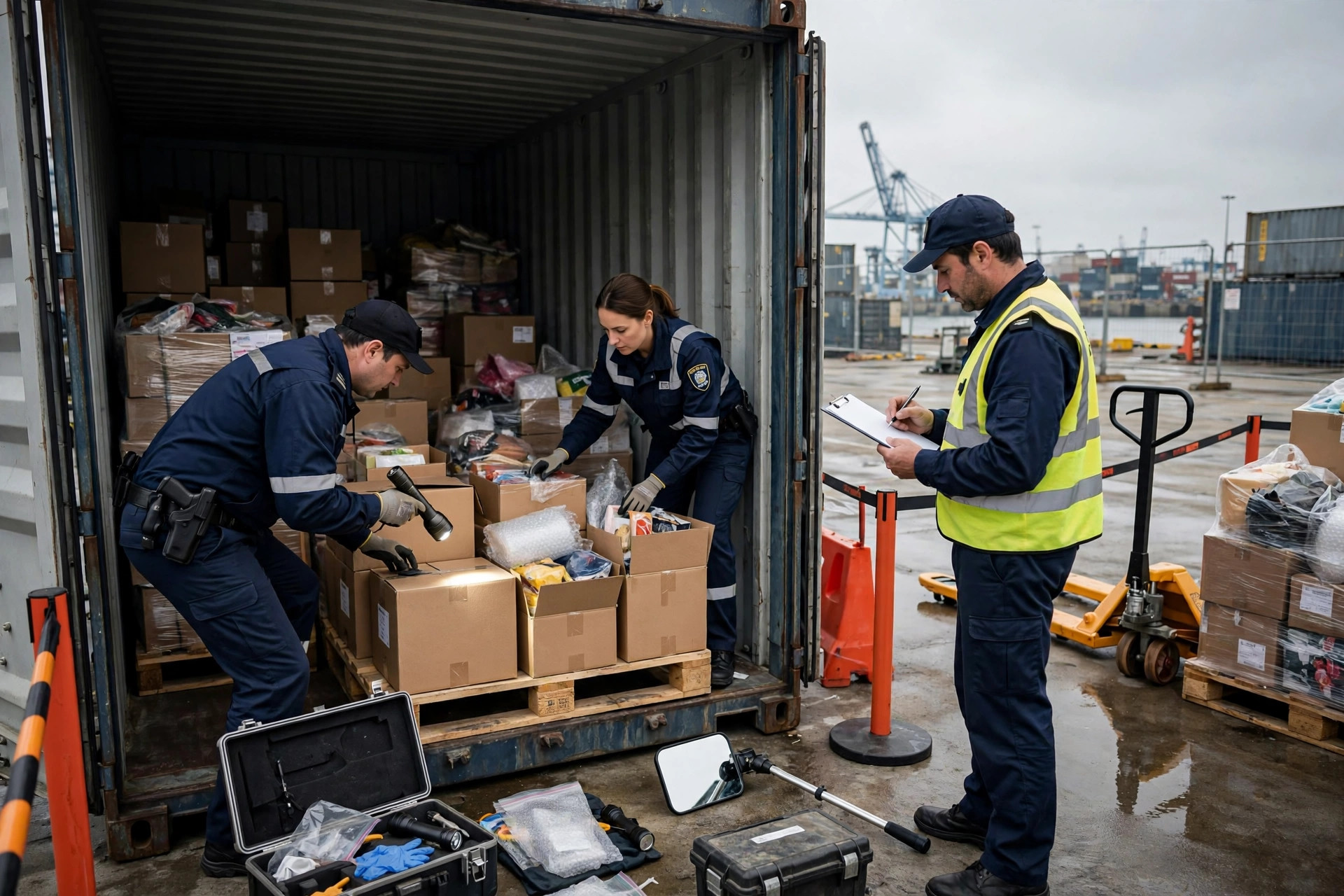
- Inspection: customs may pull your shipment for a document review or a physical exam. The regulation allows up to 5 days for the inspection process. The inspection itself is not the scary part - a document-to-cargo mismatch found during inspection is.
- The hidden cost: free time on the container is usually around 7 days, and free terminal storage is even shorter. After that, demurrage plus port storage burns cash daily. A 40-foot box stuck for 10 days can easily cost several hundred to over a thousand dollars. In both cases above, the real killer was never the duty. It was time.
The Tax Math: Two Ways to Clear a $10,000 CIF Shipment
Chile's tax structure is simple enough to do in your head. Here is a side-by-side on $10,000 CIF:
| Item | Without origin certificate | With Form F |
|---|---|---|
| Duty (6% of CIF) | $600 | $0 |
| VAT 19% (on CIF + duty) | ($10,000 + $600) x 19% = $2,014 | $10,000 x 19% = $1,900 |
| Total tax burden | $2,614 (26.14% of cargo value) | $1,900 (19% of cargo value) |
One Form F is worth $714 - 7.14% of cargo value. The origin certificate is not a nice-to-have. It is the highest-ROI piece of paper in Chile import customs clearance.
One more thing worth knowing: the 19% IVA is recoverable as input tax credit for VAT-registered Chilean importers. So for a legitimate importer, the real duty cost is just the 6% (or 0%), and the VAT is a cash-flow timing issue. Which is exactly why I keep saying the pain in Chile is never the tax rate - the tax is calculable; the cargo not moving is what actually hurts.
Two Sides Again: Transparency Is the Advantage and the Trap
Here is the contrarian take. People hear "only 6% duty" and treat Chile like Southeast Asia - just pay and move on. Wrong. Chile's logic runs the other way: low duty, rigid rules, zero flexibility. Problems you solve elsewhere by "talking to customs" can only be solved in Chile by "having the documents ready before the vessel sails." People who adapt find Chile the easiest market in South America. People who do not find it tougher than Brazil - Brazil has complicated rules but human flexibility; Chile has simple rules and no flexibility.
And the trade-off I make every client consider: spend $200 on a pre-shipment document review by your broker, or save the $200 and roll the dice? I have watched too many people choose the dice, then spend $2,000 on the lesson. A pre-review catches the fixable things: wrong RUT, vague product descriptions, HS codes on Form F that do not match the invoice, missing fumigation proof. Fix those before loading and the cost is zero. Fix them after arrival and the cost is demurrage.
So the next time someone tells you "Chile clearance is easy," ask them one question first: did your Form F arrive?
By Lao Mi, Supply Chain Veteran (20 yrs)