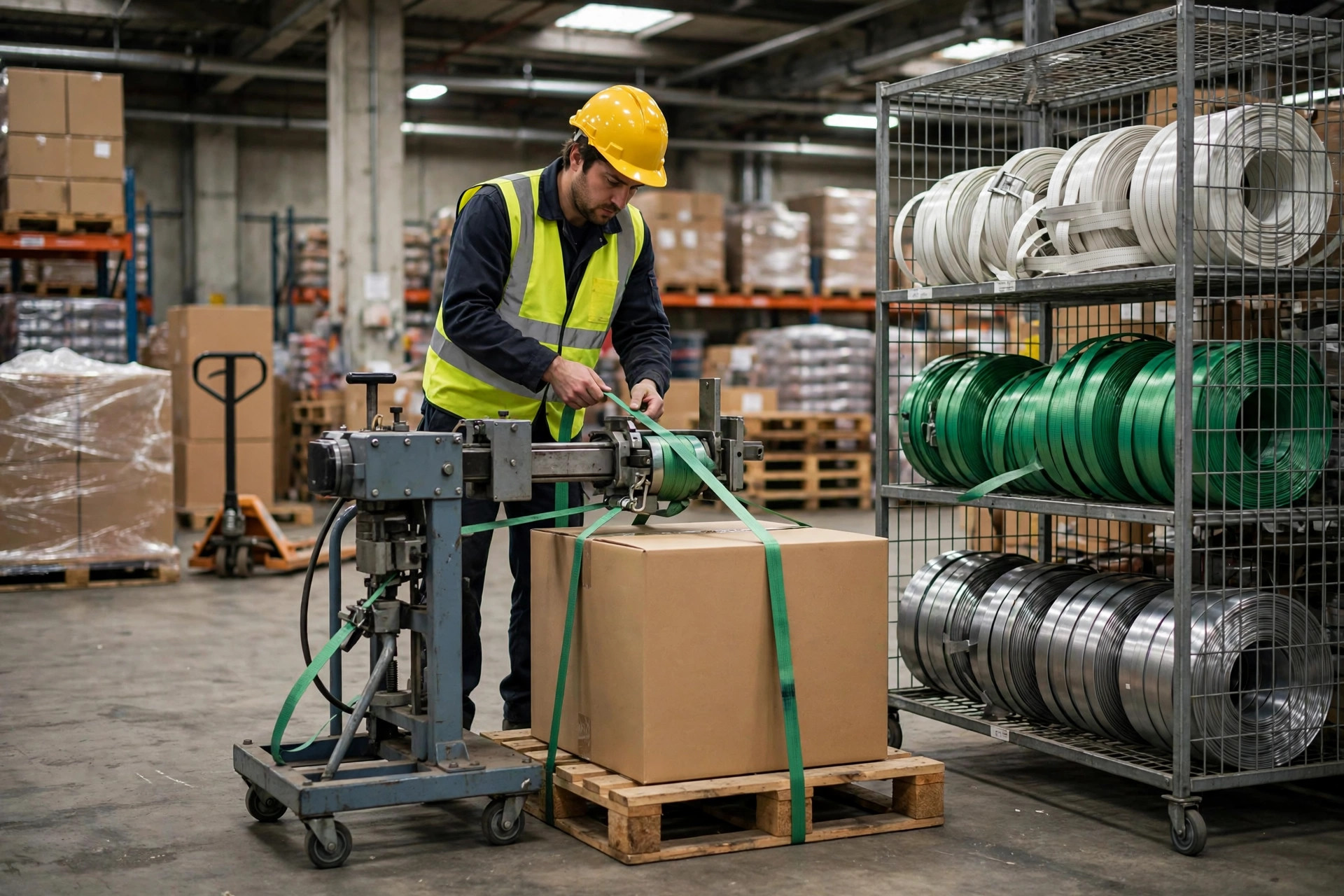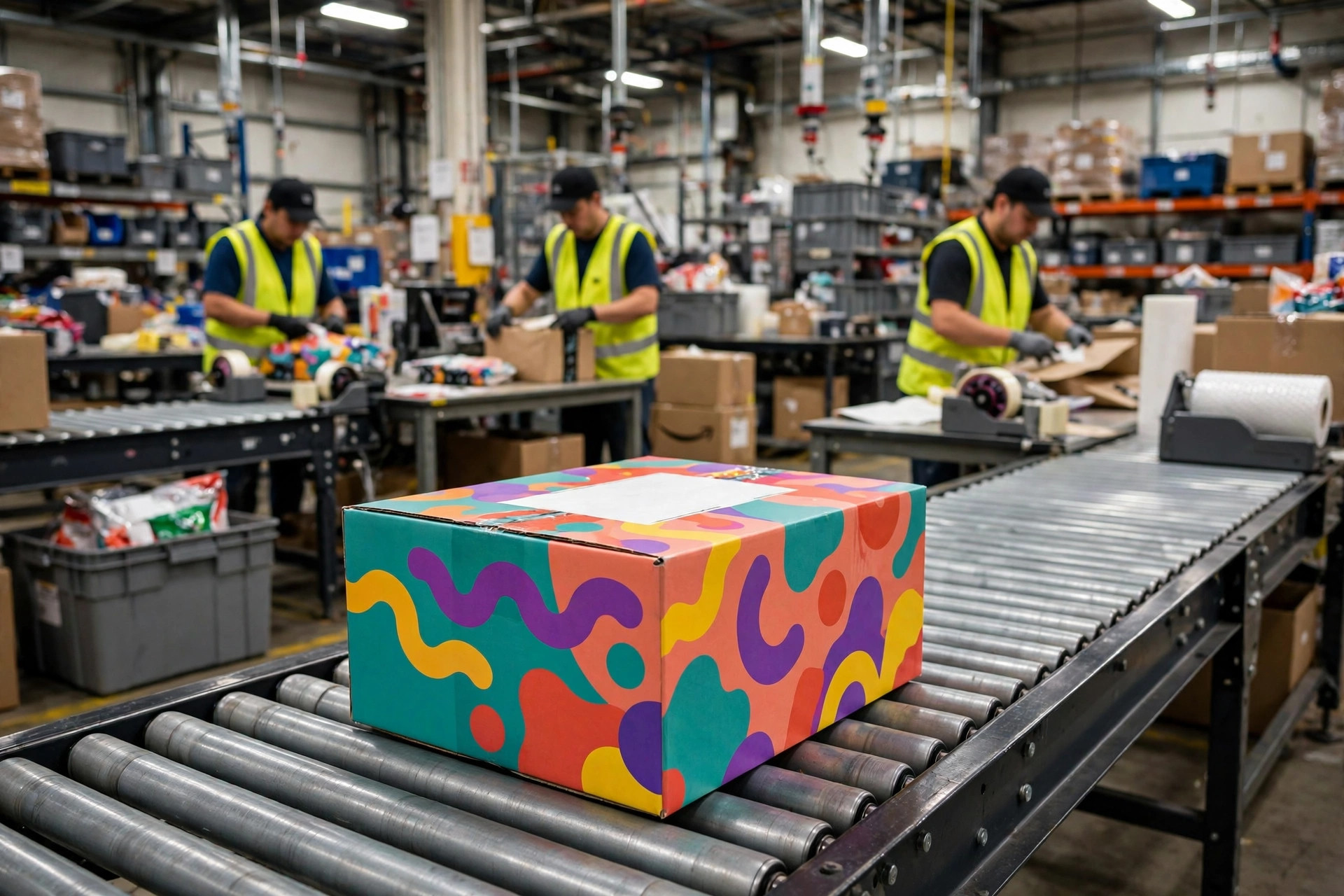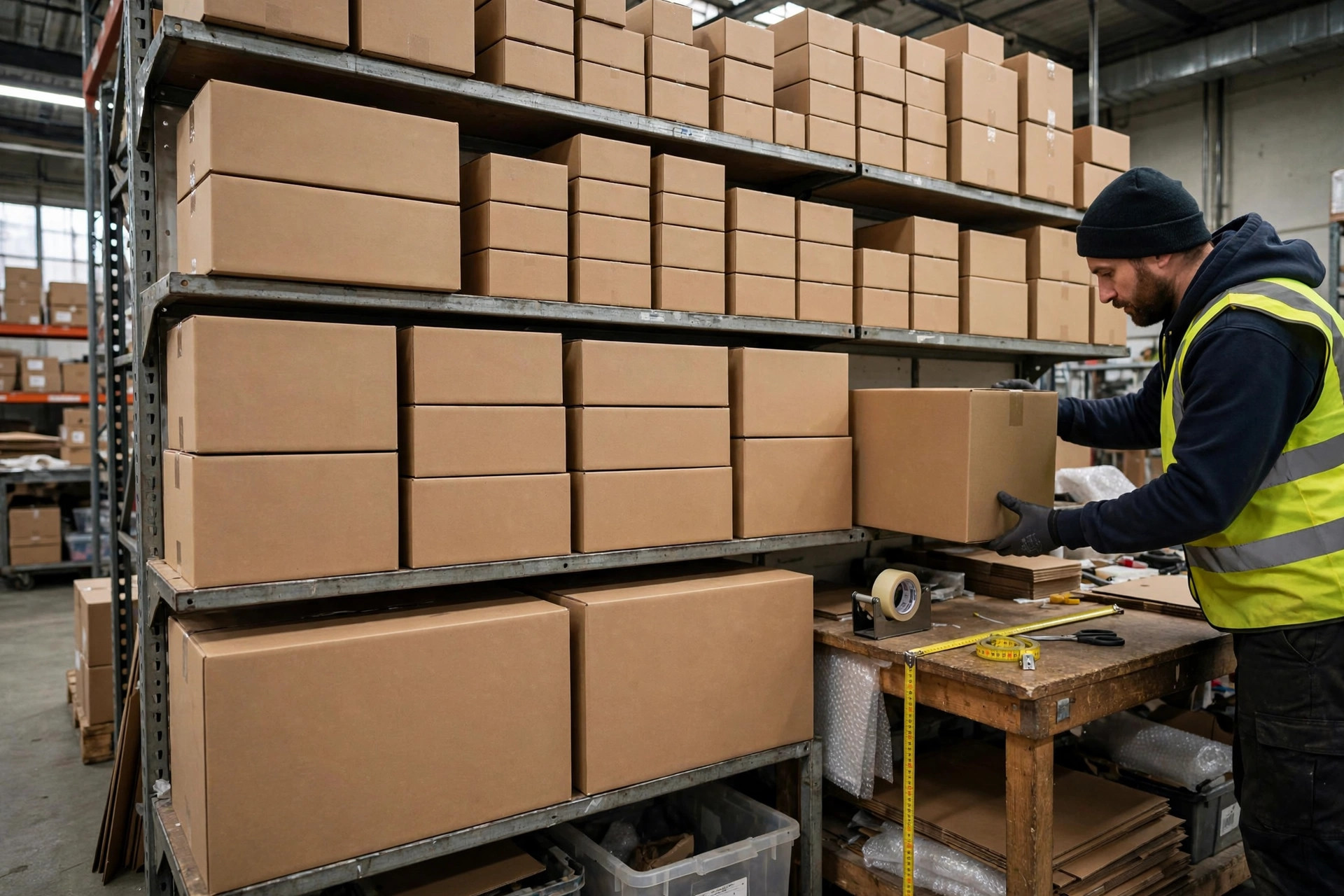
If you've ever wondered how many box sizes should a warehouse stock, welcome to the club — I've lived this mistake. At our peak, our carton area held more than a dozen box sizes. The forklift had to squeeze sideways through the aisle. And the infuriating part? Three or four sizes did all the work while the rest sat in the corner collecting dust and moisture, eventually sold off as scrap. A small warehouse like ours can't afford to burn money like that.
A Dozen Box Sizes, Nine of Them Collecting Dust
Only a small-warehouse owner knows the pain of overstocked cartons. In our 32,000-square-foot building, the carton area ate a huge chunk of floor space — room that could have held two rows of racking, filled instead with boxes kept "just in case." Cash sat there too: a dozen-plus sizes, each needing its own safety stock, money lying flat on the floor. Grabbing the wrong box was a daily event — big box for small goods, stuffed with filler, and the carrier billed dimensional weight while shipping costs climbed.
How do the big guys solve it? Cartonization software that calculates the optimal box for every order. I asked around for quotes, took one look, and quietly closed the tab. Tens of thousands of dollars a year — our little warehouse can't afford to burn money like that. The big-company playbook isn't built for us.
My most memorable moment: a new hire once grabbed a box big enough for a microwave to ship two phone cases, filled half of it with foam, and the customer probably thought we'd pivoted to selling foam. Too many choices paralyze people — packers would stand in the carton area debating for a full minute which box to take. Add it up over a day and you've burned enough time to pack dozens more orders.
But I wasn't about to surrender to the box-size monster. Time for the scrappy approach.
How Many Box Sizes Should You Actually Stock? Ask Your Order Data
Here's a counterintuitive take: more box sizes does not mean more flexibility. That's an illusion. Every extra size means more inventory cash, more mispicks, more rework, and thinner leverage when negotiating with your box supplier. The cheapest box family is usually two or three sizes smaller than you'd guess.
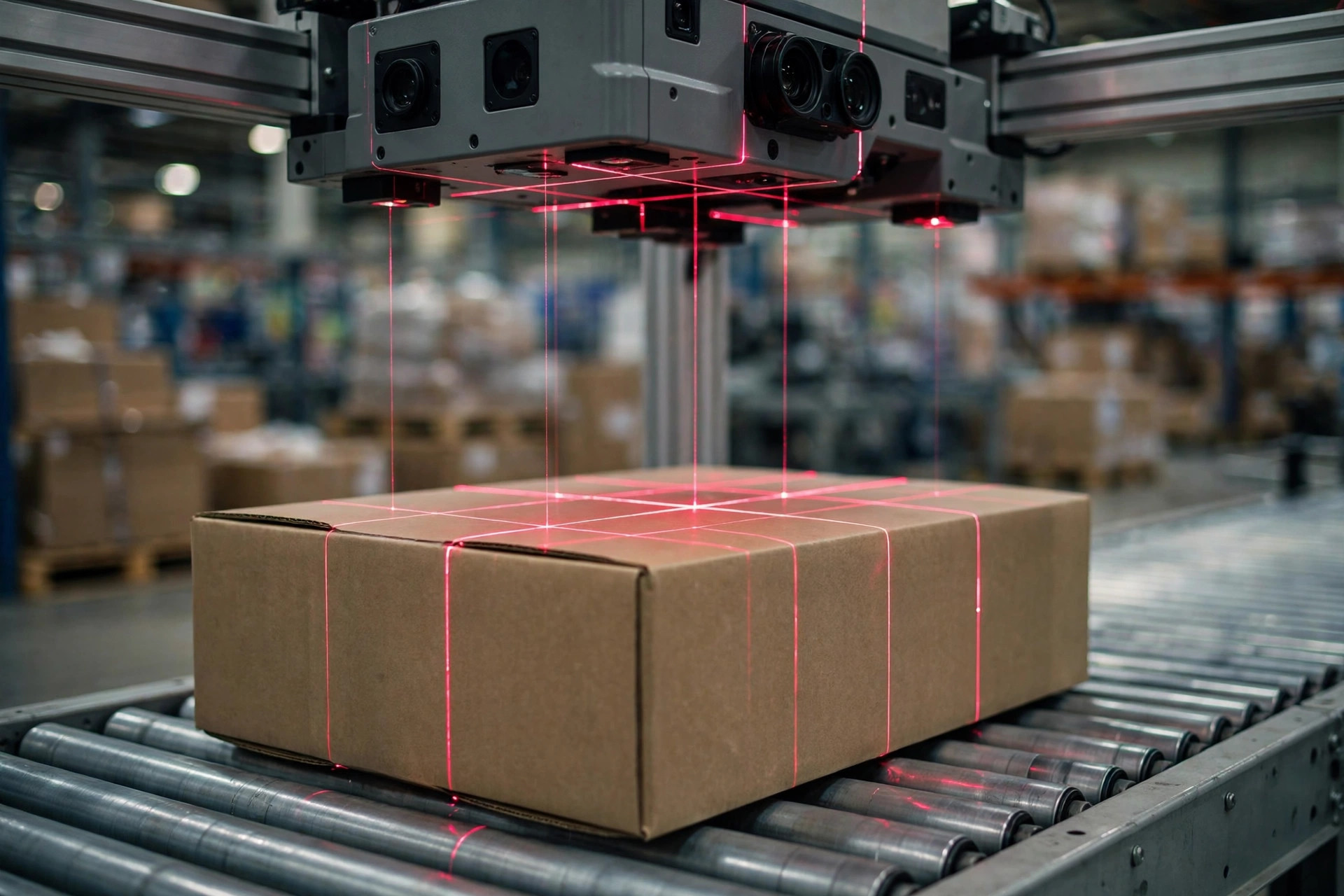
The scrappy method boils down to one sentence: stop guessing, let your order data tell you. I exported three months of order details — which SKUs were in each order, each SKU's dimensions and weight — and plotted the distribution in Excel by two dimensions: longest side and volume. The result was obvious at a glance: three or four box dimensions could cover eighty percent of our orders.
That's zero-cost, redneck cartonization. The big guys run algorithms; we run Excel. We're solving the same problem: what do your orders actually look like.
Three Steps to Reverse-Engineer Your Box Family
Step one: export the data. Order details plus your item master. You need exactly four fields: length, width, height, weight. If your item master is missing dimensions, spend an afternoon filling them in first — skip this and everything downstream is garbage.
Step two: look at the distribution. Bucket orders by longest side and see what share of orders each bucket covers. Pick the three or four dimensions that cover eighty percent of orders. Ignore the long tail for now.
Our distribution was a textbook case: the 12-inch longest-side bucket alone covered forty percent of orders; two more buckets covered another thirty. The remaining thirty percent scattered everywhere. Classic 80/20 — three or four sizes handling eighty percent of orders. Don't let the long tail scare you; it looks busy but carries little weight.
Step three: define the family. Five or six sizes, targeting 95% order coverage. For the 5% of odd-shaped orders in the tail, keep one or two "universal" boxes — adjustable-height cartons or a generic large box plus filler, reserved for weirdos. Remember: the box family serves the 95% of normal orders. Don't maintain three extra sizes for 5% of freak orders.
Pick your universal boxes carefully: go with height-adjustable ones. One score line and the box height follows the product, and dimensional weight drops immediately. Don't pick a rigid oversized box as your fallback — if the fallback becomes the habit, shipping costs creep right back up. We keep two universals, one large and one small: the large handles odd-shaped items, the small handles multi-piece small orders. Clear division of labor, no freelancing.
That's what we did: from more than a dozen sizes down to six. The results? The carton area shrank by more than half, freeing space for two rows of racking. Fewer sizes meant bigger volume per size, and our box supplier gave us a better price. Boxes matched orders better, dimensional-weight waste dropped, and monthly shipping costs fell by a serious chunk. Mispicks and rework basically vanished.
| Before (a dozen-plus sizes) | After (6 sizes) |
|---|---|
| Carton area ate huge floor space, forklift squeezed sideways | Cut by more than half, room for two new rack rows |
| Fragmented volume, weak negotiating power | Concentrated volume, noticeably better unit price |
| Big boxes for small goods, dimensional-weight waste | Right-sized boxes, monthly shipping savings in the thousands |
| Wrong-box rework was routine | Basically gone |
A friend next door who sells pet supplies copied me: 20-plus sizes down to seven, half the carton area freed up for new products. His exact words: "If I'd known you could Marie Kondo your cartons, I'd have done it last year." He even bragged that his pack stations went from two people to one — the freed-up hands moved to QC, and the error rate went down.
Now the trade-off, because there's always one: too few sizes and boxes run oversized — dunnage and shipping climb. Too many and inventory plus management costs climb. So how many box sizes should a warehouse stock? For an operation our size, five to eight is a solid range. The big guys stock twenty or thirty because their order profiles are genuinely complex. A small warehouse copying that is just picking a fight with itself.
One hidden cost most people miss: dunnage. Go up one box size and filler usage grows by volume, not by linear inches. We did the math — boxes averaging two inches oversized were costing us enough in filler each month to cover half a hire. That calculation made the decision to cut sizes even easier. You're not just saving on boxes; you're saving across the whole pack line.
And a quality trade-off while we're at it: single-wall versus double-wall, don't go all-in on either. Our rule — single-wall for normal small items to save cost, double-wall for anything over a certain weight. We'd rather pay a bit more per box than eat one damage claim. A small warehouse can't survive bad reviews; one nasty review costs more than a truckload of boxes.
How Many Box Sizes, Then? Advice for Fellow Small Warehouses
First, cut first and ask questions later. Don't mourn those "just in case" sizes — you can't afford the "just in case." Second, keep one or two universal boxes for the long tail; freak orders don't deserve their own sizes. Third, when negotiating with your box supplier, say it straight: "we only need six sizes." Concentrated volume talks. Fourth, review your order profile every quarter. Product mixes change — last year a big client switched product lines and suddenly our orders skewed larger; if our quarterly review hadn't caught it, the carton pile would have grown back.
One more practical trick: turn your final six sizes into a one-page cheat sheet and tape it at every pack station — which product dimensions take which box, at a glance. New hires are productive on day one without a veteran hovering. After we posted ours, wrong-box picks became history and training costs dropped. Scrappy method, scrappy execution — the results aren't scrappy at all.
The big guys have their algorithms. Small warehouses have their own way of surviving.
By Xiao Ma, Small Warehouse Owner