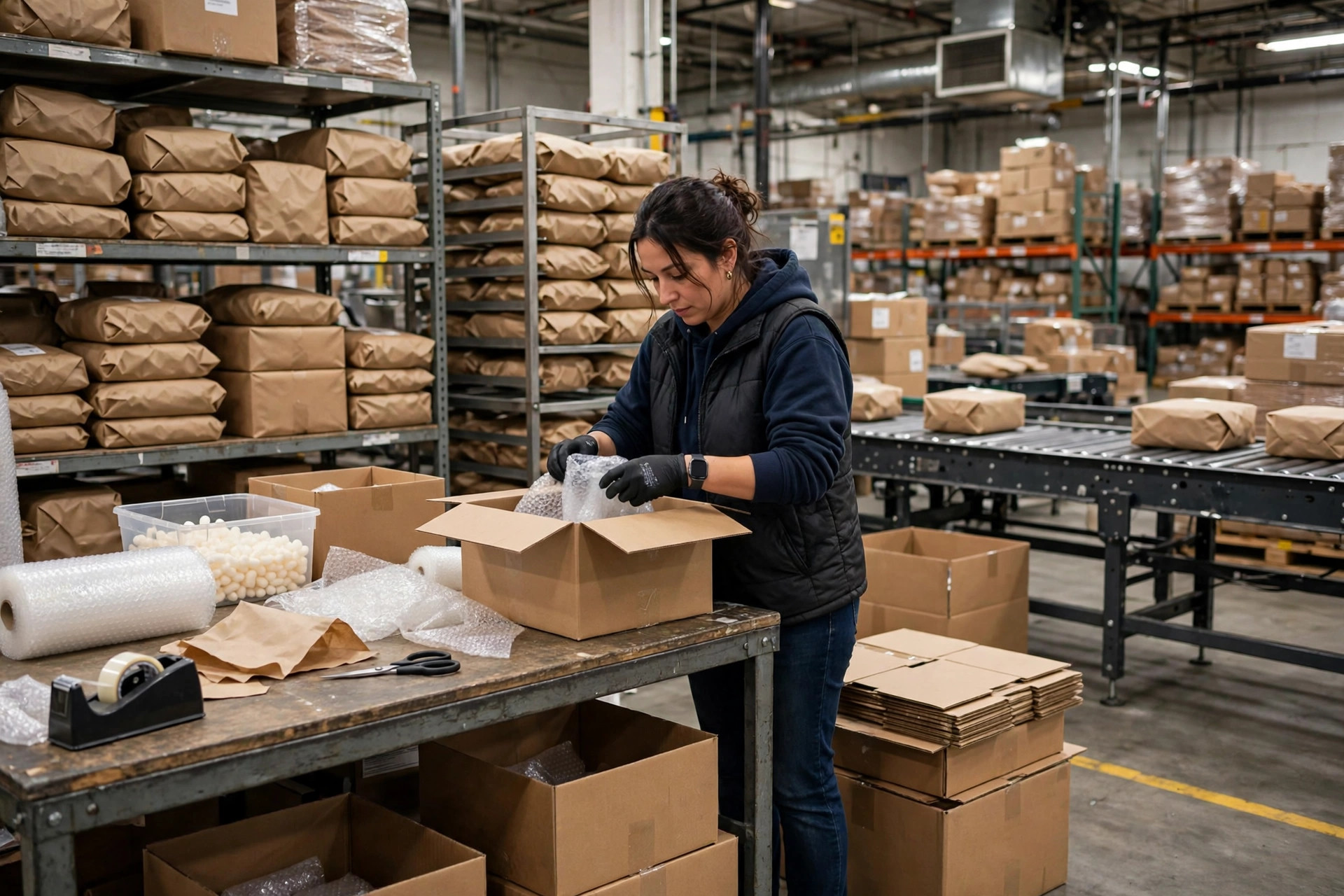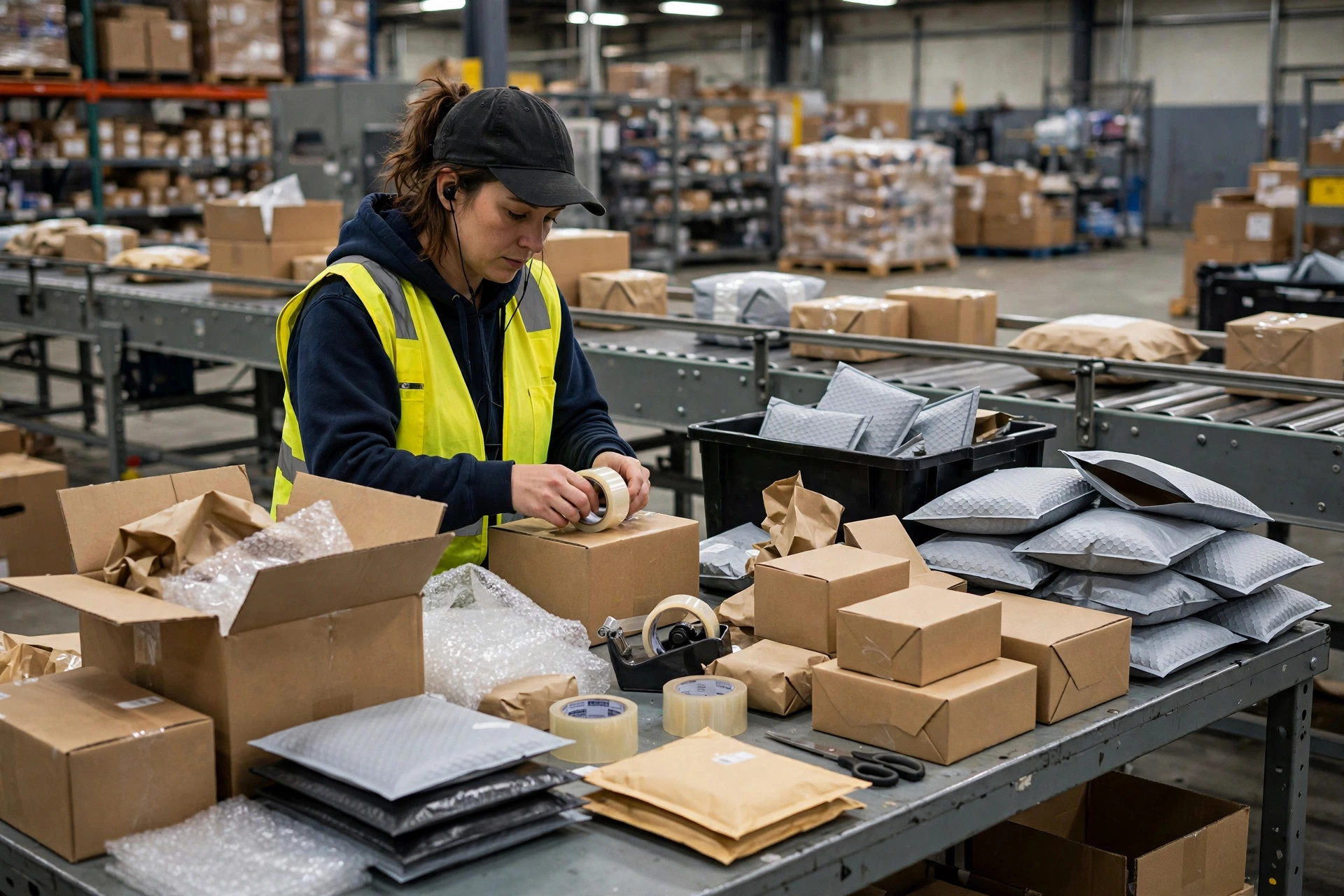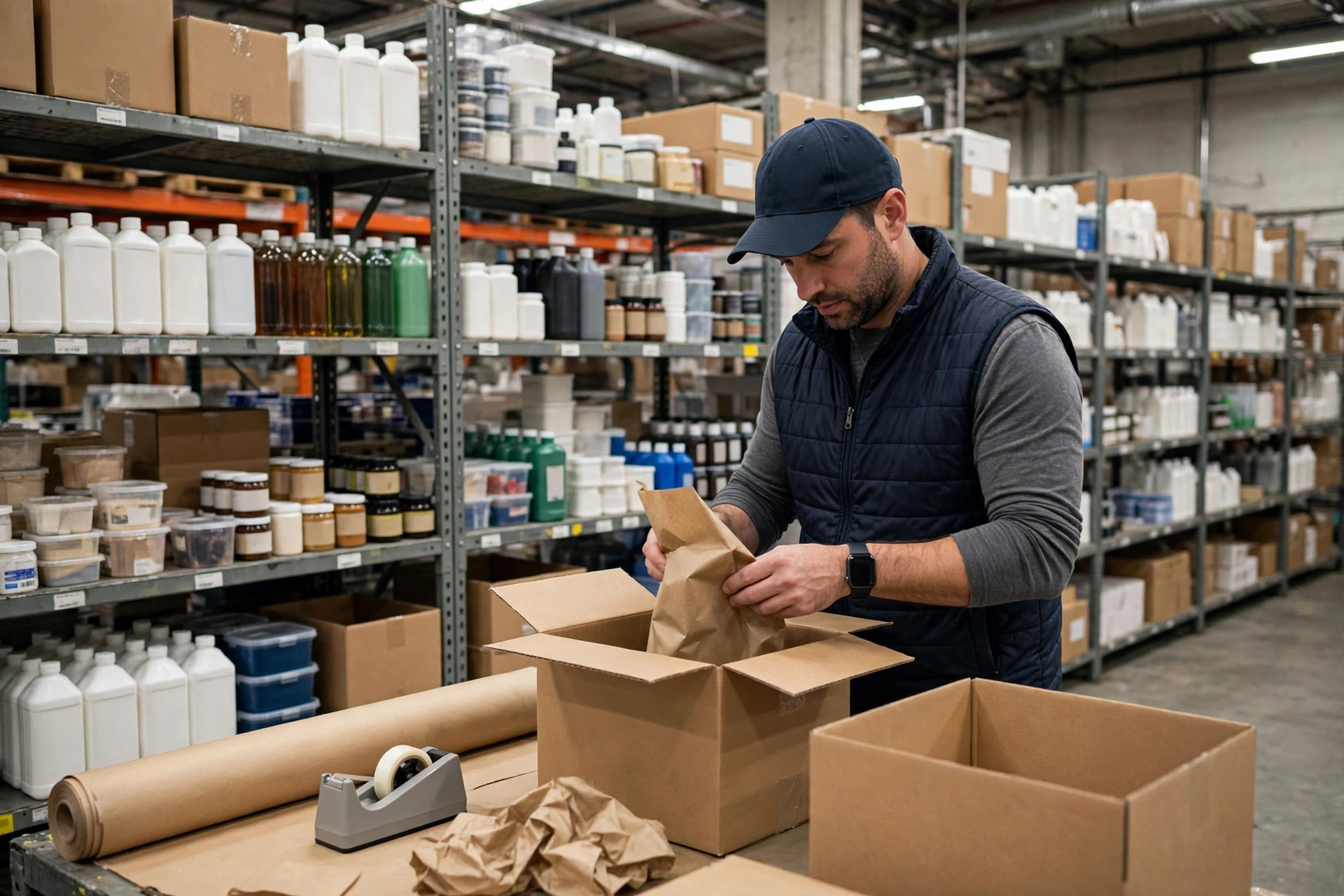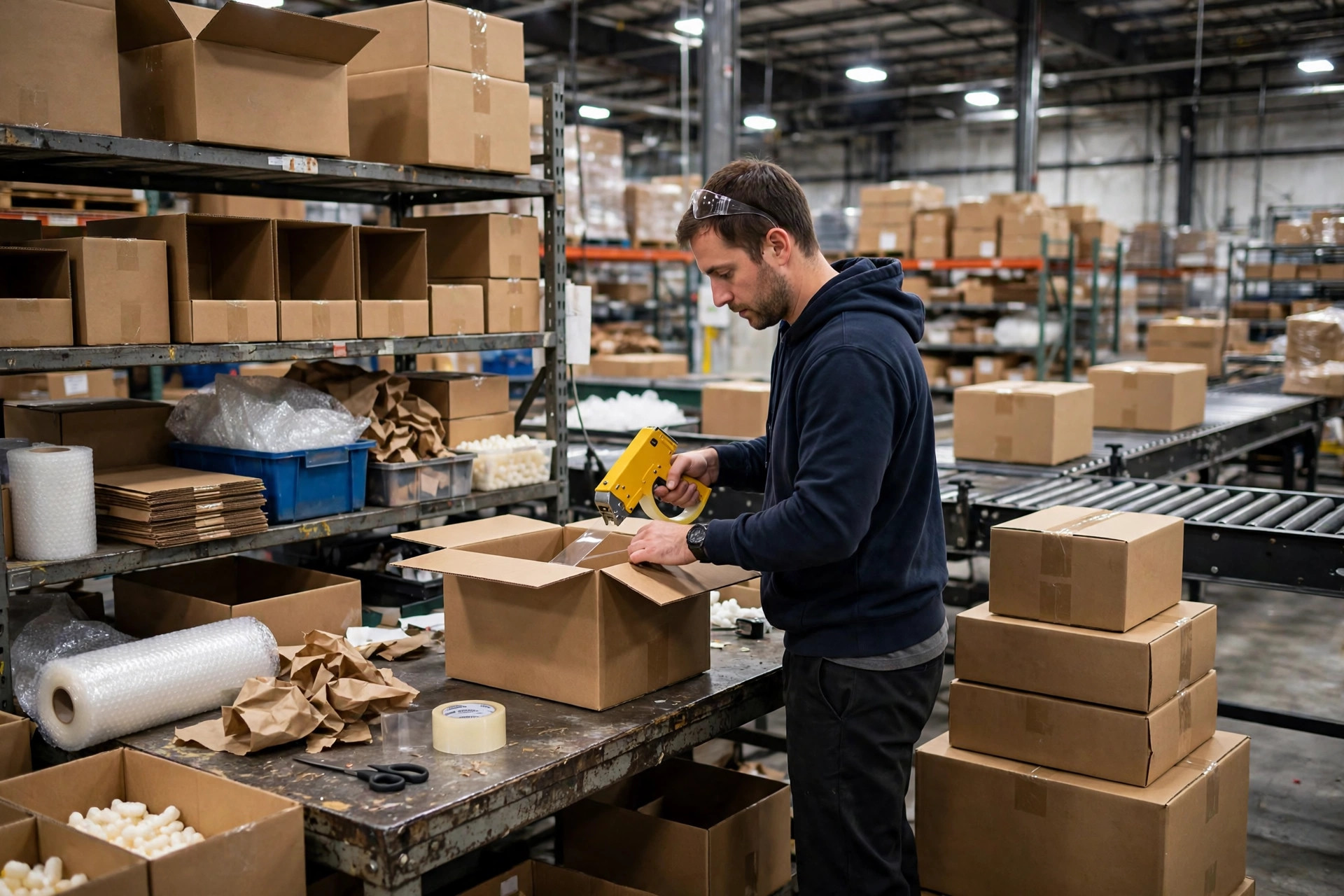
Let me complain first. We have six box sizes in my warehouse, and the packers always reach for the biggest one.
Not their fault, honestly. One person packs 300 parcels a day; if picking a box takes more than 3 seconds, the day's quota is dead. So the rational move is: grab the big box, stuff in some void fill, seal it, move on.
This is exactly what cartonization is supposed to fix. The problem was never that nobody could calculate the right box. It is that nobody had time to.
How the billable weight eats your margin
Anyone in e-commerce knows the carrier bills you on the greater of actual weight and DIM weight. UPS and FedEx use the same domestic formula: length × width × height in inches, divided by 139, rounded up. Check your carrier's site for the latest rules, but the 139 divisor and the "whichever is greater" logic have been stable for years.
A concrete one. Same multi-item order, 2 pounds actual:
- Stuffed in a 14×10×6-inch box: 840 cubic inches ÷ 139 = 6.04, billed as 7 pounds
- Stuffed in a 12×9×5-inch box: 540 cubic inches ÷ 139 = 3.89, billed as 4 pounds
Identical goods, one box size smaller, and the billable weight drops 3 pounds. The gap between the 2-pound bracket and the 4-pound bracket, or the 4 and the 7, is a few dollars a parcel for anyone who has read their own invoice.
Now do it at 1,000 orders a day, half of them multi-item, for a year. That is a six-figure number. And it got burned by a packer grabbing the big box "by hand," without anyone hearing a sound.
The cartonization savings math: run your own number first
A Shenzhen seller I know, let's call him Qiang, does eight to nine thousand orders a month, 60% of them multi-item. To keep it simple his warehouse stocked exactly 3 box sizes.
He pulled three months of order details, clustered the product dimensions, and found the combos were actually concentrated: 70% of multi-item orders could be covered by 5 size combinations. He went from 3 box sizes to 8, then printed a "recommended box" line on every pick ticket so packers grabbed the box on the ticket instead of freelancing.
Three months later he showed me the bill: average billable weight down about 0.4 kilograms, and the higher the multi-item share, the bigger the drop. Scaled to his volume at the time, the yearly shipping savings would cover hiring two extra packers.
No software did that. He never bought a cartonization tool — just an Excel sheet of SKU dimensions, and the box recommendation logic lived in the pick ticket print template.
Here is the calculation template I built for one warehouse. Plug in your own numbers:
| Line item | Value |
|---|---|
| Daily shipped orders | 1,500 |
| Multi-item share | 40% |
| Billable weight reduction after box optimization | 0.3 kg |
| Average freight per kg of billable weight | Take from your own invoices |
| Yearly freight savings | 1500 × 40% × 0.3 × freight-per-kg × 365 |
The "freight per kg" must come from reverse-engineering your own bills, not from thin air. What you want from this number is the order of magnitude — then you decide whether cartonization deserves a single dollar of your money.
Three tiers of rolling out box recommendations
Verdict first: small sellers, do not buy auto-boxing software on day one. Roll out cartonization in three tiers, and pick by your order volume:
Tier one: print the recommended box on the pick ticket (zero cost) Keep SKU length-width-height in a table, compute the smallest outer box per order combination, and print it: "Order 12345 → Box B4 + 2 air columns." The packer grabs the box on the ticket, and a wrong box gets spotted immediately.
Tier two: PDA scan check at pack-out (small spend) Packer scans the order number, the PDA shows the recommended box; scan the box barcode, and if they grabbed the wrong one, the PDA screams. This tier mainly cures the "grab the biggest box" disease.
Tier three: auto-boxing machine or software (big spend) Only for warehouses past 10,000 orders a day with wildly scattered multi-item combos. Run the ROI separately on this one — the equipment is not cheap, and salespeople lie.
I have personally watched a warehouse skip tiers one and two and go straight to tier three software. The SKU dimensions were entered by procurement off the top of their heads — length written as width — so every box the algorithm recommended was too small to actually hold the goods. The software was fine; the data was garbage, and garbage in meant garbage out.
So step one of cartonization is never buying software. It is measuring your SKUs correctly. Real measured outer dimensions, cushioning included, not the nominal size on the product packaging.
The trade-off everyone gets backwards
Here is the counterintuitive part: the tightest-fitting box is not always the cheapest box.
Every notch tighter the fit, the breakage rate ticks up. Multi-item orders mix in fragile goods; jam everything tight, the void fill you saved gets replaced by shipping damage. One return claim eats half the freight you saved.
Second: more box sizes is not always better. Going from 3 sizes to 8 saves freight; going from 8 to 15 saves a little more freight but pushes box procurement cost up (each size's MOQ stops amortizing) and eats warehouse slots. There is a sweet spot, usually 6 to 10 sizes — past that you are just creating work.
Third: seasonal SKUs wreck everything. An apparel seller's winter and summer lines differ 2x in cube; the box list needs a review at least twice a year. The algorithm is static, the SKU structure is alive.
Where this blows up: the four traps
Missing SKU dimensions. New products launch without a measurement, old products change packaging without an update, and the recommended boxes slowly become wrong everywhere. Make it a rule: every new inbound gets measured, same as weighing.
Counting volume but not weight. Some orders already weigh more than their DIM weight. Shrink the box all you want — it saves nothing. Step one of the recommendation should be "is this order DIM-dominated," and if not, skip it.
Forgetting the void fill cost. Smaller box, different void fill usage. Air columns and honeycomb paper go into the total ledger — do not only count the freight drop.
Counting on packer discipline. Human nature reaches for the familiar box. The recommended box must live in the system and the workflow. Self-discipline as a strategy equals no strategy.
One thing you can do tomorrow
Pull last month's multi-item orders and look at one number: the 20% of orders where billable weight overshoots actual weight the worst. What do they look like?
Odds are the culprit is two or three fixed "handy big boxes." Lock down the use cases for those boxes, print the recommendation as a rule, and check the bill again in a month.
Cartonization sounds fancy. The implementation is embarrassingly simple. But simple saves real money.
This one, I have personally verified works.
By Ah K, E-commerce Seller (5 yrs)